
Far from the bustle of more well-known towns like Mandawa or Nawalgarh, the village of Mahansar offers a peaceful respite....
Churu, the eastern gateway to the Thar Desert
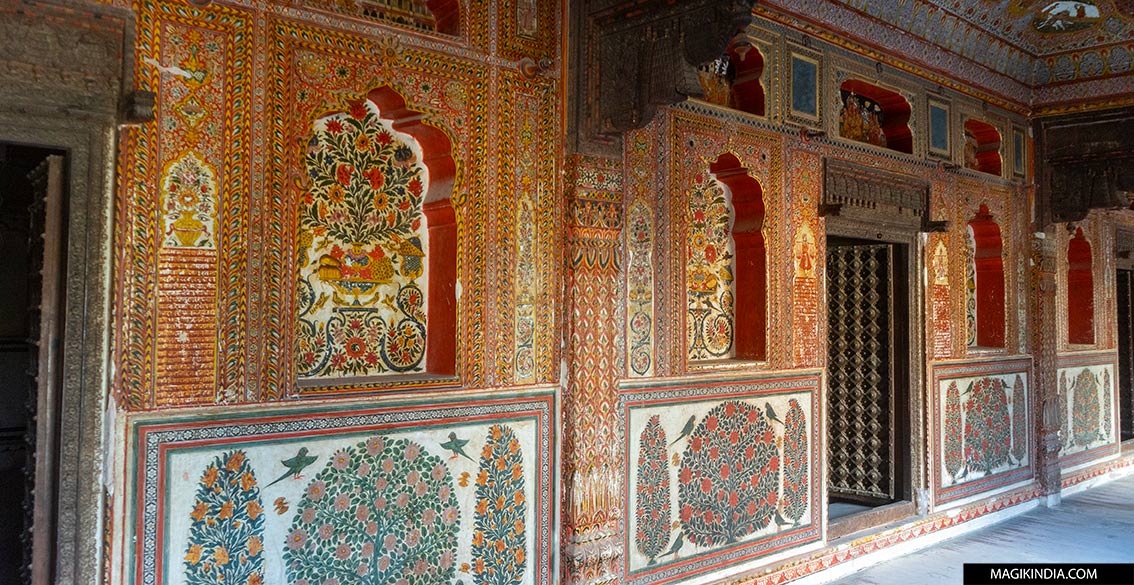
Located on the eastern edge of the Thar Desert, Churu is considered its gateway. It’s a city often overlooked, but for the curious traveler, it reveals itself to be a true gem of authenticity. It offers a unique opportunity to uncover the secrets of Shekhawati, far from the tourist crowds, and to discover a facet of Rajasthan’s mercantile history preserved in the murals of its havelis (mansions).
Foundation, golden age and decline of Churu
The founding of the city is generally attributed to a Jat chief named Churru (or Chuhru) around 1620, from whom it is said to have derived its name. However, other historical accounts suggest that the region was initially under the control of the Chauhan dynasty.
The golden age of Churu coincided with the meteoric rise of the Marwari merchants. These merchants accumulated immense wealth there thanks to the increase in secure trade of essential goods such as spices, textiles, and opium, making Churu a vital commercial hub.
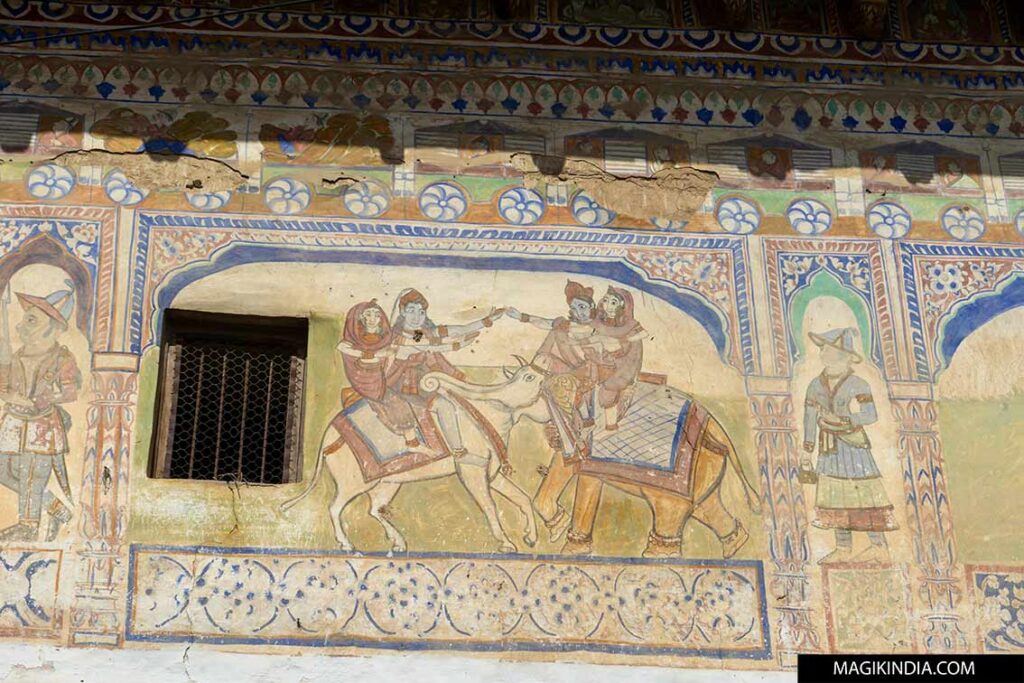
To showcase their wealth and social status, these families erected sumptuous Havelis. These magnificent residences, richly decorated with detailed frescoes, transformed the city into an architectural landscape that told the story of their fortunes.
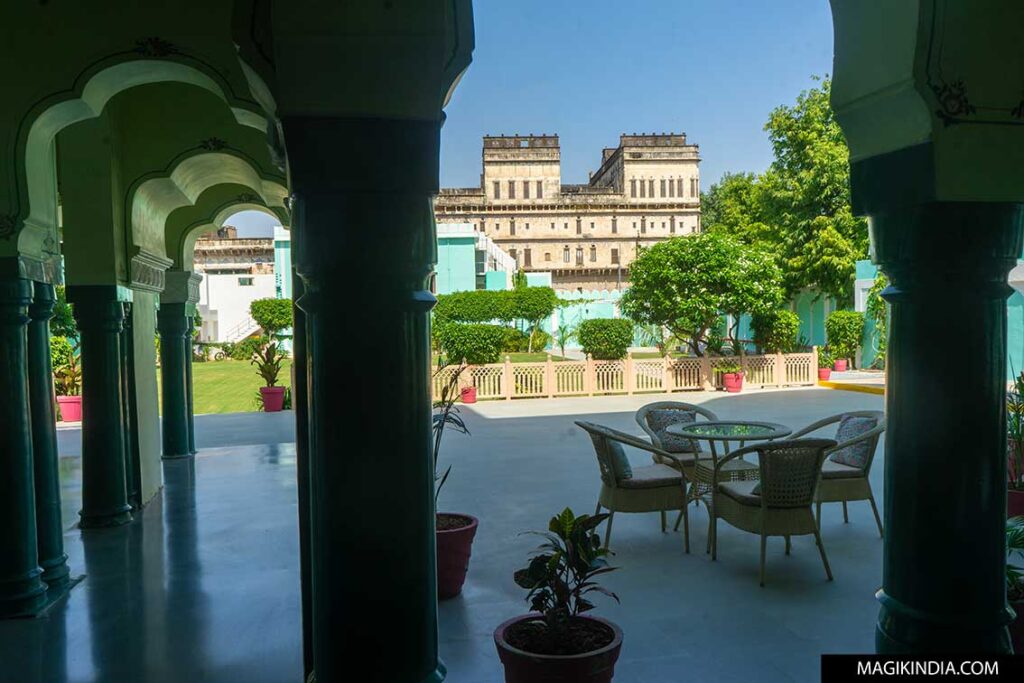
The decline came abruptly with the establishment of the British Raj and the transportation revolution. The massive development of railways spelled the end of the old caravan routes of Shekhawati, forcing the Marwaris (notably the Birla and Goenka families) to migrate to new economic centres like Kolkata and Mumbai. Upon leaving, they abandoned their luxurious havelis (mansions). This exodus effectively froze time in Churu, which is now preserved as an “open-air art gallery” where the painted walls silently bear witness to its past mercantile glory.
Malji Ka Kamra
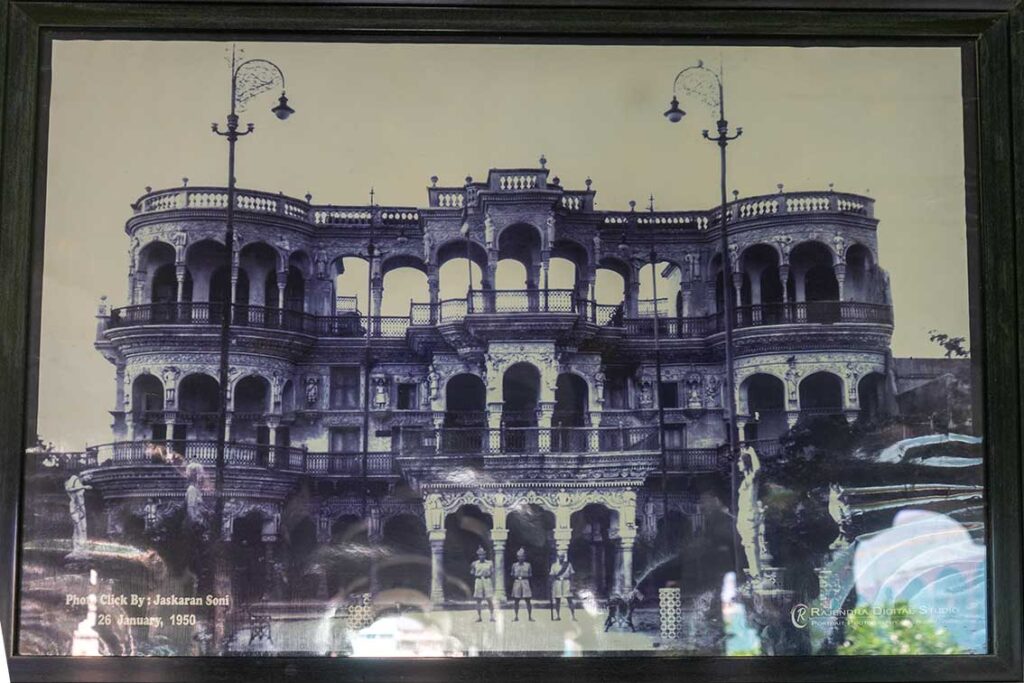
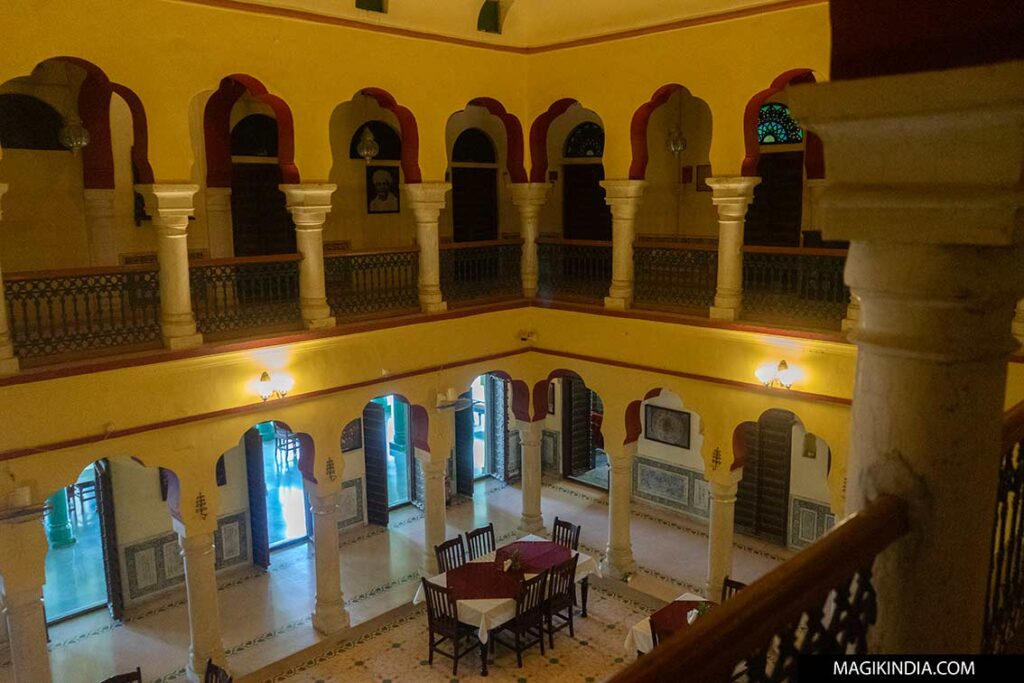
One of the most well-known buildings in Churu left behind by the Marwaris is the “Malji Ka Kamra” (Malji’s Chamber), a prestigious green-clad haveli that was erected in the early 1920s at the behest of the prosperous local merchant, Malchan Kothari.

The name “Kamra” (meaning “room” in Hindi) is an ironic understatement given the size of the dwelling. Historically, this structure served not only as a residence but also as a pleasure palace (rang mahal) for Maharaja Ganga Singh of Bikaner during his visits to the region.
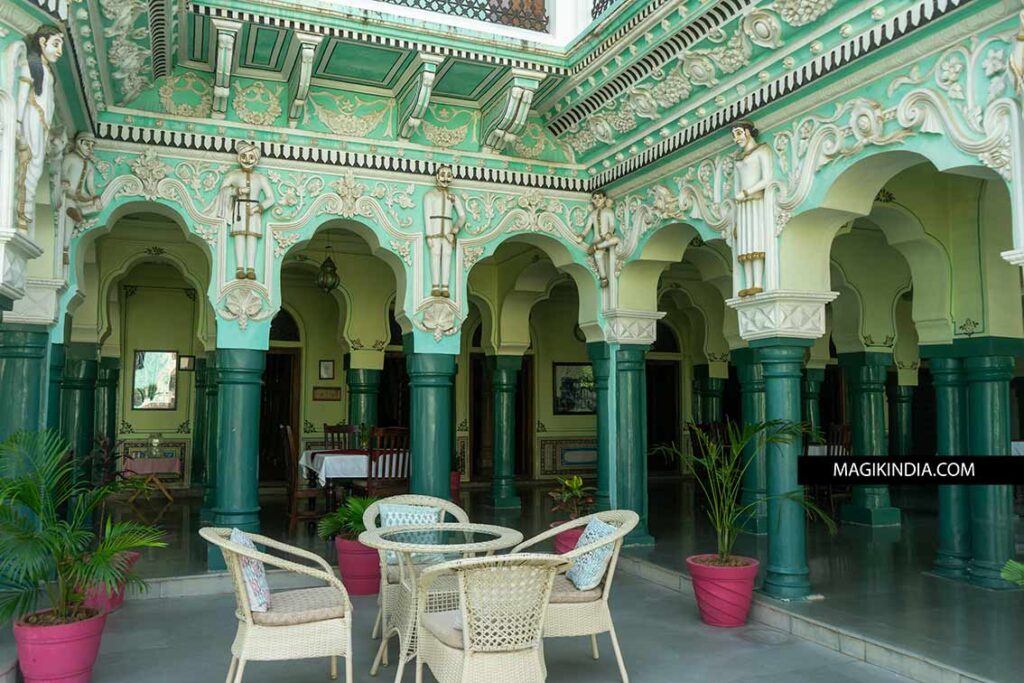
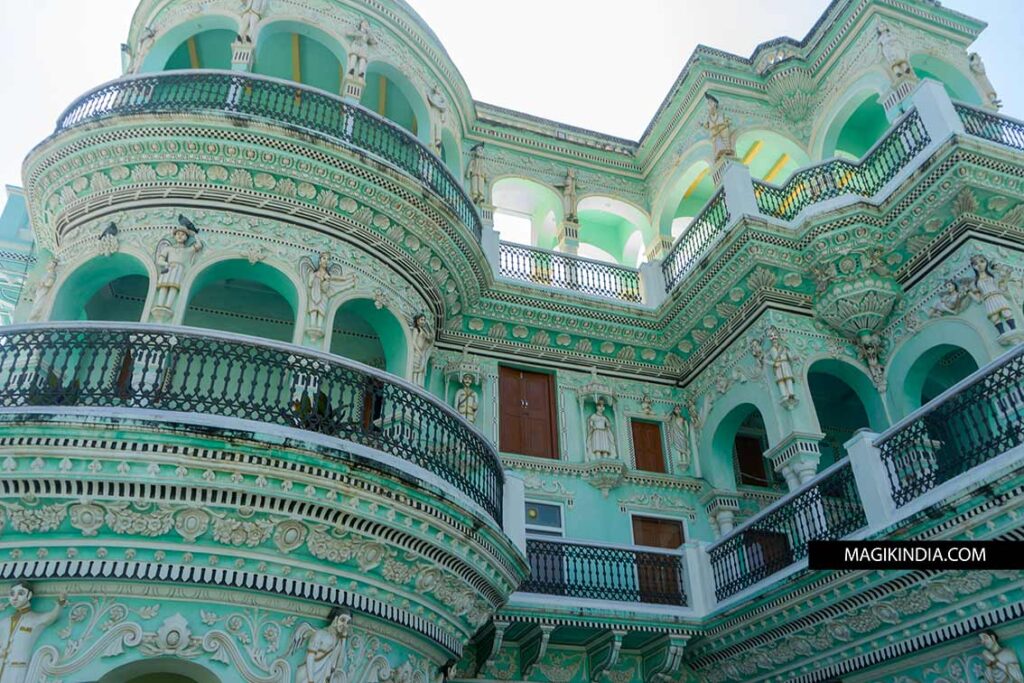
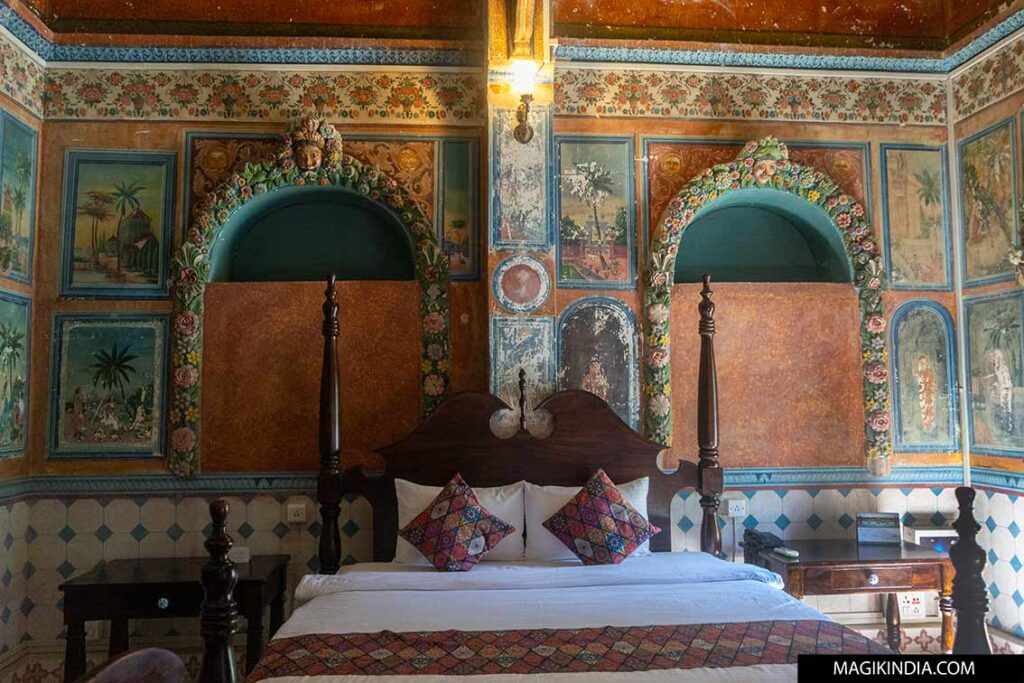
From an architectural perspective, Malji Ka Kamra represents a fascinating syncretism, a harmonious blend of traditional Indian styles and European influences of the time. It is particularly renowned for its ornamental stucco work covering its facades, complemented by the colorful frescoes typical of Shekhawati art.
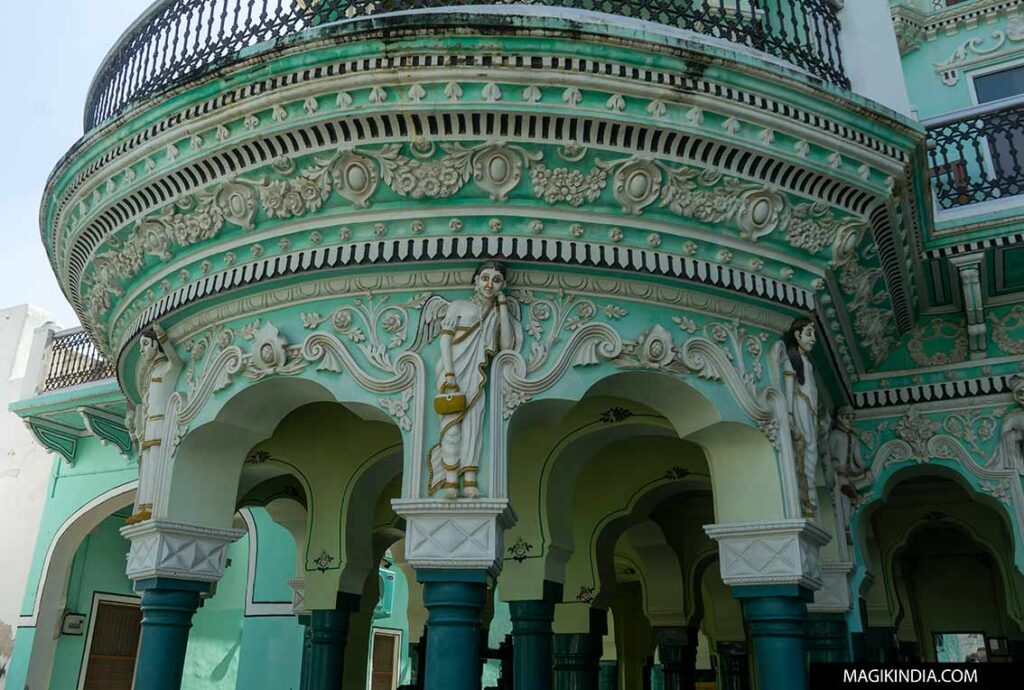
After a period of decline following the departure of the merchant families, the building was fortunately preserved and restored to serve as a heritage hotel, thus preserving a living testament to the opulence and strategic role of Churu.
Shantinath derasar
If there was only one place you absolutely had to discover in Churu, it would undoubtedly be its Derasar (Jain temple), managed by the Kothari family, a true architectural gem.
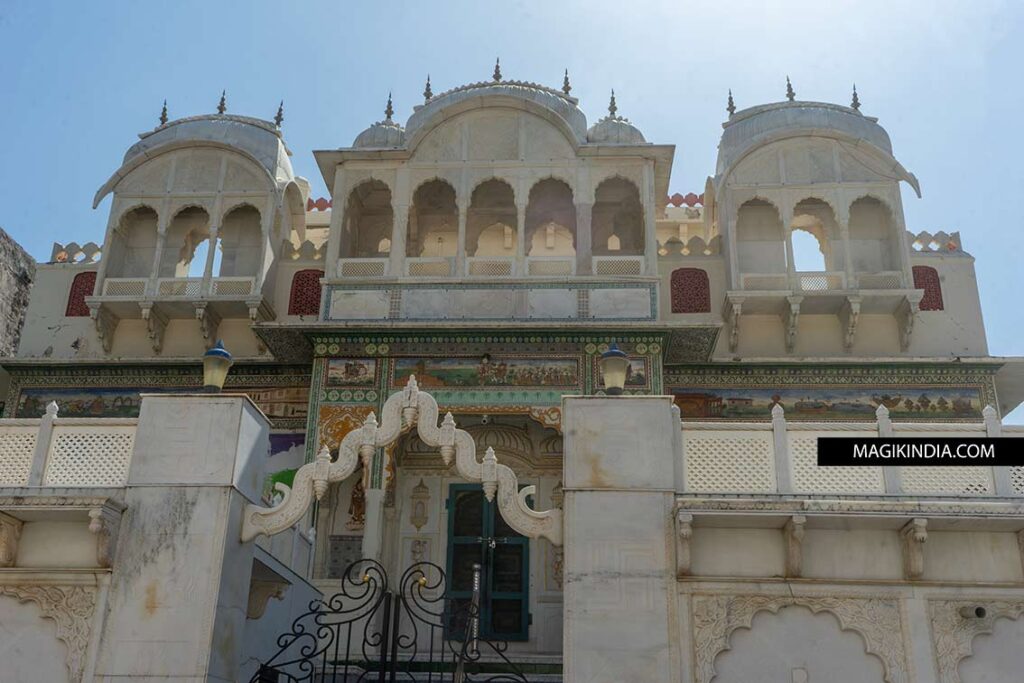
This temple is radically different from other Jain sanctuaries in Rajasthan, such as those in Ranakpur or Mount Abu, because it was designed not as an austere place of worship, but as a charming little palace.
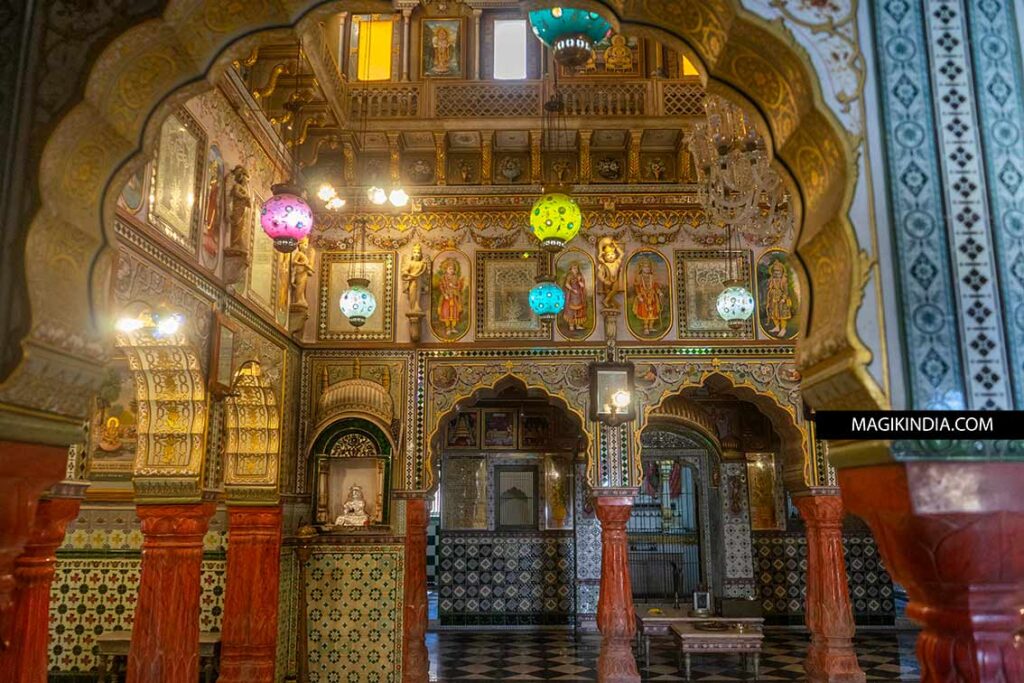
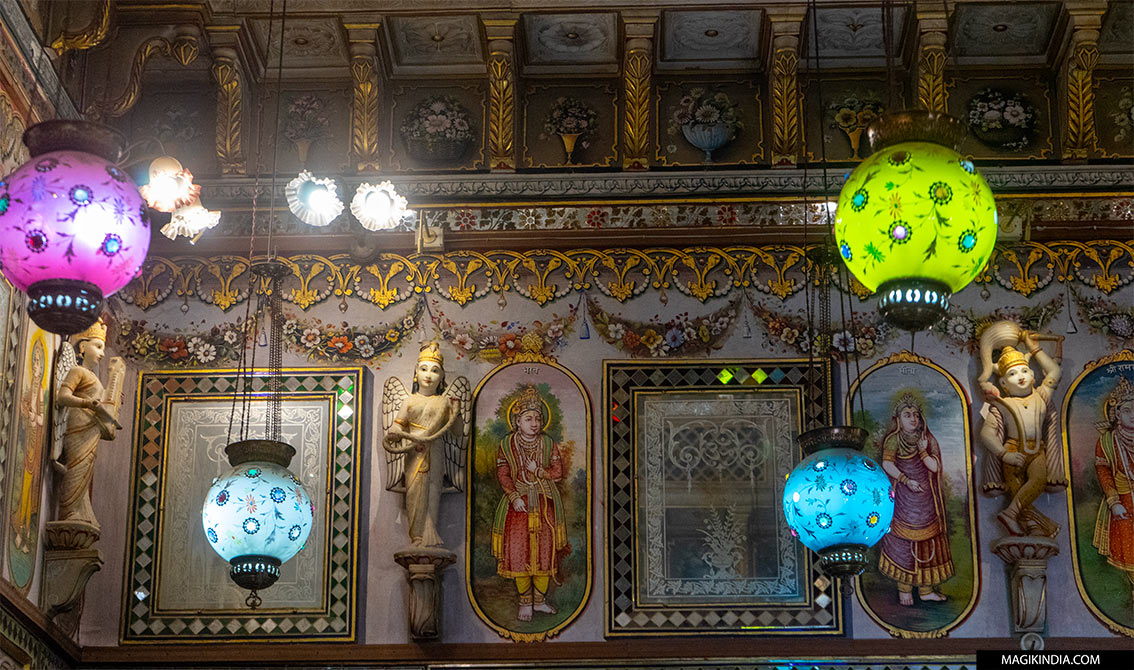
The use of white marble, although common in Jain architecture, is surprisingly limited here. Instead, the derasar celebrates local art through numerous paintings and wall ceramics, faithful to the aesthetic of the Shekhawati region.
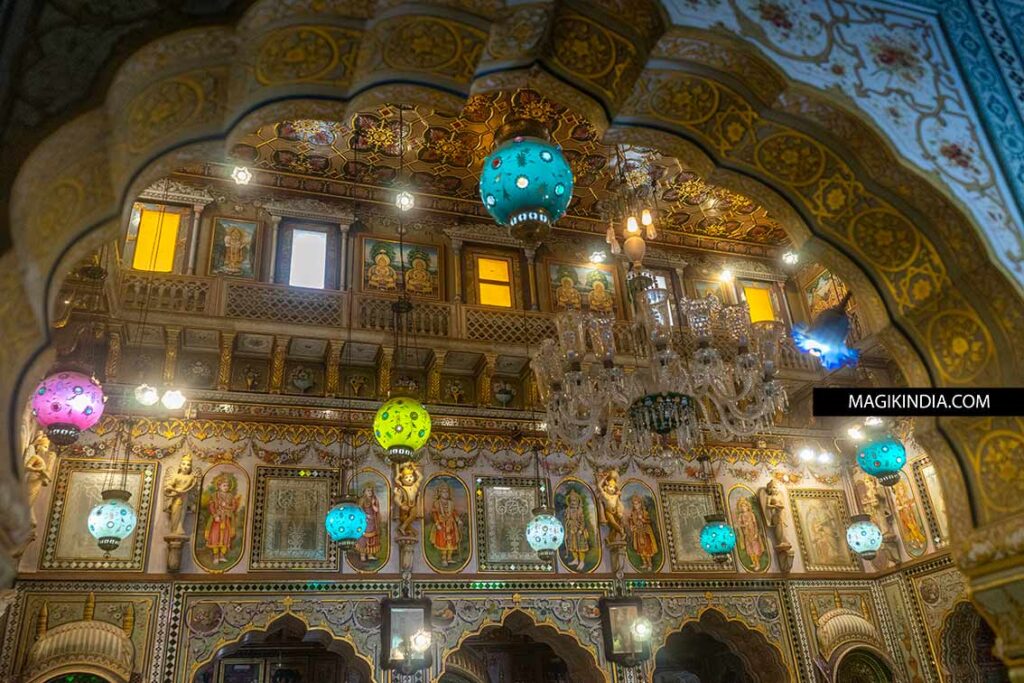
The abundance of glass lamps, arranged around a Belgian crystal chandelier, lends an atmosphere of pure enchantment to this place. Suspended from the ceiling, these lamps come in a myriad of vibrant colors, creating shimmering reflections. This lighting transforms the temple into a magical visual experience, transcending a simple religious visit.
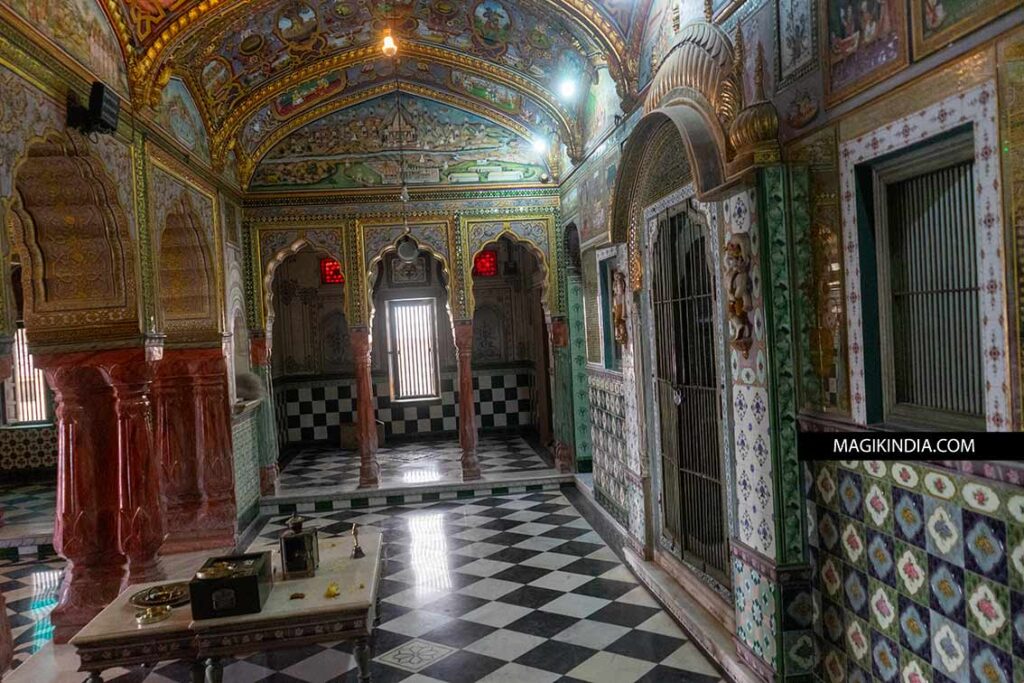
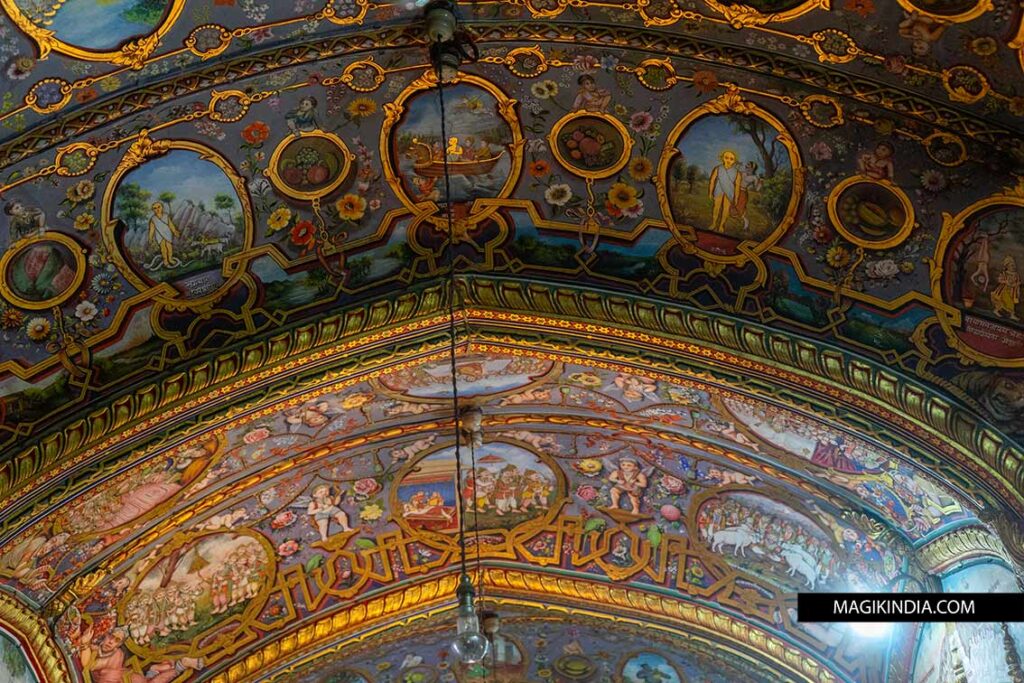
The walls and ceiling bear witness to exceptional craftsmanship: they are covered with intricate patterns and detailed polychrome frescoes. Often inlaid with gold leaf, these wall paintings depict various religious figures and scenes. The shrine itself pays homage to Shantinath, the sixteenth Tirthankara, an enlightened master of Jainism.
Others visits in Churu
A stroll through Churu reveals a string of other havelis, many of which are more or less abandoned. However, some well-preserved wall frescoes alone make the walk worthwhile.

Among these remarkable residences, several deserve special attention:
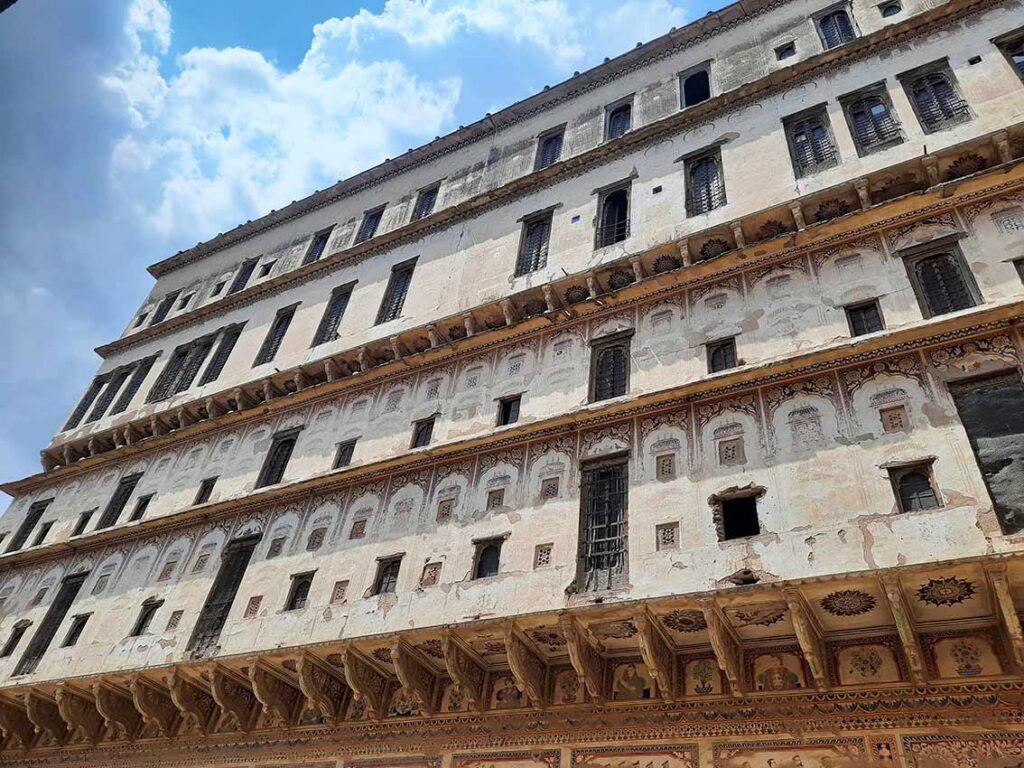
The Surana Hawa Mahal, also known as the Surana Double Haveli, is a residence of impressive architectural splendor. It owes its name “Hawa Mahal” (Palace of Winds) to the incredible density of its small openings. It boasts no fewer than 111 windows, allowing for ingenious natural ventilation. This structural and ornamental masterpiece testifies to the megalomania and wealth of the Marwari families of the time, who competed to erect the most spectacular havelis in the region.
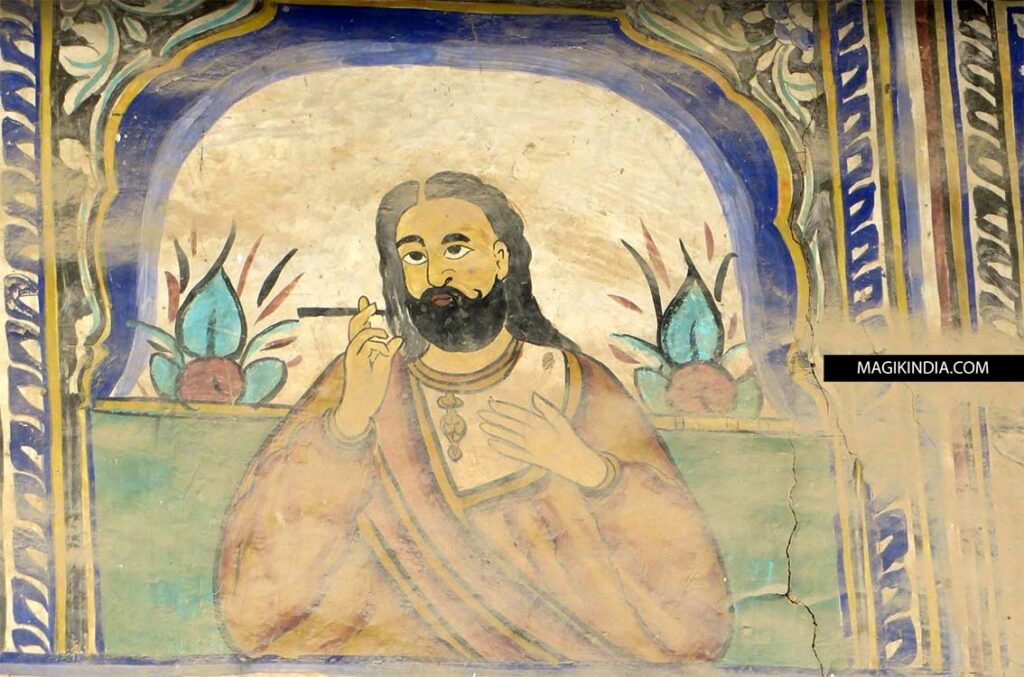
Located on a discreet street in Churu, the Banthia Haveli, built in 1925, could easily go unnoticed. Yet, this mansion is famous for housing a mural depicting an image of Jesus Christ smoking a cigar. The Marwaris sometimes allowed themselves to incorporate humorous, eccentric, or even slightly irreverent elements to stand out and demonstrate their boldness.
On the western outskirts of Churu, we came across the “Sethani ka Johra”: this century-old structure is a major historical landmark. It was built by the widow of the merchant Seth Bhagwandas Bagla as part of a project to combat drought. It was a large reservoir designed to collect rainwater and store it for dry periods. This reservoir now serves as a popular spot for taking selfies!

Vous aimerez peut-être aussi...

On the road between Pondicherry and Thanjavur, in Tamil Nadu, stands the Chidambaram Temple, a place where sacredness takes an...

Dussehra, which translates to "the tenth day," is a Hindu festival celebrated with great fervour throughout India. It symbolises the...

Nestled at the foot of the Aravalli Mountains in the peaceful Pali district, the village of Ghanerao is an invitation...
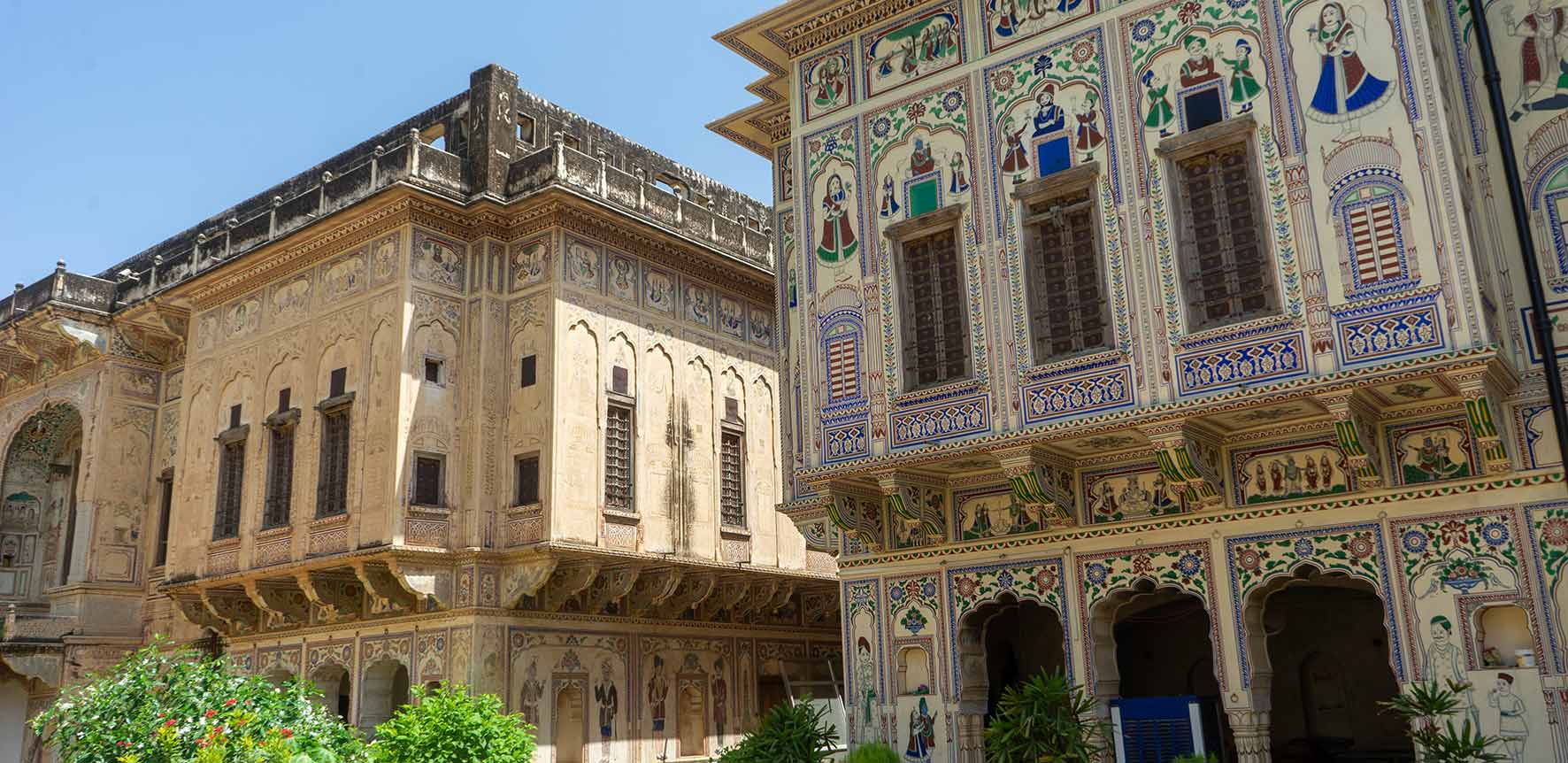
Among the architectural treasures of Shekhawati, the Goenka Double Haveli in Mandawa stands out as a must-see. This historic house,...
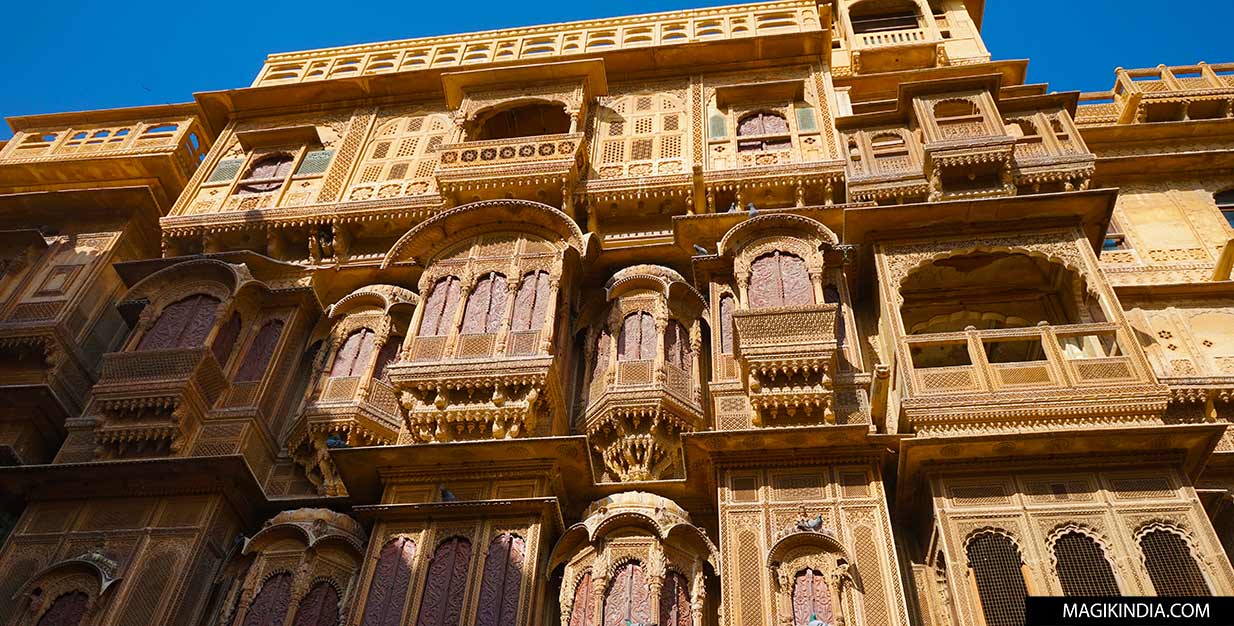
In the vibrant heart of Jaisalmer, Patwon Ki Haveli stands as if born from an ancient dream of bygone splendor....

