




Namaskaram !
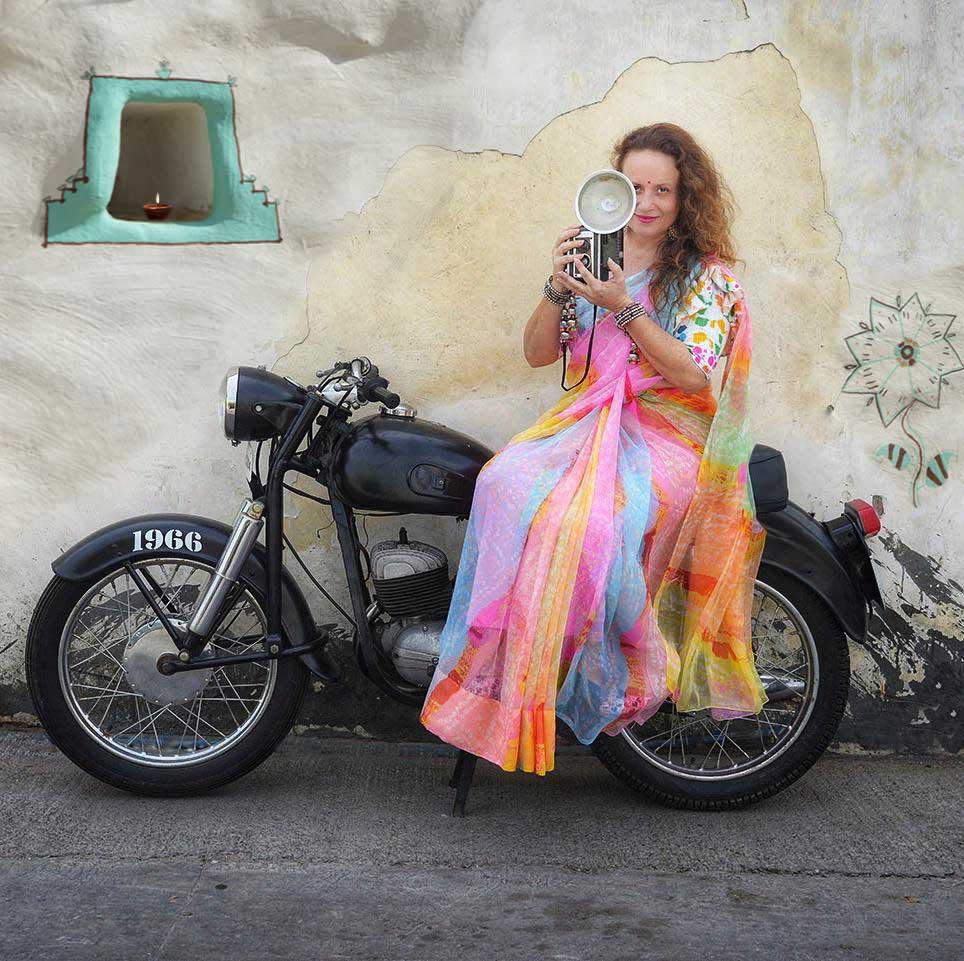
Welcome, Padharo ! I'm Mathini, a French woman who has been living in Rajasthan for 10 years. Despite being imbued with Indian culture from a young age it wasn't until 2014 that my Indian adventure really began. I left everything behind in France and set off on a 6-year journey through the land of Gandhi. These adventures are gathered in this blog which aspires, in an intentionally positive spirit, to bear witness to India's remarkably diverse and multifaceted cultural heritage. If this website sparks a desire to pack your bags and set off for an Indian adventure, it will have achieved its purpose. Subh Yatra on Magik India and beautiful explorations in the sacred land of Bharat...
Situated in the vast expanses of Rajasthan, halfway between Udaipur and the Pink City, Shahpura cultivates the art of discretion. Foreign to the tourist crowds, the city reveals an intimate India where royal fervor, centuries-old pictorial traditions and rural people intersect. A true haven of peace, it offers total immersion in a timeless world.
Three hours away from Ahmedabad, the Tarnetar fair comes alive as one of Gujarat’s most dazzling rural spectacles. Fusing ancient history with widespread celebration, the festival draws thousands from diverse tribal and pastoral communities annually. At the core of this vibrant energy rests its ultimate symbol: the embroidered umbrella. Crafted meticulously with threads and mirrors, it serves quietly as a captivating stage for courtship and romance.
Phad is one of India’s most fascinating artistic and cultural expressions. Originating from the district of Bhilwara and more particularly from the town of Shahpura in Rajasthan, this traditional art unites painting on a fabric scroll, epic narration, music and popular theater. A true nomadic temple, the Phad is both a visual masterpiece and a living heritage passed down from generation to generation.
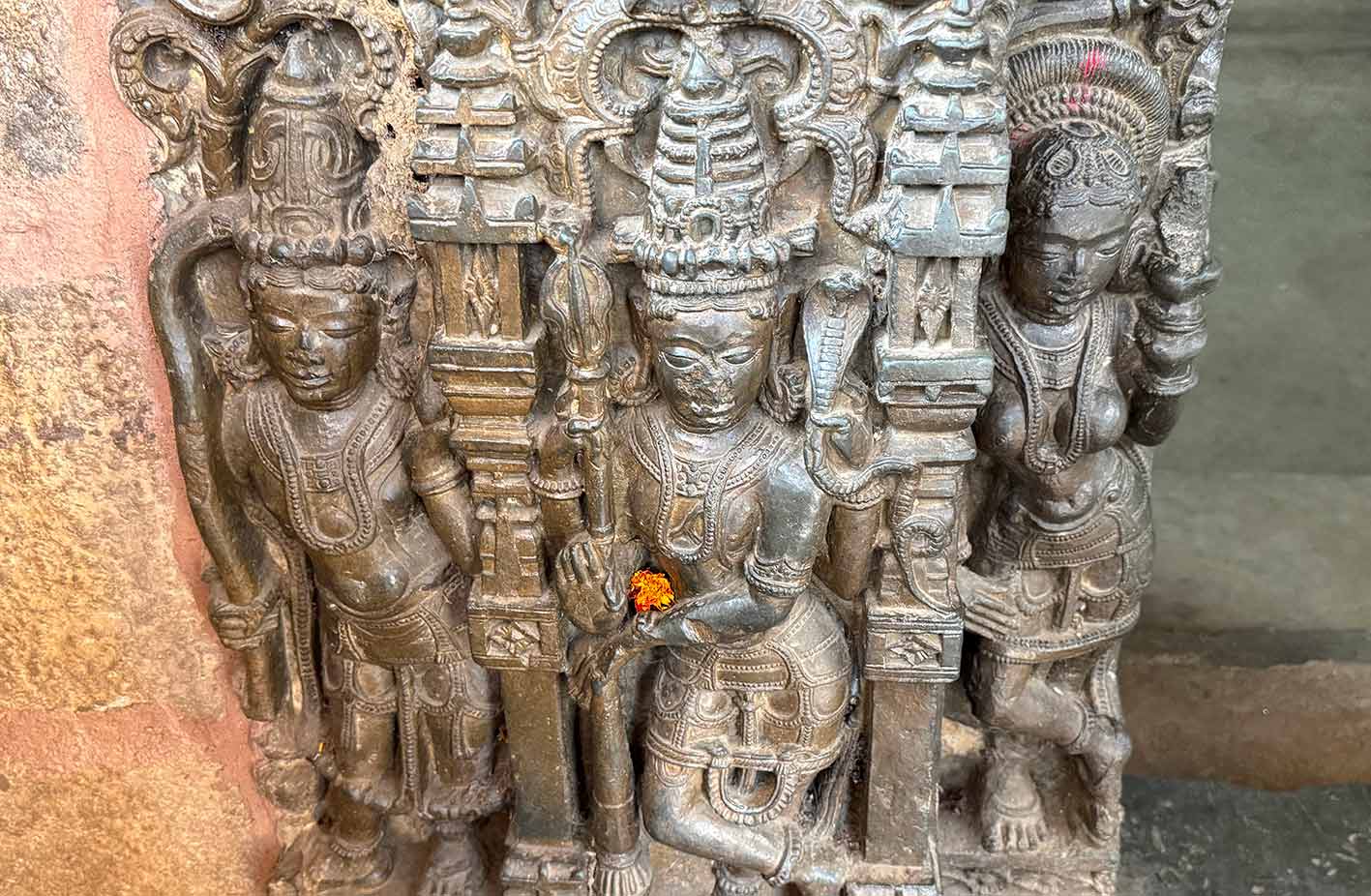
In the hollow of the wooded hills of the Maikal range, in the wild setting of Chhattisgarh, the Bhoramdeo temple stands its stone structures inherited from medieval times. Built by the Nagvanshi dynasty, this sanctuary dedicated to Lord Shiva displays its harmonious proportions and its lace bas-reliefs. Between spiritual traditions and ancestral know-how, the site offers a striking testimony to the history of the art of central India.
Languid on the banks of the Narmada, in the southwest of Madhya Pradesh, Maheshwar offers the image of a city frozen outside of time. Preserved from the beaten track, this city imbued with the memory of Queen Ahilyabai Holkar cultivates a discretion that contrasts with the depth of its history. It offers travelers a peaceful pace where remarkable Marathi architecture, a deeply mystical atmosphere and centuries-old artisanal know-how are revealed.
Nestled on a fortified plateau of the Vindhya Hills, over 600 meters above sea level, Mandu (or Mandav) is one of the most fascinating architectural and historical gems of Madhya Pradesh. Famous for its hanging palaces, elaborate hydraulic system and monumental Afghan monuments, this ghost city bears witness to a romantic and tumultuous past, immortalised by the tragic love of Sultan Baz Bahadur and poet Rani Roopmati.
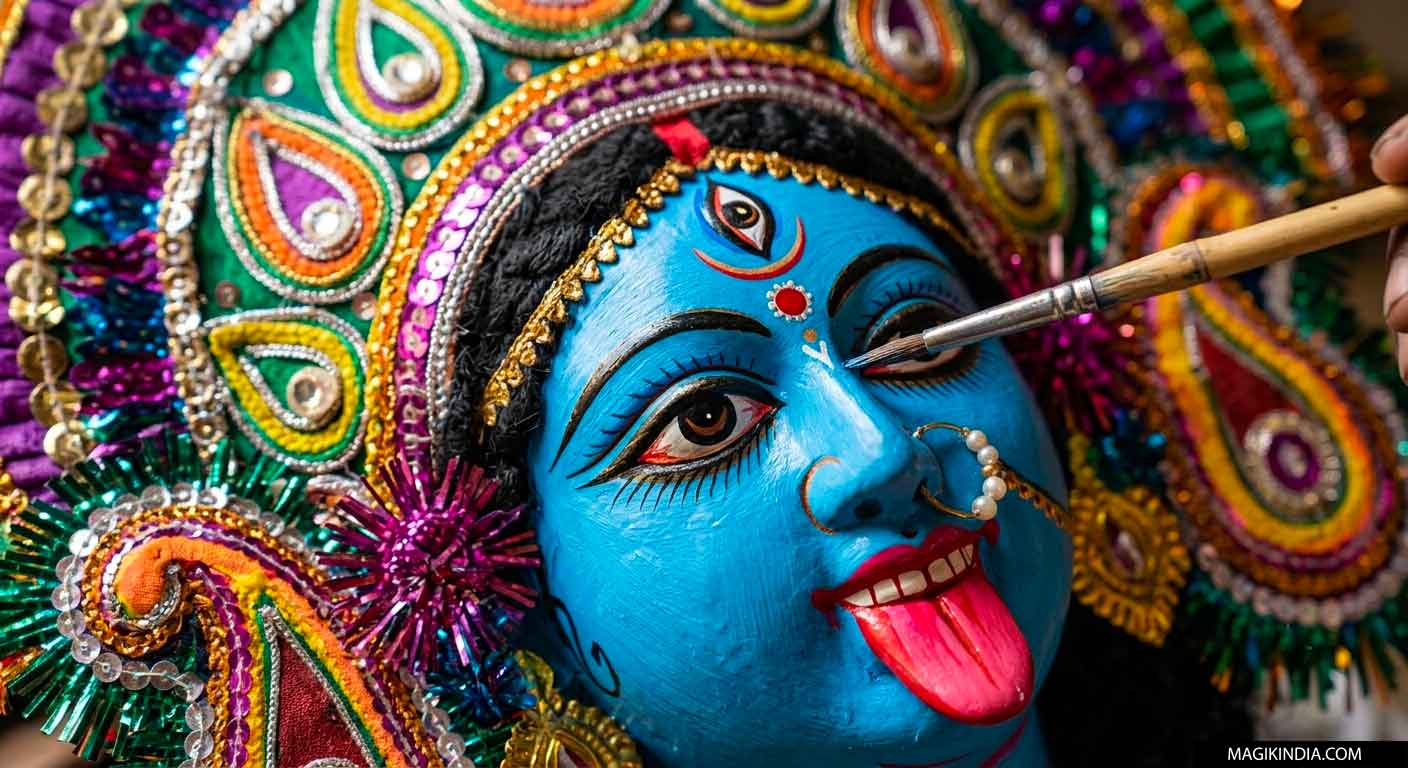
Classified as an intangible heritage of humanity, Chhau dance is a centuries-old tradition from Eastern India. By combining martial techniques and mythological stories, this nighttime performance, carried by costumed dancers, celebrates local folklore and remains a powerful vector of community unity in the face of changes in the modern world.
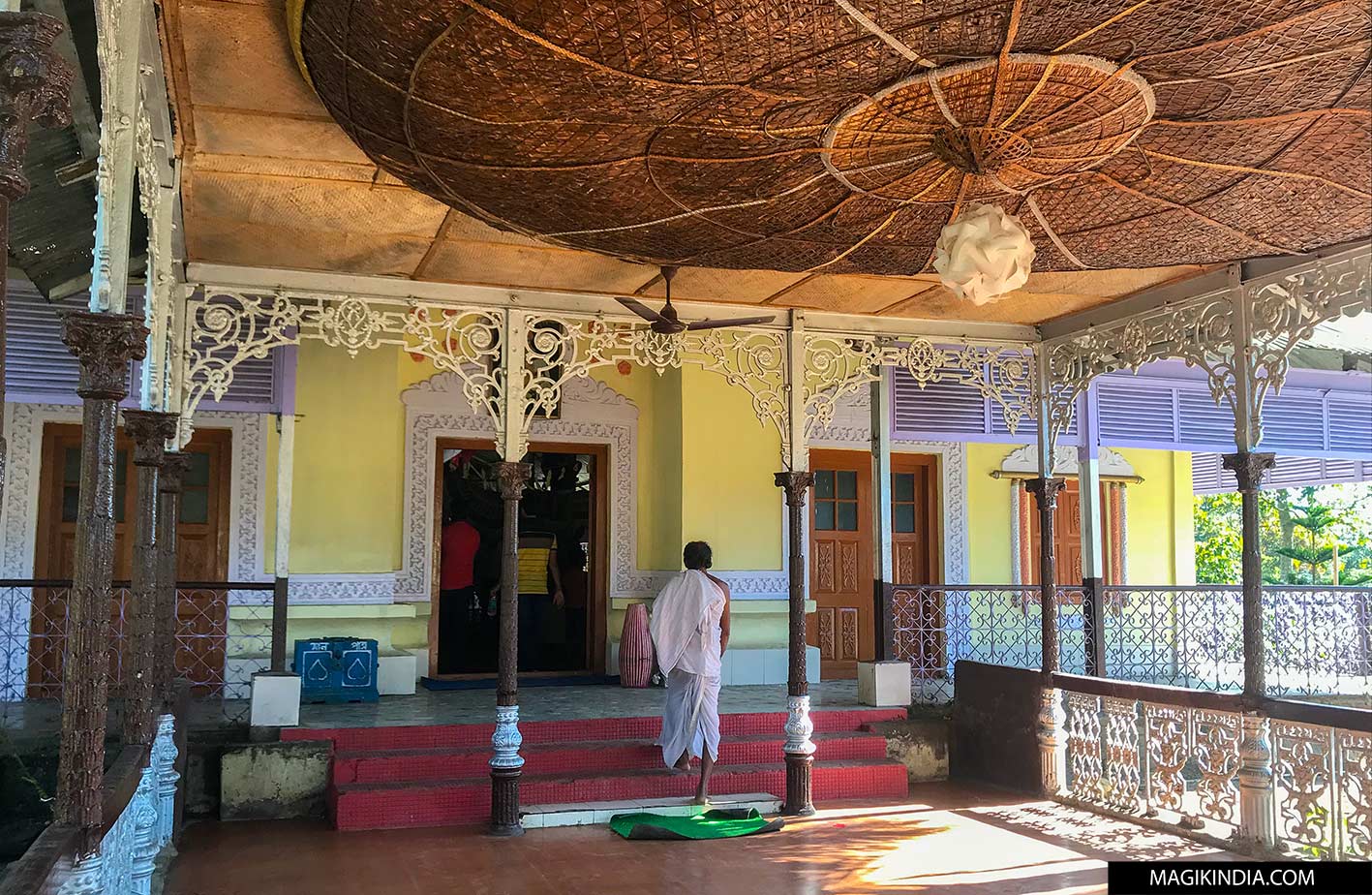
Lost in the middle of the tumultuous currents of the Brahmaputra, the island of Majuli is a world apart. As a land of contrasts, it unites the authenticity of tribal traditions with the artistic influence of the Satras, these monasteries which perpetuate a centuries-old culture through dance, masks and prayer. Despite the constant erosion that threatens its geography, Majuli remains the epicentre of Assam‘s identity, offering a rare immersion in a spiritual and wild India.

