
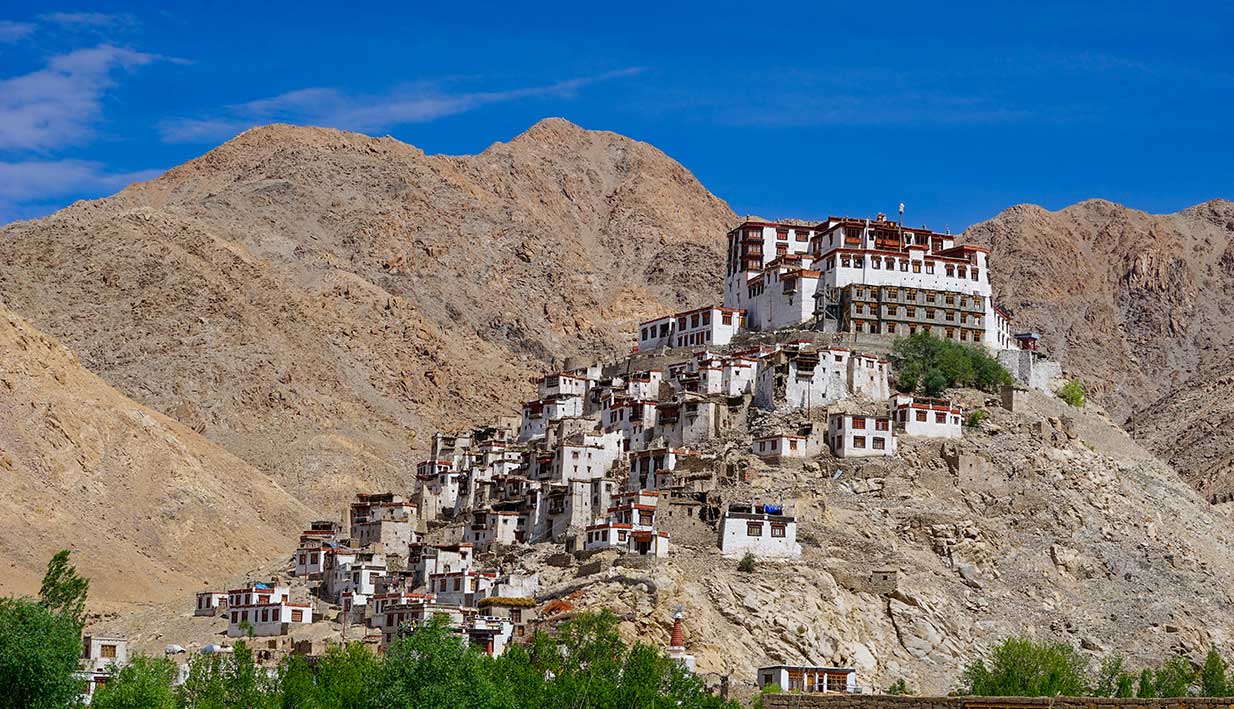
As a lime sentinel emerging from the mineral chaos, the Chemrey gompa appears carved out of the raw verticality of a rocky spur. Founded in the 17th century by the lama Tagsang Raspa to sanctify the memory of King Sengge Namgyal, this bastion of the Drukpa lineage spreads its immaculate walls in dizzying terraces, lifting the chant of the monks towards the azure of Ladakh.
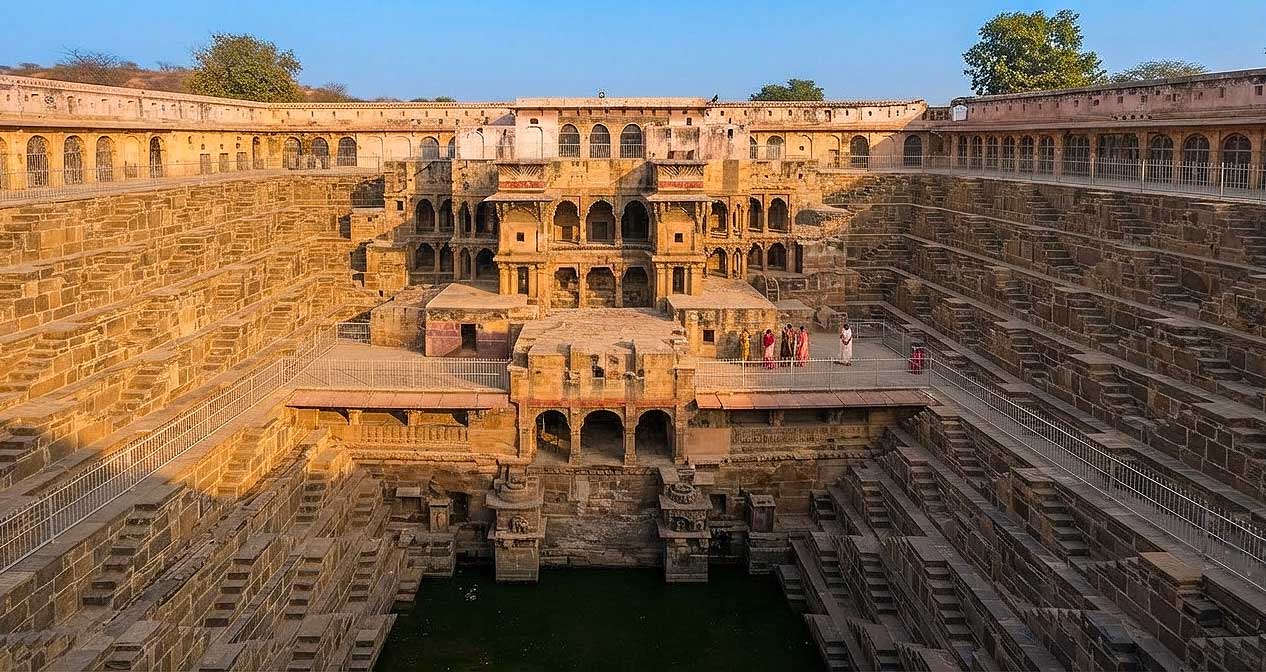
Situated between Jaipur and Agra, Abhaneri, the ancient “City of Brightness” (Abha Nagri), is a historical treasure. Its heritage rests upon two 9th-century CE marvels: the ingenious Chand Baori, a colossal stepwell and true feat of stone engineering, and the Harshat Mata Temple, whose carved ruins whisper of the fervor and finesse of medieval Indian art. Abhaneri stands as a living testament to the union of vital engineering and spiritual devotion in ancient India.
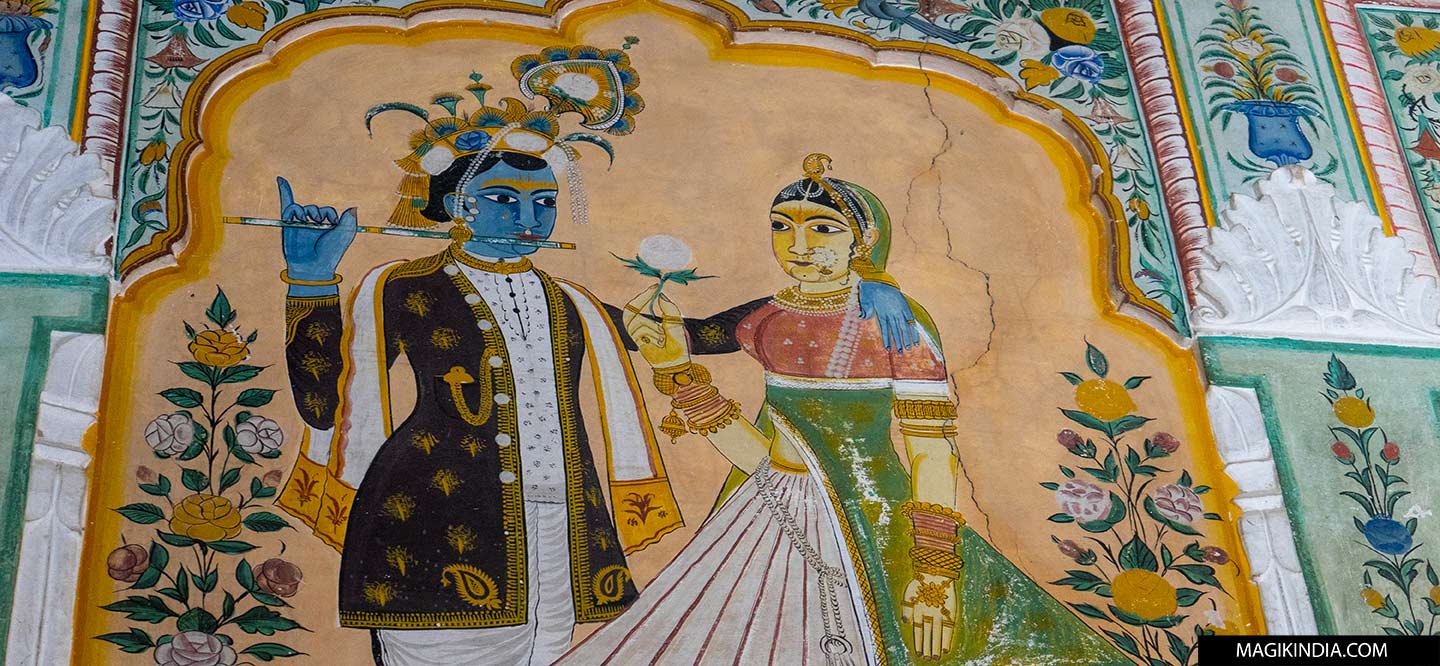
Jhunjhunu is the administrative headquarters of Shekhawati, a cultural region renowned for its palatial homes adorned with sumptuous frescoes. Having served as the center for various dynasties, ranging from the Chauhans to the Nawabs, the city is today primarily famous for the imposing Rani Sati Temple. This major place of worship attracts thousands of devotees annually from all corners of India.
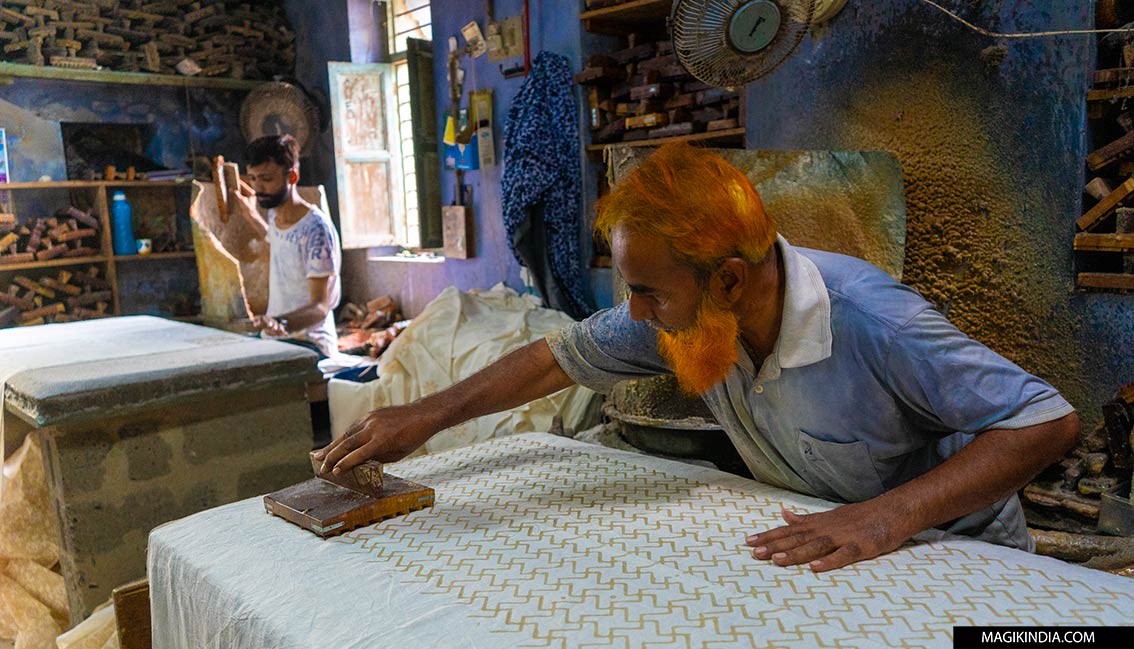
Batik is among the most vibrant textile arts of Kutch, alongside ajrakh, bandhani, and the distinctive embroideries of the Ahir, Rabari, and Mutva communities. This art, woven into the very fabric of Kutch’s land, is a profound mirror of its history and the ancient trade routes that have shaped its identity.
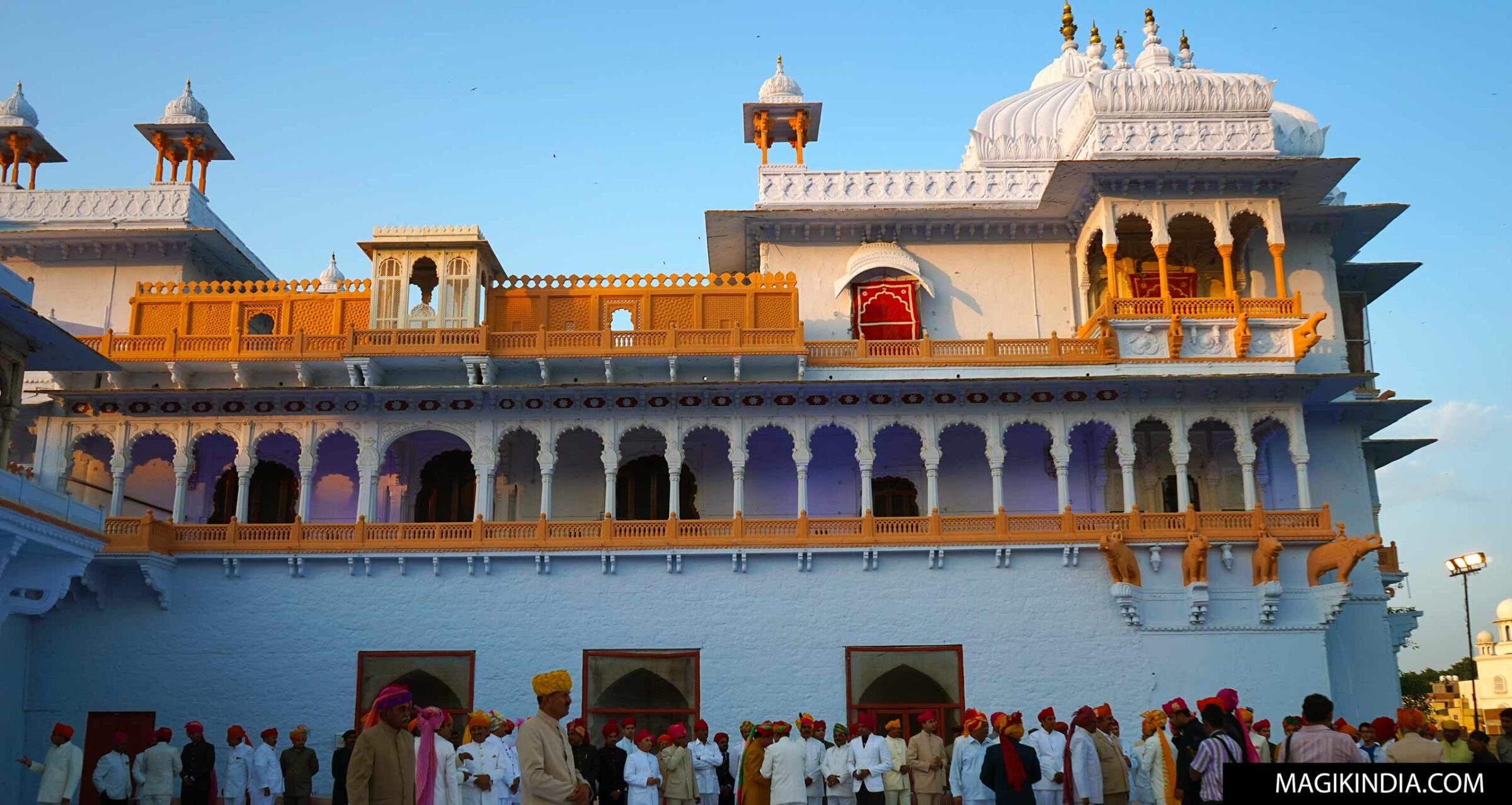
Often overshadowed by its neighbors in Rajasthan, the city of Kotah, south of Bundi, nevertheless conceals unsuspected treasures. Its palace, perched on a rocky promontory, houses beautiful frescoes, but it is during the Dussehra festival that the city reveals its full magic. Kotah transforms into a kaleidoscope of colors, music, and religious fervor, offering a vibrant and unforgettable cultural experience to those who venture there.
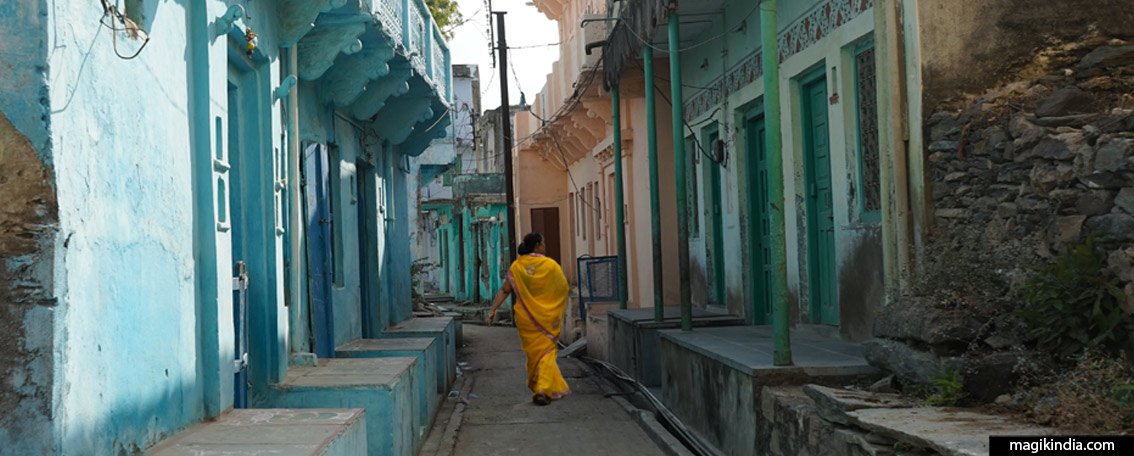
Delwara is a town nestled in the heart of the Aravalli Mountains, barely thirty kilometers from Udaipur, the romantic city of lakes of Rajasthan. While Delwara is surprisingly little known, it was once a major spiritual center and a renowned place of learning for the future rulers of Mewar; its thousands of Hindu temples and hundreds of Jain derasars earned it the name “city of gods”.
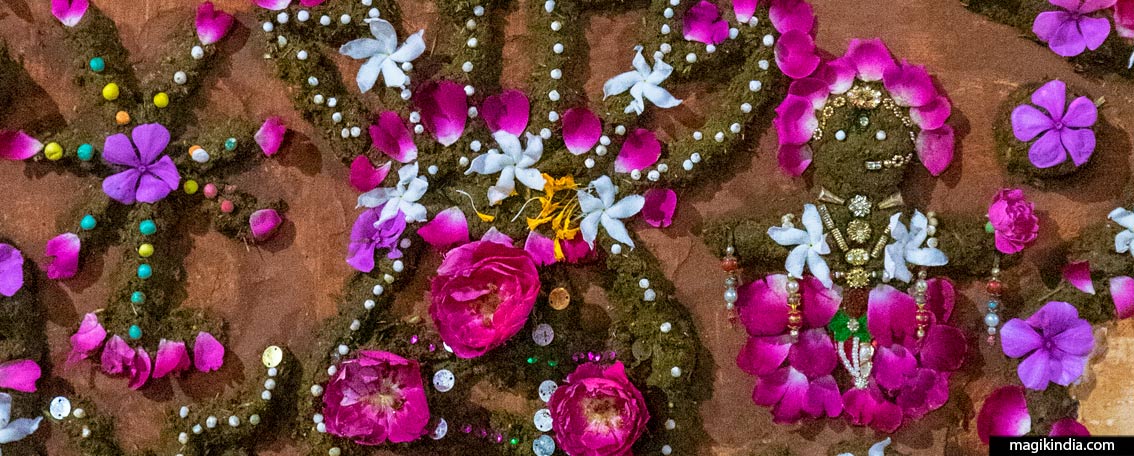
Sandhya is a form of traditional mural art that originated in the region of Braj (Uttar Pradesh). From there it spread to many other regions, especially Rajasthan, Madhya Pradesh and Punjab. Coinciding with the annual worship of the ancestors, the Sandhya is part of the “Bhakti” movement: it is a means of expressing one’s adoration for the divine and, more precisely, for the Hindu divinity Krishna. If this tradition was once very common, there are only a few places where it is still practiced. A few families in Udaipur in Rajasthan still perpetuate it.
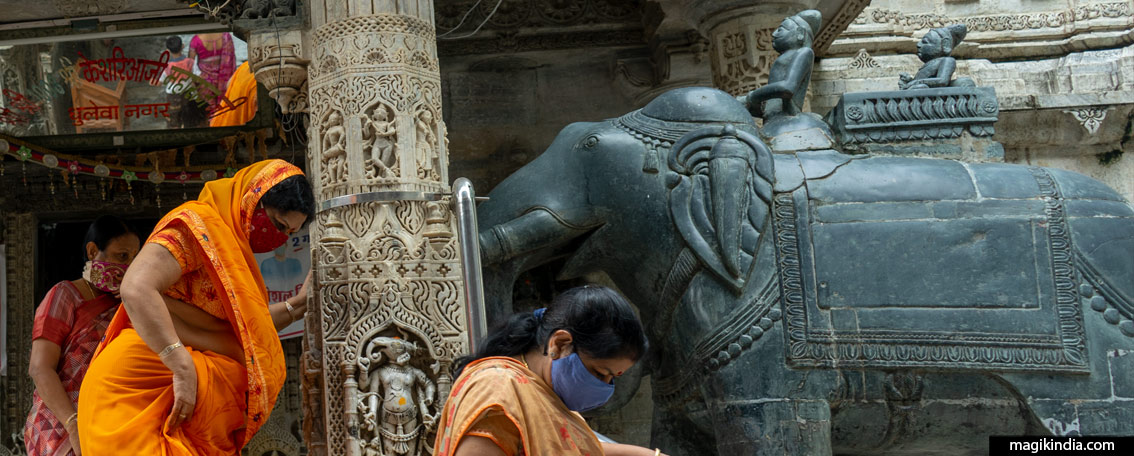
The Jain temple of Rishabhdev also called Kesariyaji or Rishabdeo, located 60 km south of Udaipur, is one of the four great “Teerth” (pilgrimages) of the Mewar region in Rajasthan. The other three being: Shrinathji, Shri Eklingji and Shri Charbhujaji. However, unlike the latter, Rishabhdev is not only revered by Jains, but also by Hindus and Bhils, the majority indigenous people of the region. This particularity, which was once the subject of discord between the different communities, contributes to the very special atmosphere of this place.
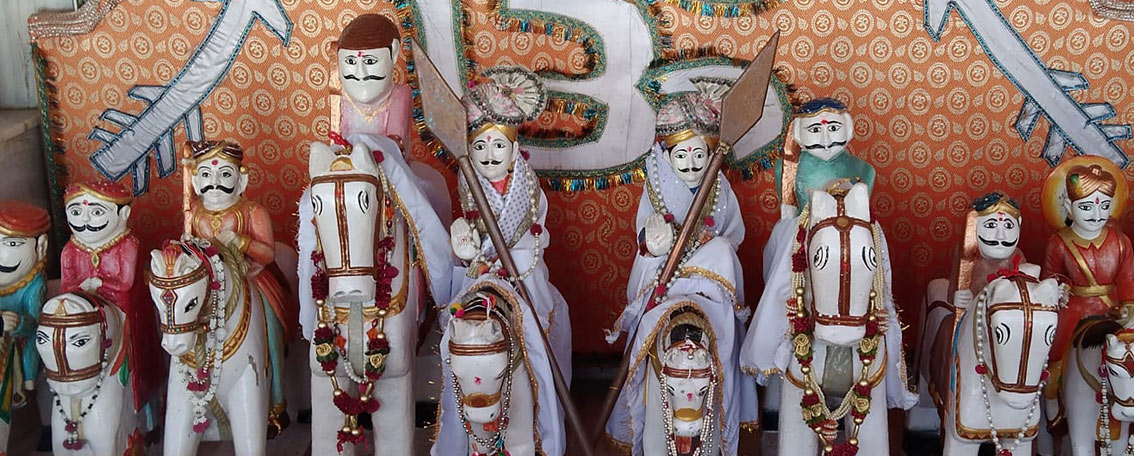
Apart from the “Rann“, the great salt desert, the district of Kutch, in the northwest of Gujarat, has many other little treasures, which are worth a visit to the region alone. For this article, I have selected eight historic temples, still little known to travellers, which once again bear witness to the richness and cultural diversity of this corner of India.
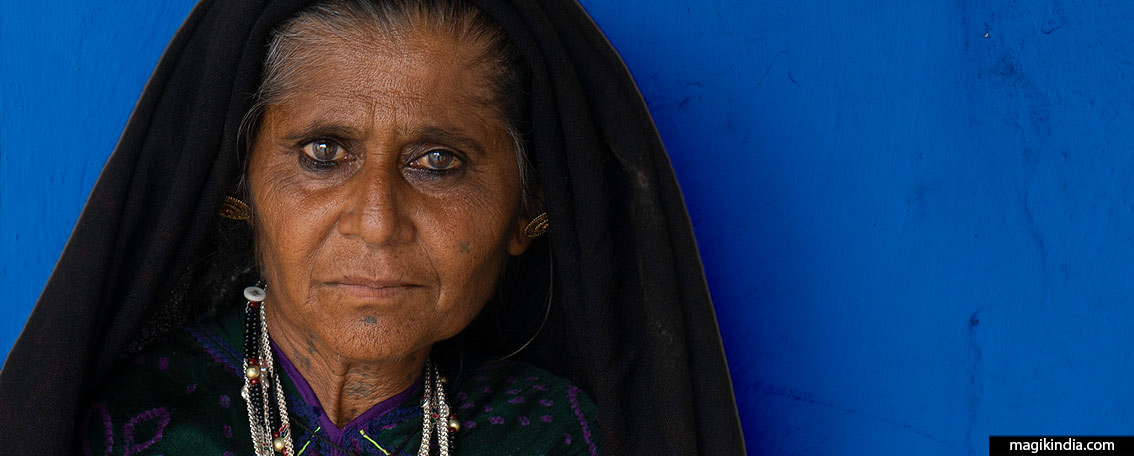
Kutch (Kachchh), is an amazing district located in the northwest of the state of Gujarat. The proximity to Sindh and the region’s ideal location on a navigable stretch of the Arabian Sea have made the district of Kutch the hub of cultural exchange which is reflected in its motley population. There are about fifty different ethnic groups in Kutch, without counting the many subdivisions, which is to say that it is impossible to mention them all in this article, so my choice fell on the most emblematic people of the region, namely Meghwals, Jats, Ahirs and Rabaris.

