
The tradition of Mundan, also known as Chudakarana or Chaula in India, is a very important ceremony for Hindus that...
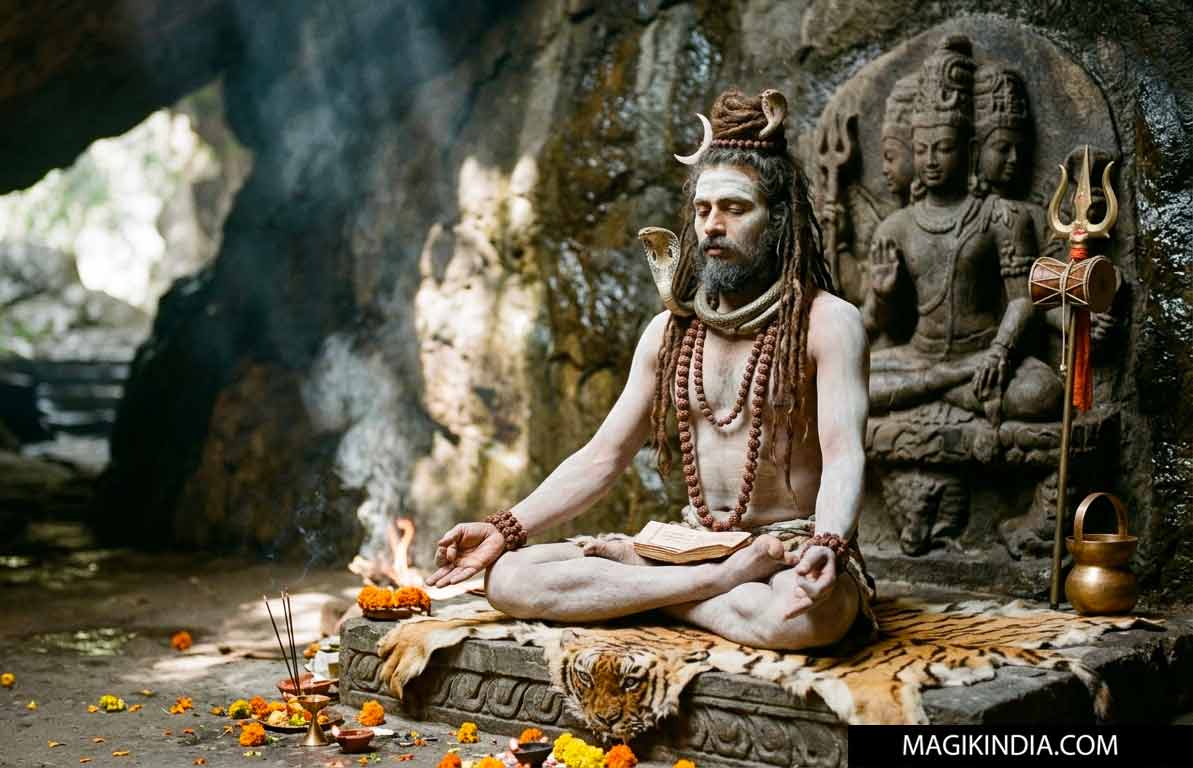
Shiva, the cosmic force of transformation
A central figure in Hinduism, Shiva forms the Adi-Dev, the primordial divine principle. Within the Trimurti, alongside Brahma the creator and Vishnu the preserver, his role as “destroyer” goes far beyond the simple notion of end: he embodies the cosmic force of transformation, regeneration and absolute universal consciousness.
Origins and creation
Unlike gods with conventional birth narratives, Shiva is often considered “Svayambhu” (self-manifested), having neither beginning nor end.
The Column of Infinite Fire

The sacred texts of the Puranas relate that at the beginning of time, while Brahma and Vishnu were competing for cosmic supremacy, a pillar of infinite fire suddenly appeared between them. Failing to find the summit or the origin, they understood that they were transcended by a higher power: Shiva, revealed in the form of a lingam of light (Jyotirlingam), embodying pure consciousness.
KNOW MORE ABOUT JYOTIR LINGAMS
The Lingam: of the formless Shiva

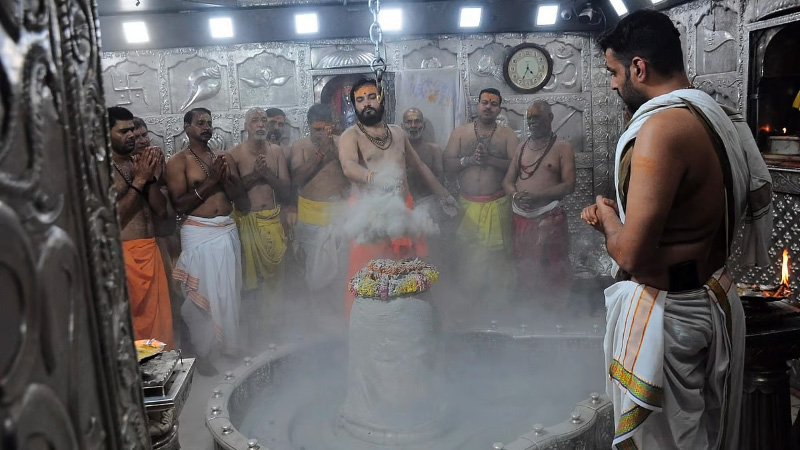
Devotion to the god Shiva involves the veneration of the Lingam or Shivalingam the most sacred aniconic (Niraakaara) and abstract symbol of Shiva, representing the ultimate formless reality. Often erected at the center of a circular base called a yoni (vagina), which embodies the feminine principle and the universal womb of Shakti, the lingam symbolises the inseparable union of the vital force at the origin of all manifestation.
KNOW MORE ABOUT THE LINGAM
Symbolism and Iconography
The appearance of Shiva with his attributes, like that of all Hindu deities, tells the different facets of his nature:
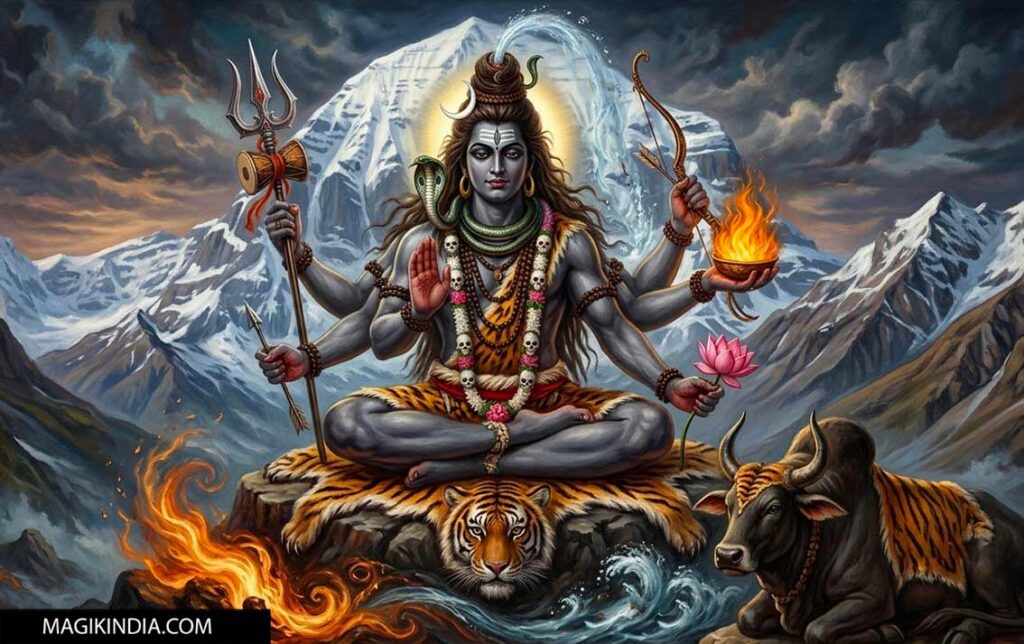
The tangled hair (Jata) and the Ganges: her long braided hair holds back the sacred river Ganga during its descent to Earth, thus preventing the torrential power of the river from destroying the planet.
Legend has it that King Bhagiratha had performed long ascetics to bring the goddess Ganga (the Ganges) down to Earth, because only its sacred waters could purify the ashes of his cursed ancestors and free their souls. When the Ganges fell from the heavens with a crash, Shiva spread his long tangled locks.The furious waters rushed into it like a dense forest, losing all their violence as they meandered through the divine loops.

- The third eye (Jnana-chakshu): located in the middle of the forehead, it symbolises the gaze of inner wisdom and absolute truth. When Shiva opens it, his incandescent rage can reduce illusions and desires to ashes (as was the case with Kama, the god of desire).

- The crescent moon (Chandrashekhara): worn upon his matted locks, it represents the passage of time, the lunar cycles, and the mastery of the mind and emotions.
- The snake around the neck (Vasuki): symbol of kundalini (coiled spiritual energy) and timelessness. The snake, deadly to man, is tamed and worn as a simple necklace, showing that Shiva has transcended the fear of death.
- The tiger skin: a symbol of the mastery of raw energy, instinct, and wild nature (Prakriti).
- Sacred ash (Bhasma): his body is smeared with cremation ash, serving as a reminder of the impermanence of matter, the detachment from the ego, and the ultimate truth of all earthly existence.
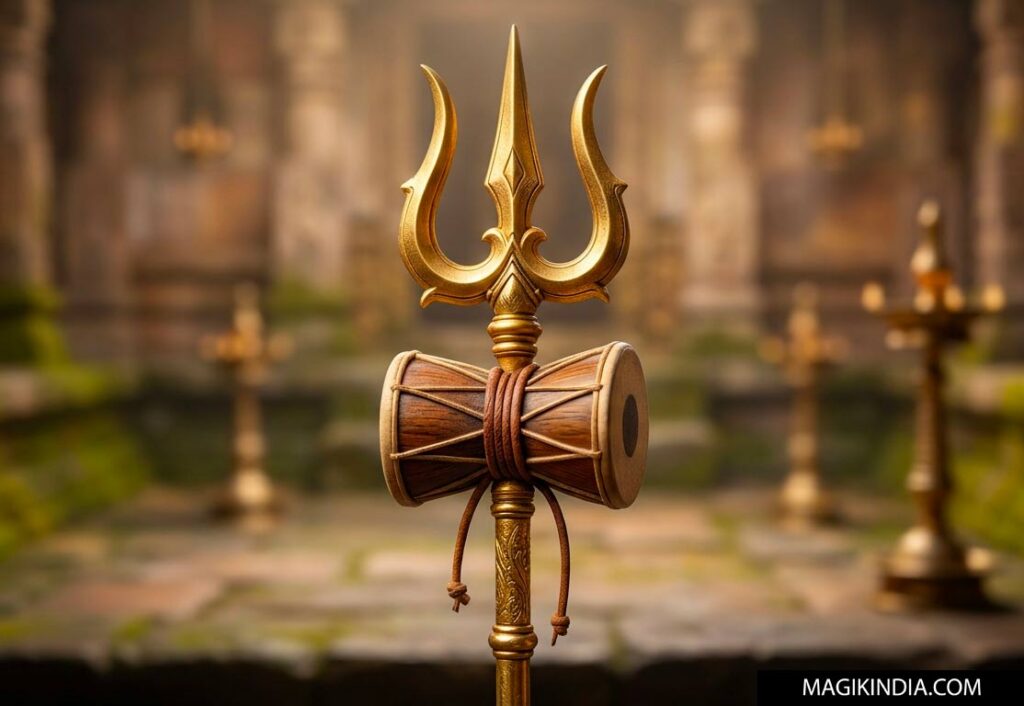
- The trident (Trishula): its three prongs symbolize various cosmic triplicities—creation, preservation, and destruction—as well as the three states of consciousness (waking, sleeping, and dreaming) and mastery over the three dimensions of time (past, present, and future).
- The drum (Damaru): hourglass-shaped, it emits the primordial sound (Nada) that is the source of creation and cosmic language.
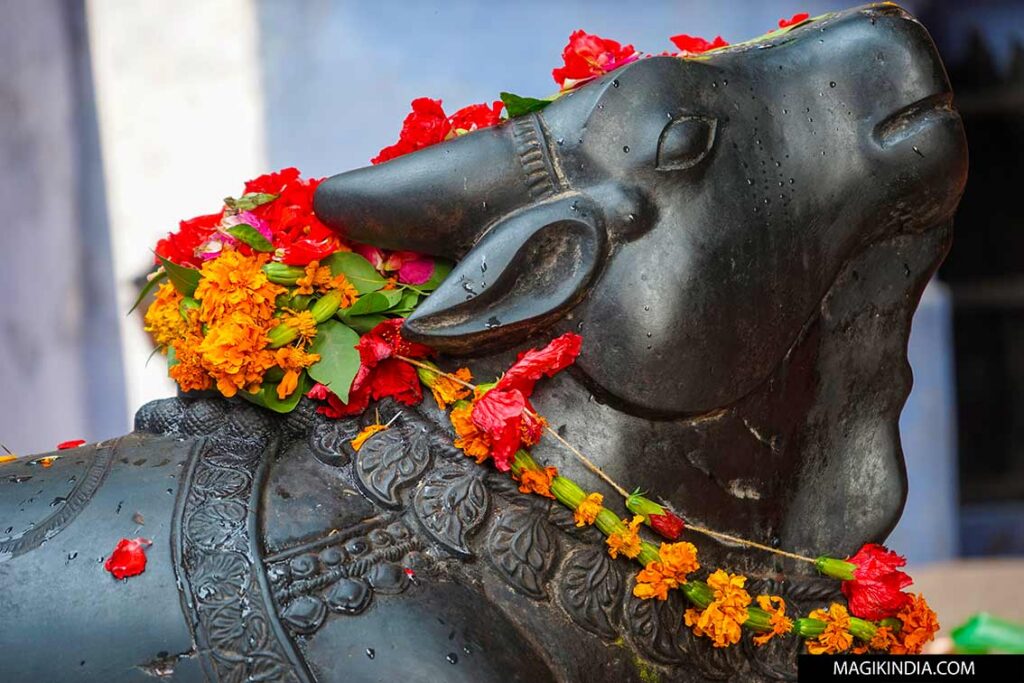
- Nandi (the divine bull): Shiva’s sacred mount, a symbol of devotion and strength, and the faithful guardian of his abode (Mount Kailash) as well as the entrance to temples dedicated to the god.
The one with the blue throat
If Shiva has blue skin, it is due to a major mythological episode linked to the churning of the cosmic ocean. As gods and demons sought to obtain amrita, the ambrosia of immortality, an extremely destructive and deadly poison named Halahala rose from the depths of the ocean, threatening to wipe out all creation.

To save the universe from certain destruction, Shiva agreed to swallow the poison. To prevent the deadly venom from spreading through his body and destroying the world he shelters, his consort Parvati gripped his neck firmly, trapping the poison in his throat. His throat turned blue instantly, earning him the name Nilakantha. “the one with the blue throat.”

Shiva’s family
In Hindu mythology, the family of Shiva, is one of the most revered and symbolises the cosmic balance of the universe. At the center of this family is his wife, Parvati, the goddess of devotion and divine strength, who embodies the essential primordial energy (Shakti) for Shiva’s action.

From this union two main sons are born, each with unique attributes and roles.The first is Ganesha, the elephant-headed god revered as the patron of the arts and sciences, the one who removes obstacles and brings wisdom. The second is Kartikeya, also known as Murugan or Skanda, the valiant commander-in-chief of the celestial host and the god of war.

According to certain traditions, the family also expands to include three daughters: most notably Ashokasundari (the best-known, mentioned in the Padma Purana), who was created by Parvati using the sacred Kalpavriksha tree to alleviate her loneliness and sorrow; Jyoti (associated with light and linked to the divine fire of Shiva); and Manasa (the goddess of snakes, often considered a spiritual daughter or one born from the mind of Shiva).
The various forms of Shiva
Shiva embodies a duality: he is simultaneously the solitary ascetic meditating on the icy peaks of the Himalayas and a benevolent family man. While formless in the abstract guise of the Lingam, he nonetheless reveals himself through 64 Moortham, multifaceted manifestations, only a few of which are described below.
Nataraja, the Lord of the Dance
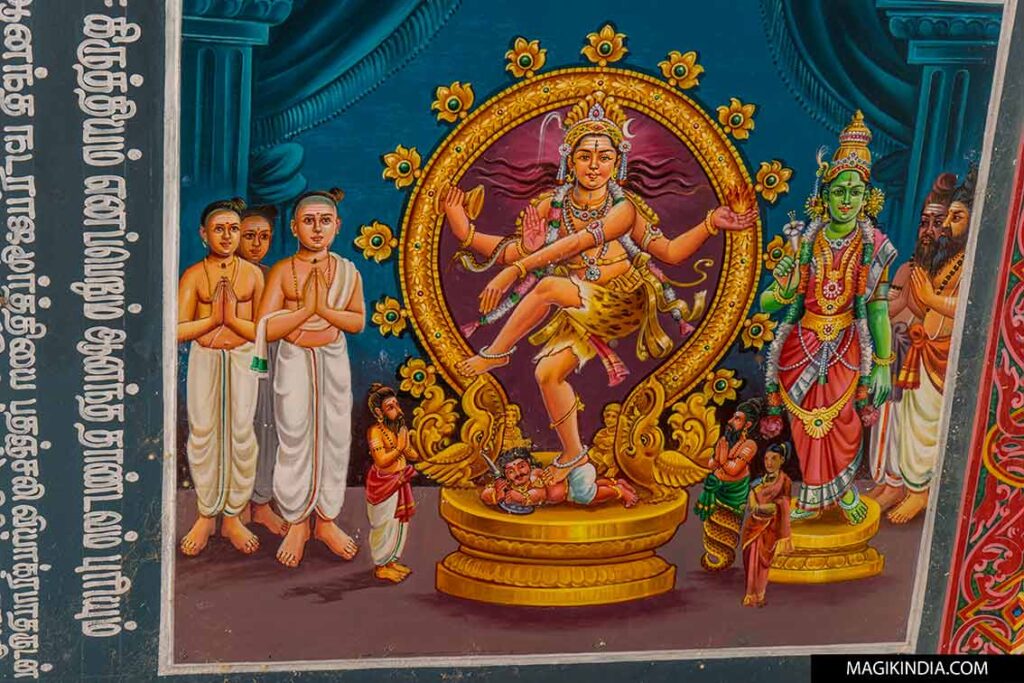
In this form, Shiva performs the Tandava, the cosmic dance of creation and destruction, immortalized by the figure of Nataraja, who crushes ignorance within a circle of flames. It manifests in two modes: the Ananda Tandava (the joyful dance of creation) and the Rudra Tandava (the fierce dance of a destructive force that purifies and paves the way for renewal).
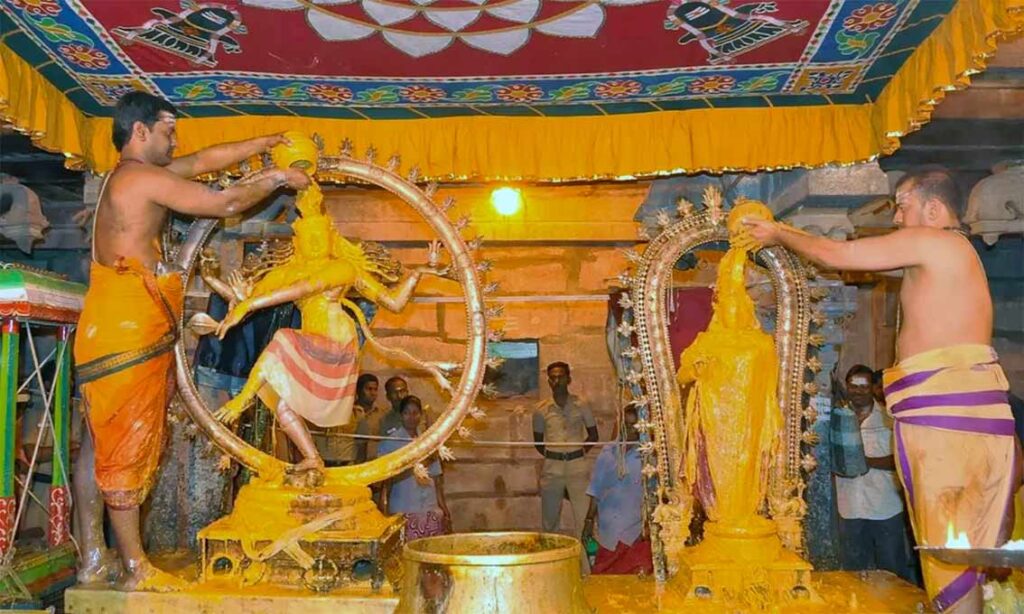
Chidambaram (in Tamil Nadu) is the most iconic shrine dedicated to Shiva’s cosmic dance. It is one of the few temples where Shiva is not represented in his traditional lingam form, but rather as ether and through a bronze statue of him dancing (Nataraja) housed within the inner sanctum (the Chidambara Rahasya).
KNOW MORE ABOUT CHIDAMBARAMArdhanarishvara, the androgynous form

Shiva and his consort Parvati (or Shakti) are united as one body, the right half being male (Shiva) and the left half female (Shakti).This aspect symbolizes the inseparable interdependence of the masculine (consciousness) and feminine (active energy) cosmic energies.
Dakshinamurti, the silent master

Depicted seated beneath a banyan tree and facing south, Shiva silently teaches philosophy, yoga, and supreme knowledge to sages and seekers of truth. He is the first and greatest of all gurus (Adi Guru).
Rudra, the fierce and tempestuous aspect
Rudra is a very ancient Vedic deity, often considered the direct ancestor of Shiva. He embodies the raw, unpredictable power of nature unleashed manifesting in storms, hurricanes, lightning, and epidemics. In ancient texts, Rudra is an ambivalent figure who inspires fear through his devastating wrath, yet he is also invoked as a healer capable of soothing the very afflictions he unleashes.
Bhairava, the Terrifying

Bhairav, whose name means “the terrifying”, is a specific and later manifestation of Shiva himself, appearing in Puranic texts. According to the most famous myth, Shiva created Bhairava in a fit of anger to punish the arrogance of the creator god Brahma, cutting off one of his five heads. Bhairava is the embodiment of the destruction of the ego, of all-consuming time and the supreme guardian of sacred places (especially the city of Varanasi). He is always accompanied by his dog, his divine vehicle.
Mahayogi, the great ascetic

Seated in deep meditation on Mount Kailash, with his eyes closed, he stands as the paragon of detachment and total self-mastery, teaching yogis the path of inwardness.
Sacred festivals associated with Shiva
The major celebration dedicated to Shiva is Mahashivaratri (in February or March), the “great night of Shiva,” an all-night festival of fasting, waking and meditation commemorating, among other things, the night when the god of Mount Kailash revealed himself in the form of the Jyotir Lingam.
KNOW MORE ABOUT MAHASHIVARATRI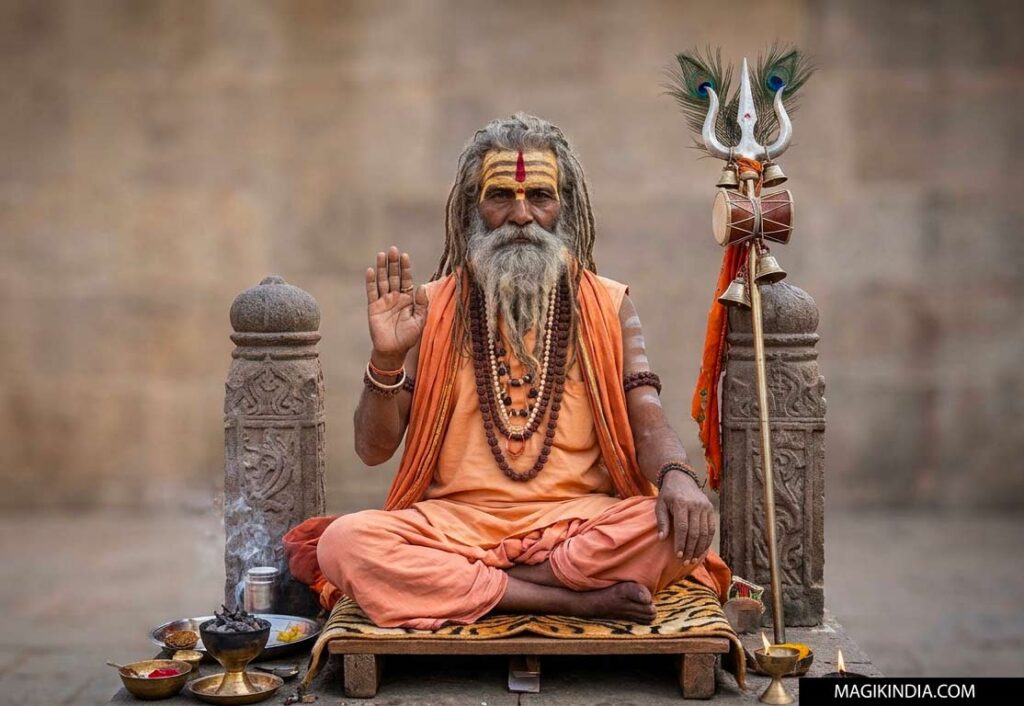
In Gujarat, Mahashivaratri is celebrated with a grand gathering at Bhavnath, at the foot of Mount Girnar, where thousands of Naga Sadhu ascetics converge.
KNOW MORE ABOUT THE MELA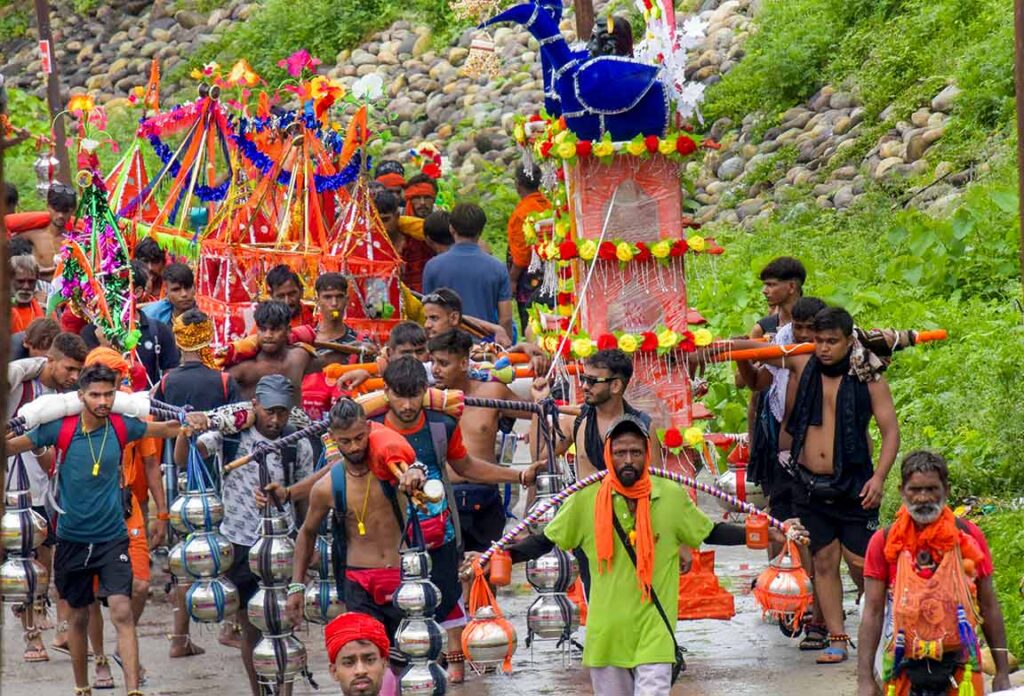
The Shaivite calendar is also marked by the sacred month of Shravan (July–August). During this period, the massive pilgrimage known as the Kanwar Yatra takes place: millions of saffron-clad devotees called Kanwariyas walk barefoot to collect sacred water from the Ganges (notably at Haridwar or Gangotri). They carry this water on their shoulders using a bamboo pole (a kanwar) ensuring it never touches the ground and subsequently pour it over the Shivalingam at their local temple (a ritual known as Jalabhishek) to honor Shiva.
Finally, major regional celebrations mark the course of the year. Notable examples include Thiruvathira (or Arudra Darshan) in South India, dedicated to Nataraja, and Kartik Purnima (known as Dev Deepawali in Varanasi). The latter commemorates Shiva’s triumph over darkness, an event celebrated by the descent of the gods to earth, where they light countless lamps.
KNOW MORE ABOUT DEV DEEPAWALI
Vous aimerez peut-être aussi...
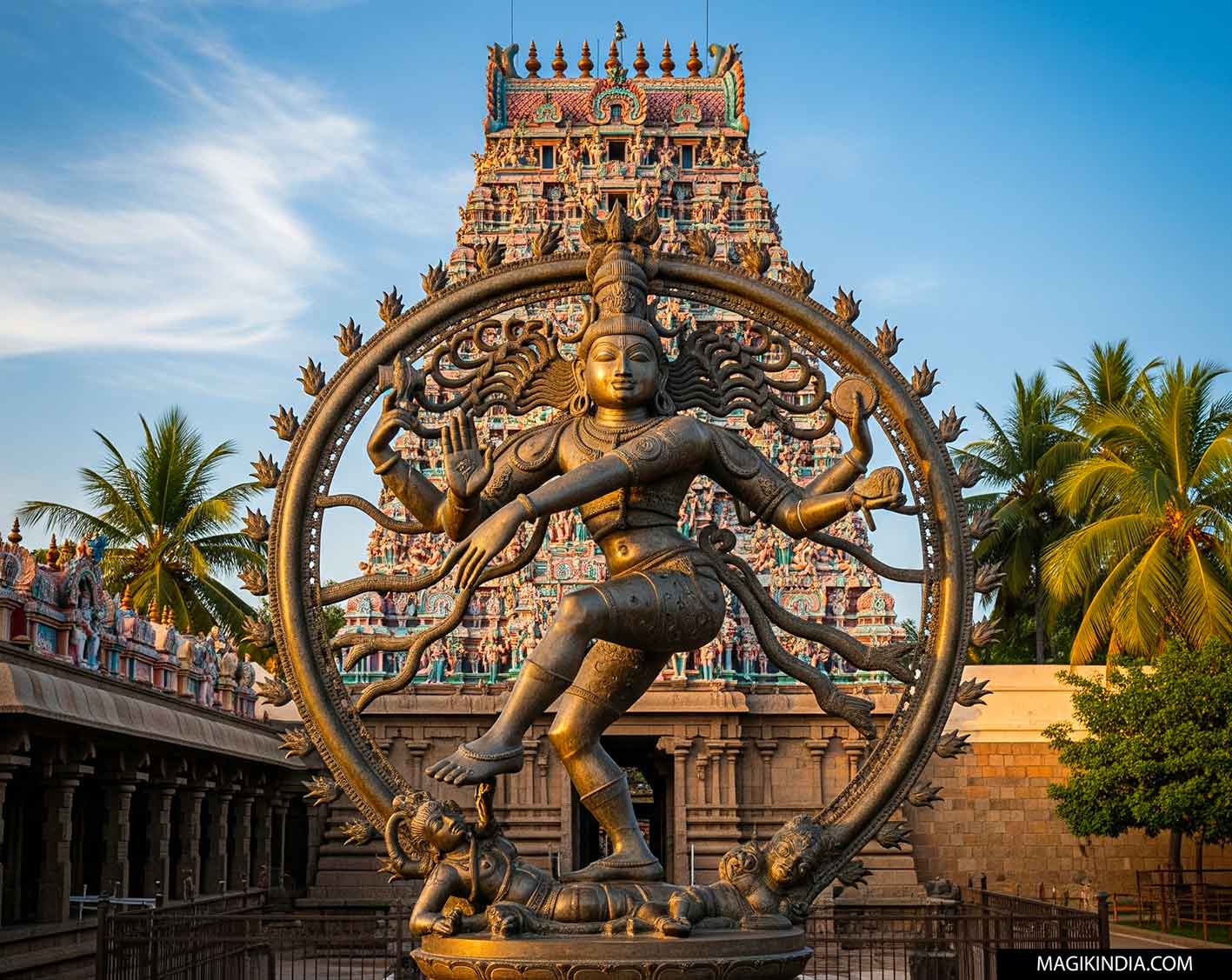
On the road between Pondicherry and Thanjavur, in Tamil Nadu, stands the Chidambaram Temple, a place where sacredness takes an...
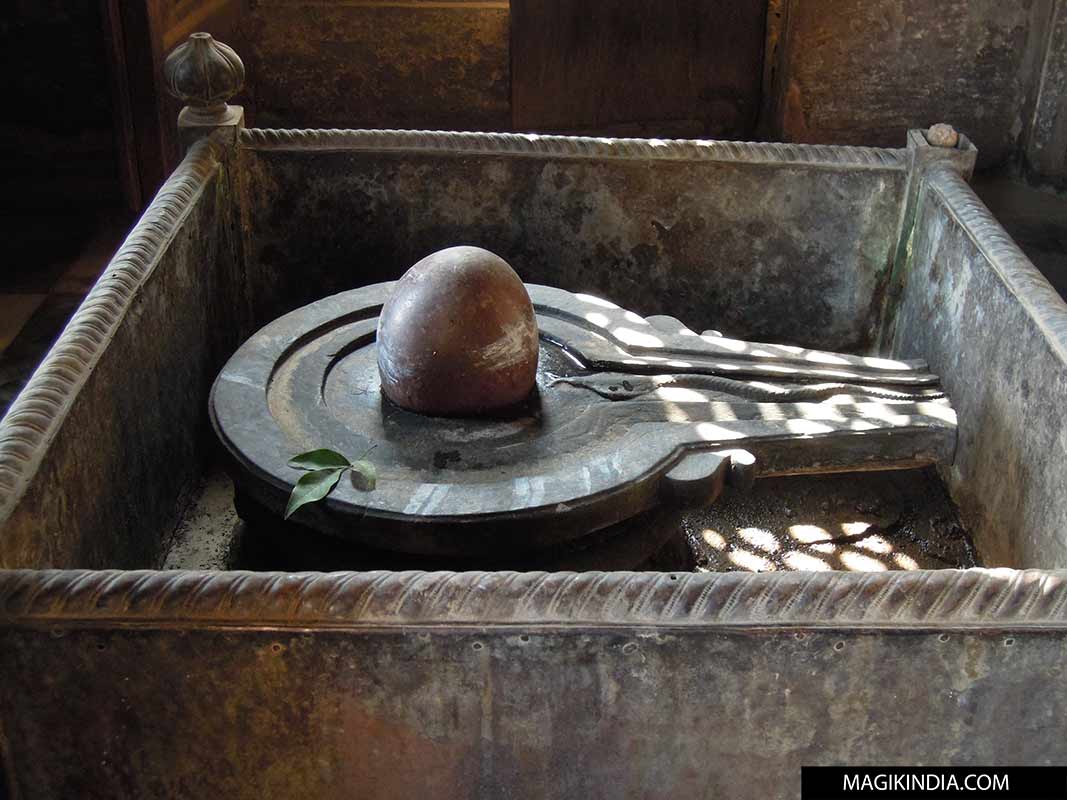
The ‘lingam’ or ‘Shiva-lingam' is one of India's most emblematic hindu representation, and one of the most powerful. Some theories trace the...

Garba is a sacred folk dance originating from Gujarat, traditionally celebrated during the festival of Navaratri. Performed in a circle,...
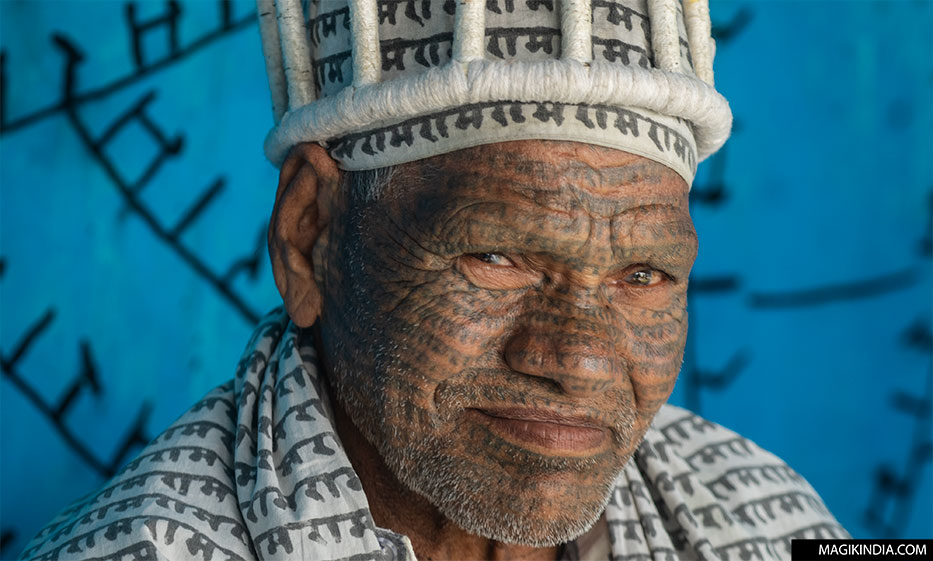
In the rural plains of Chhattisgarh, in central India, lives a community whose physical appearance tells a story of defiance,...
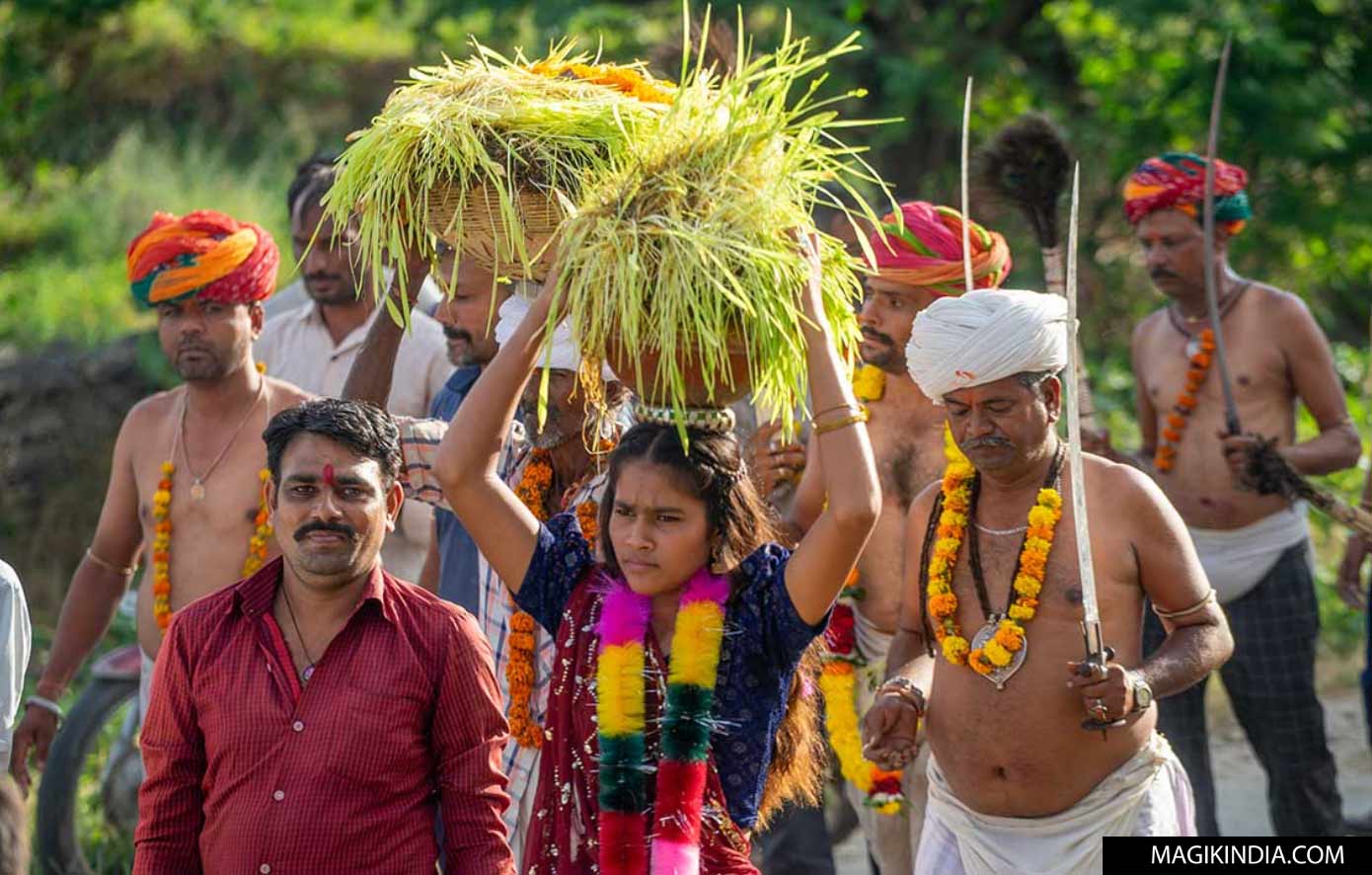
Dussehra, which translates to "the tenth day," is a Hindu festival celebrated with great fervour throughout India. It symbolises the...

