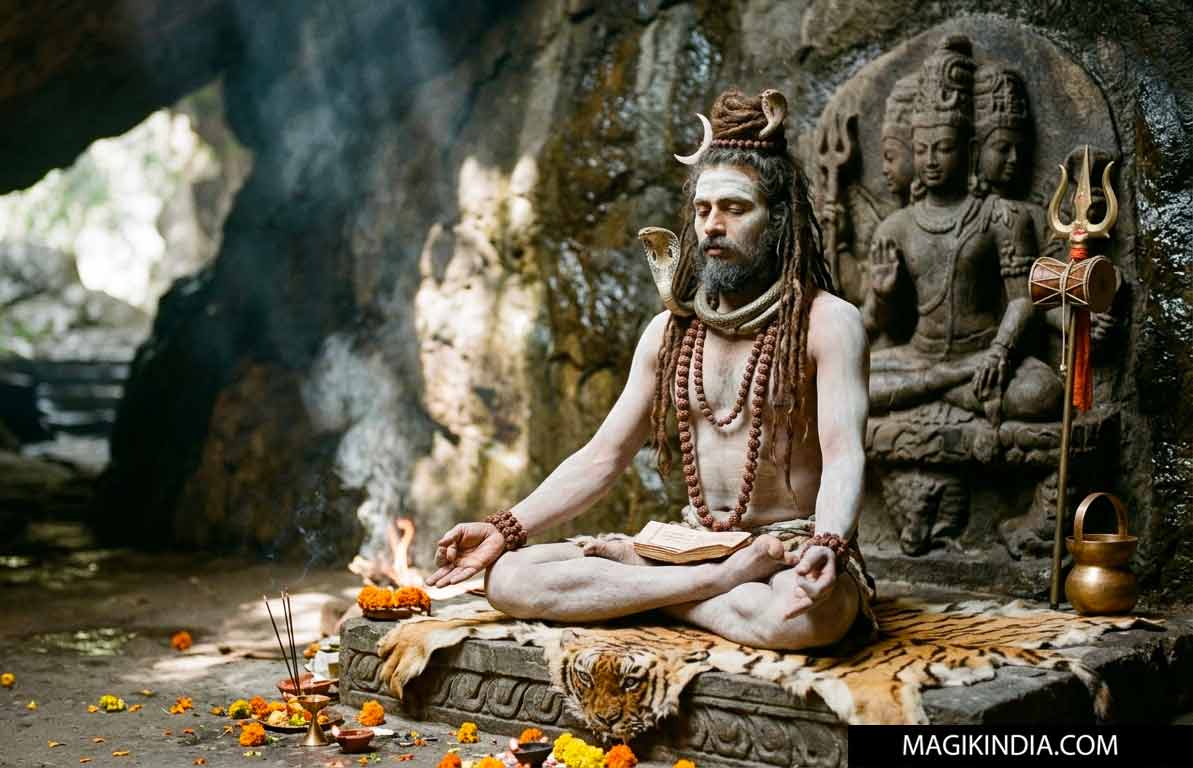
A central figure in Hinduism, Shiva forms the Adi-Dev, the primordial divine principle. Within the Trimurti, alongside Brahma the creator...

Garba, the Dance of Shakti
Garba is a sacred folk dance originating from Gujarat, traditionally celebrated during the festival of Navaratri. Performed in a circle, it pays homage to Shakti, the universal divine feminine energy. Once an intimate village ritual, Garba has evolved over time into an inclusive, global, and festive gathering that blends spiritual devotion with community celebration.
Origins of Garba
The term Garba comes from the Sanskrit word “Garbh,” which means womb.

Originally, Garba was an exclusively female dance performed in the villages of Gujarat at the end of the harvest season. Women would move in a circle around an earthenware lamp or a representation of the Mother Goddess (Devi or Shakti) to invoke fertility, protection, and prosperity for their households.
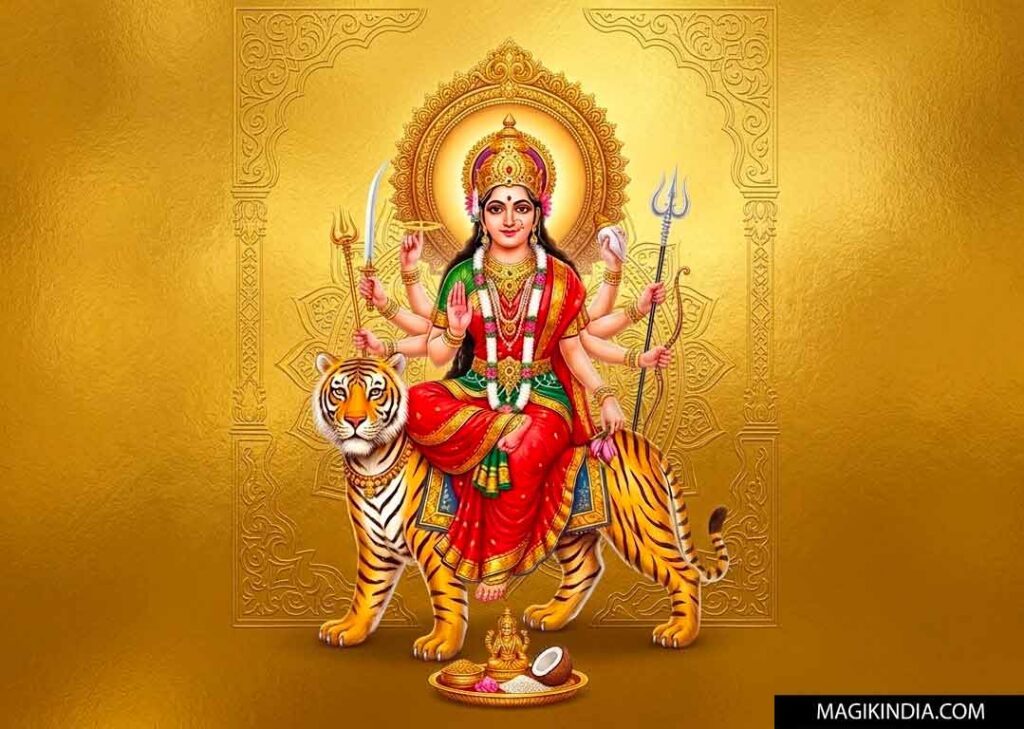
This dance is now intrinsically linked to the great celebration of Navaratri (meaning “nine nights”), a major Hindu festival. During these nine nights, the community comes together to celebrate the various incarnations of Shakti and the victory of good over evil…
KNOW MORE ABOUT NAVARATRISymbolism
At its core, the Garba is a ritual imbued with profound spiritual and philosophical symbolism.
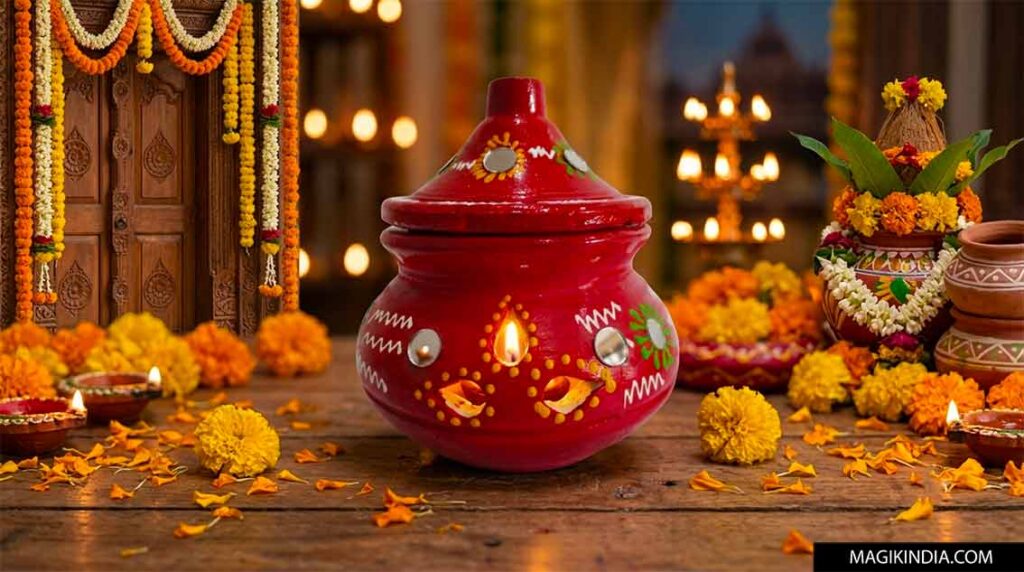
At the center of the dance stands the Garba Deep (garbo), a perforated terracotta vessel containing an oil lamp. The garbo symbolises the human body, while the flame flickering within represents the divine soul (Atman) present in every individual. Thus, the dance is performed around this light, serving as a reminder that the divine resides at the heart of everyone and that all existence gravitates around this fundamental truth.

Around this radiant hearth, the dancers move in concentric circles that rotate in a counter-clockwise direction. This circle evokes the eternal cycle of time (Samsara), marked by birth, life, death, and rebirth.

While the participants move about and constantly change their positions, the Garba Deep at the center remains perfectly motionless, illustrating the idea that, despite the perpetual transformations of the material world, the soul remains immutable and steadfast.
Course and forms of the dance
In large metropolises like Ahmedabad, contemporary Garba remains a deeply inclusive celebration, bringing together men and women of all ages, from young children to elders, in the same festive spirit.
The movements

Although each community brings its own nuances and variations to the movements, the dance everywhere maintains a fluid grace, punctuated by slight bends of the body, synchronized hand claps (Tali) and elegant rotations. The participants dance barefoot, united in this same gesture of respect towards the sacred land and the goddess.
Garba & Dandiya Raas
Although often performed together during the nights of Navaratri, these two dances are quite distinct. Garba is danced primarily using the hands and arms, with movements circling around a lamp or a statue of the Goddess. In contrast, Dandiya Raas is performed by partners arranged in two rows, who rhythmically strike small wooden sticks (known as Dandiyas) against one another; these sticks symbolically represent the swords of the goddess Durga.
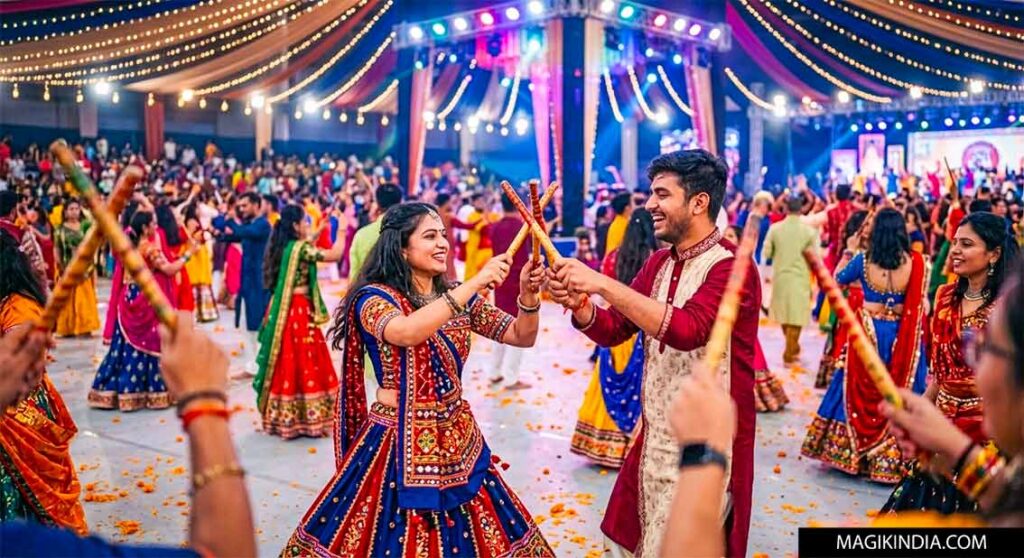
Traditional costumes
Garba is also a visual festival, thanks to the richness of its traditional attire.
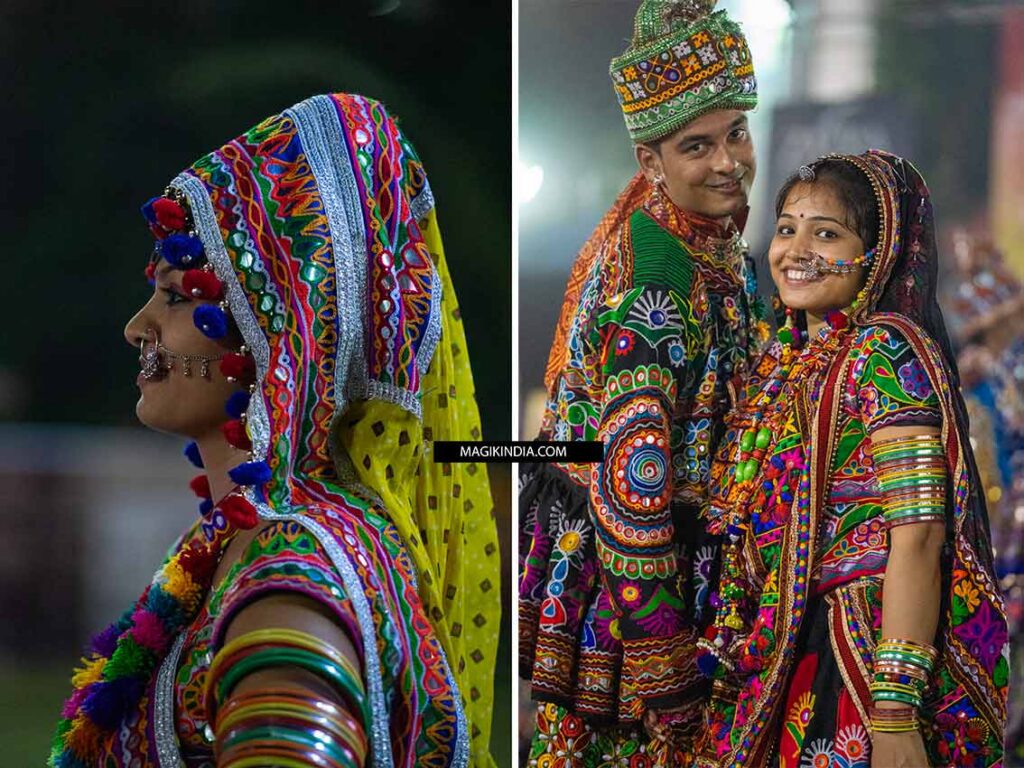
Women wear the Chaniya Choli, an ensemble consisting of a very full, flared skirt (Chaniya), a fitted blouse (Choli), and a veil (Dupatta). These garments are richly embroidered in the tradition of Kutch, adorned with small mirrors (aabla) that reflect the light, and feature vibrant colours such as red, yellow, orange, and green.
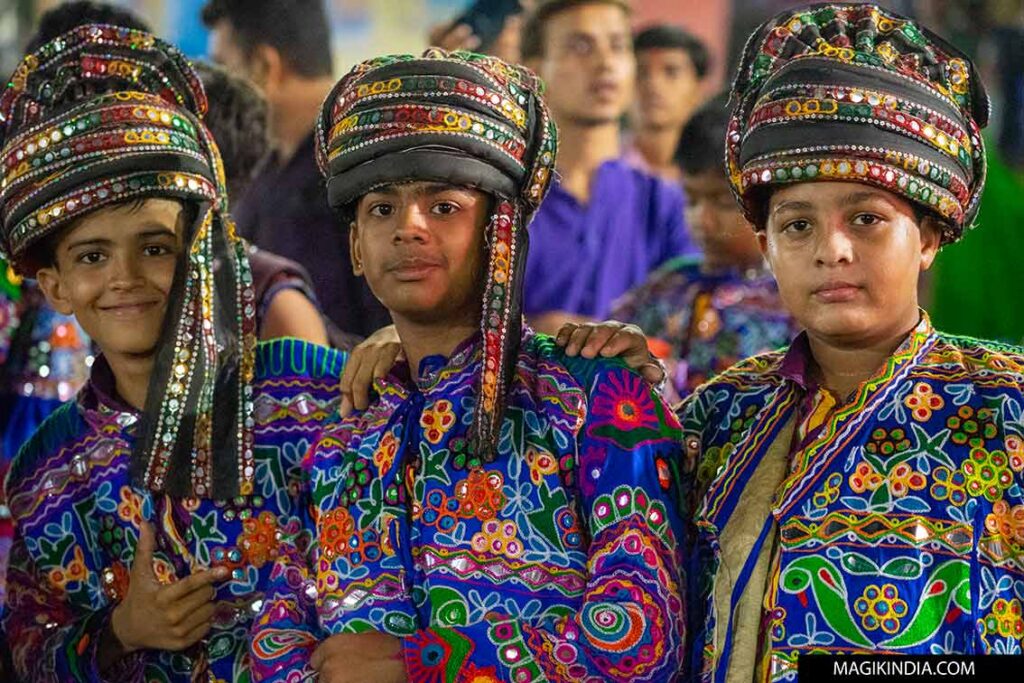
The men, for their part, wear the traditional outfit of the Kediyu, consisting of a short pleated and flared tunic (Kediyu), worn with pants tightened at the ankles (Chorno) and a colorful turban.

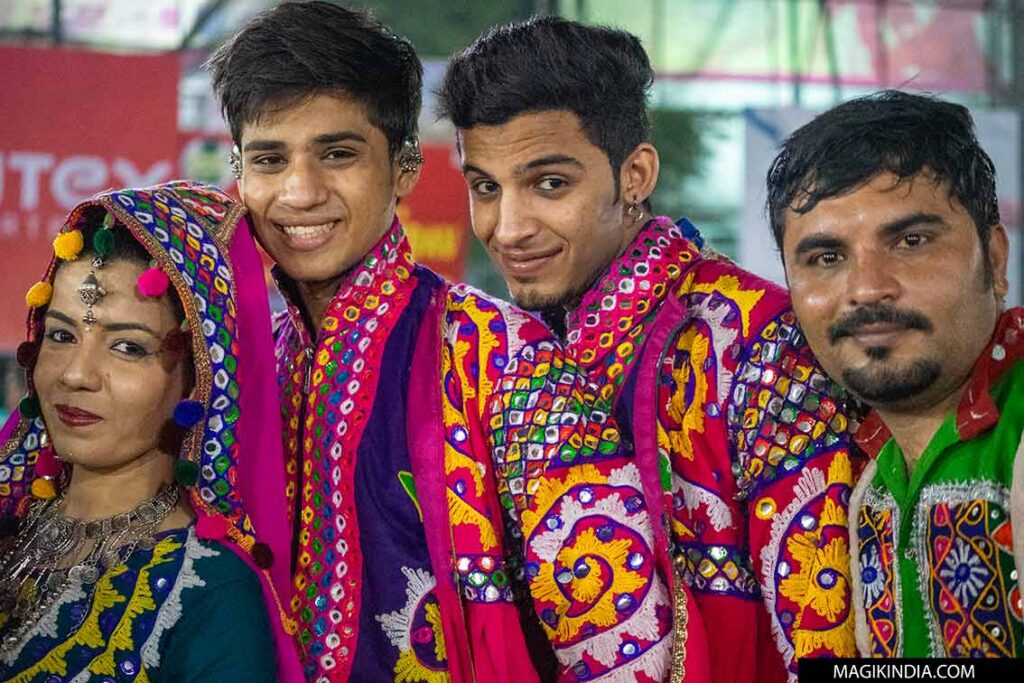
To perfect these ensembles, pieces of oxidized silver jewelry—such as bracelets, necklaces, and earrings—complete the look, resonating harmoniously with every movement.
HIT THE ROAD IN GUJARAT WITH US!
Vous aimerez peut-être aussi...

For forty days, the mystical theater Gavari comes to life under the footsteps of troupes of Adivasi artists, who travel through the villages...

Three hours away from Ahmedabad, the Tarnetar fair comes alive as one of Gujarat's most dazzling rural spectacles. Fusing ancient...

The tradition of Mundan, also known as Chudakarana or Chaula in India, is a very important ceremony for Hindus that...

If Gujarat captivates me, it is above all by the human richness of its communities. After exploring the world of...
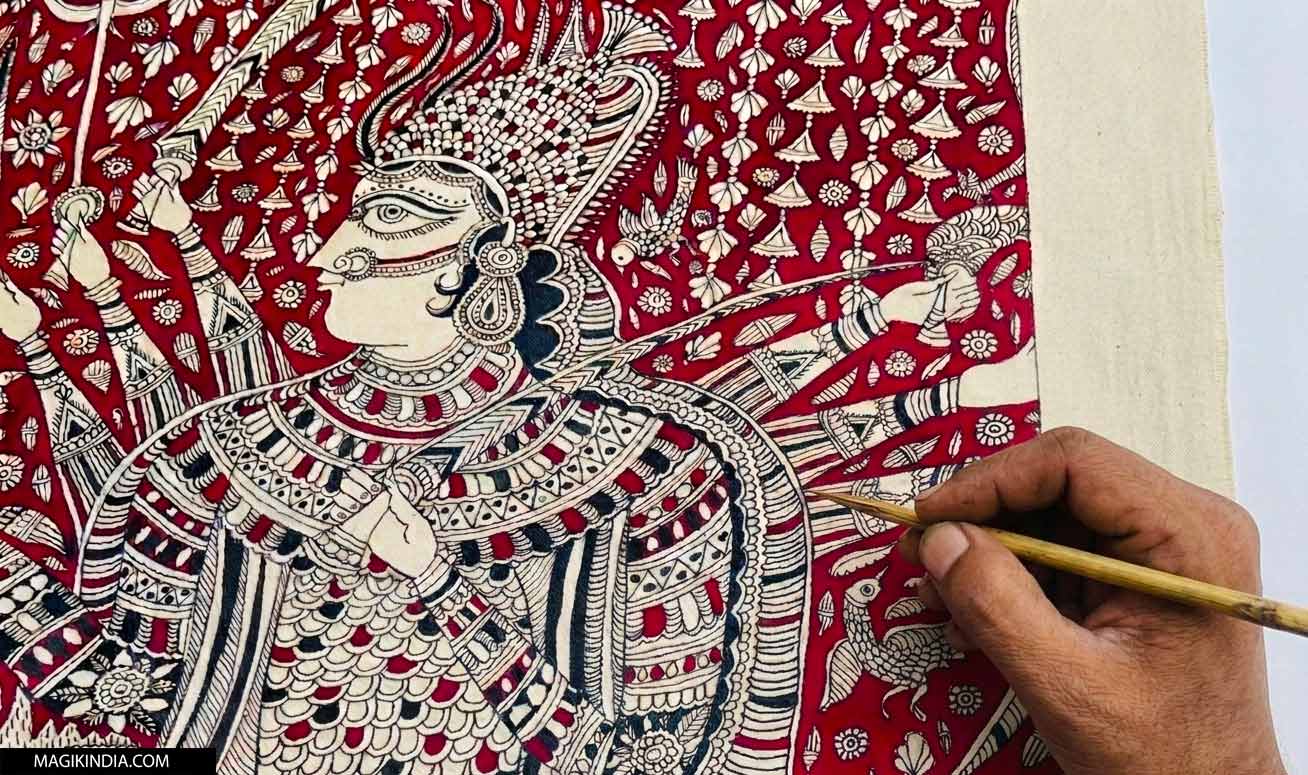
The Mata ni Pachedi, literally “the goddess in the background,” is the triumph of fervour over exclusion. Invented by the Vaghari...

