

Some forms of art do not merely traverse time; they suspend it. Deep within the tribal strongholds of India, where...
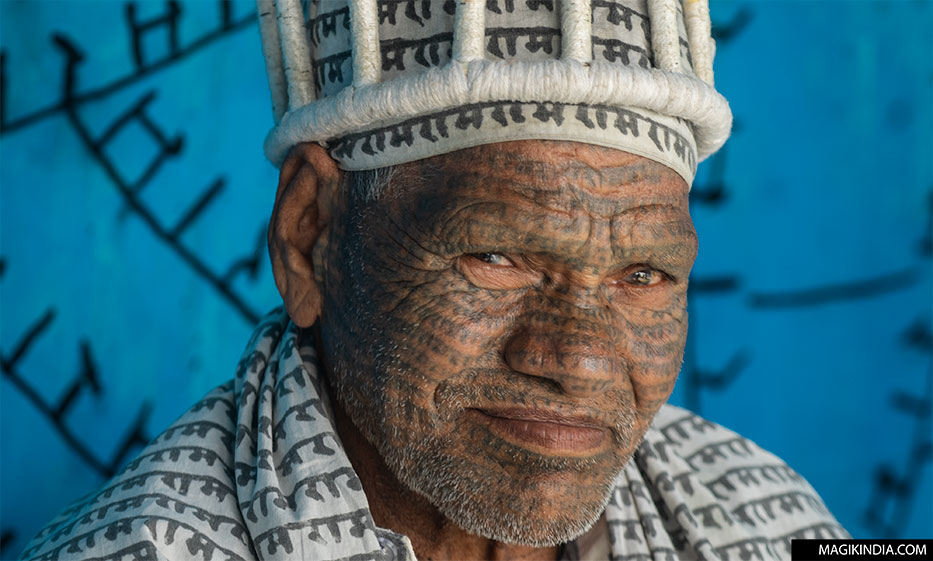
The Ramnami: a spiritual rebellion etched into the skin
In the rural plains of Chhattisgarh, in central India, lives a community whose physical appearance tells a story of defiance, faith, and human dignity. They are the Ramnami: a group of “untouchables” (Dalits) who, more than a century ago, decided to inscribe their devotion directly onto their skin to protest social exclusion. The Ramnami Samaj are not merely an “exotic” religious group; they represent one of the first non-violent protest movements of modern India.
Origins: a revolt against the caste system
The movement originated around the 1890s. At that time, members of lower castes considered “impure” by the rigid caste system of Hinduism were forbidden from entering temples and reading sacred texts.

According to oral tradition, a man named Parasuram was the founder of the movement. Excluded from places of worship, he reportedly had a vision indicating that God belongs to no one and is present everywhere. In response to the priests who forbade them from viewing the image of God, the Ramnamis decided to become the temple themselves.
The tattoo: an armor of words
The most striking characteristic of the Ramnami is the nakhshikh, a full-body tattoo covering every square inch of their bodies, including the face and sometimes the eyelids, with the name of the Hindu god “Ram” (राम).

The symbolism of this full-body tattoo rests, above all, on its indelible nature: unlike a garment or a sacred object that could be confiscated, the inscription upon the skin is permanent, guaranteeing that no one will ever be able to tear their faith away from them.

This practice effects a genuine democratisation of the sacred, for by bearing the name of Ram on every inch of their skin, the Ramnami affirm that divinity resides directly within them rendering physical temples and religious intermediaries entirely obsolete.

Today, the face of the community is undergoing a metamorphosis. To better integrate into modern India, younger generations of Ramnamis are gradually moving away from full-body tattooing in favor of more discreet inscriptions of the name “Ram Ram.” It must be said that the traditional method, based on soot and water, is a long and grueling process that many no longer wish to endure. The community leader, in fact, found this amusing during our interview: “If young people are afraid of a simple syringe today, how could they possibly endure full-body tattooing?”
Ram, a bij mantra
The term “Ram” is considered a bij mantra (seed mantra) a short, highly powerful sacred syllable (such as Om, Shreem, Hreem, or Aim) that acts as a germinal sound to invoke the energy of specific deities. Repeating “Ram Ram” becomes a form of active meditation known as Japa. For the Ramnami who were historically deprived of written texts, this oral and visual repetition (expressed through their tattoos) serves as their direct path to spiritual liberation.

Anyone traveling through North or Central India will frequently hear the traditional “Ram Ram”, a greeting whose depth far transcends that of a simple daily salutation. By uttering the name twice, those exchanging the greeting seek to establish a vibration of peace and mutual respect. This repetition also evokes the union of the individual soul with the universal soul, as well as the harmony between masculine and feminine energies. It is, in essence, a way of acknowledging the completeness of the Divine that encompasses the entire universe.

Specifically among the Ramnami, “Ram Ram” serves as a rallying cry of identity. By reclaiming this name, which high-caste priests had forbidden them from uttering, they transformed these two syllables into a symbol of personal sovereignty. For them, Ram is not a mythological king or a stone idol, but an abstract energy and a principle of truth and justice that belongs to all of humanity.
Spiritual practices of the Ramnami
The spiritual practices of the Ramnami Samaj are distinguished by a stripped-down, egalitarian approach deeply rooted in everyday life. Unlike orthodox Hinduism, which relies on complex rituals led by priests, Ramnami spirituality is a quest for autonomy in which every devotee is their own temple.

For the Ramnami, Ram is neither the royal hero of the epic Ramayana nor a stone statue housed in a temple. They practice Nirguna Bhakti, that is, devotion to a deity without attributes, formless, and omnipresent. For them, “Ram” is the name of the universal energy that resides within every living being and a vision that renders the intercession of a clergy unnecessary.

Their primary collective practice is Bhajan (devotional singing). They gather to sing verses from the Ramcharitmanas (a popular version of the Ramayana written by Tulsidas).

Ramnami spirituality is inseparable from exemplary moral conduct, for the body bearing the divine name must remain pure. This entails:
- Ahimsa: absolute non-violence toward all beings.
- Diet: strict vegetarianism.
- Truth: rigorous honesty in word and deed, for lying would amount to defiling the name of God inscribed upon their tongues.
The great Ramnami festival: Bada Bhajan Mela
Every year, as the harvest season draws to a close, it’s giving way to the Bhajan Mela, the spiritual highlight of the Ramnami community’s life. The community then gathers in the village of Sarsiwa, in the Raipur district, for three days of intense celebrations.
Surrounding a jayostambh, a sacred white pillar inscribed with the name of Ram, they erect temporary structures adorned with traditional motifs. Amidst unceasing fervor, chants drawn from the Ramcharitmanas resonate, serving to bind the community together. It is during this pivotal moment that bonds are strengthened and that, for new members, the symbolic opportunity arises to receive their first tattoos.
Vous aimerez peut-être aussi...
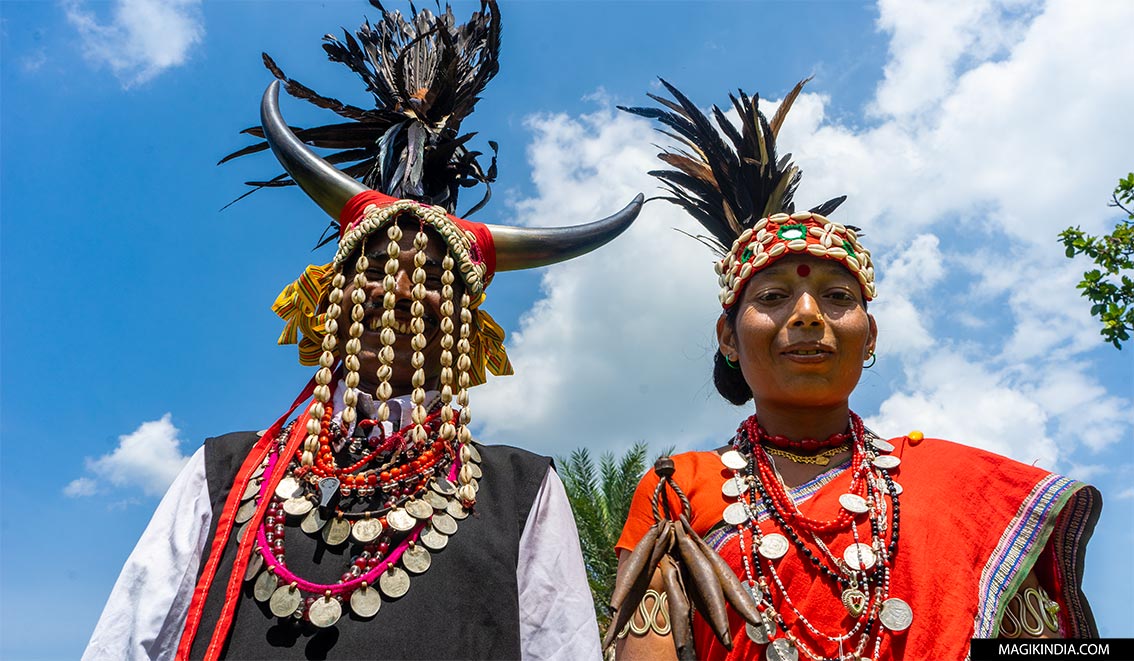
Inhabiting the high plateaus of Bastar (Chhattisgarh), the Dandami Maria tribe constitute an emblematic branch of the Gond people, distinguished...
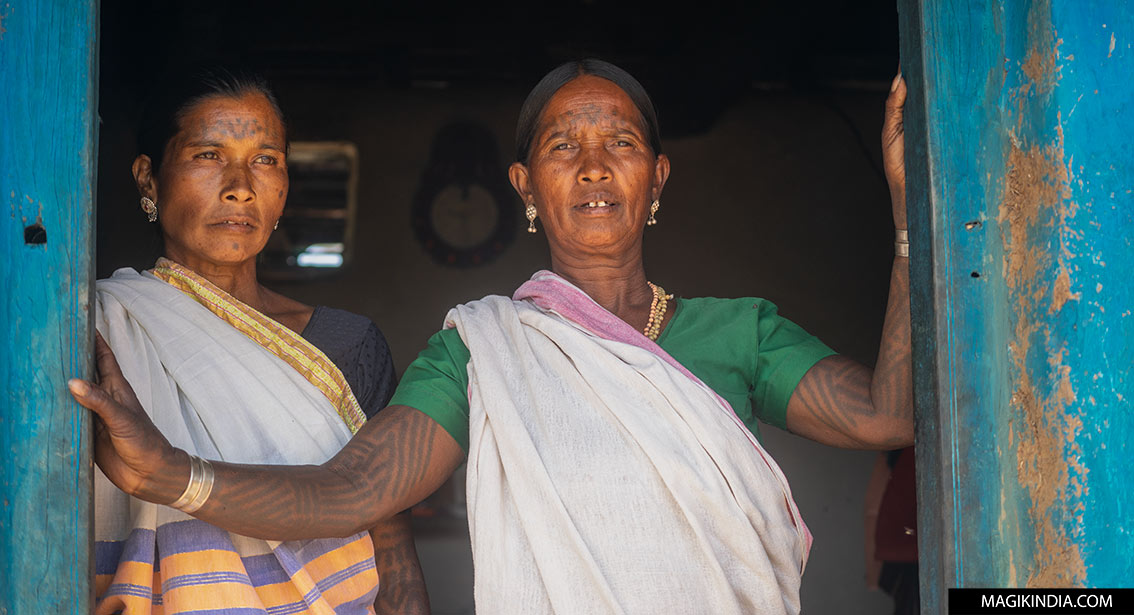
The Baiga tribe, nestled deep within the dense forests of northern Chhattisgarh, define themselves above all as the spiritual guardians...

The Muria tribe, a major branch of the Gond ethnic group, inhabits the highlands and forests of the Bastar district...
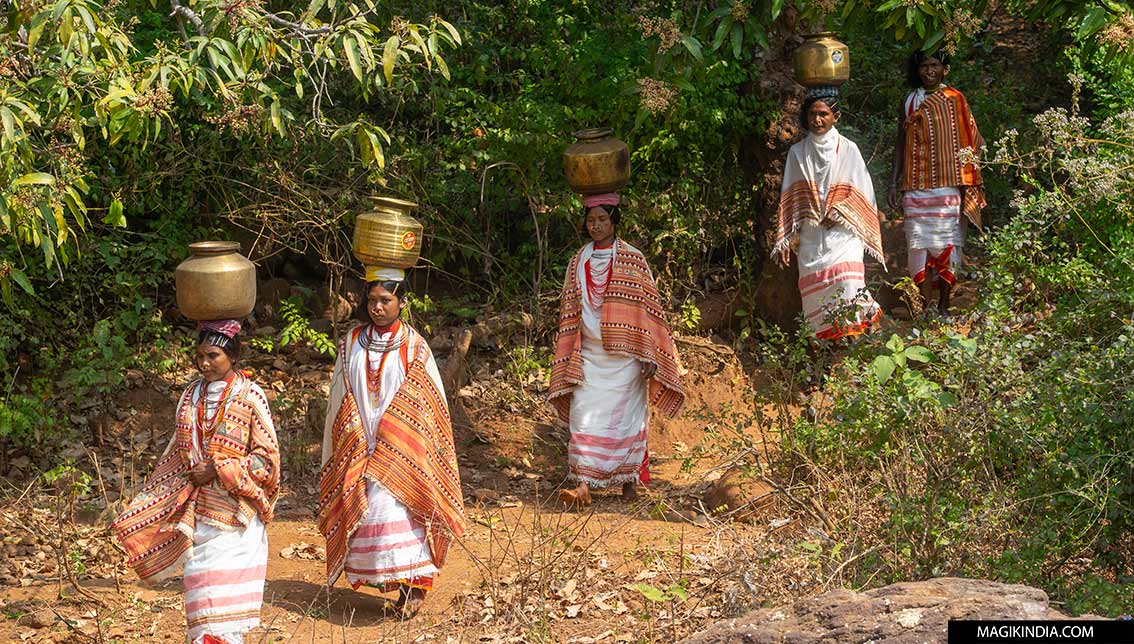
Nestled within the rugged terrain of Odisha’s Niyamgiri Hills, the Dongria Kondh cultivate a sovereign elegance that finds expression as...
Nestled within the rugged folds of the Malkangiri district, on the fringes of the state of Odisha, lives the fascinating...

