
If Gujarat captivates me, it is above all by the human richness of its communities. After exploring the world of...

Tarnetar: Beneath the Umbrellas, Romance Blossoms
Three hours away from Ahmedabad, the Tarnetar fair comes alive as one of Gujarat’s most dazzling rural spectacles. Fusing ancient history with widespread celebration, the festival draws thousands from diverse tribal and pastoral communities annually. At the core of this vibrant energy rests its ultimate symbol: the embroidered umbrella. Crafted meticulously with threads and mirrors, it serves quietly as a captivating stage for courtship and romance.
History of Tarnetar
The Mahabharatha legacy

The fair generally takes place over three to four days between August and September (during the Hindu month of Bhadrapada) in the village of Tarnetar, in the Surendranagar district of Gujarat.

This place has its roots in the Hindu epic of Mahabharata. It is in these lands that the famous “Swayamvar”, the solemn ceremony where Draupadi chose her husband, once took place. It is said that the valiant archer Arjuna accomplished the feat of piercing the eye of a moving fish, guiding his gaze only by the reflection of the water, thus earning the hand of the princess.

As for the name Tarnetar, it takes its name from the day when Lord Vishnu, lacking a lotus to worship Shiva, offered his own eye as an offering. In gratitude, Shiva placed this eye on his forehead, becoming Trinetreshwar Mahadev, a name whose popular evolution became Tarnetar.
Customary foundations

Beyond the myth, the gathering originally responded to pragmatic imperatives for local pastoral and tribal communities, such as the Koli, Rabari and Bharwad. Around the Trinetreshwar temple, these populations came together to boost trade and encourage meetings in the heart of an isolated region.
Institutionalisation and historical rise

Born in the 8th century, the site was transformed between the 18th and 19th centuries into a major cultural fair. Its current temple, the Trinetreshwar Mahadev, was rebuilt in 1898 by King Karansinghji of Lakhtar (or by the Gaekwads of Baroda according to some records).

This royal patronage, combined with the rehabilitation of the hydraulic infrastructure, including the three sacred basins of the Brahma Kund, the Vishnu Kund and the Shiv Kund, gave the sanctuary major legitimacy and extended the fame of the event well beyond the region. A local belief also associates it with a purifying power, comparing a ritual bath in these sacred waters to a real pilgrimage in the Ganges.
The enduring role of the Thakores of Muli

The Thakores of Muli (Rajput clan of the Parmar) play an essential ritual and historical role at the Tarnetar fair. For over 800 years, they have held the exclusive privilege of hoisting the first sacred flag (Dhwaja Arohan) on the dome of the temple during Ganesh Chaturthi, officially marking the start of the festivities. This gesture perpetuated by their descendants symbolises their function as guardians of tradition and testifies to a centuries-old bond of affection with the local tribes gathered for the event.
Embroidered umbrellas, emblems of Tarnetar

True to the mythical dimension of Draupadi, Tarnetar stands out as a major venue for matrimonial encounters among the youth of the region’s tribal and pastoral communities—bringing together, notably, the Koli, Rabari, Bharwad, Khant, Kanbi, Kathi, Charan, and Harijan.

This centuries-old tradition of seduction finds its most dazzling symbol in the embroidered umbrella, a true emblem of the festivities of the Tarnetar fair, elegantly completed by a peacock which overlooks it.

Sometimes requiring several months of work, this accessory combines complex patterns, shards of mirror and fringes of pearls. Dressed in ornate vests and colorful dhotis, the young men brandish their creations to capture the gaze of the young women, thus displaying the quintessential attribute of their love quest at the heart of the festivities.

These superb umbrellas are also the subject of competitions, which reward the most beautiful creations at the heart of the festivities.
A visual panache
Tarnetar is above all a huge space for celebration and conviviality. Here, minimalism is forgotten: the fair is an absolute ode to visual panache!

Far from everyday life, participants take advantage of this event to dress up in their most eccentric and vibrant outfits.


A special mention is in order for the bikers who, in a burst of unbridled creativity, transform their Bullet Enfields into true rolling works of art.These enthusiasts adorn their mounts with exuberant jewelry and heterogeneous and eccentric objects, adding a unique touch of eccentricity to the already colorful spectacle of the fair.

Festivities

Every day in the morning and evening, the Tarnetar fair vibrates to the rhythm of drums and circular dances, such as the Raas or the Rahado performed in perfect synchronicity by the women, complemented by various recitals by musicians.

The alleys are covered with hundreds of tents and counters where everyday foodstuffs and utensils are displayed alongside the shimmering crafts of Gujarat, the whole being enhanced by of fairground shows.

Beyond the artistic festivities, the event is enriched by the “Rural Olympic Games”, born from a joint initiative of the Gujarat sports authority and the district administration to bring together men and women in athletic competitions and traditional outdoor games.


Practical Guide to Tarnetar
Access and accommodation
Located about 80 kilometres from Rajkot and about thirty kilometres from Muli, the Tarnetar site is accessible by taxi.

For accommodation, although there are tents on site, Muli is the preferred choice for staying as close as possible to local history, by settling down at the Ambika Niwas Palace, a former residence of the royal family transformed into a heritage hotel. Guests are warmly welcomed in spacious suites and enjoy tailor-made menus prepared by a chef. Ambika Niwas Palace also serves as a charming stop on our tour of the textile arts of Gujarat.
Climate

Taking place between late August and early September, the festival coincides with the end of the monsoon. Visitors should expect demanding weather conditions, characterised by intense humid heat and very likely rain showers which occasionally turn the ground into muddy tracks.
The unknown factor…
The only downside of this festival lies in the absence of an official program, no piece of information on the site or online agenda: the program is revealed little by little depending on the arrivals of the participants. However this lack of visibility offers a valuable advantage: the site remains protected from mass tourism!
To take full advantage of the fair, you must therefore plan to spend several hours there, or even a whole day, or to come back. The festivities are generally structured around two highlights: a first set of shows and competitions in the morning and a second in the evening.
DISCOVER GUJARAT WITH US!Vous aimerez peut-être aussi...
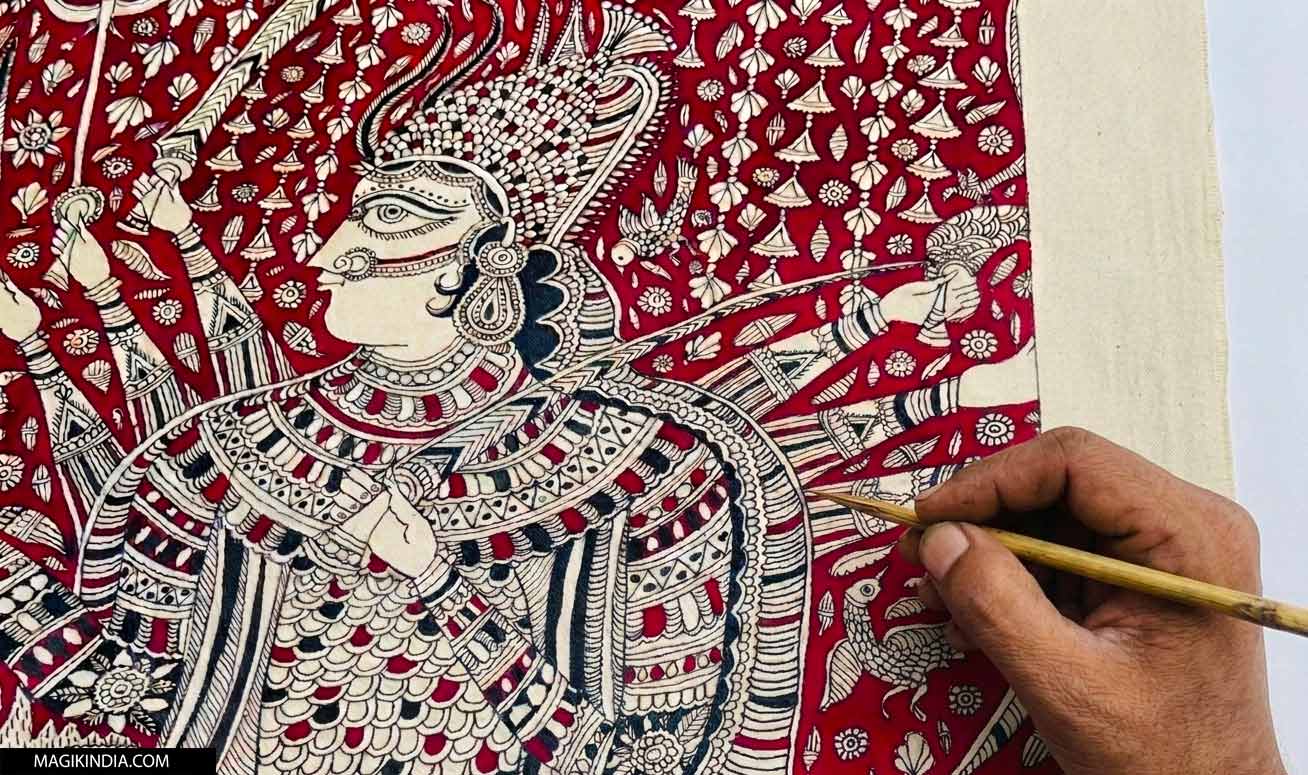
The Mata ni Pachedi, literally “the goddess in the background,” is the triumph of fervour over exclusion. Invented by the Vaghari...
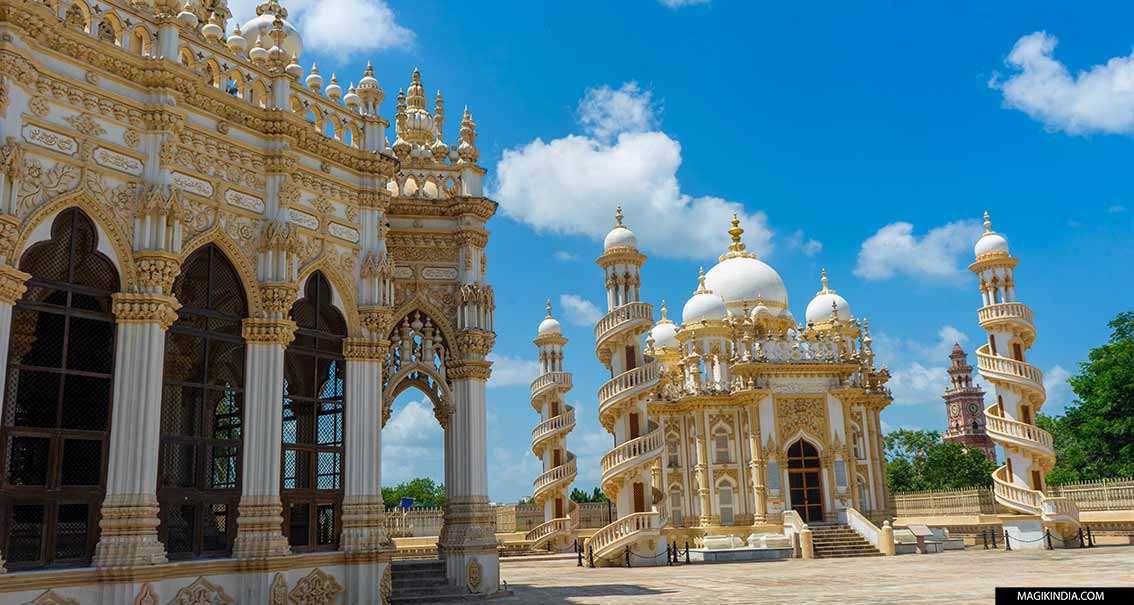
It was while finishing my story about Mount Girnar that something became obvious: I had forgotten to write about Junagadh,...

Imagine a kitchen utensil capable of rivaling Teflon, yet born of the earth, long before the industrial era. Deep within...
Inhabiting the high plateaus of Bastar (Chhattisgarh), the Dandami Maria tribe constitute an emblematic branch of the Gond people, distinguished...
On the road between Pondicherry and Thanjavur, in Tamil Nadu, stands the Chidambaram Temple, a place where sacredness takes an...

