

If Gujarat captivates me, it is above all by the human richness of its communities. After exploring the world of...
Junagadh and the eccentric legacy of the Nawabs
It was while finishing my story about Mount Girnar that something became obvious: I had forgotten to write about Junagadh, the thousand-year-old city at its feet. To ignore this architectural UFO would have been unforgivable. For Junagadh is a theatre of unusual contrasts, where the extravagance of the Nawabs of Gujarat challenges the splendour of the raw stone of the Rajput citadels. A void finally filled.
The History of Junagadh
To understand Junagadh’s eclectic architecture, one must look at its history like a true cultural tapestry where Hindu, Buddhist, and Muslim dynasties have successively shaped the city.
The ancient foundations
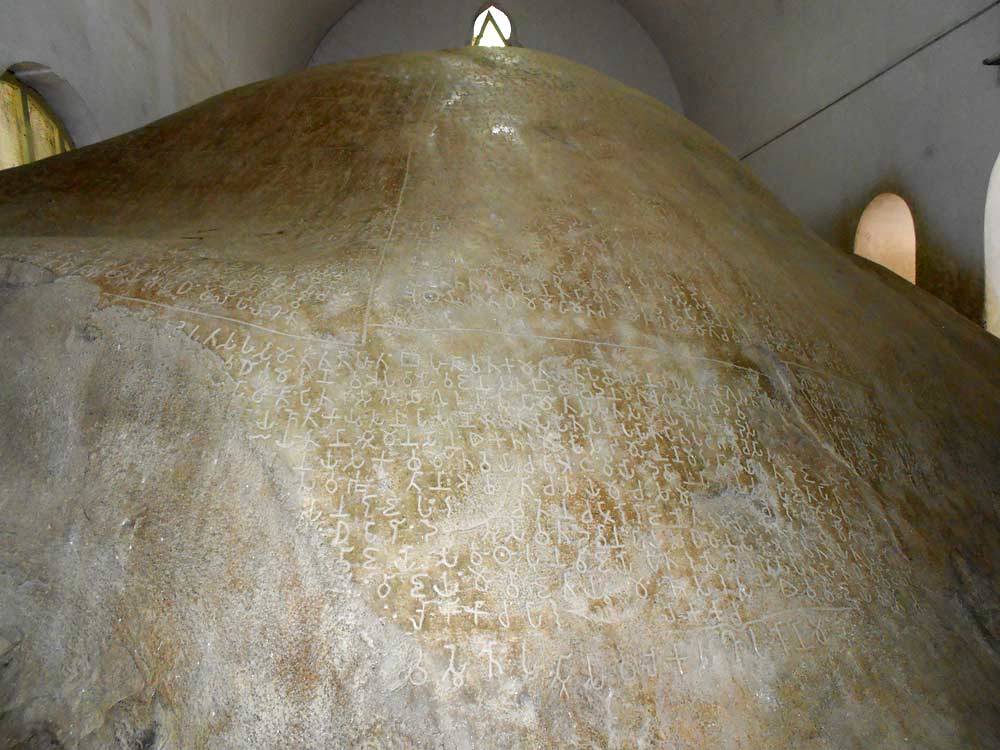
The history of Junagadh has its roots in antiquity, first as a natural sanctuary around the sacred Mount Girnar, an extinct volcano revered by Hindus and Jains. From the 3rd century BC, the city established itself as a major provincial capital of the Maurya Empire. Emperor Chandragupta founded the first citadel of Uparkot there, while his grandson, Emperor Ashoka, had his famous Buddhist edicts of tolerance engraved on a huge granite rock, forever marking the spiritual and political importance of the region.
The Rajput Golden Age
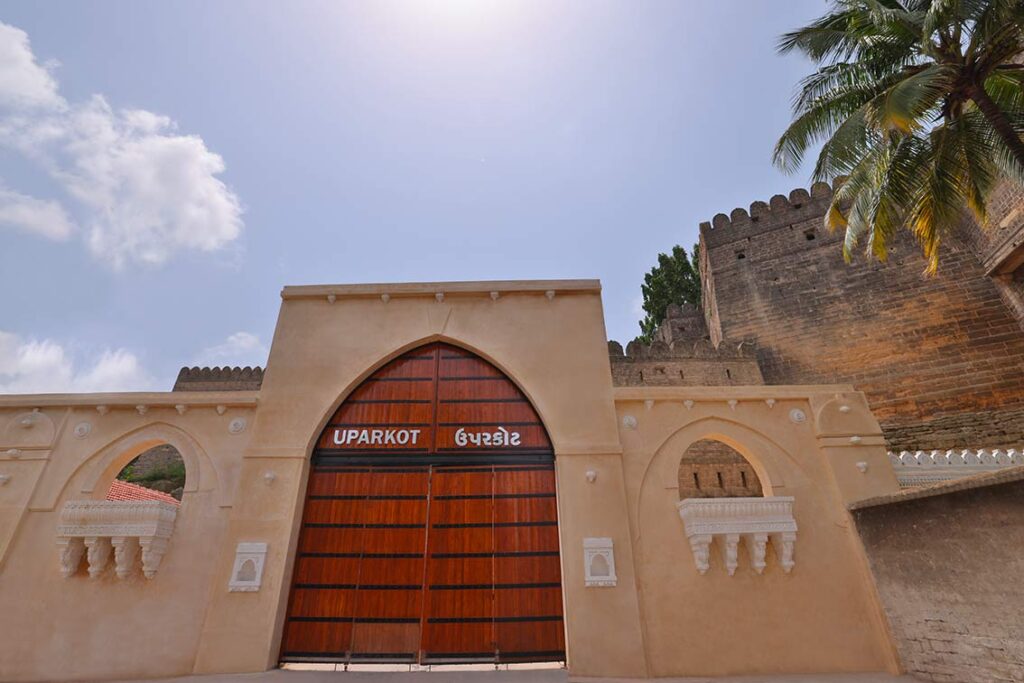
During the Middle Ages, between the 10th and 15th centuries, the Rajput Chudasama dynasty took control of the city and shaped its monumental landscape. It was these rulers who rebuilt the massive ramparts of Uparkot. This long period of Hindu rule came to an abrupt end in 1472, when the Sultan of Gujarat, Mahmud Begada, besieged and conquered the citadel, paving the way for Islamic cultural and architectural influence.
The Splendour of the Nawabs and the Partition
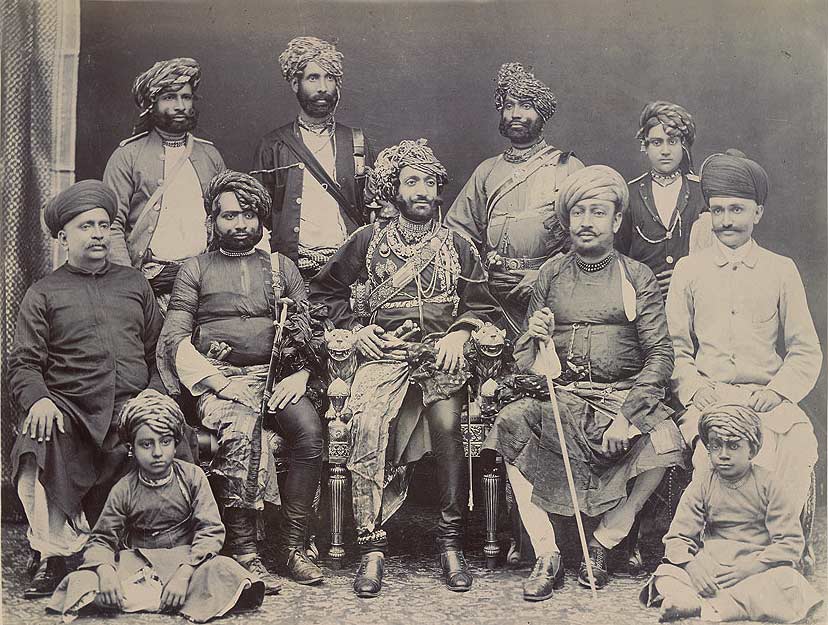
From 1730, a dynasty of Muslim governors of Afghan origin, the Nawabs (Babi dynasty), declared their independence and took control of Junagadh. For two centuries, they modernised the city and built extravagant monuments, like the spiral minarets of the Mahabat Maqbara.
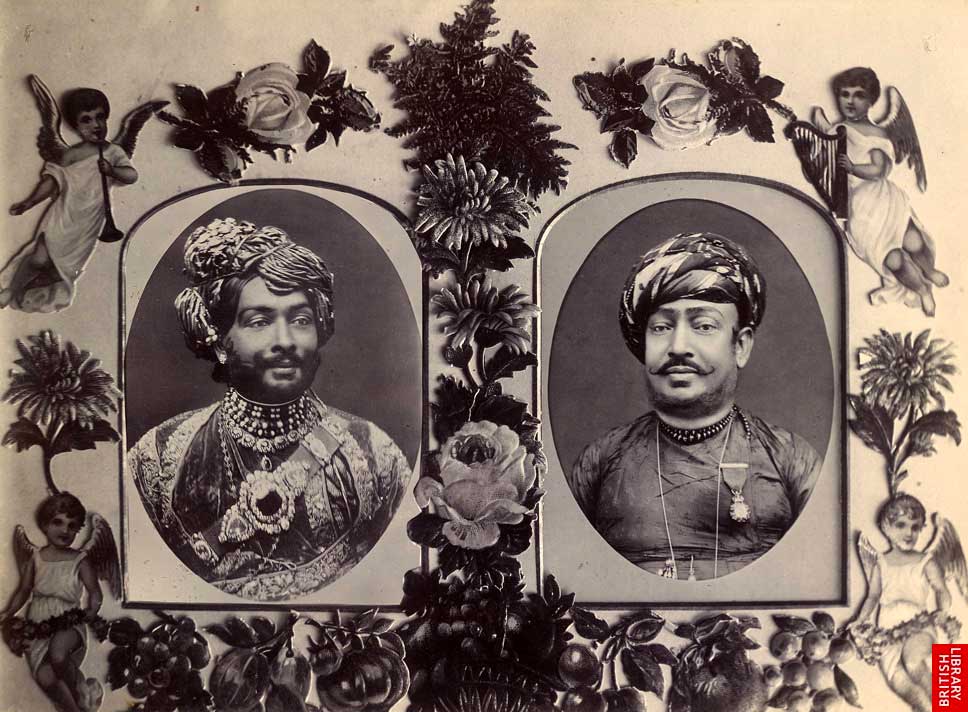
This reign ended in chaos in 1947: during Independence, the last Nawab chose to attach his state to Pakistan despite a population that was 80% Hindu. Faced with popular revolt and the intervention of Indian troops, he fled to Karachi, and Junagadh was officially integrated into the Indian Union in 1948 after a massive plebiscite.
The Mahabat Maqbara: The Extravagance of the Nawabs
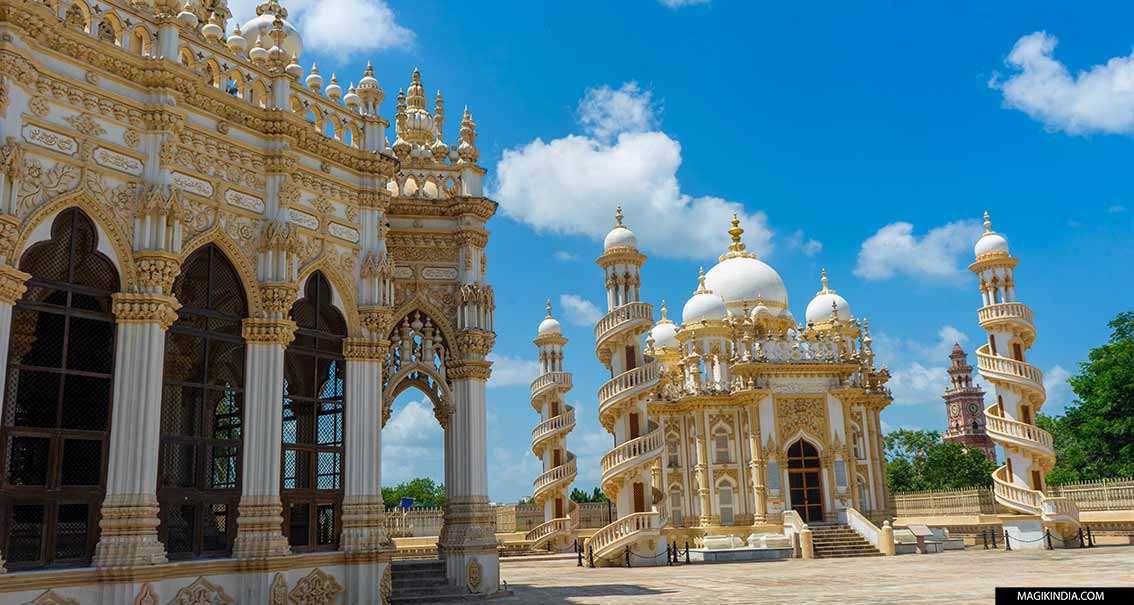
The Mahabat Maqbara is undoubtedly the architectural jewel of Junagadh, but above all it is the monument, which best embodies the madness of grandeur and the eccentricity of the Nawab dynasty. If we are well aware of the legendary extravagance of the Nawabs of Lucknow, that of the sovereigns of Junagadh has absolutely nothing to envy them and rivals them in audacity.
Often summarised under a single name, the site is in reality a complex of three major buildings attached to each other, combining the Mahabat Maqbara itself, which is the mausoleum of the Nawab, the Bahauddin Maqbara, which houses the tomb of the Vizier, and finally the Jama Masjid.
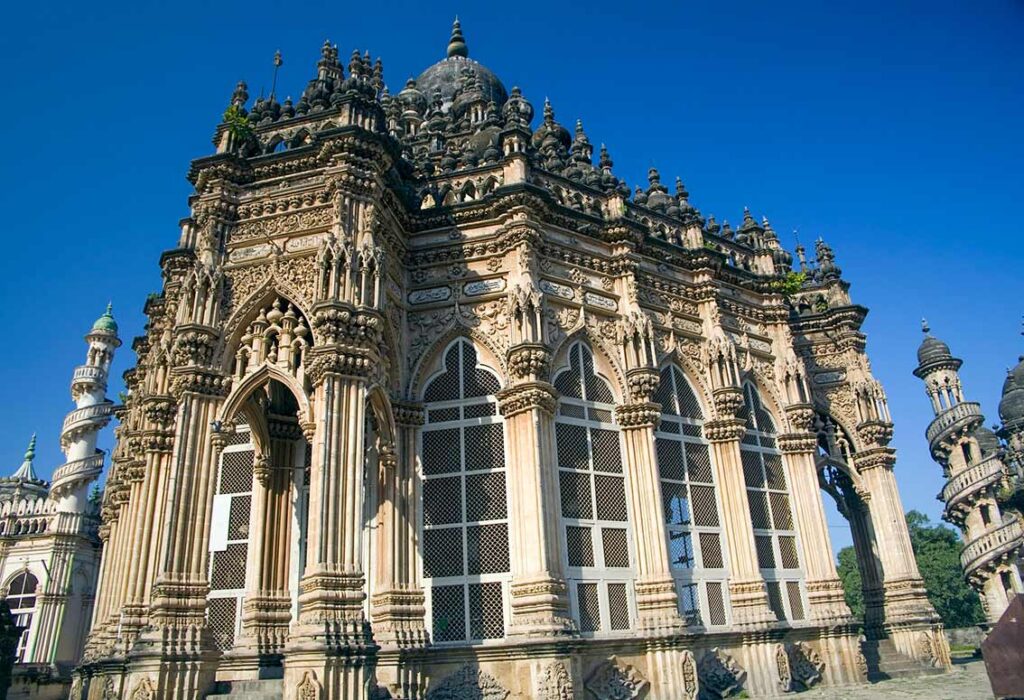
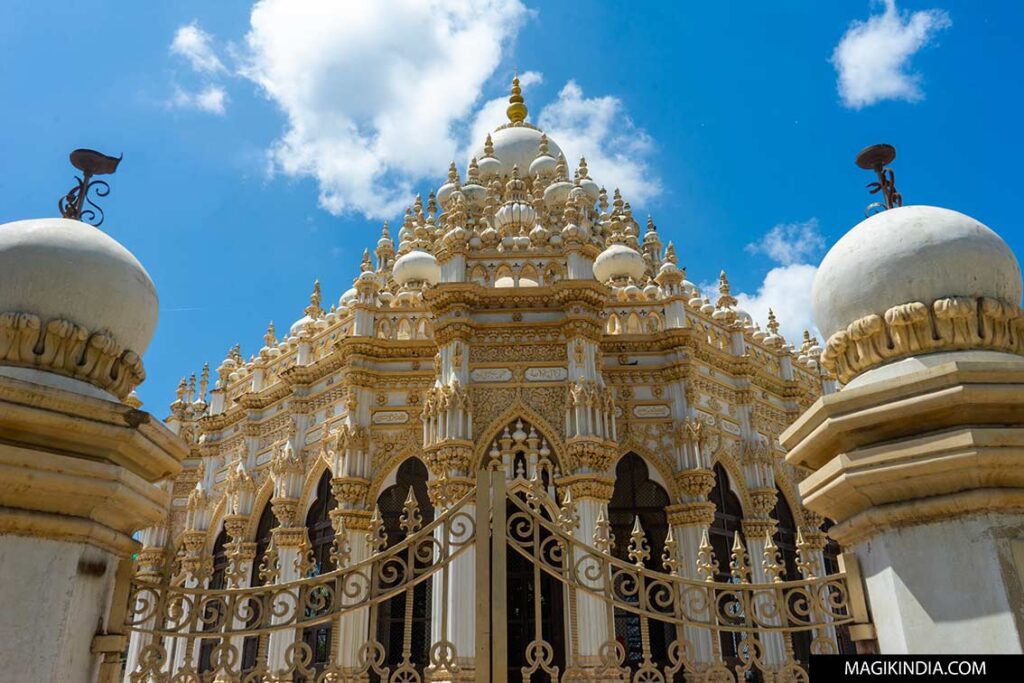
During my last visit, the ensemble had just benefited from a major white and gold restoration. Even if there are sometimes objections to certain details, this time I am not offended by the result, as the buildings were previously in very bad shape. This new freshness restores all its splendor to this architectural madness, transfigured into a true fairytale setting.
A masterpiece at the crossroads of styles
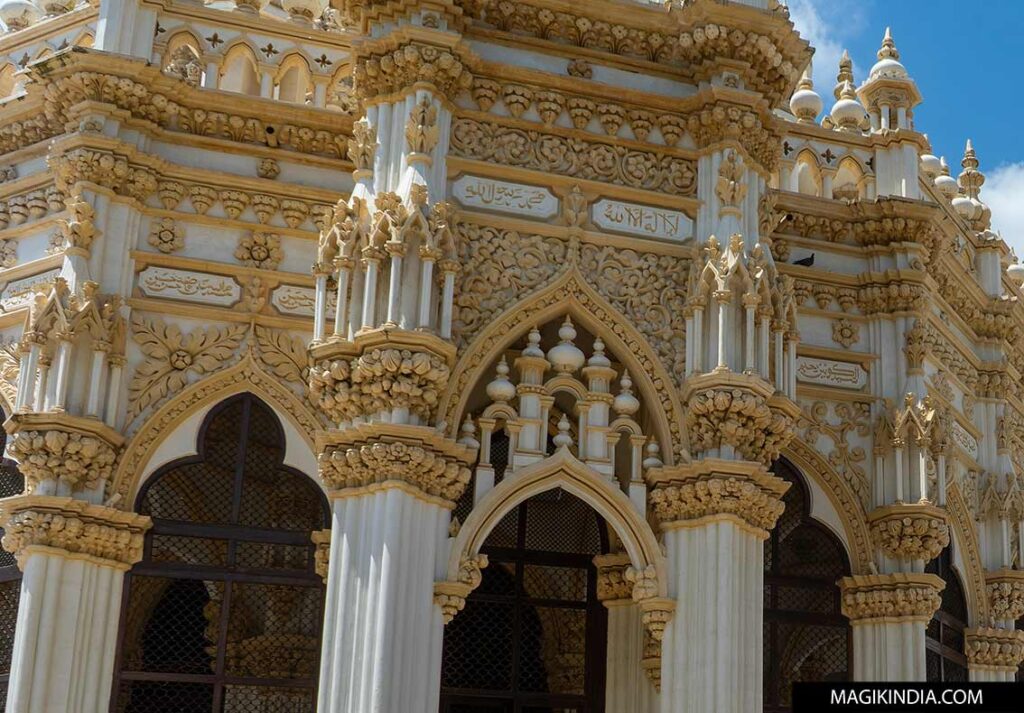
Exploration of the complex begins with the Mahabat Maqbara. Begun in 1878, this main mausoleum houses the tomb of the sixth Nawab of Junagadh, Mahabat Khan II. It is a masterpiece with sculptures of great finesse, whose onion domes and chiseled arches vividly recall the classic Mughal style.
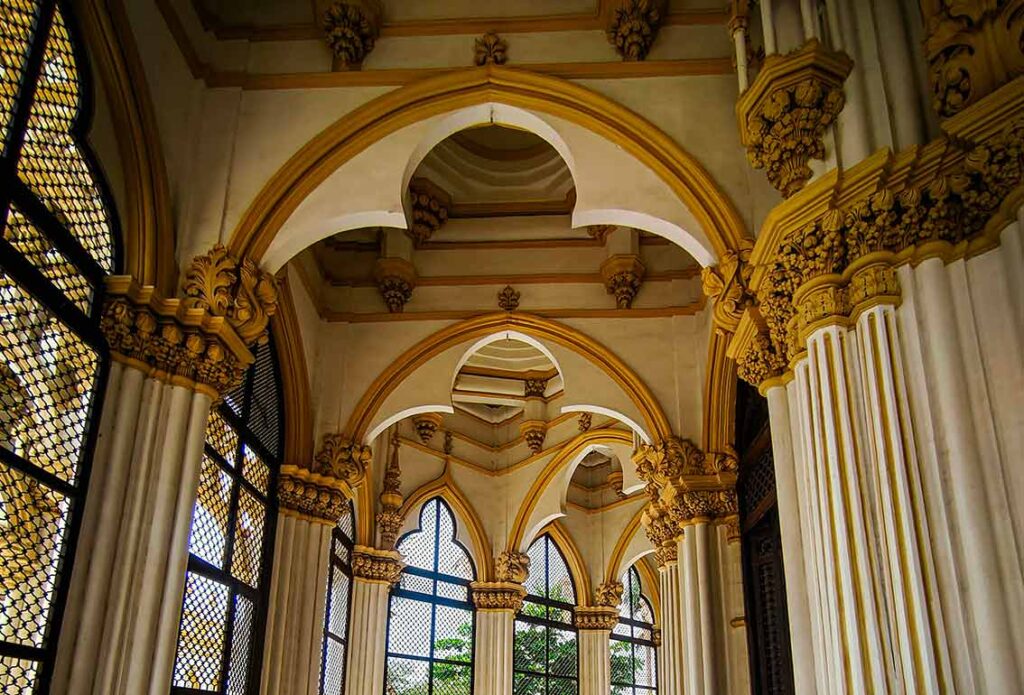
The interior of the mausoleum proves surprisingly intimate, bathed in a diffused light that filters through tall, French-inspired windows and delicate jalis, intricate openwork stone screens.
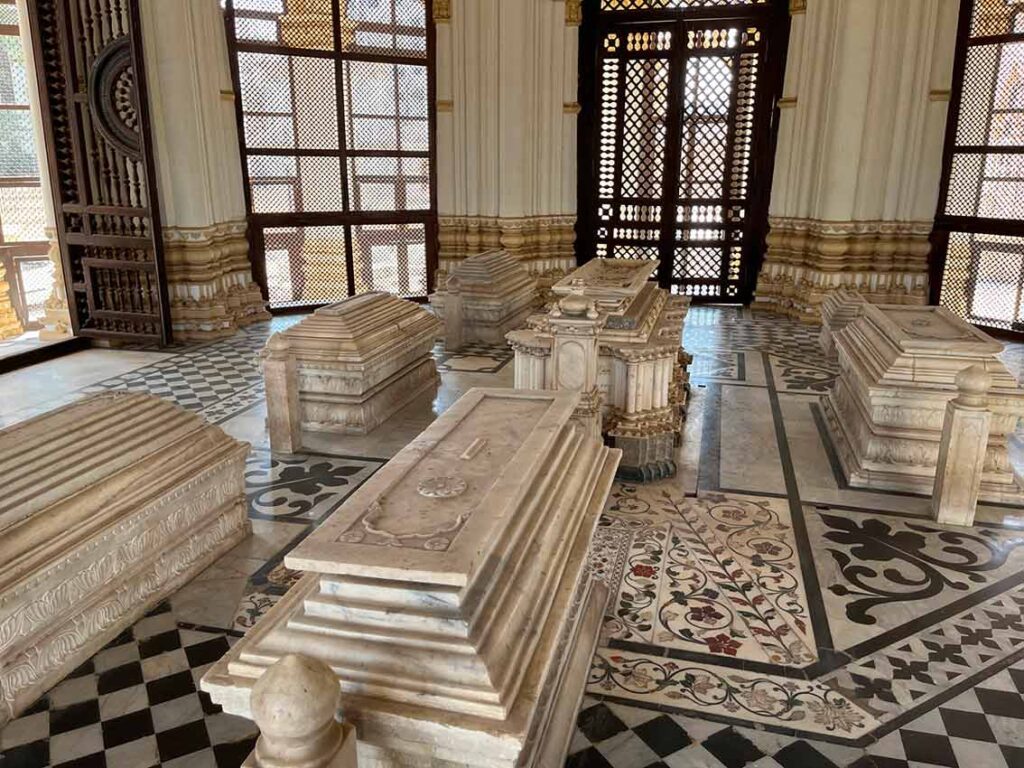
In the center of the room, beneath the great dome, the tombs of Nawab Mahabat Khan II and his family members rest upon a floor adorned with black and coloured marble inlay. Carved with a restraint that contrasts with the exterior’s exuberance, these tombs lend the space a profound solemnity.
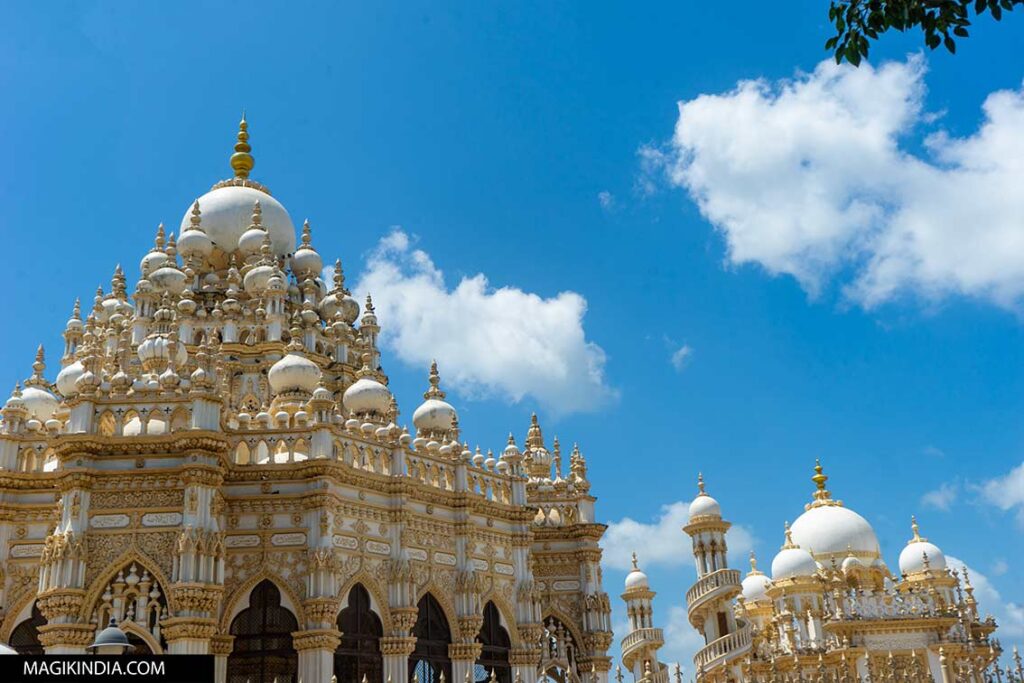
Right next door, despite ostensibly being merely a secondary monument, stands the most visually spectacular structure: the Bahauddin Maqbara, dedicated to the Nawab’s Prime Minister, Sheikh Bahauddin Hussain Bhar. It is this building that features the famous four minarets flanked by external spiral staircases winding their way toward the sky.
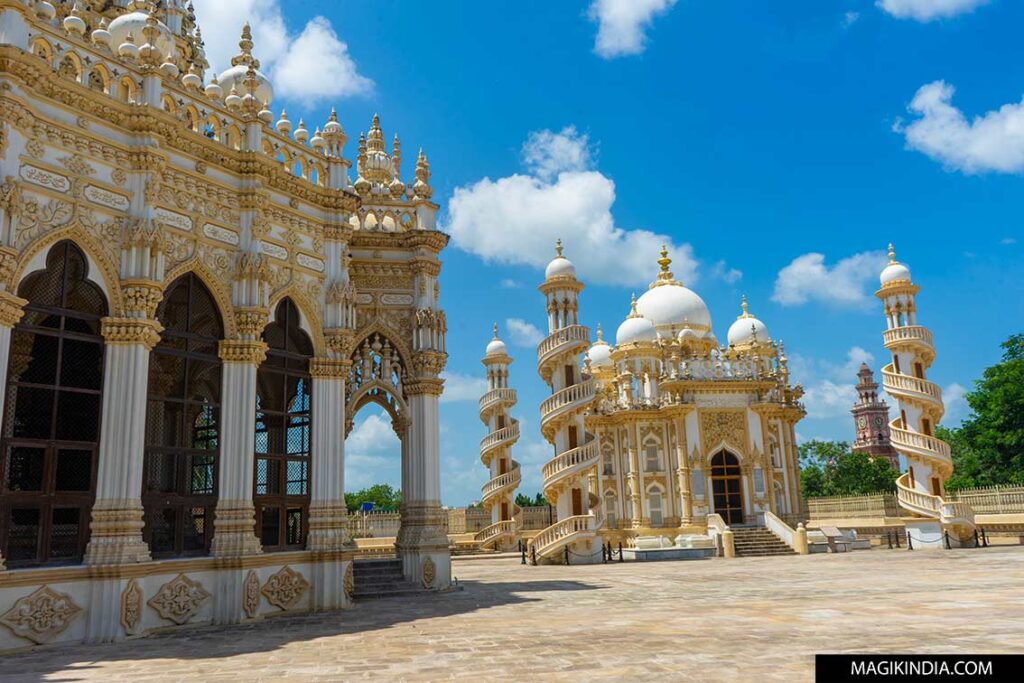
This technical and aesthetic feat, wholly unusual for an Eastern minaret, gives the structure the air of a surrealist castle. European influence is also striking, as the pointed-arch windows, pillars, and façade details look as though they came straight out of a French cathedral.
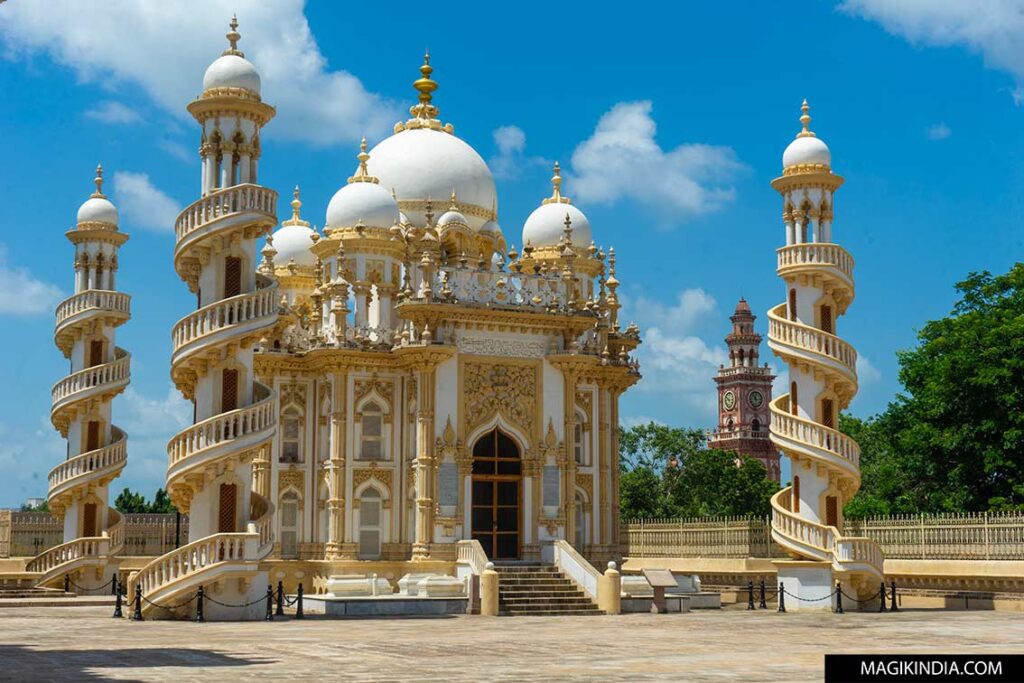
Nevertheless, the local connection remains strong, as the floral and vine motifs carved into the yellow stone draw direct inspiration from the traditional craftsmanship of artisans from Gujarat.
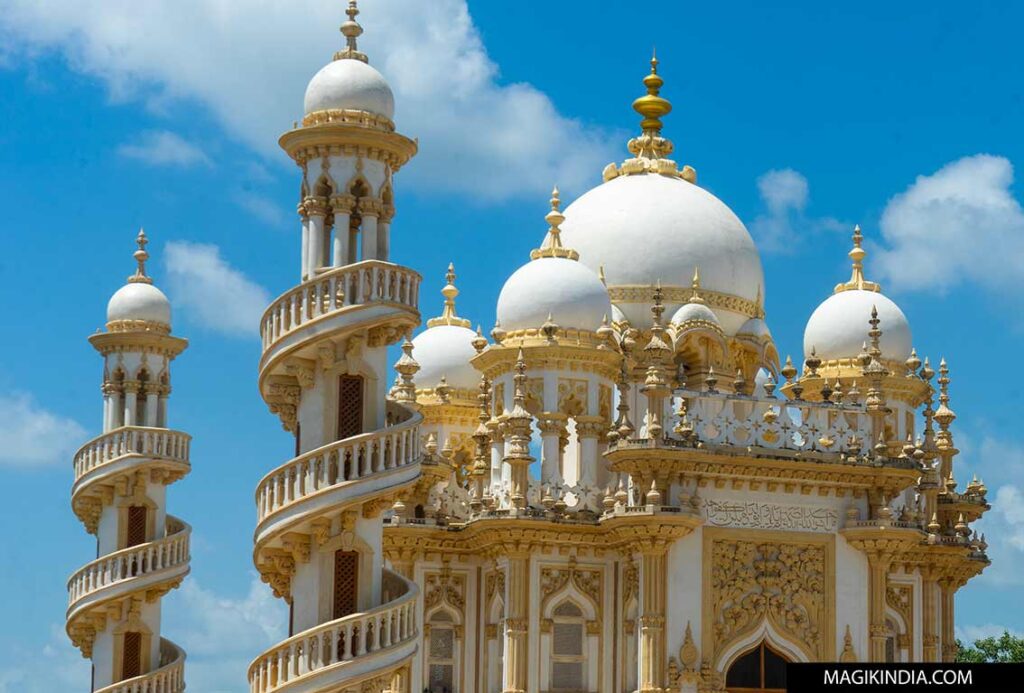
A timeless harmony
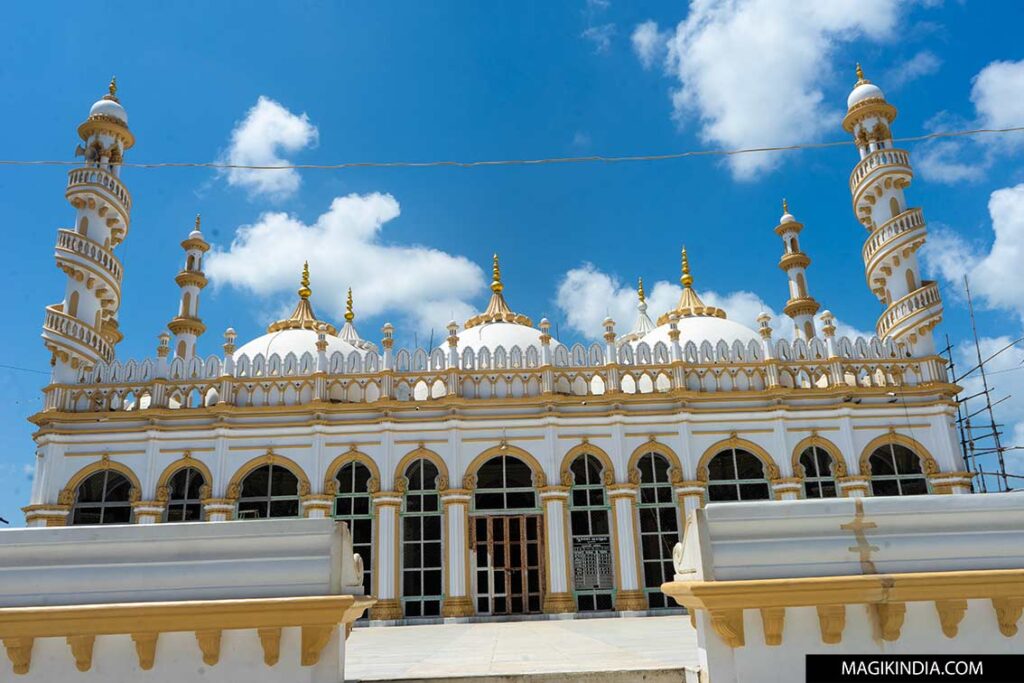
Adjoining the mausoleums, the Jama Masjid magnificently completes the picture. It adopts a similar Gothic-Islamic architectural style, creating perfect harmony within this royal complex.
Uparkot Fort: over two millennia of history
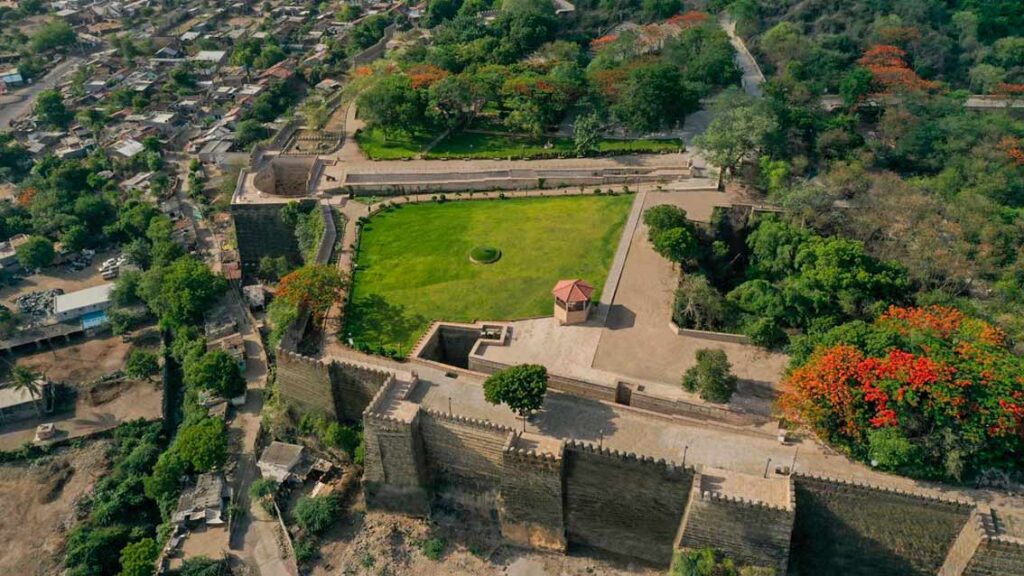
Perched on a rocky plateau, the Uparkot citadel is the historic cradle of Junagadh. Founded around 319 BC by Chandragupta Maurya, this legendary fort withstood sixteen sieges before being abandoned and then rediscovered in the jungle in the Middle Ages. Recently renovated, the fortress now reveals its impressive twenty meter high ramparts. Crossing them is like leafing through an open-air history book, where fascinating Buddhist, Hindu and Islamic remains mingle.
From massive ramparts to the cannons of the royal courtyard
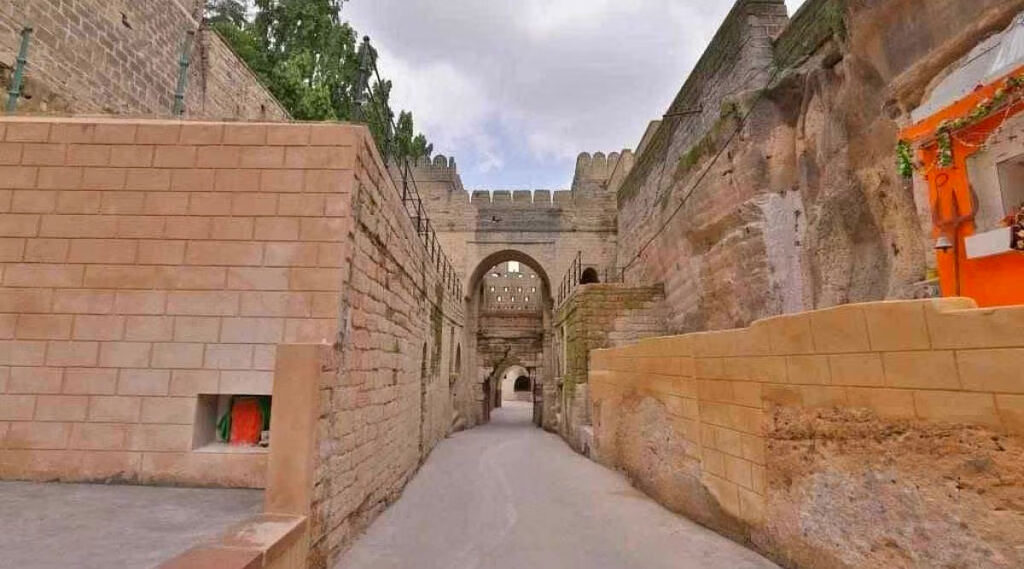
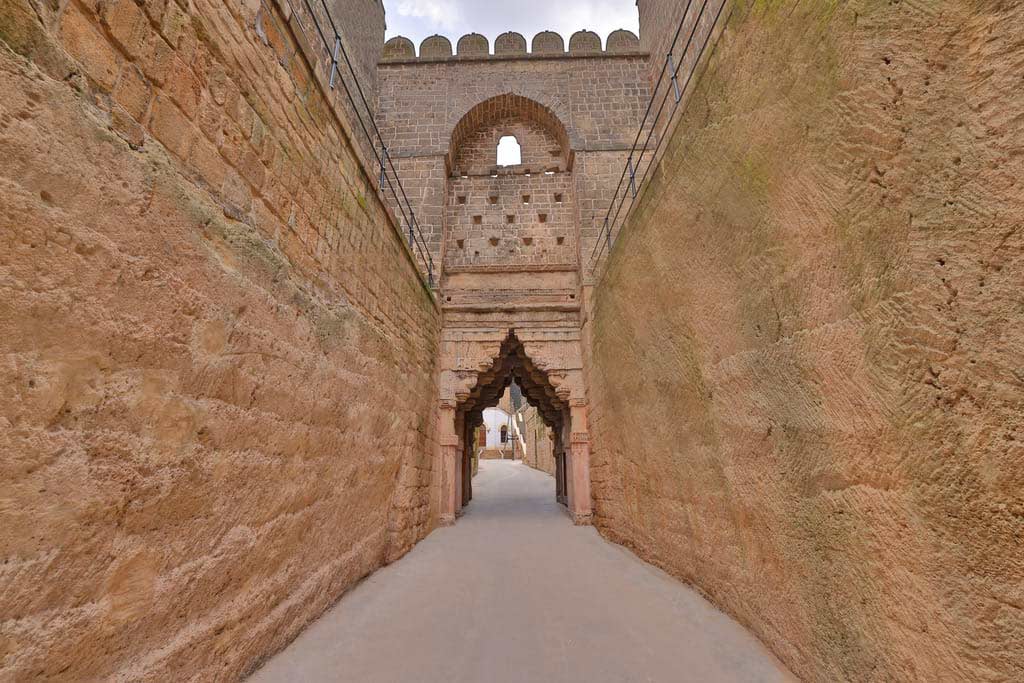
Access to the fort is via a succession of monumental gates and arches known as the “Toran Gate Passage”.
As you walk along the ramparts, which offer a striking panoramic view of Junagadh and Mount Girnar, you come across two imposing medieval bronze cannons named Neelam and Manek. Cast in Egypt and brought by the Ottoman navy in the 16th century to counter the Portuguese, these artillery behemoths bear witness to the major strategic role Uparkot played at the time.
An underground journey: from giant cisterns to Buddhist caves
The true genius of Uparkot, however, lies underground, in its ability to have survived such long sieges thanks to revolutionary water management. The fort houses two monumental stepwells, unique in their kind because they are directly cut into the living rock: the Adi Kadi Vav and the Navghan Kuvo.
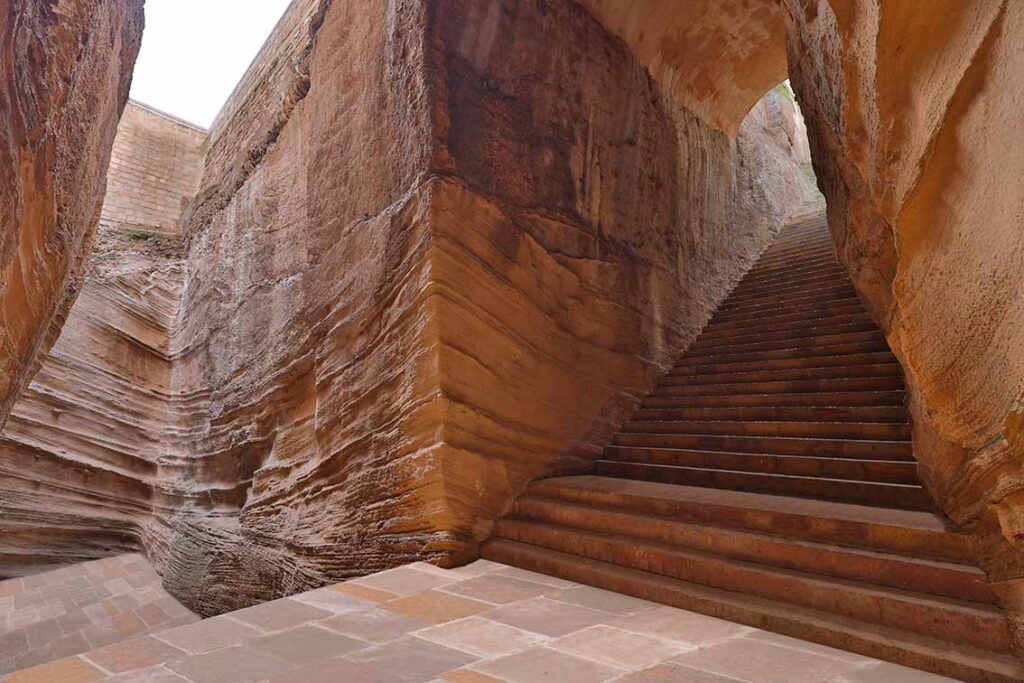
The Adi Kadi Vav impresses with its linear structure. It’s a vast, straight-edged chasm plunging deep into the bowels of the earth, devoid of any supporting columns. A narrow, 120-step staircase cuts through the stone, guiding the way down to the water trapped at the very bottom of this earthen fissure.
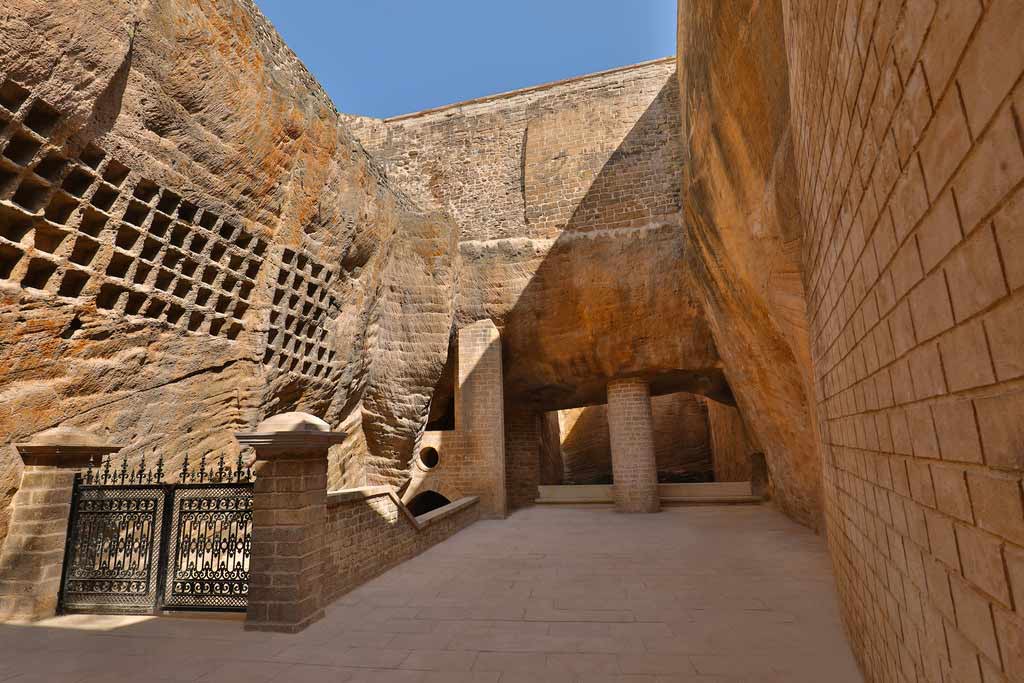
The Navghan Kuvo, for its part, descends in a circular fashion, encircled by a spiral staircase from which one can look down at the abyss of water below.
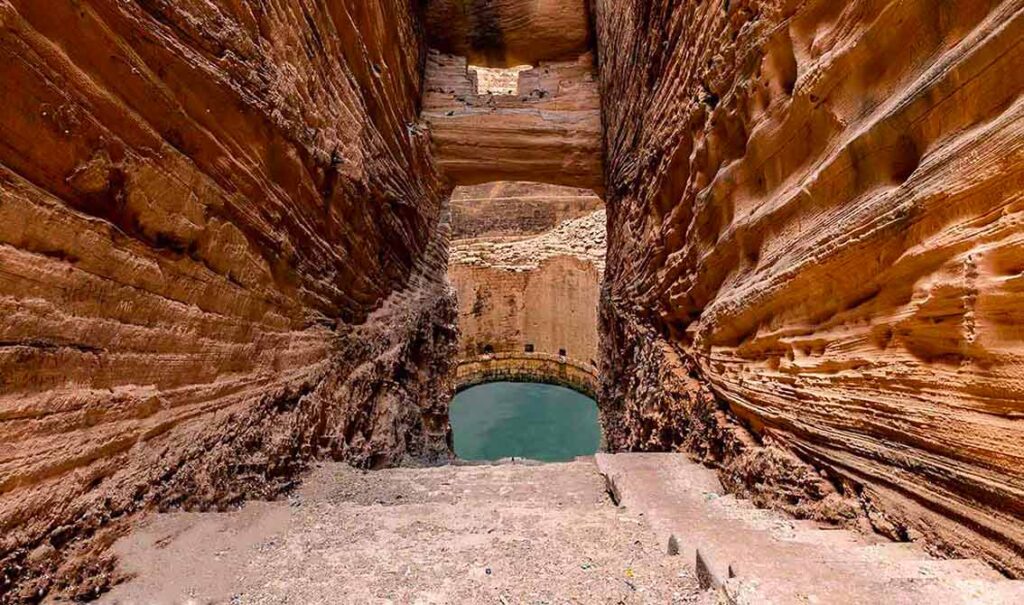
Not far from these impressive cisterns lies another underground gem: the Buddhist caves of Uparkot, dating from the 2nd and 3rd centuries. Built on three levels for itinerant monks, these troglodyte rooms surprise with the finesse of their details.
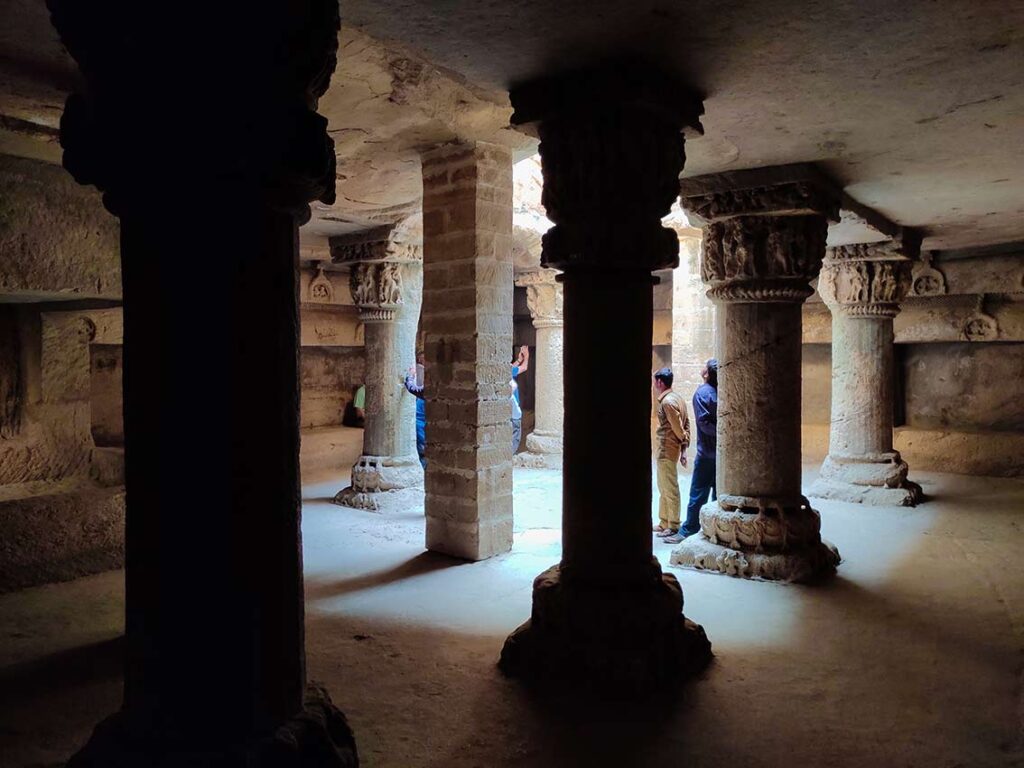
Even after centuries, one can still admire prayer halls adorned with pillars featuring Greco-Buddhist motifs, as well as ingenious ventilation systems that maintain a welcome coolness, offering a striking contrast to the scorching heat on the surface.
A Reflection of the Muslim Conquests: Rani Ranak Mahal
At the heart of the citadel stand the remains of the Rani Ranak Devi Mahal. This palace, later converted into a mosque during the reign of Mahmud Begada, bears the name of a legendary 12th-century queen whose tragic fate, sacrifice by fire, still haunts local memory.
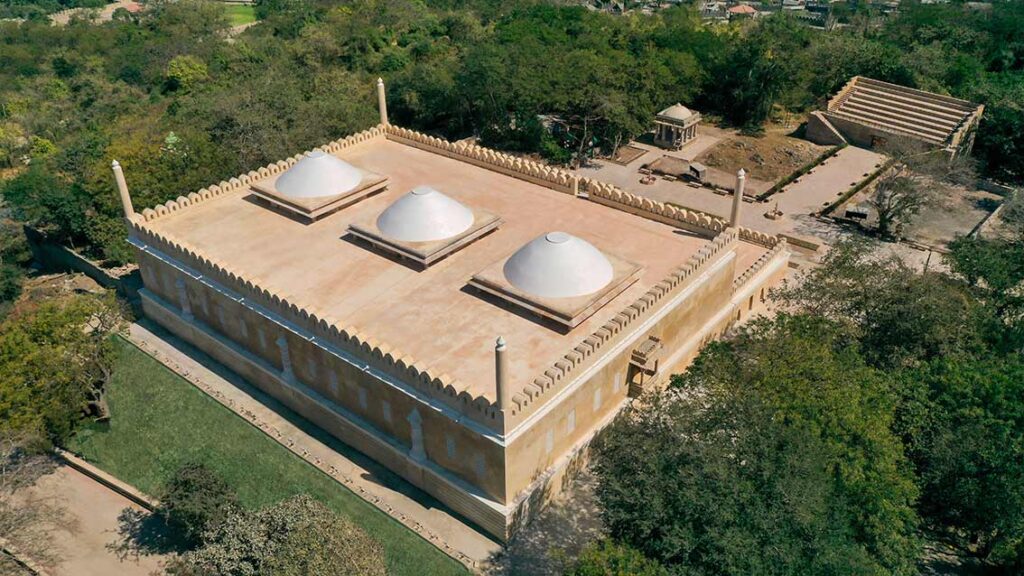
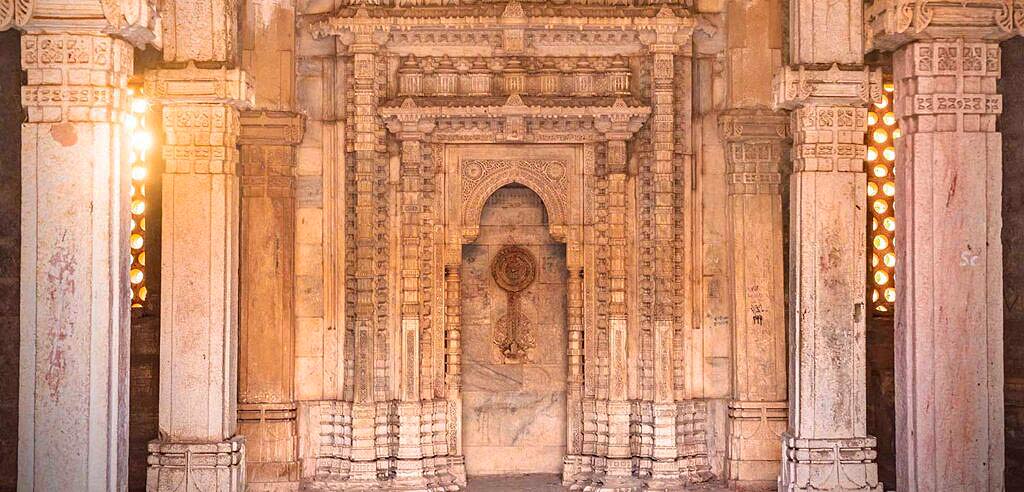
The building makes an immediate impression with its proportions and its structure open to the sky, crowned by three understated domes set in the center. Upon entering, one is confronted by a veritable forest of finely carved stone pillars supporting the heavy horizontal structures of the domes.
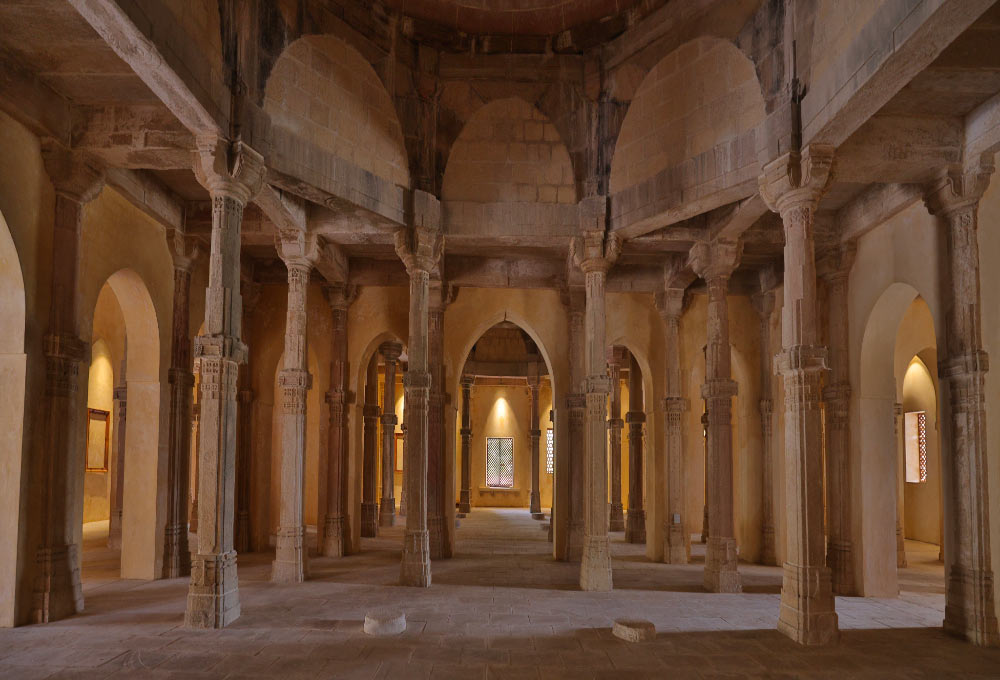
The architecture of the site creates a fascinating blend of the intricate artistry and finely carved ornamentation found in the Hindu and Jain temples of Gujarat with the purity and geometric simplicity of Islamic prayer spaces.
Beneath the gaze of Mount Girnar
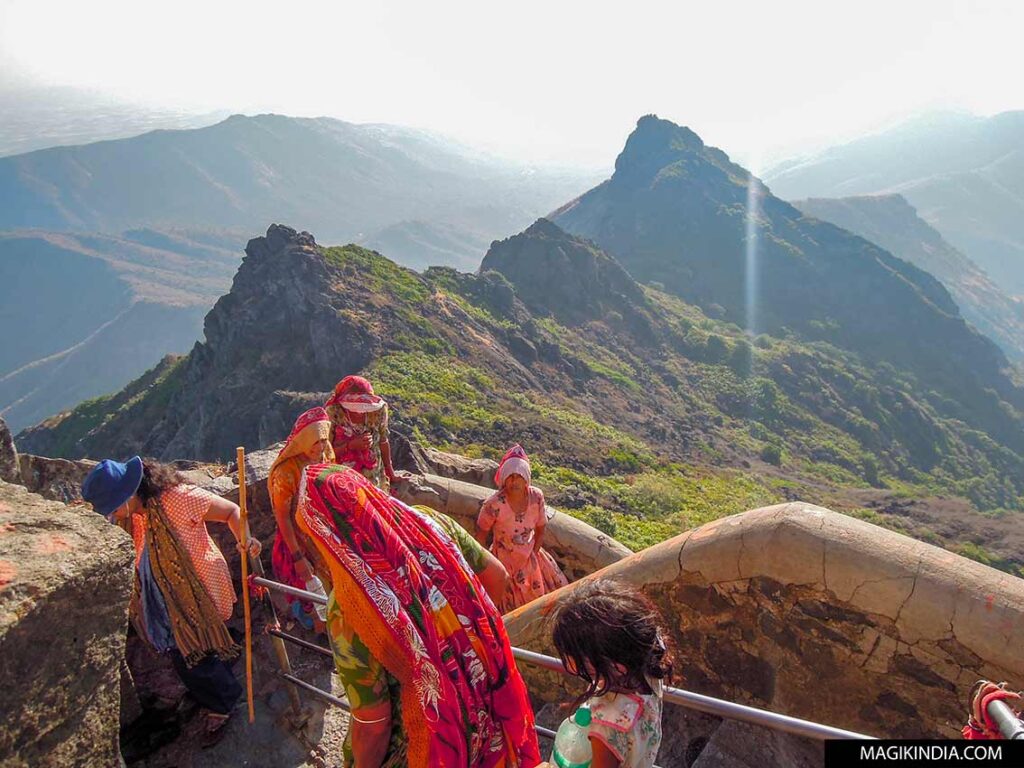
Situated at the immediate gates of Junagadh, Mount Girnar is the spiritual backbone of the region. This volcanic massif with 9,999 steps, crowned with majestic Hindu and Jain temples, rises abruptly above the plain, just a few kilometres east of the city center…
KNOW MORE +Vous aimerez peut-être aussi...
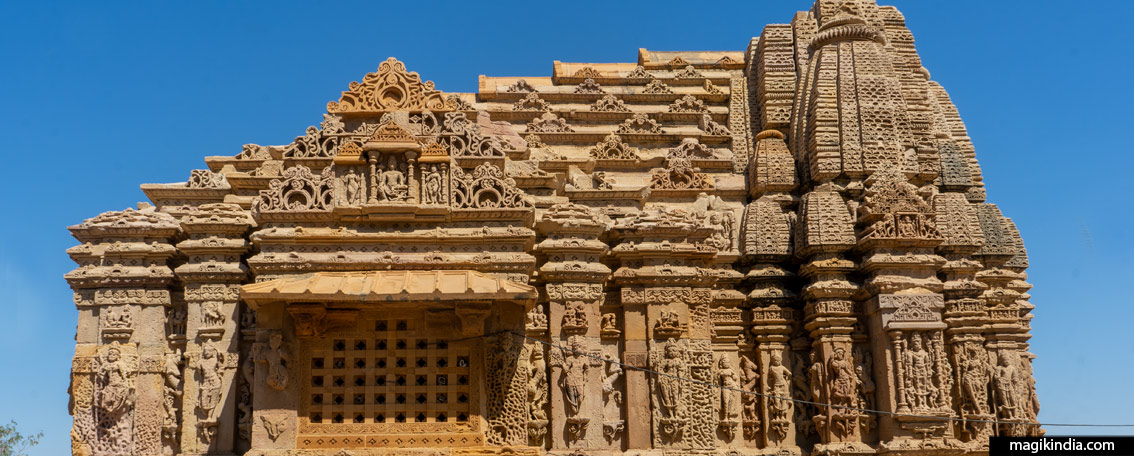
Kotay, just an hour north of Bhuj (Gujarat), boasts the remains of a temple dedicated to Surya, the Hindu sun...
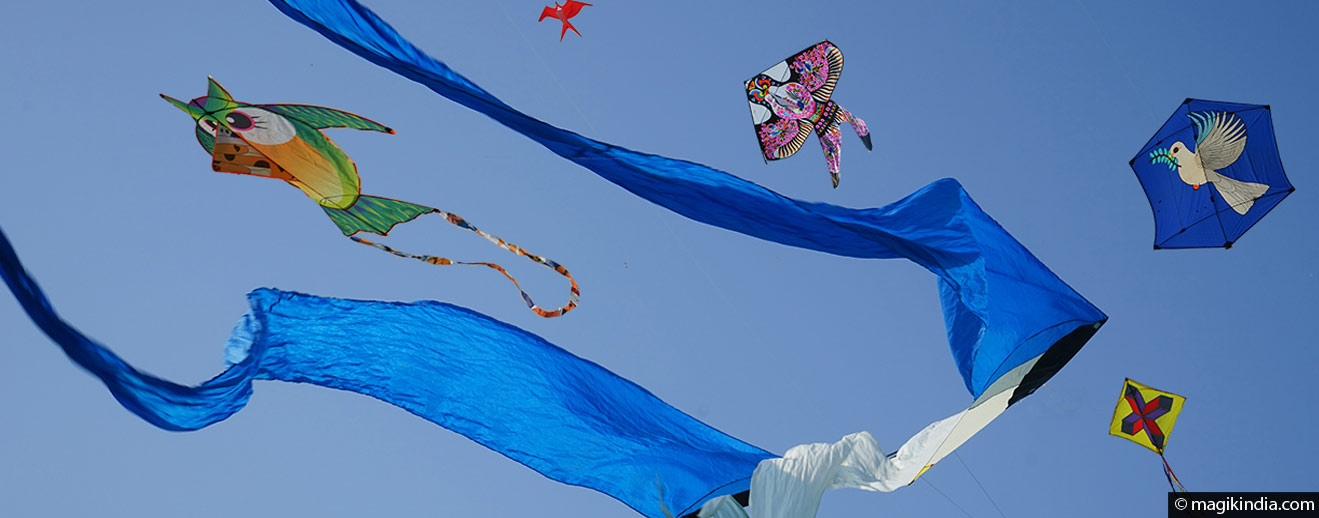
Uttarayan, the time of year when the sun starts its northward journey, is celebrated in Gujarat state with a kite...
Bordered by Pakistan and Rajasthan, Kutch is an ancient land that takes its name from its turtle-like geographical features (Kachchh...
Chamba is a charming city situated at the end of the valley bearing the same name, located in the Northwest...
On the Shatrunjaya hill, the temples of Palitana rise like a marble prayer, caressing the heavens with their slender spires....

