It was while finishing my story about Mount Girnar that something became obvious: I had forgotten to write about Junagadh,...

The Sacred World of the Rathwas
If Gujarat captivates me, it is above all by the human richness of its communities. After exploring the world of the Rabari of Kutch and Saurashtra, I now take you to meet the Rathwa, an ethnic group with a fascinating heritage. Between the mystical protection of their sacred groves and the excitement of their festivals, they reveal to us a world where pictorial art and age-old traditions forge a culture of rare intensity.
Origins of the Rathwa people
The name “Rathwa” is closely linked to their geographical history. The most popular theory suggests that they got their name from Rath-Vistar, a mountainous and forested region once located in the ancient princely state of Rajpipla.
Historically, the Rathwa are considered a branch of the Bhils, although today they assert a distinct social and cultural identity. Their lineage is marked by a warrior pride and resilience in the face of external influences, which has enabled them to preserve their ancestral customs.
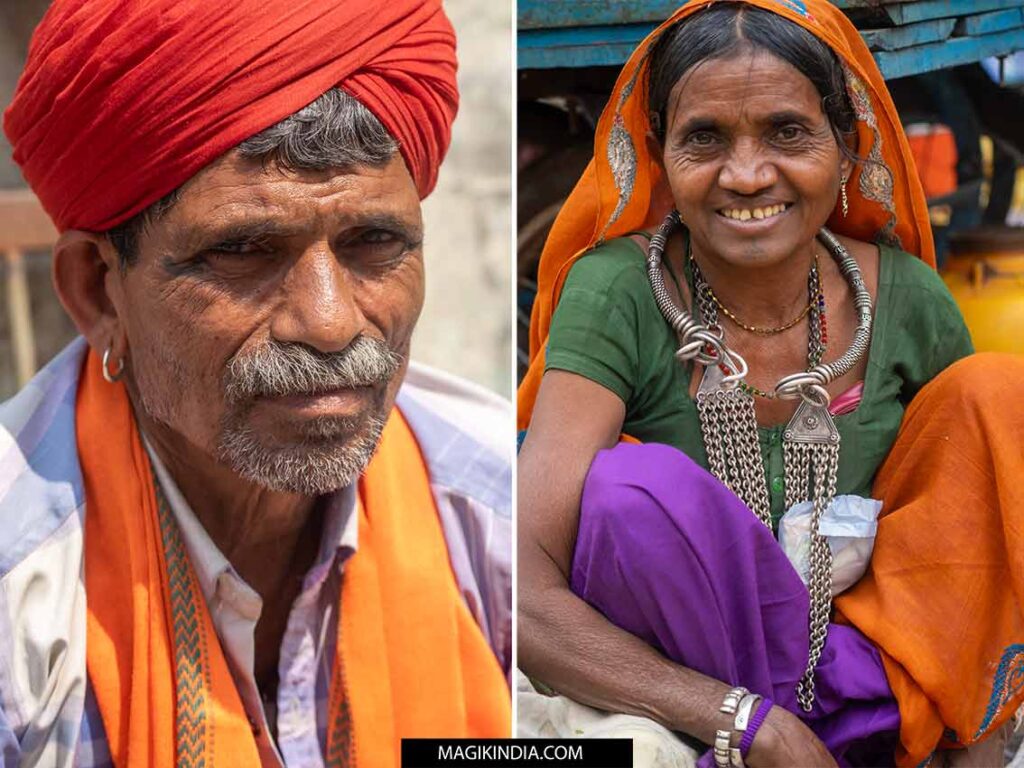
They live primarily in east-central Gujarat, specifically in the districts of Chhota Udepur (their main stronghold), Panchmahal, Dahod, and Vadodara. Small communities are also found in the bordering areas of Madhya Pradesh.

Their identity finds expression in Rathwi, a rich, hybrid language rooted in a fascinating linguistic blend. This dialect weaves together the sounds of Gujarati, the inflections of Bhili, and the resonances of Marathi.
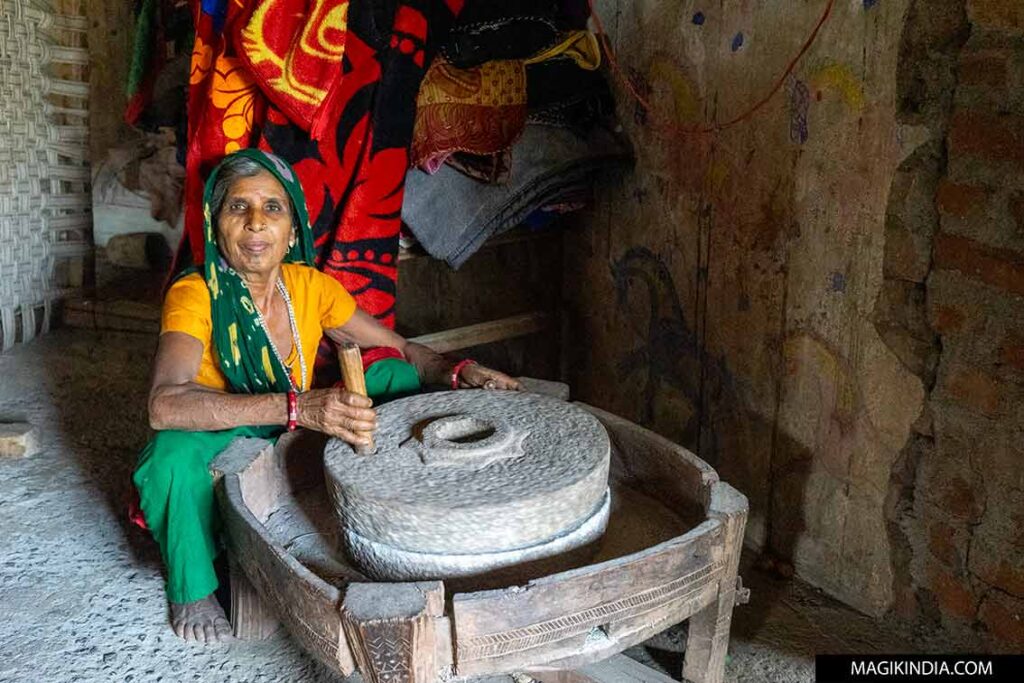
Once hunter-gatherers, the Rathwa have today anchored their lives in the cycle of the seasons as farmers. Their land is devoted to the cultivation of corn, millet and various legumes.
Sacred art
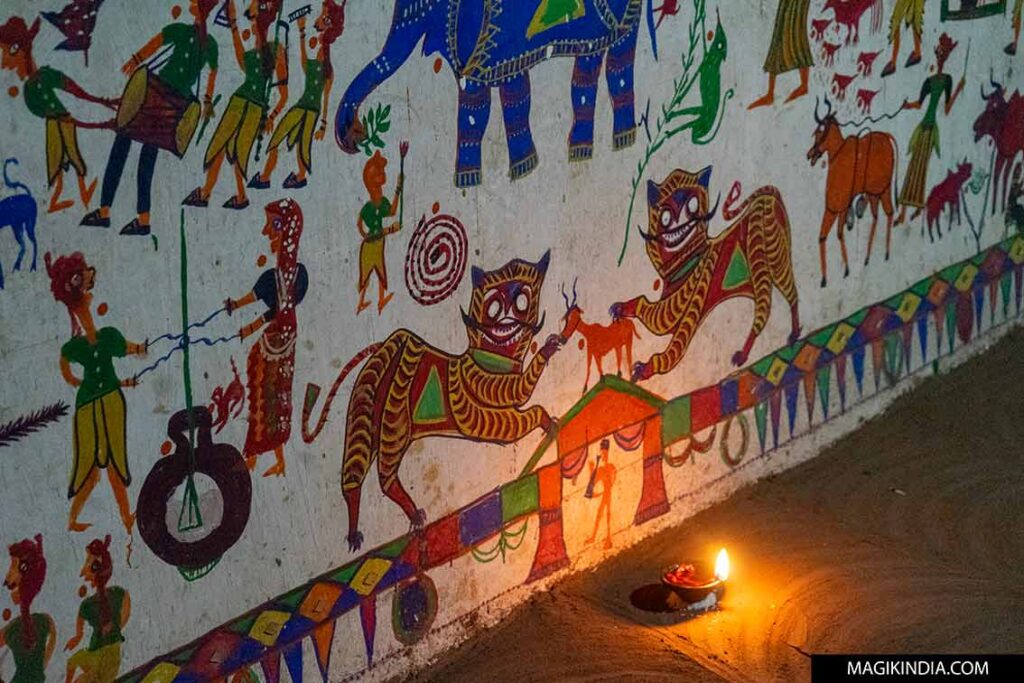
The most emblematic expression of the Rathwa identity undoubtedly lies in the art of Pithora, a practice which transcends simple decoration to assert itself as a true sacred ritual.
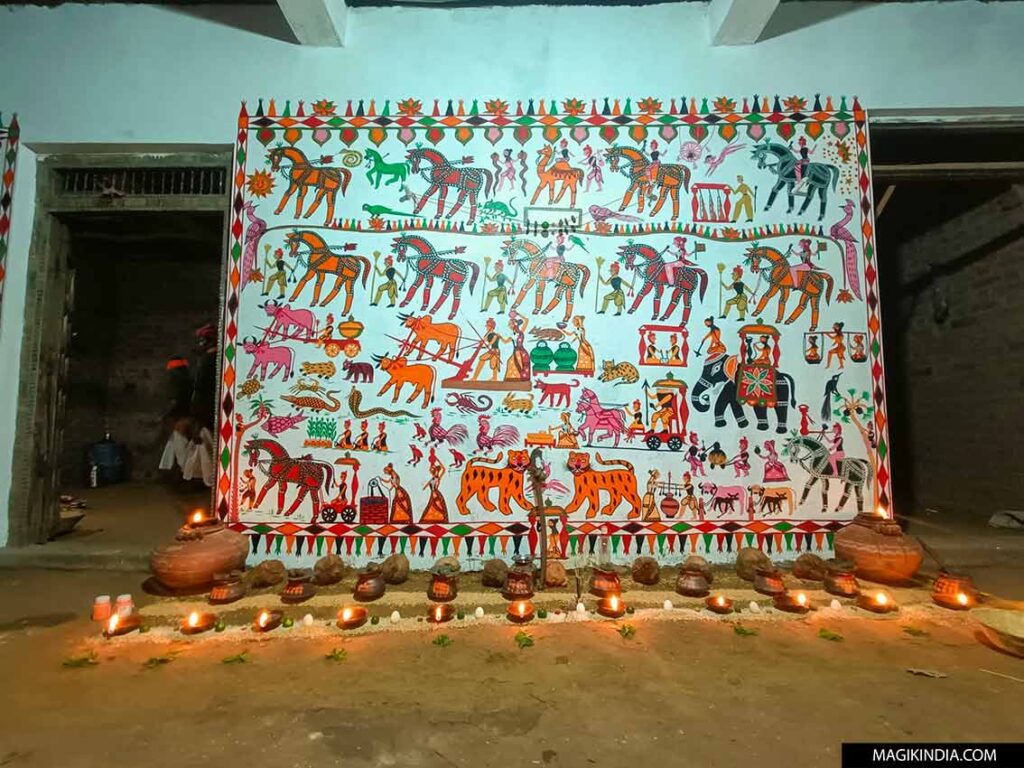
This mural is indeed an act of deep devotion, usually undertaken to thank the supreme deity, Baba Pithora, for granting a wish or to place the home under his benevolent protection.
I have dedicated an entire article to this art: click on this link to find out more about Pithora.
Rathwa spirituality
The Gram Devta
The Rathwa religion constitutes a complex spiritual system where animism and ancestral traditions predominate over a surface Hindu influence.
At the heart of the Rathwa people’s social and religious organization stands the Gram Devta. A true bulwark against chaos, this tutelary deity shields the village from life’s adversities. In times of crisis, the community rallies to “appease” its guardian through specific rituals. For the Rathwas, misfortune signals a disruption of harmony, and only by restoring this sacred bond can order and prosperity be regained.
The “Devsthan”: the sacred grove
The sacred groves (Devsthan) are the beating heart of Rathwa spirituality. Unlike classic Hindu temples, the sacred here refuses confinement: it flourishes in the open air, where the invisible takes root.
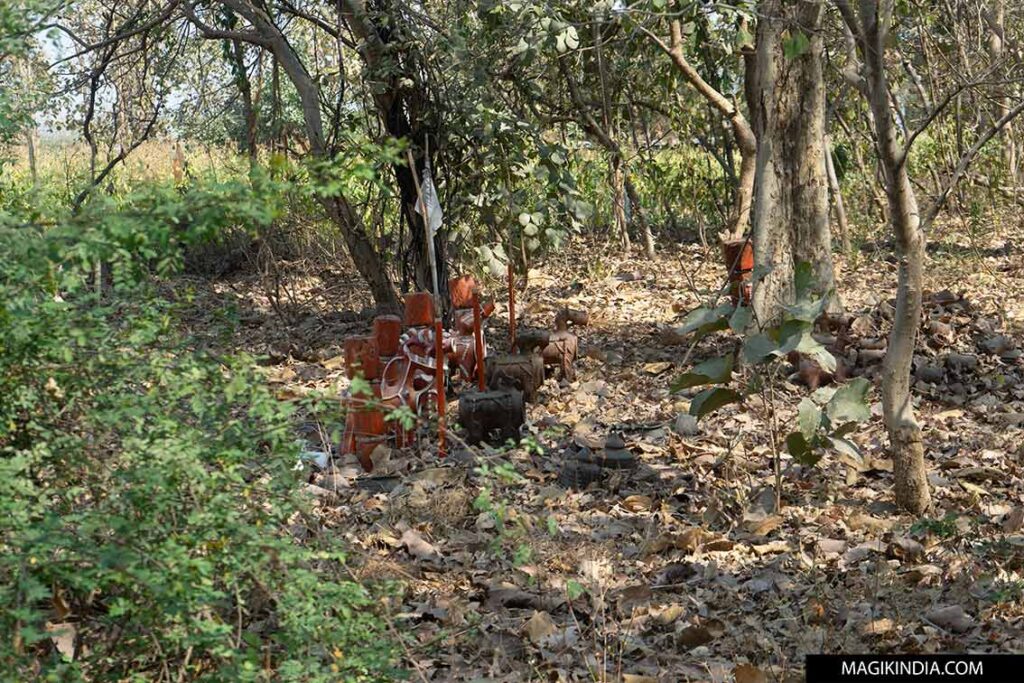
These sanctuaries stand on the edge of villages, nestled under the canopy of ancestral trees like the sacred Mahua. Here, deities are honored within their natural habitat, transforming these woods into a protective spiritual barrier.
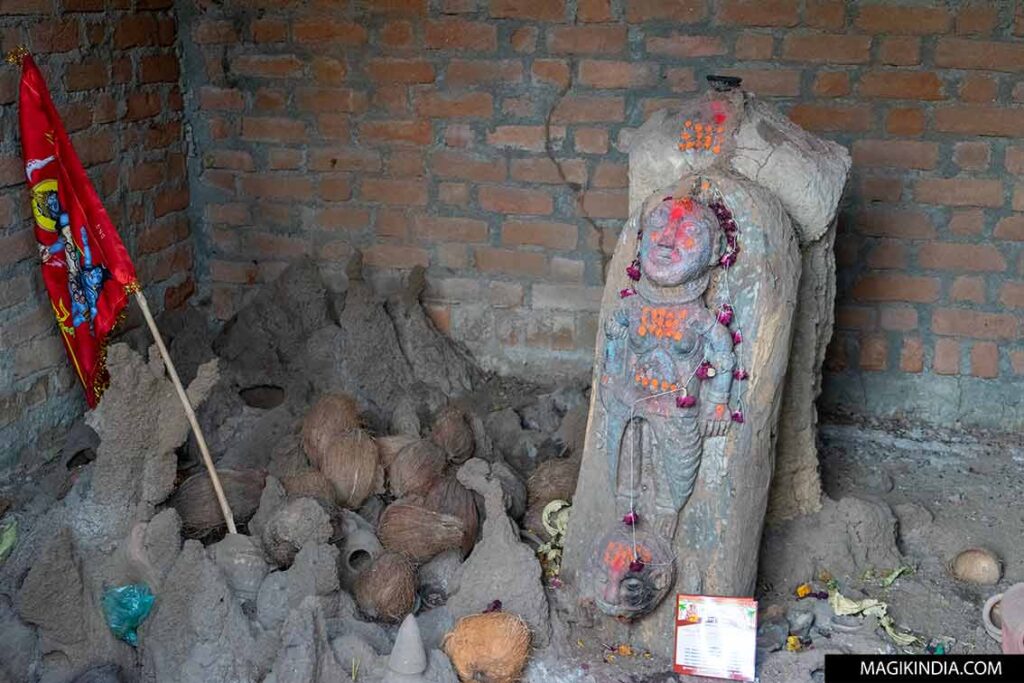
However, the appearance of these places is changing. If the spirit of the site remains anchored in nature, many sanctuaries have acquired, over time, more formal structures. Now, it is not uncommon to see the Devsthan protected by light roofs and built structures, providing shelter for steles and offerings.
The ritual posts
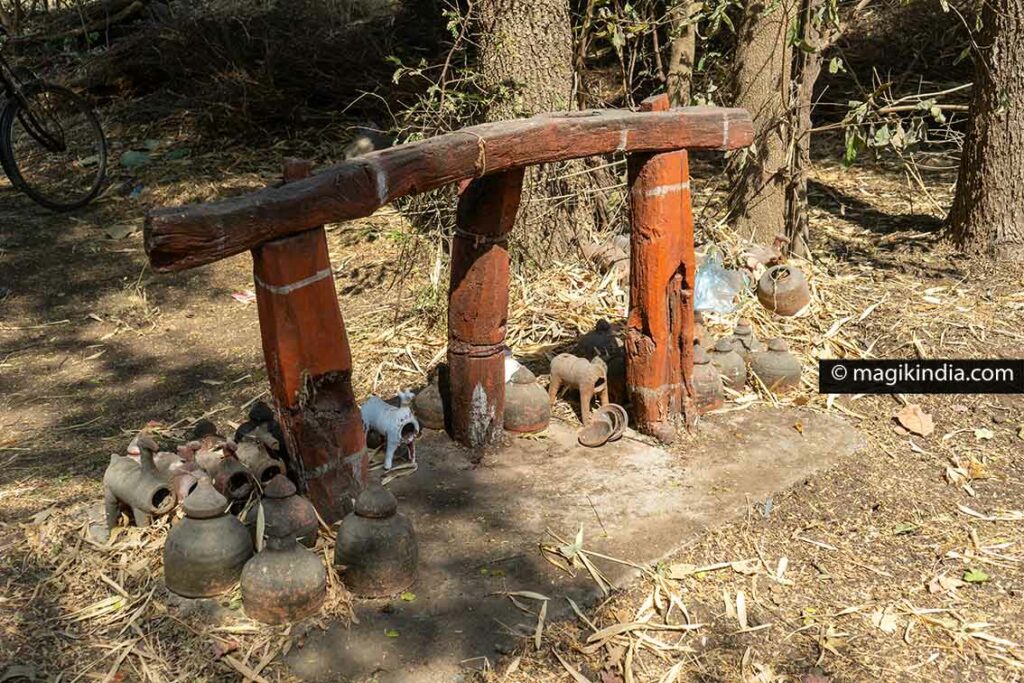
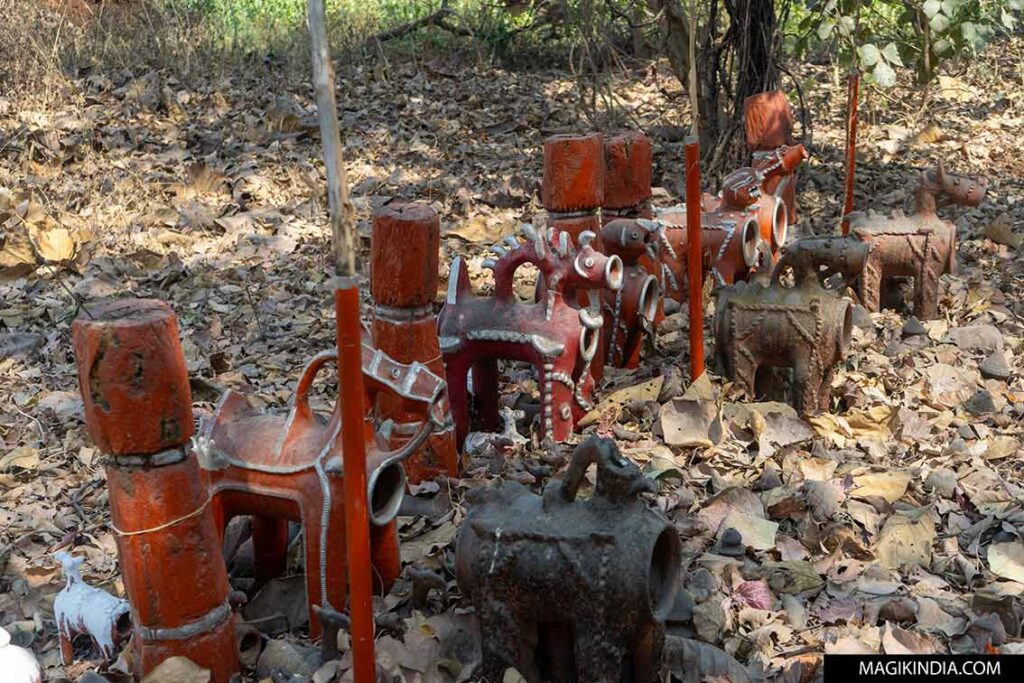
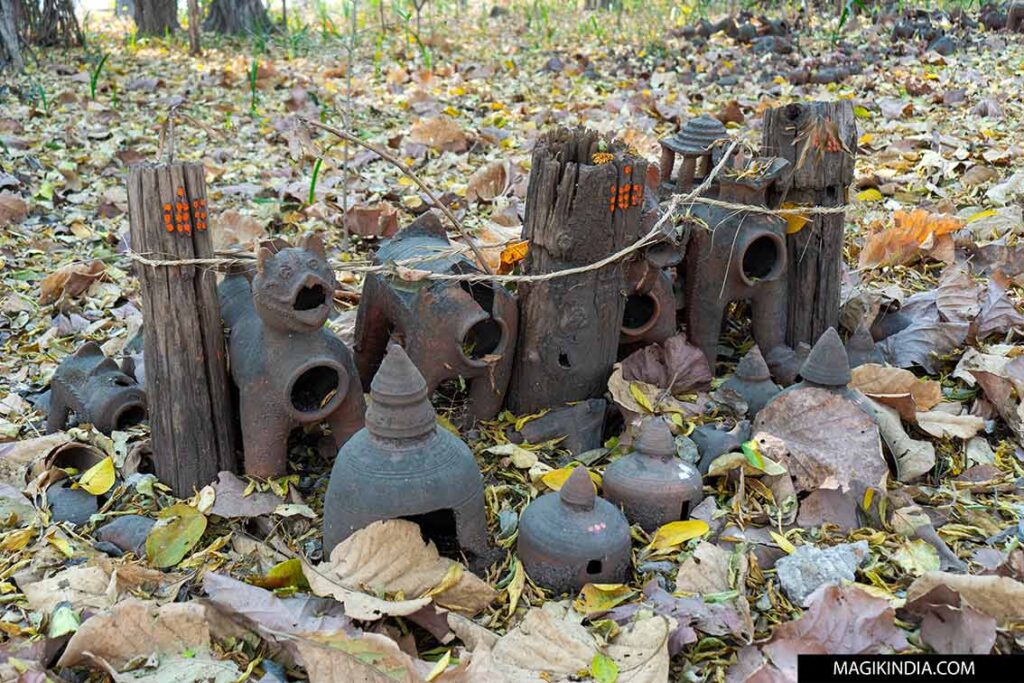
Within the Devsthan, the eye is captured by the Khambha, these sober wooden posts, often marked with orange dots, which serve as spiritual anchors. During ceremonies, they become the sacred junction point where the spirit of the divinity or ancestor comes to settle, allowing a tangible communion between the worlds.
Terracotta offerings
The Rathwa place a wide variety of terracotta figurines in their sacred groves. These objects generally represent stylised figures which embody the protective powers of the place.
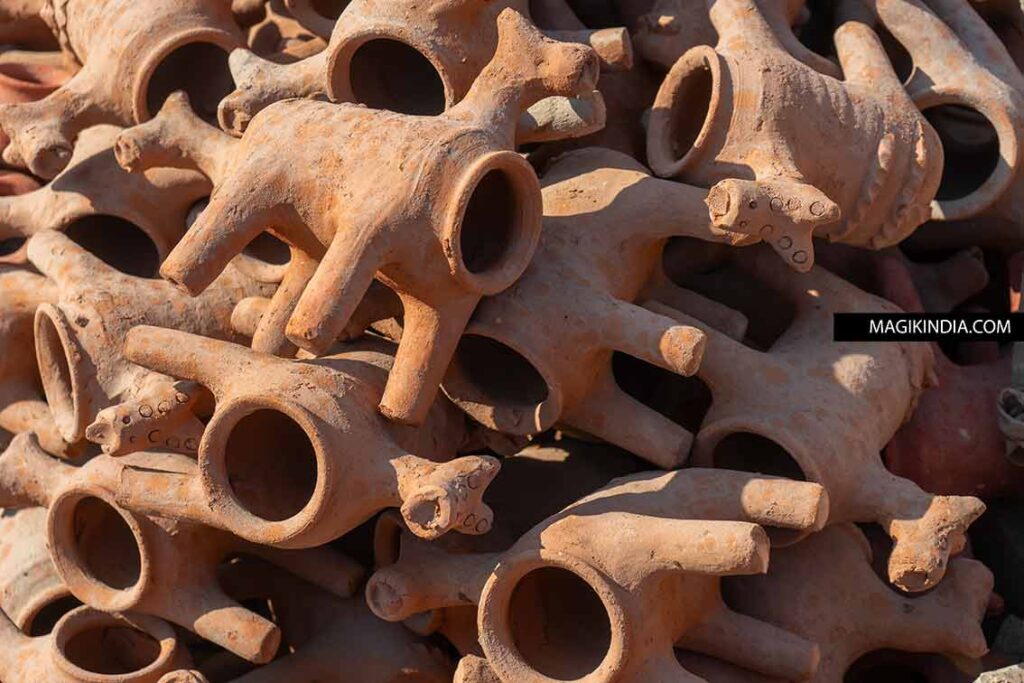
Terracotta horses hold a prominent place in the sanctuaries. Symbols of prestige and mobility, they serve as mounts for the deities, enabling them to traverse the worlds to bring aid and protection. This sacred menagerie is regularly enriched by other figures (elephants, camels, or tigers) that populate this world of clay.
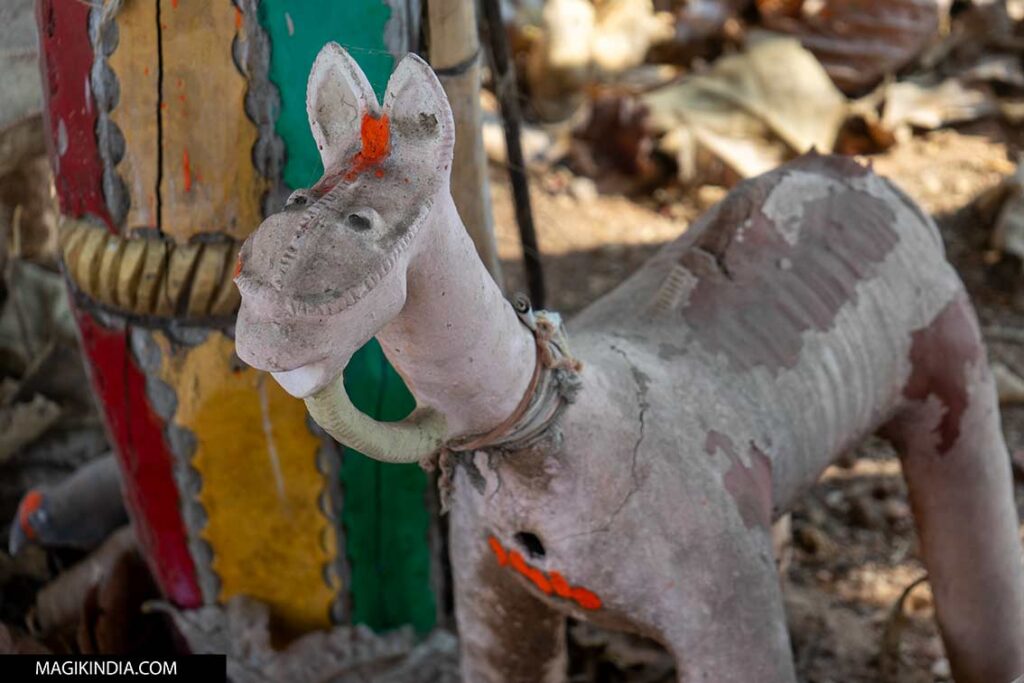
Dozens, or even hundreds, of these figurines can be found in a shrine. When a wish is granted, the family brings a new horse to the shrine. Over time, these horses crumble and return to the earth, symbolising the natural cycle.
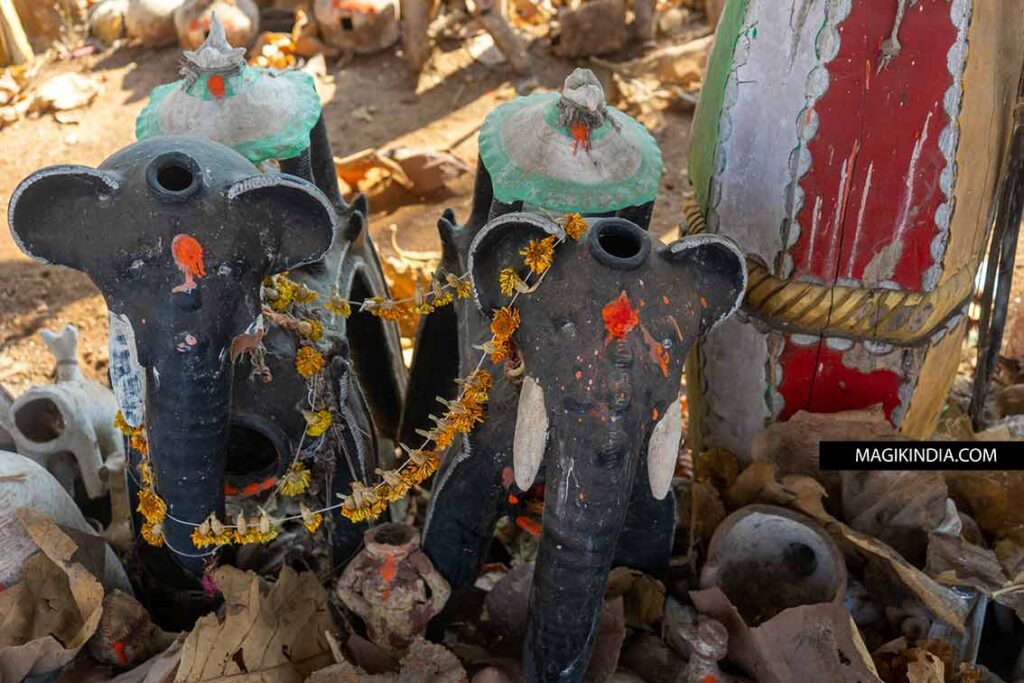
The deities depicted
Here is a selection of deities (there are hundreds of them), reflecting the richness of the Rathwa pantheon:
- Baba Pithora: The central deity, often associated with the creation of the world and fertility. It is the pillar around which the narrative art of the mural paintings is organized.
- Baba Dev: Generic term for the protective spirits of the village. Each clan or village has its Baba Dev sanctuary where hundreds of horses accumulate, forming veritable terracotta “armies” protecting the village border.

- Baba Ind : He is the principal recipient of the large terracotta horses. As the god of rain and fertility, he “rides” across the clouds and fields. Offering him a horse ensures that water arrives in time for sowing.

- Dongar Dev (the mountain god): to appease the spirit of the heights and ensure the safety of those gathering wood or fodder there, horse figures are placed on the hillsides.

- Khetarpal: the guardian of the fields. He is given small figurines so that he can guard against pests and evil spirits that could spoil the harvest.
- Gowal Dev: responsible for the growth of livestock and their good health; in short, he protects their goats, poultry, etc.

- Bhathiji Maharaj : when a person suffers a snakebite or an insect sting, or is ill. In the event of a snakebite, the shaman ties a thread and gives the victim neem leaves to chew. If the leaves taste sweet, it indicates the presence of poison in the body.
Rathwa festivals
The Rathwa calendar is marked by a succession of key moments, when community life comes alive with the fervor of festivals. Among the most notable are Jatar, Divasa, Navai, and Diwali, which punctuate the year with their rituals and colors.
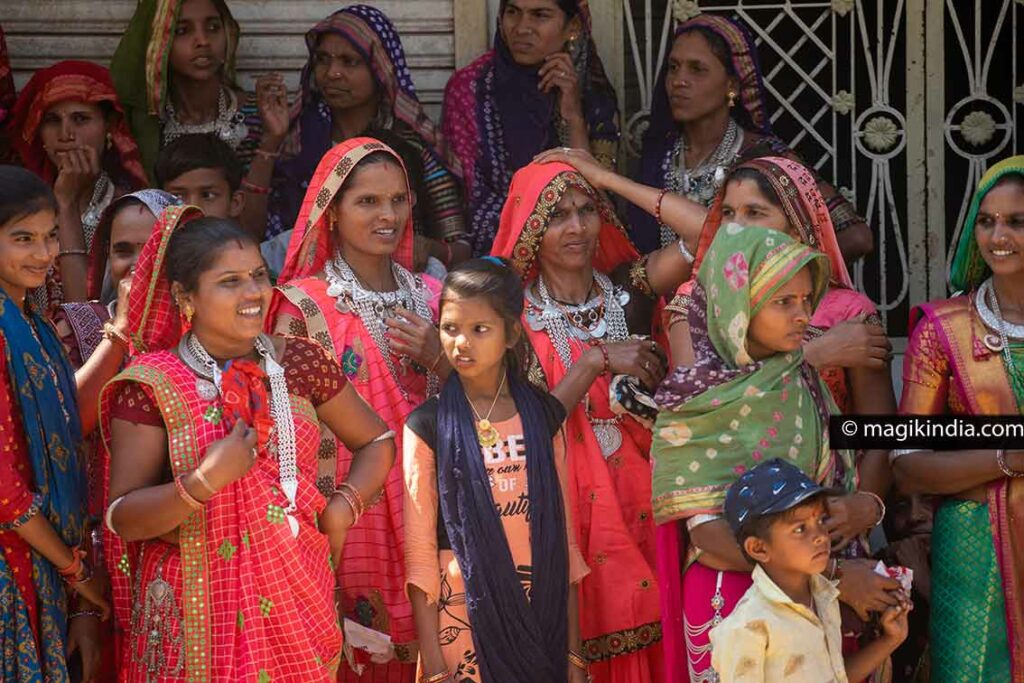
Yet it is undoubtedly Holi that marks the pinnacle of this vibrant energy. The event spans several days, forming an intense ritual cycle. It begins with Bhagoria, a true carnival of social connection and vitality, and continues with the spirit of the traditional Holi festival, and finally culminates in Kavant, bringing a close to this suspended moment in time when the Rathwa tradition finds its most powerful expression.
Bhagoria: The Carnival of Encounters
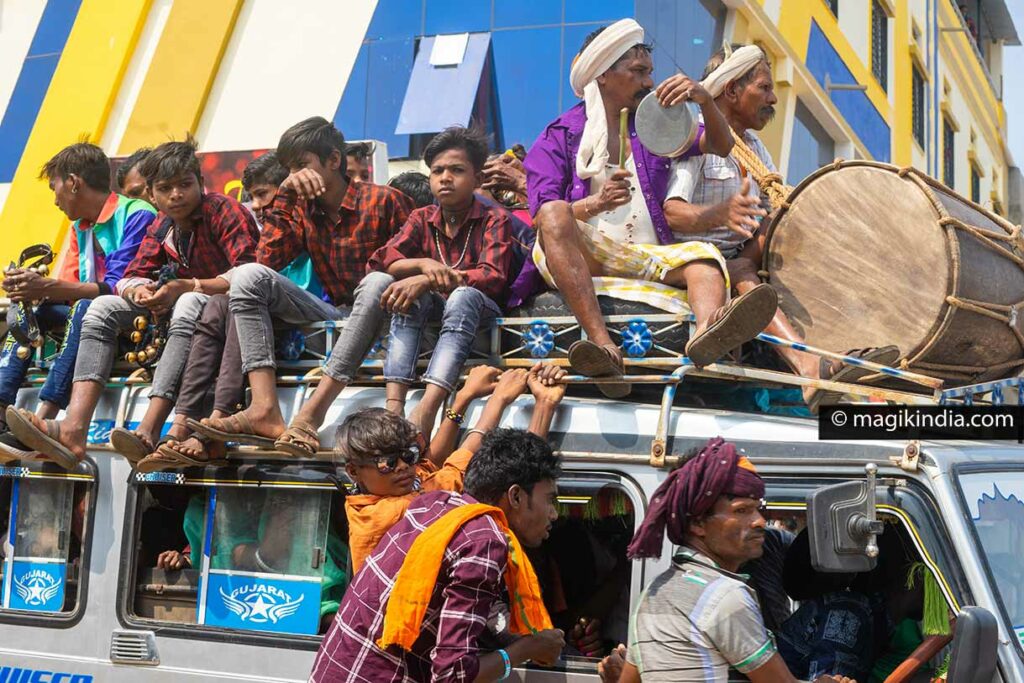
Bhagoria is not merely a celebration; it is a social institution. Often described as a “festival of love,” it takes place just before Holi. It is a time of total freedom when young men and women, dressed in their finest attire, gather at local fairs.
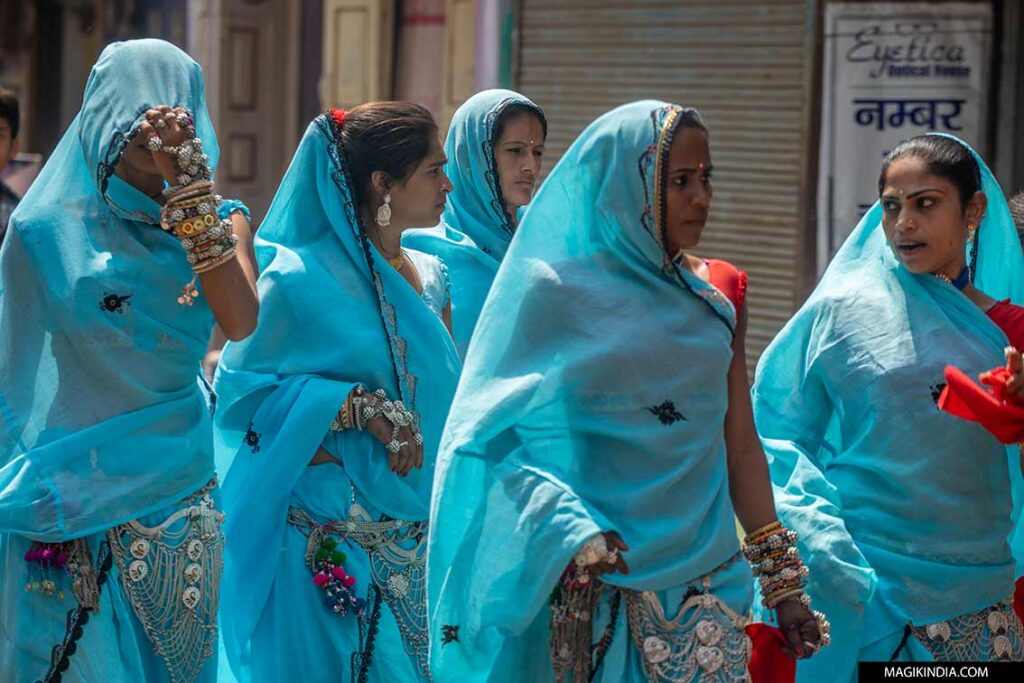
This is where alliances are made. Traditionally, if a young man offers paan (betel leaf) to a young woman and she accepts it, the sign is clear: their union is sealed under the gaze of the community.
KNOW MORE ABOUT BHAGORIA
Holi: the ritual blaze
Holi Rathwa goes far beyond the boundaries of the famous Indian festival of colors. Among the Adivasi, it is a celebration deeply connected to agrarian cycles and fertility.
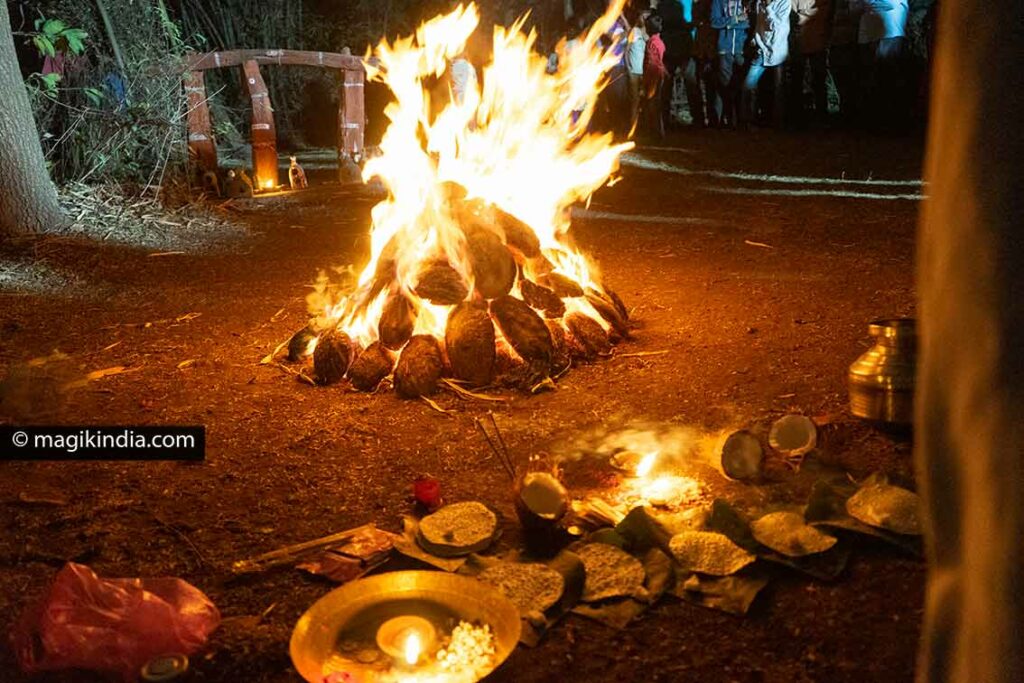
No color pigments here, Holi is the time when we thank the deities for the past harvest and when we invoke protection for the one to come. The fire, the central element, is lit at nightfall: around the brazier, the elders transmit the history of the people and ancestral stories, strengthening the cohesion of the clan in a whirlwind of circular dances.
KNOW MORE ABOUT HOLI WITH THE RATHWAS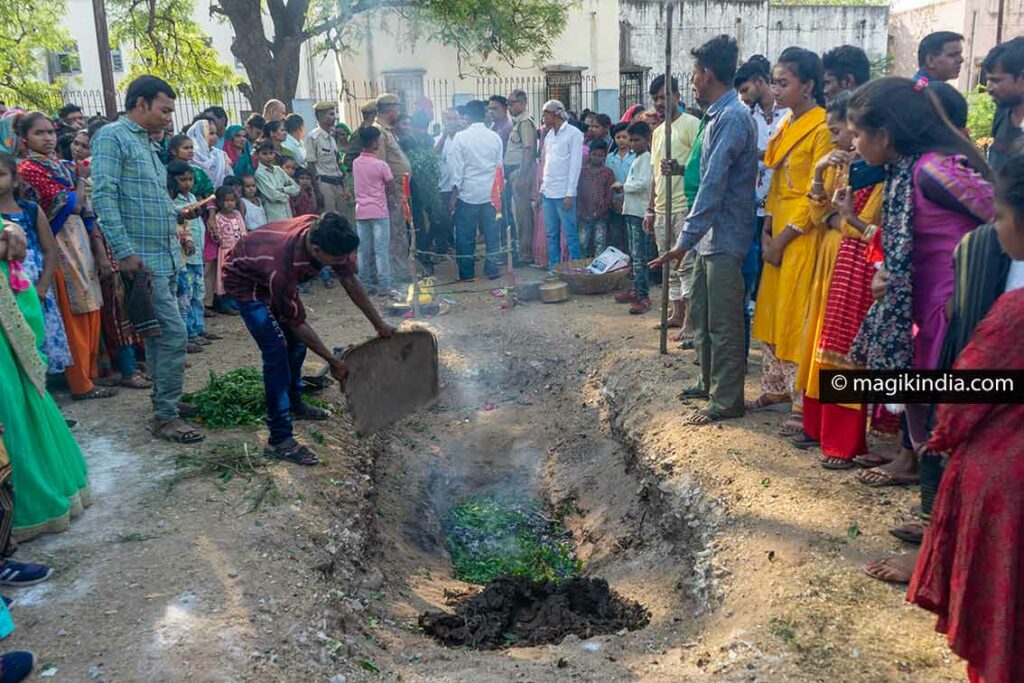
Kavant: a visual tour de force
Kavant is undoubtedly the most spectacular moment, often considered the finale of this festive cycle. Originating from the village of Kavant, this festival attracts communities from all over the region.
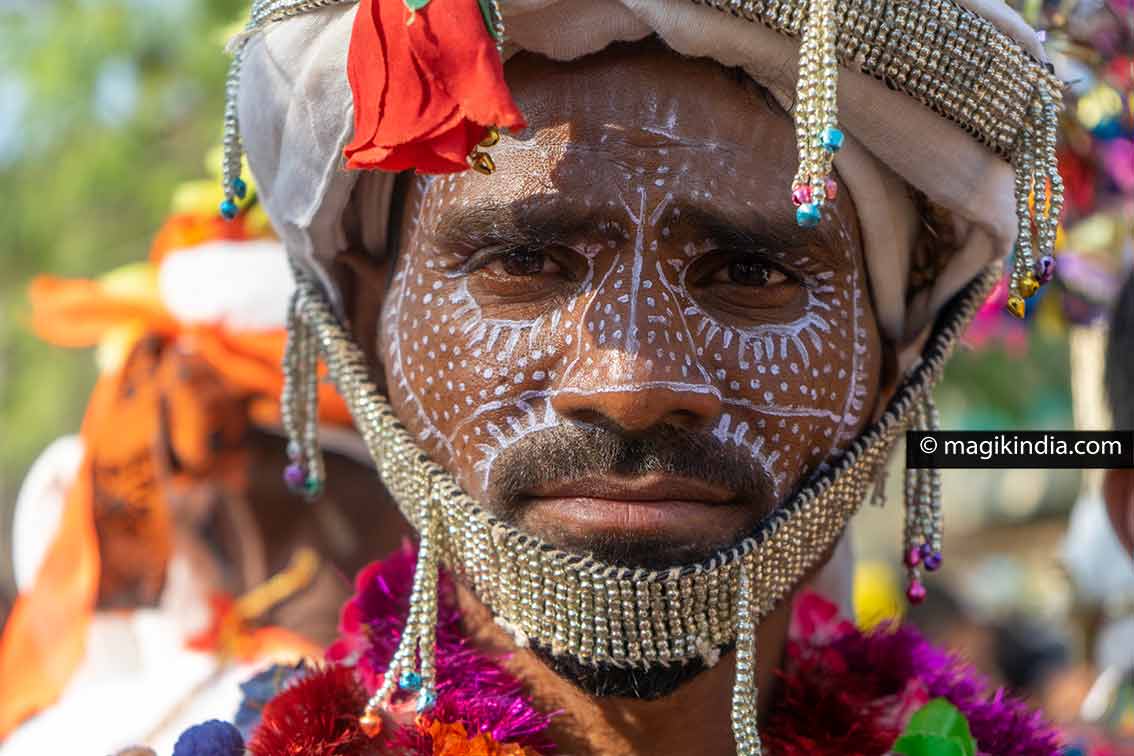
Rathwa men engage in memorable ritual dances. They paint their bodies with intricate designs in white clay, adorning themselves with beaded necklaces, bells and shimmering traditional clothing.
KNOW MORE ABOUT KAVANT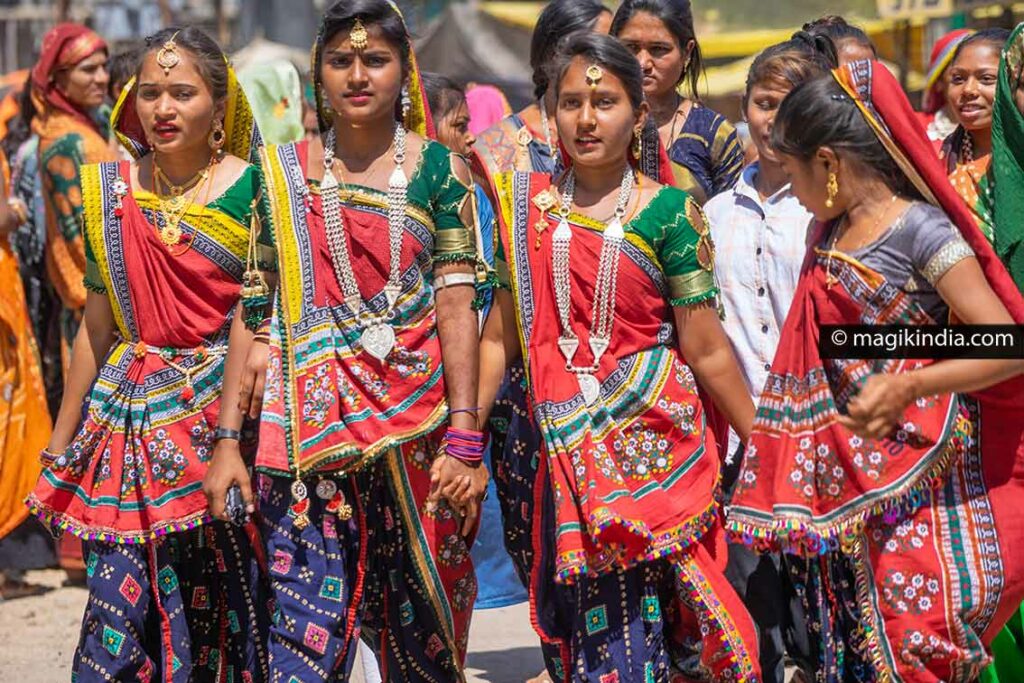
MEET THE RATHWAS DURING HOLI !
Vous aimerez peut-être aussi...

The Santhal people constitute one of India's largest indigenous communities, primarily settled in the states of Jharkhand, West Bengal, Odisha,...
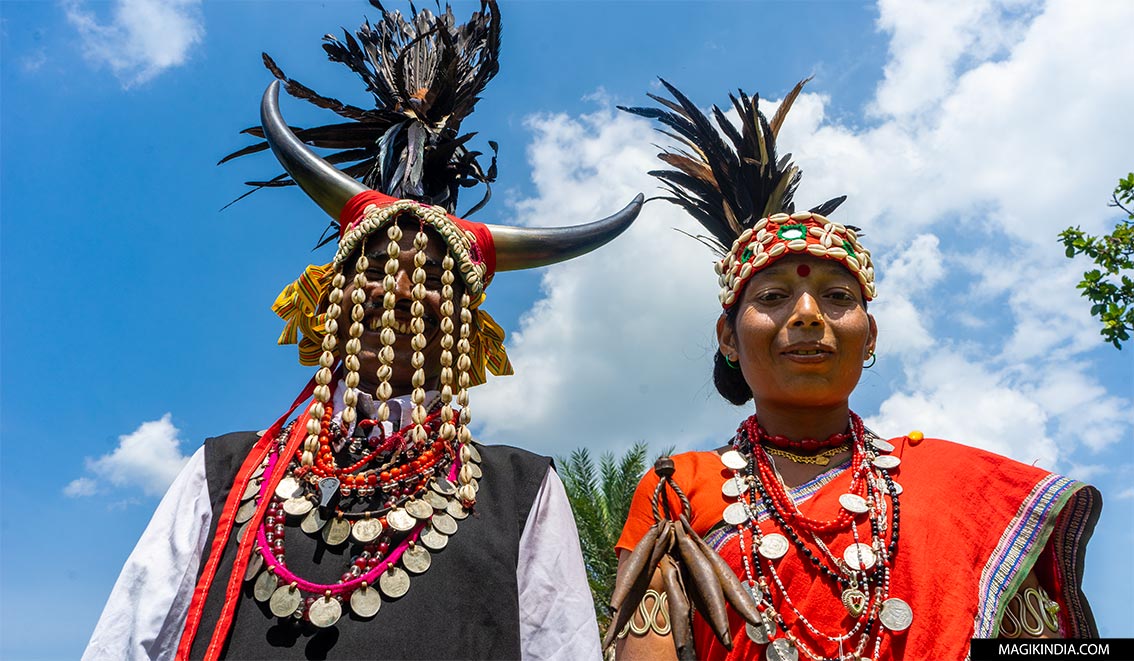
Inhabiting the high plateaus of Bastar (Chhattisgarh), the Dandami Maria tribe constitute an emblematic branch of the Gond people, distinguished...
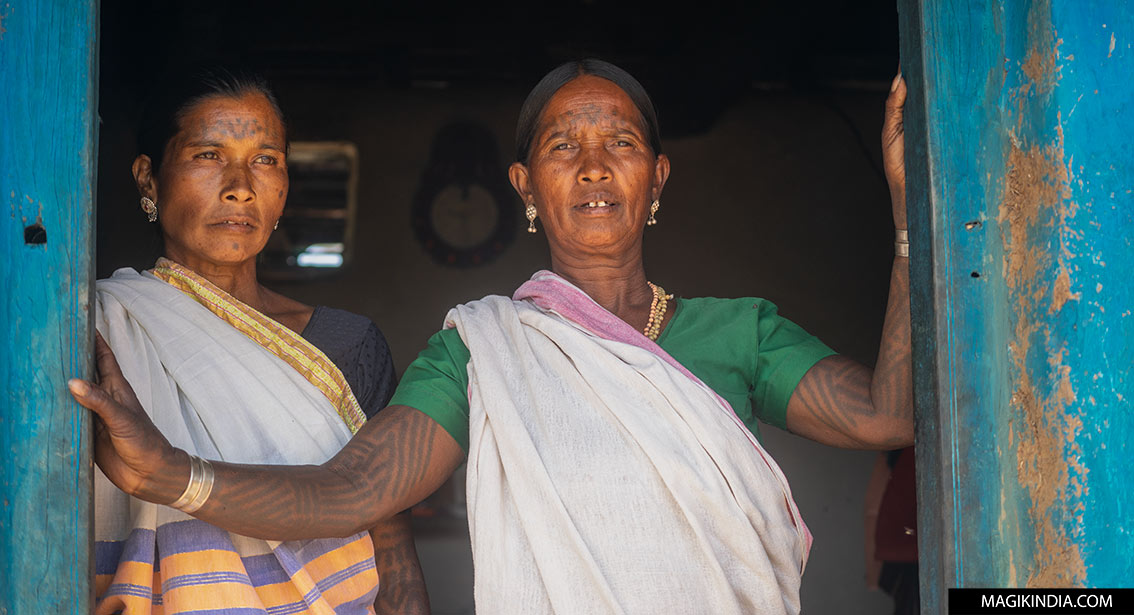
The Baiga tribe, nestled deep within the dense forests of northern Chhattisgarh, define themselves above all as the spiritual guardians...

The Muria tribe, a major branch of the Gond ethnic group, inhabits the highlands and forests of the Bastar district...
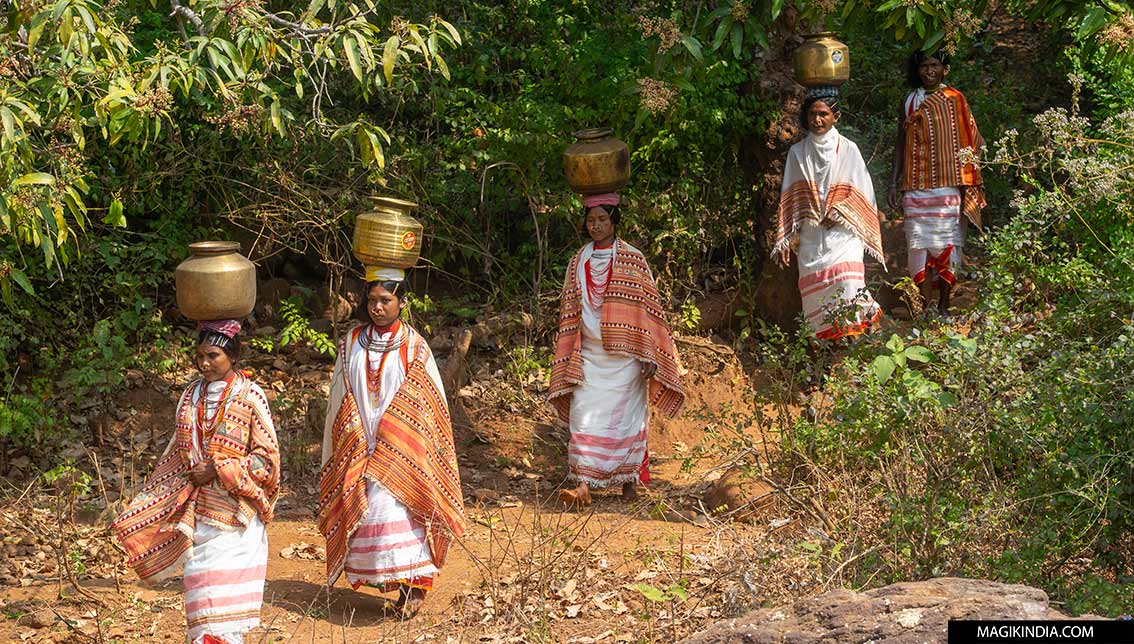
Nestled within the rugged terrain of Odisha’s Niyamgiri Hills, the Dongria Kondh cultivate a sovereign elegance that finds expression as...

