
Situated between Jaipur and Agra, Abhaneri, the ancient "City of Brightness" (Abha Nagri), is a historical treasure. Its heritage rests...
Chemrey, the Lion King memorial gompa
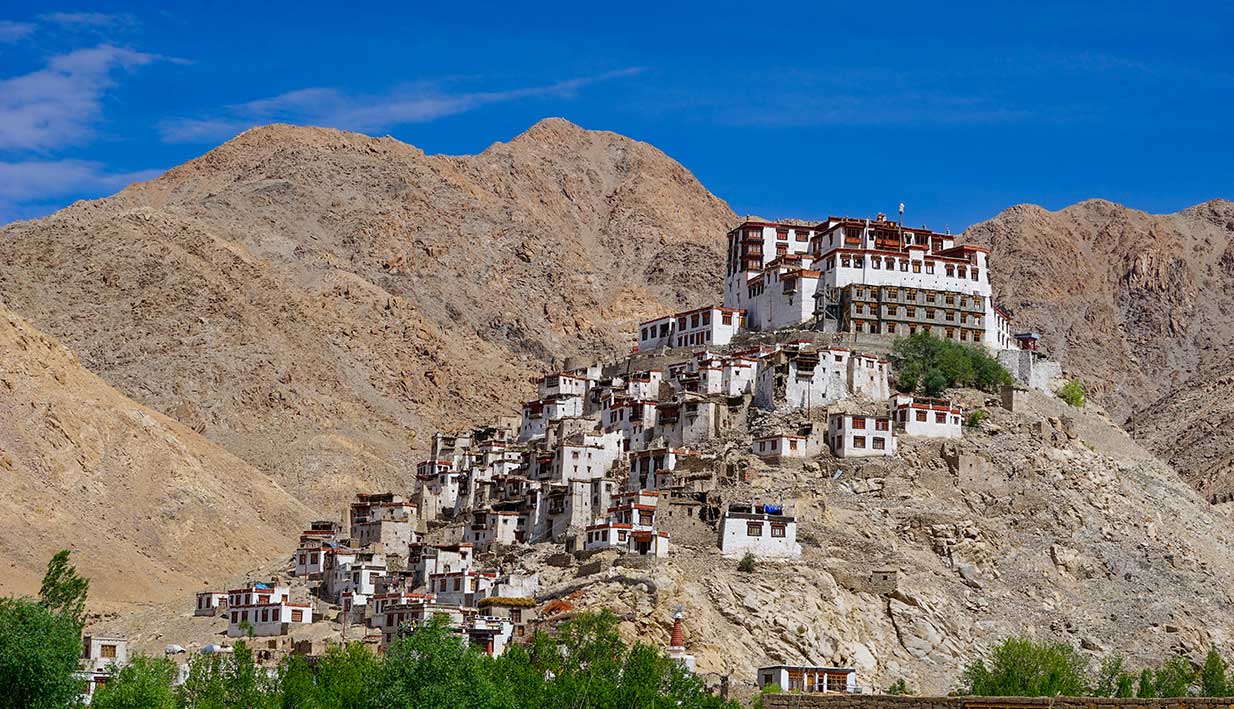
As a lime sentinel emerging from the mineral chaos, the Chemrey gompa appears carved out of the raw verticality of a rocky spur. Founded in the 17th century by the lama Tagsang Raspa to sanctify the memory of King Sengge Namgyal, this bastion of the Drukpa lineage spreads its immaculate walls in dizzying terraces, lifting the chant of the monks towards the azure of Ladakh.
The Foundations of Chemrey
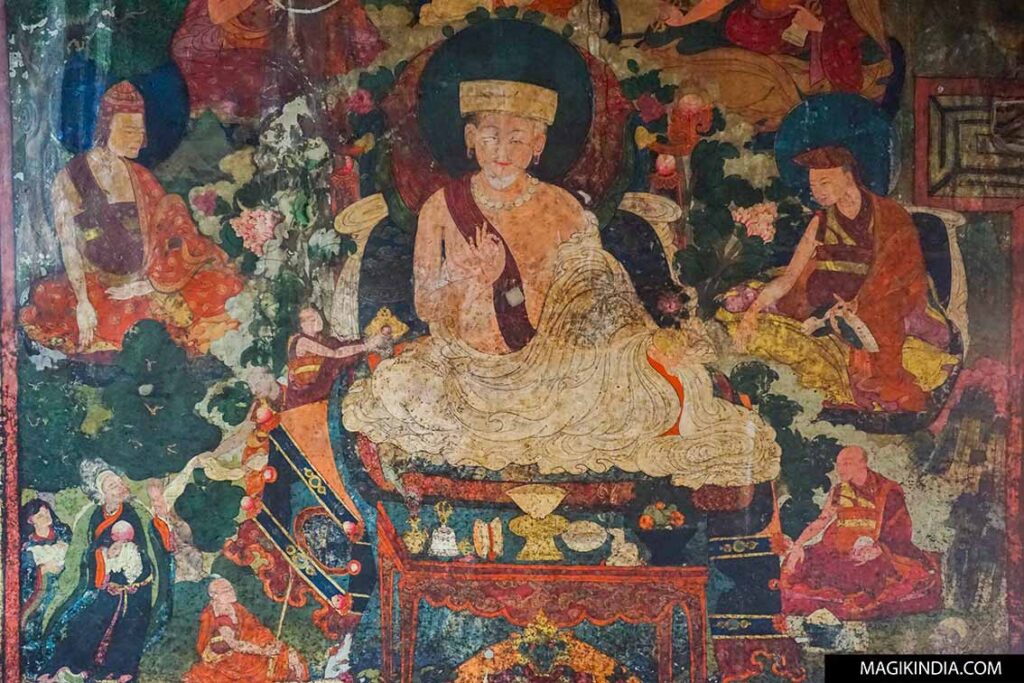
The history of Chemrey was written in 1664 under the aegis of Lama Tagsang Raspa. Nicknamed the “tiger-skinned yogi”, this accomplished master of the Drukpa lineage was much more than a simple builder: spiritual mentor of King Sengge Namgyal, he was the architect of religious revival in Ladakh.
Able to brave the rigors of the Himalayas through advanced yogic practices, this visionary transformed the regional landscape by erecting iconic sanctuaries such as Chemrey, Hemis, and Hanley. His genius lay in the selection of sites with dramatic topography, placing his gompas atop steep ridges to foster asceticism.
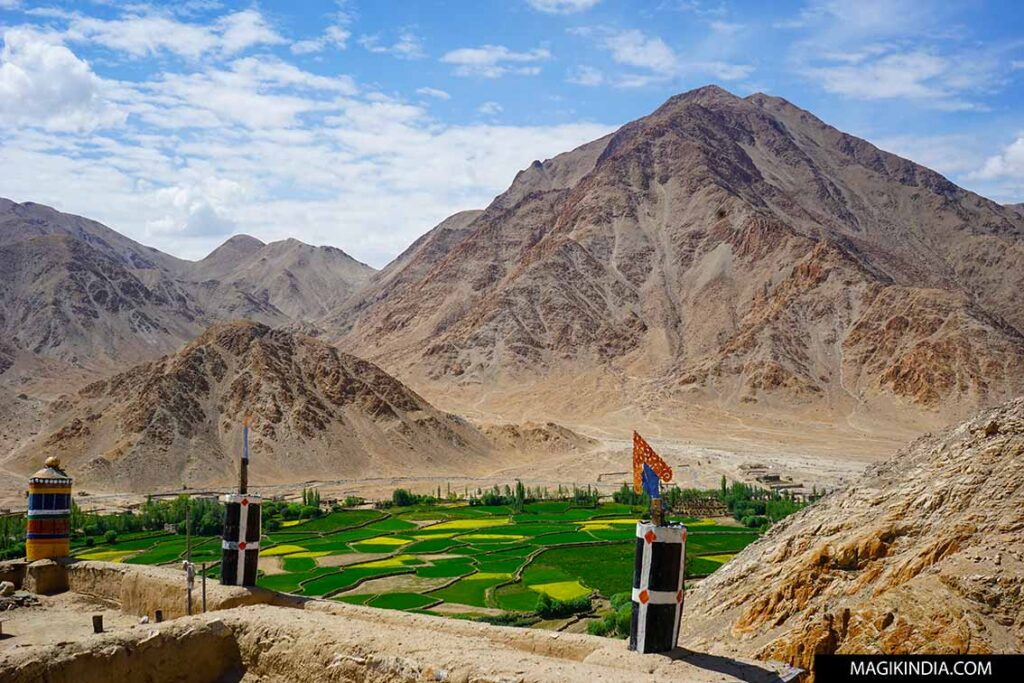
The context of creation of Chemrey goes beyond the simple religious function to become a living memorial. Built at the request of King Deldan Namgyal to honor his father, the legendary “Lion King” (Sengge Namgyal), the monastery celebrates the work of a ruler who dedicated his reign to restoring the greatness of Ladakh through his territorial conquests and his monumental patronage of sacred architecture. This royal origin explains why the gompa was, from its foundation, provided with fertile land and priceless treasures.
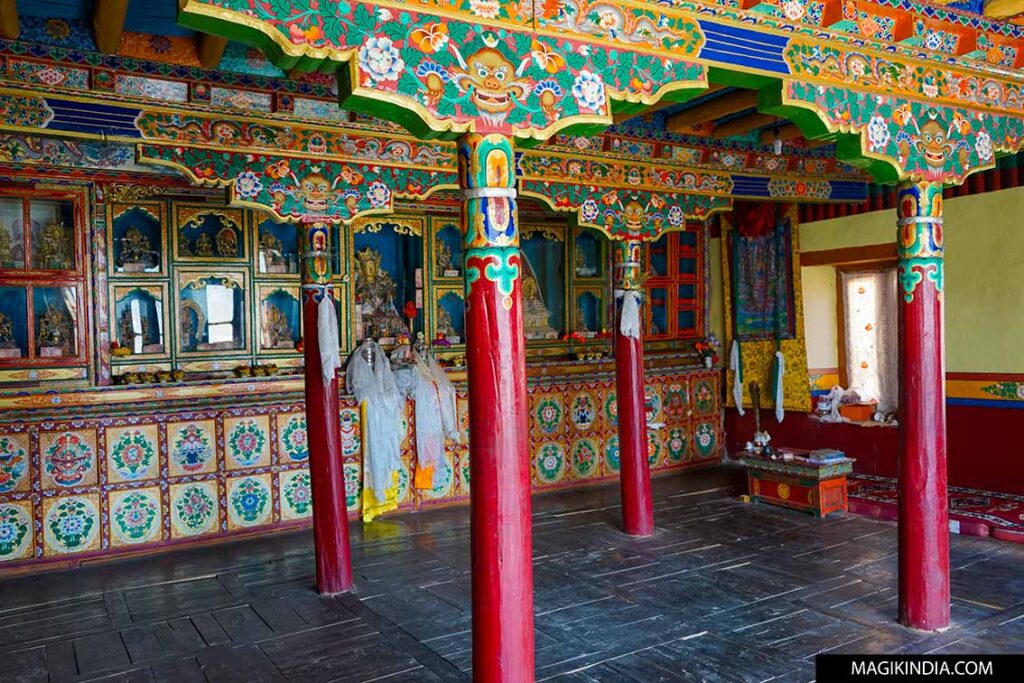
Having become a pillar of the “Dragon” (Druk) school, a branch of the Kagyu order, Chemrey continues to uphold this mystical tradition to this day, standing as a major center of Tibetan Buddhism where royal heritage intertwines with the spiritual quest.
Architecture of the Gompa
The architecture of Chemrey is a masterpiece of adaptation to the relief, perfectly illustrating the concept of a fortress-gompa where the religious structure merges with the natural defense of the site.
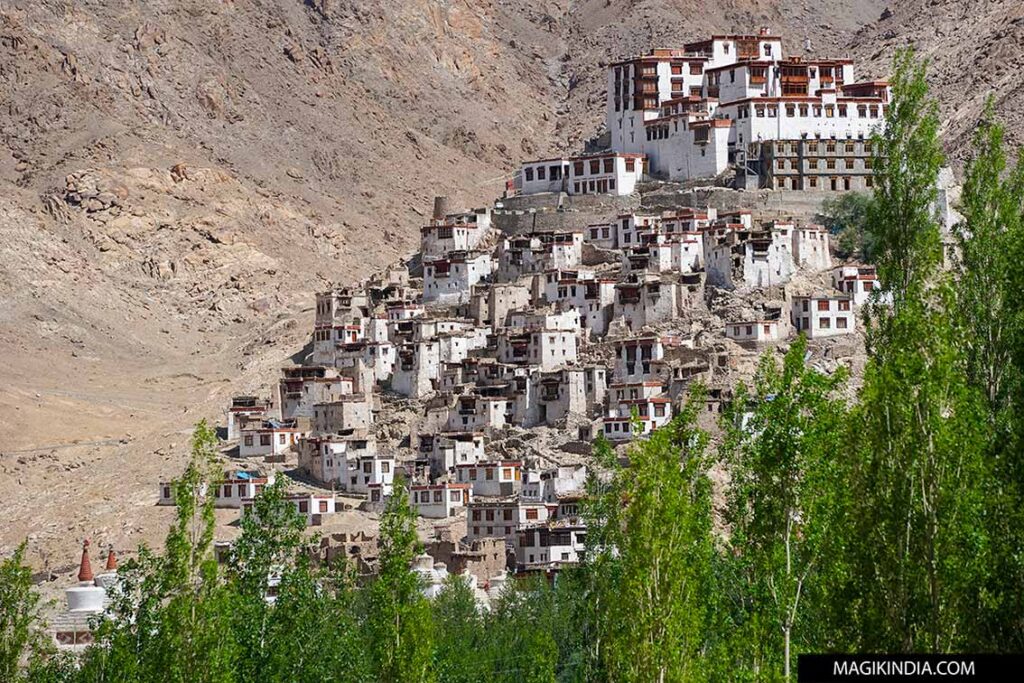
Unlike other monasteries installed on plateaus, Chemrey follows the pyramidal shape of a rocky spur. The buildings stack on top of each other, creating an organic silhouette that seems to extend the growth of the mountain.
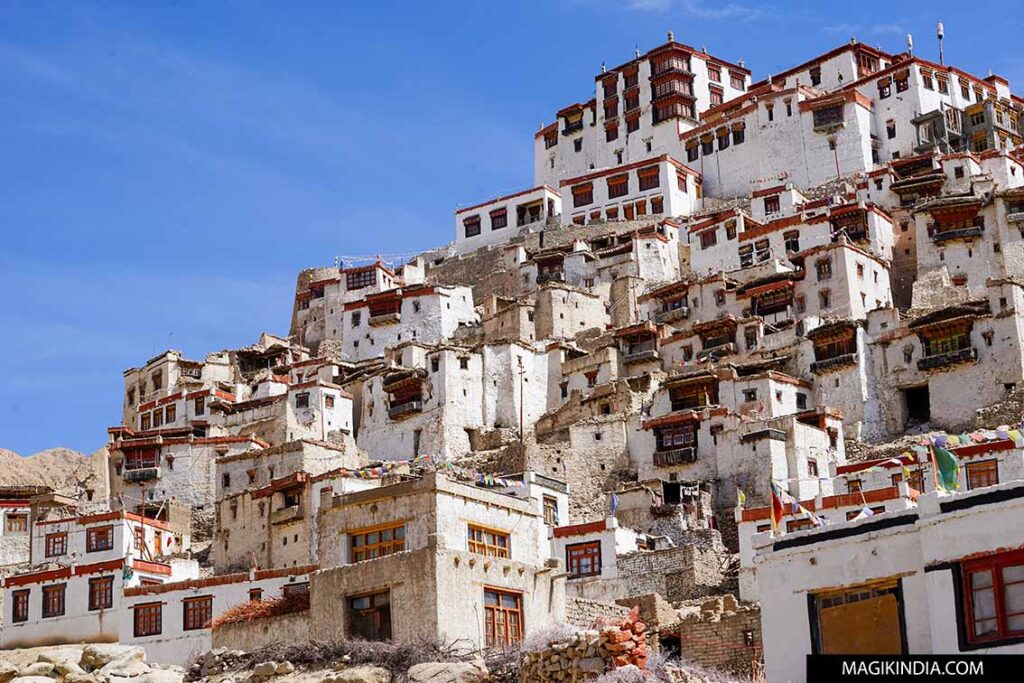
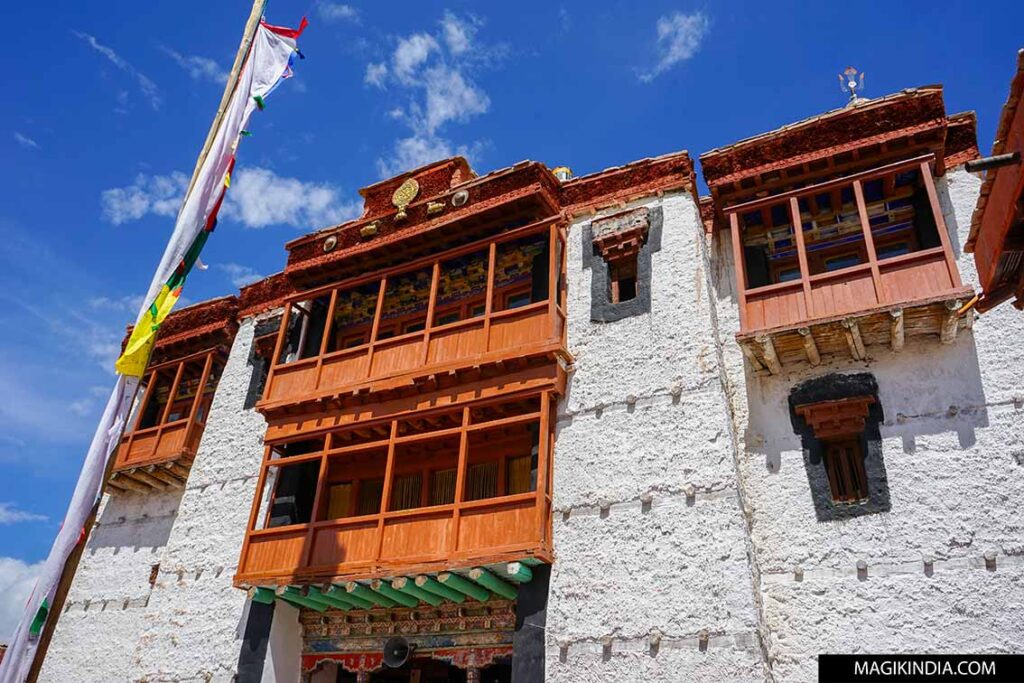
The massive walls, slightly inclined inwards (the result of the Tibetan architectural style), are built of dry stone and mud bricks to absorb seismic tremors. The base of the buildings is whitewashed, while the upper parts and window frames often feature red ocher hues (maru), signaling the most sacred spaces.
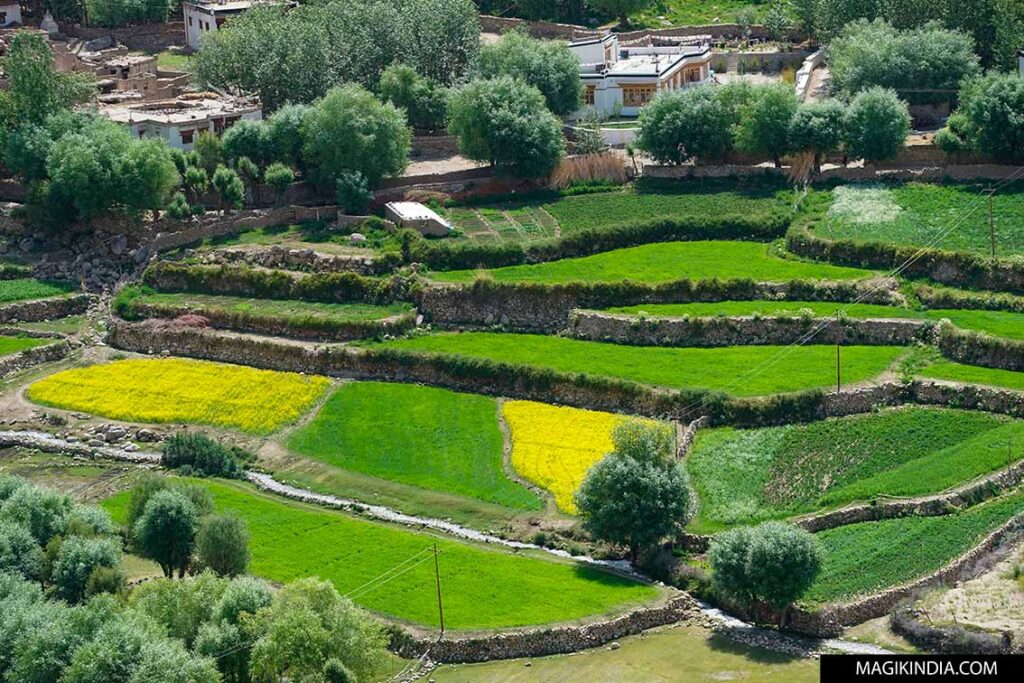
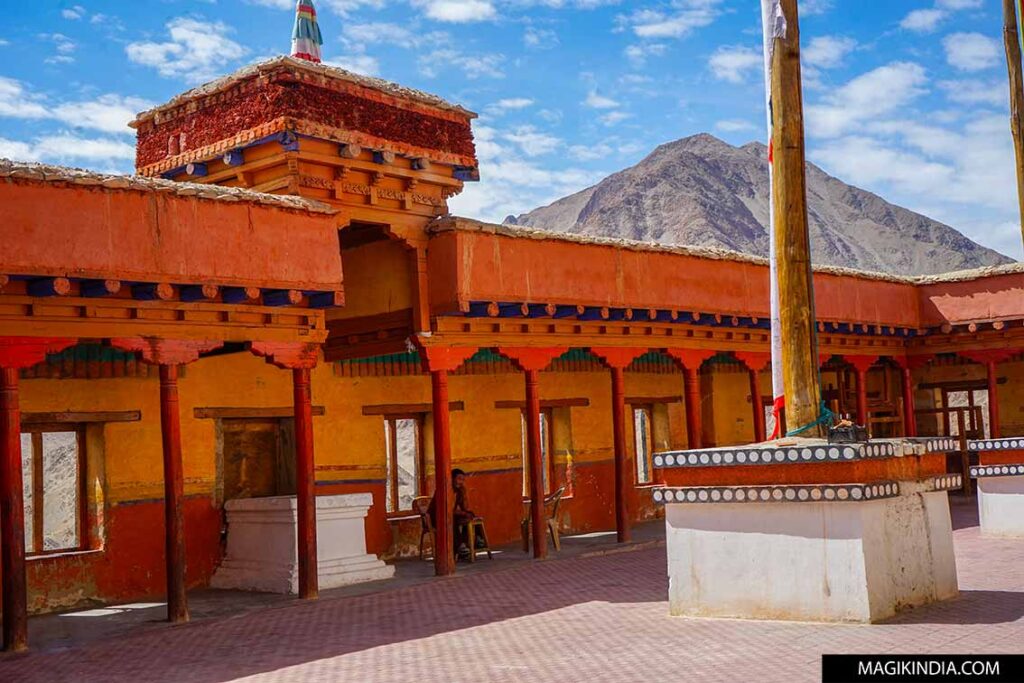
At the heart of the monastery, the main courtyard, a vast stone space surrounded by galleries of carved wood, is transformed each year during the Chemrey Angchok which is generally held on the 28th and 29th day of the 9th month of the Tibetan calendar (often in November).
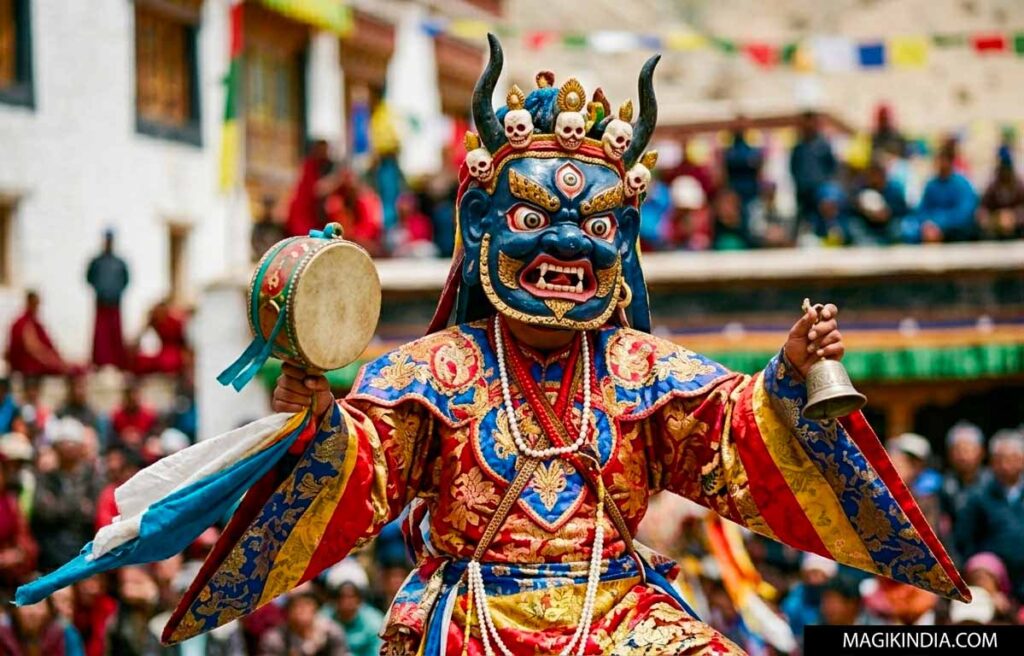
For two days, the monks practice the sacred Cham dances (masked dances). These rituals symbolize the victory of good over evil and the purification of the spirit.
The Dukhang
At the top of this mineral pyramid, the main building houses the jewel of the monastery: the Dukhang. This assembly room, where time seems to stand still during monastic rituals, stands out as the most spectacular space in the complex.
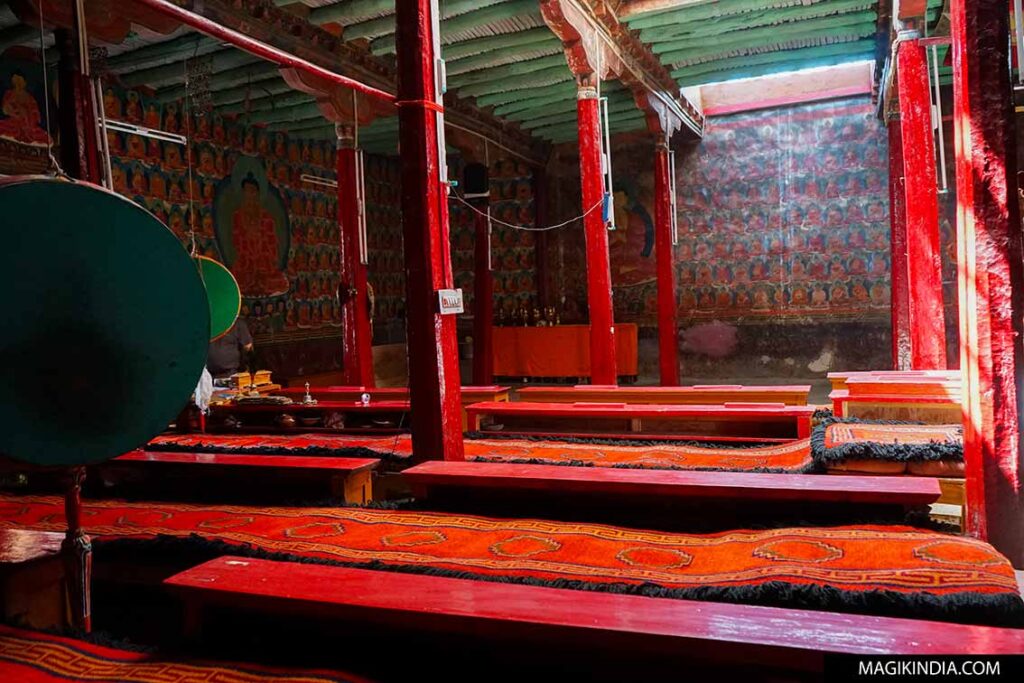
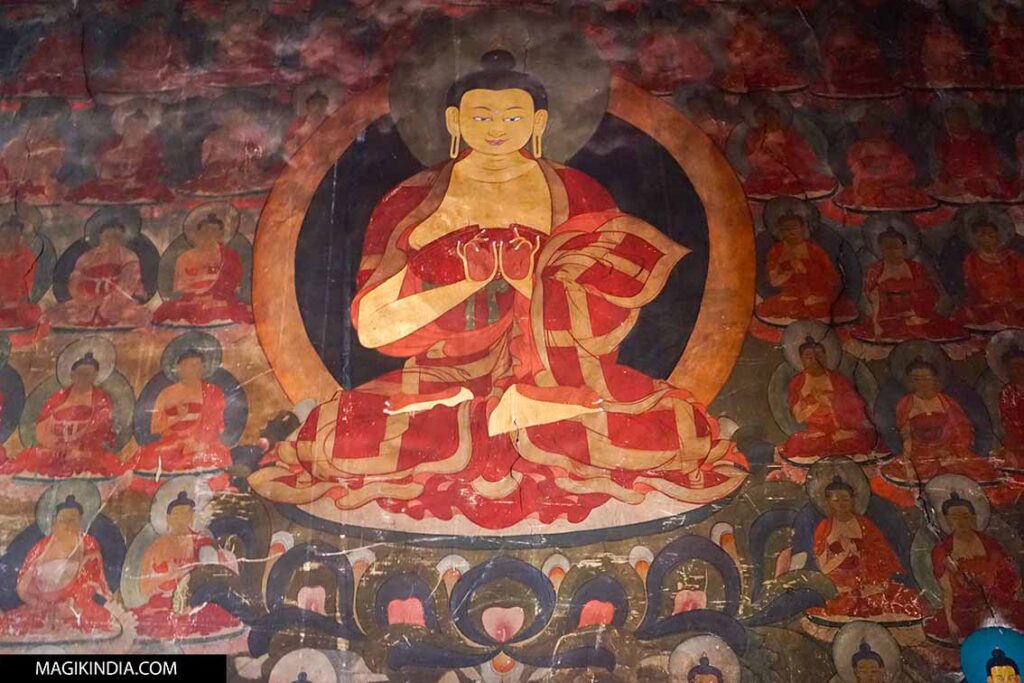
The interior architecture reveals a forest of red-wood pillars supporting beams painted jade green. The walls are entirely covered with frescoes depicting thousands of Buddhas. This vast array of imagery, like a veritable spiritual tapestry, envelops monks and visitors alike in an atmosphere of absolute devotion.
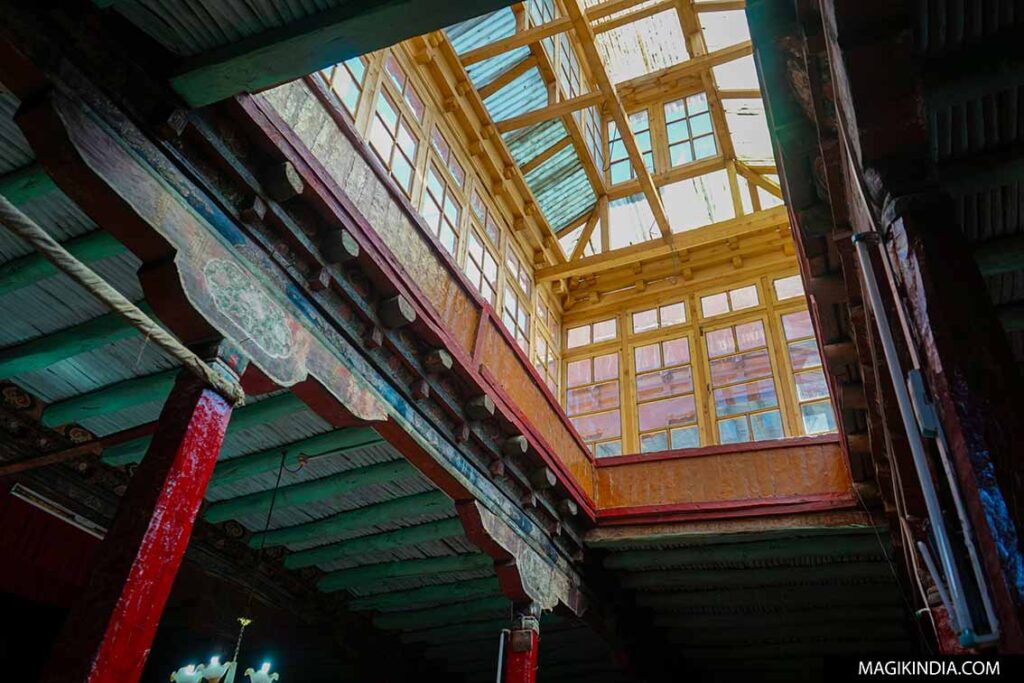
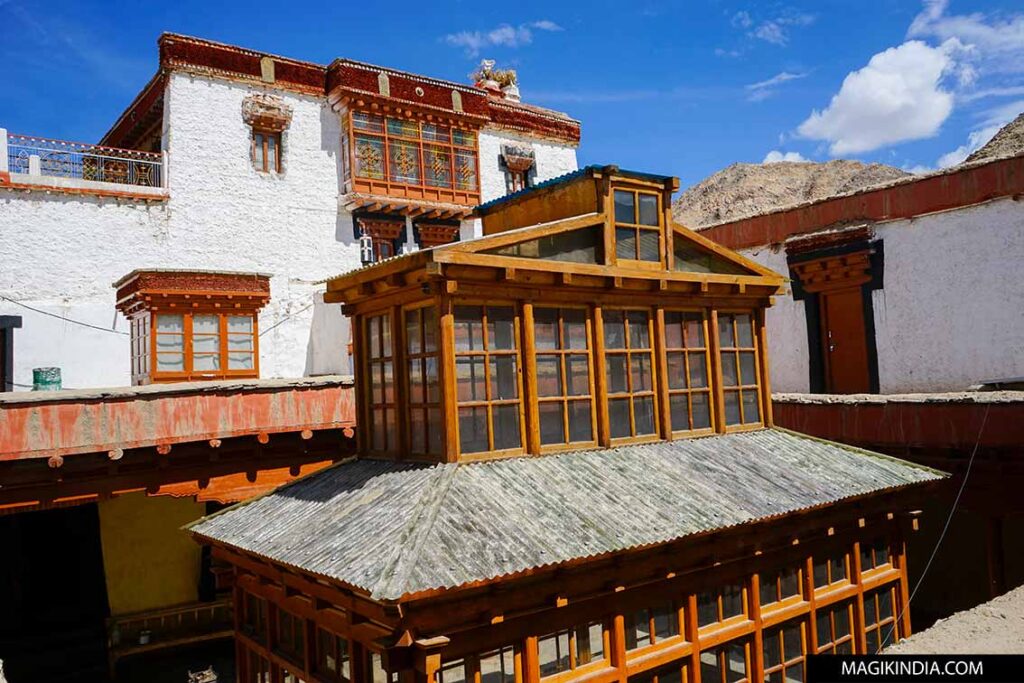
What is immediately striking in this room is the light well created by an overhanging gallery. A true architectural gesture, this structure is similar to a suspended residence which sculpts the space. It does not just bring light; it infuses a geometric harmony which sublimates the darkness of the sanctuary.
The Guru Rinpoche Temple
At the heart of the climb to the peaks of the monastery is the shrine dedicated to Guru Rinpoche, one of the most sacred rooms in Chemrey. This space was specifically designed to house a remarkable bronze statue of Padmasambhava.
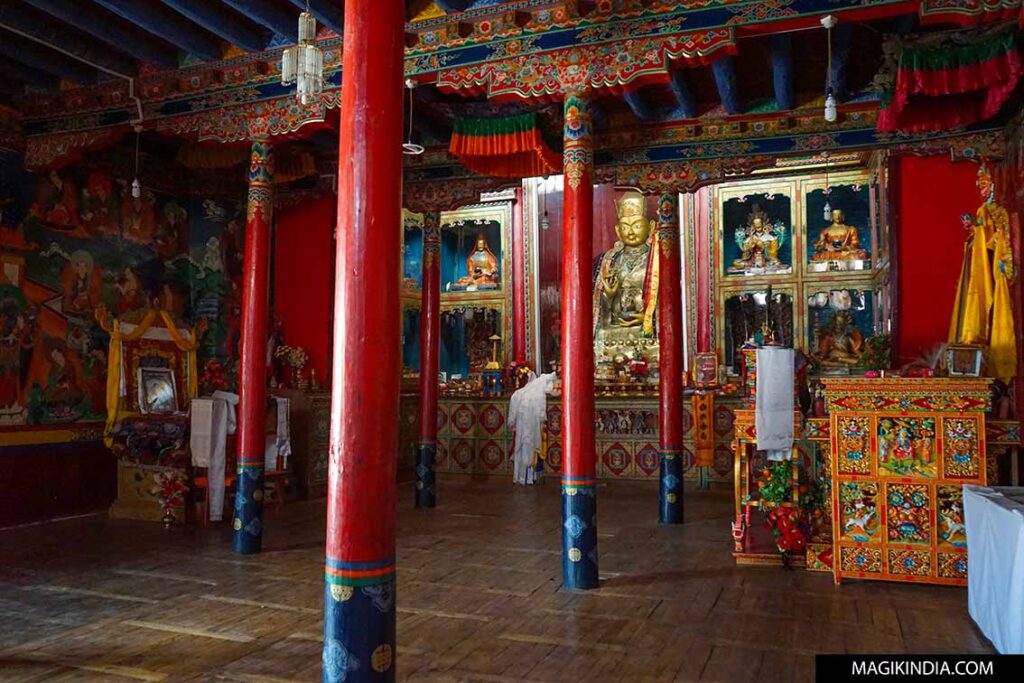
Venerated as the “Second Buddha” throughout the Himalayas, Padmasambhava (or Guru Rinpoche, “the Precious Master”) is the Indian tantric master who introduced Buddhism to Tibet in the 8th century.
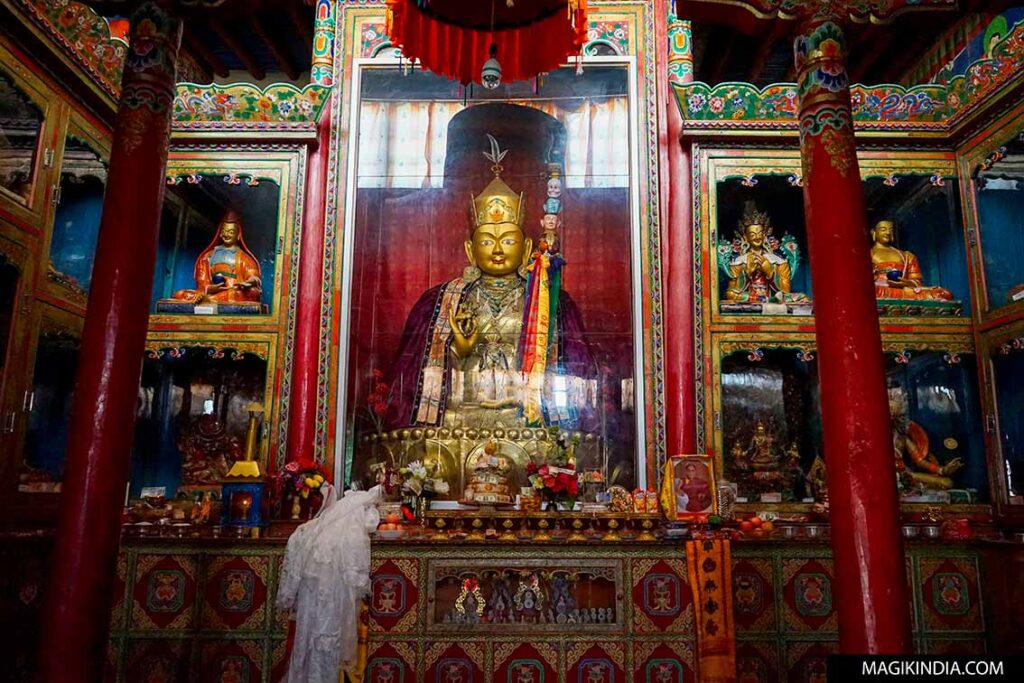
His effigy can be recognised by his piercing gaze, his lotus headdress and his ritual trident, the katvanga, decorated with three superimposed heads representing mastery over the three times or the emptiness of the three worlds. This powerful symbol illustrates his role as a transformer: he is the master capable of transmuting the poisons of the mind and obstacles into radiant wisdom.
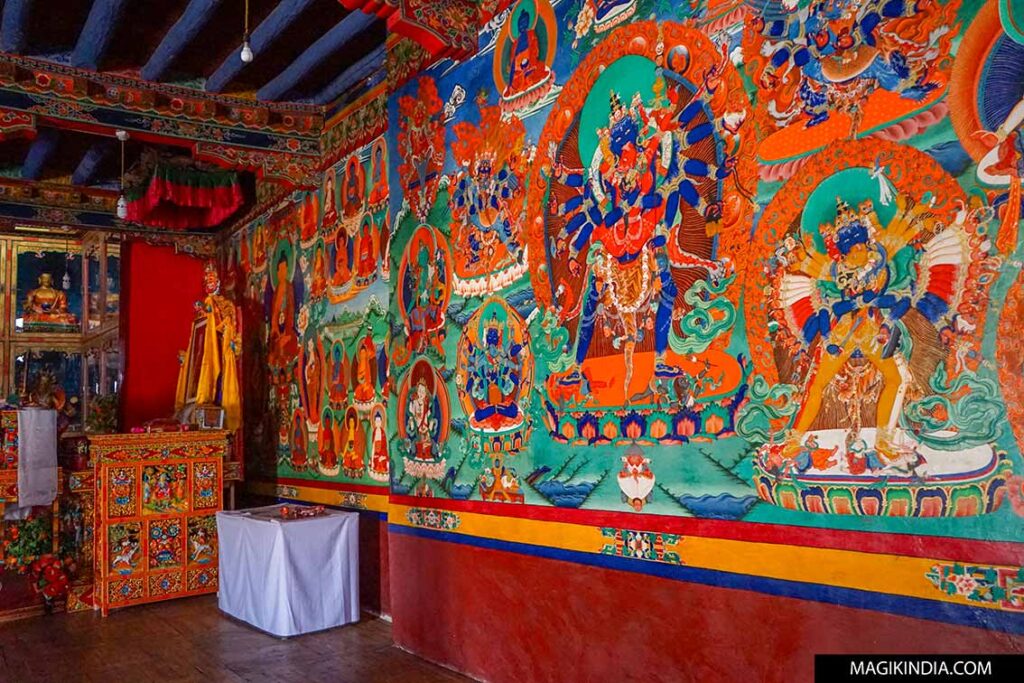
The walls around the Rinpoche statue also reveal the fierce energy of Chakrasamvara in sacred union (Yab-Yum) with his consort Vajravarahi. This passionate embrace is not carnal, but metaphorical: it illustrates the inseparable fusion of active compassion, the only key capable of opening the doors to spiritual liberation.
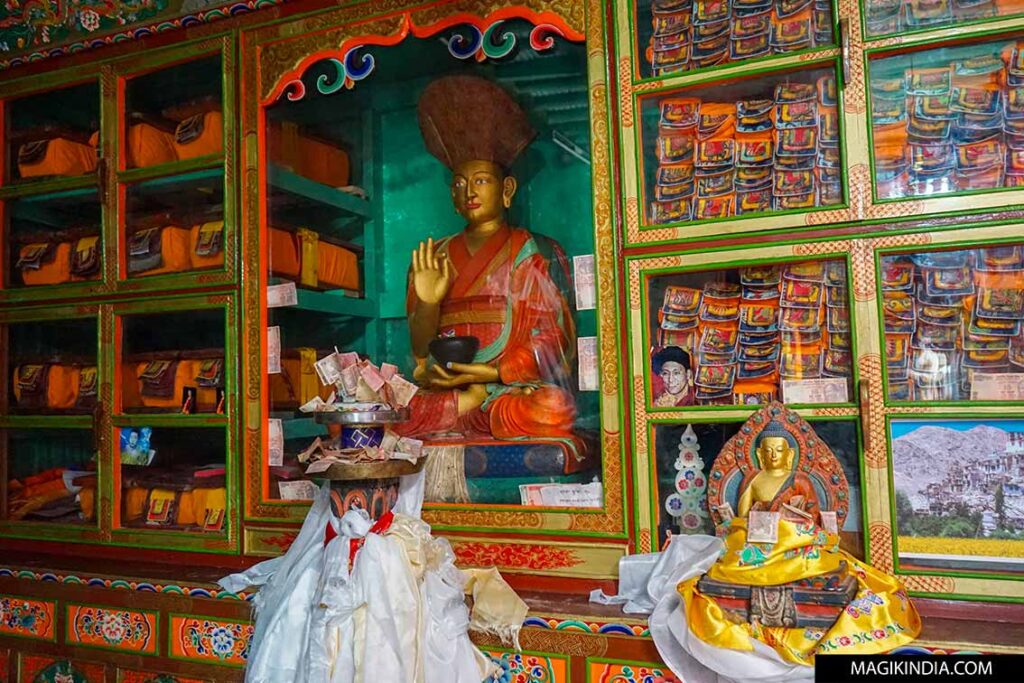
The library
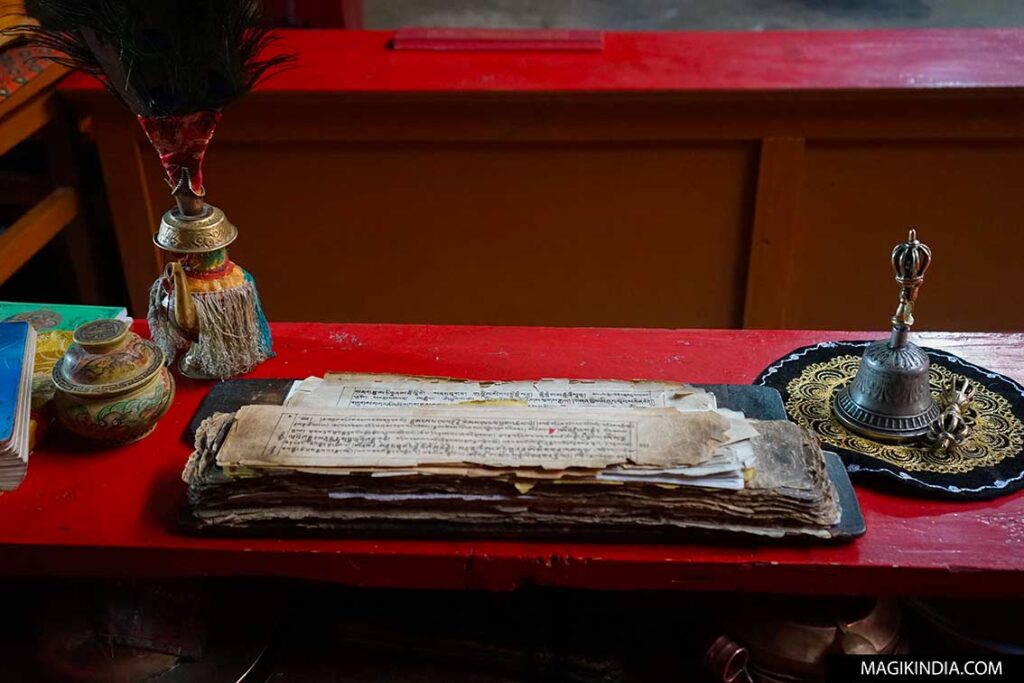
Chemrey enjoys a prestigious reputation thanks to its sacred library, a true sanctuary of Himalayan knowledge. The monastery oversees an exceptional collection of ancient texts, the centerpiece of which remains a unique copy of the Kangyur (the collection of the sayings of the Buddha). This sacred manuscript is distinguished by incredible calligraphy where the titles and texts are inscribed entirely in real gold and silver letters.
The other Lhakhangs (temples) of Chemrey
Overlooking the complex, the upper part of Chemrey is home to the Lama Lhakhang. This minor, but spiritually essential, sanctuary is dedicated to the master lineages; it preserves the heritage and continuity of the Drukpa tradition through the centuries.
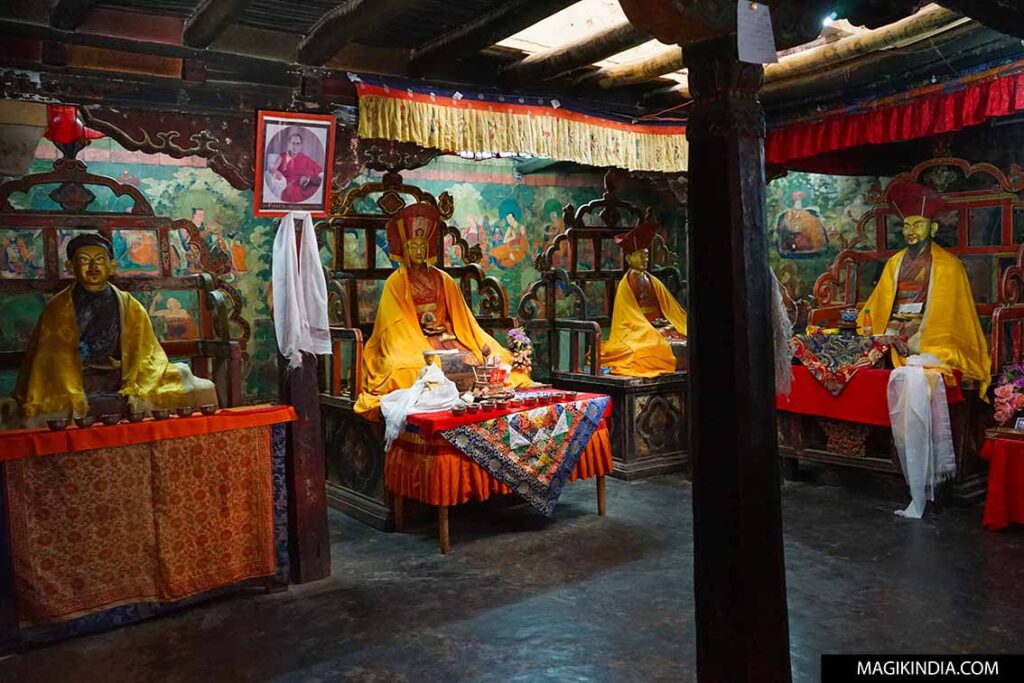
This intimate space is distinguished by its finely carved wooden thrones, upon which sit the central figures of the Drukpa lineage. Notable among them is the effigy of Tagsang Raspa, the monastery’s founder, recognizable by his distinctive headdress and meditative posture. Beside him, successive masters of the lineage appear to keep eternal watch over the spiritual destiny of the gompa.
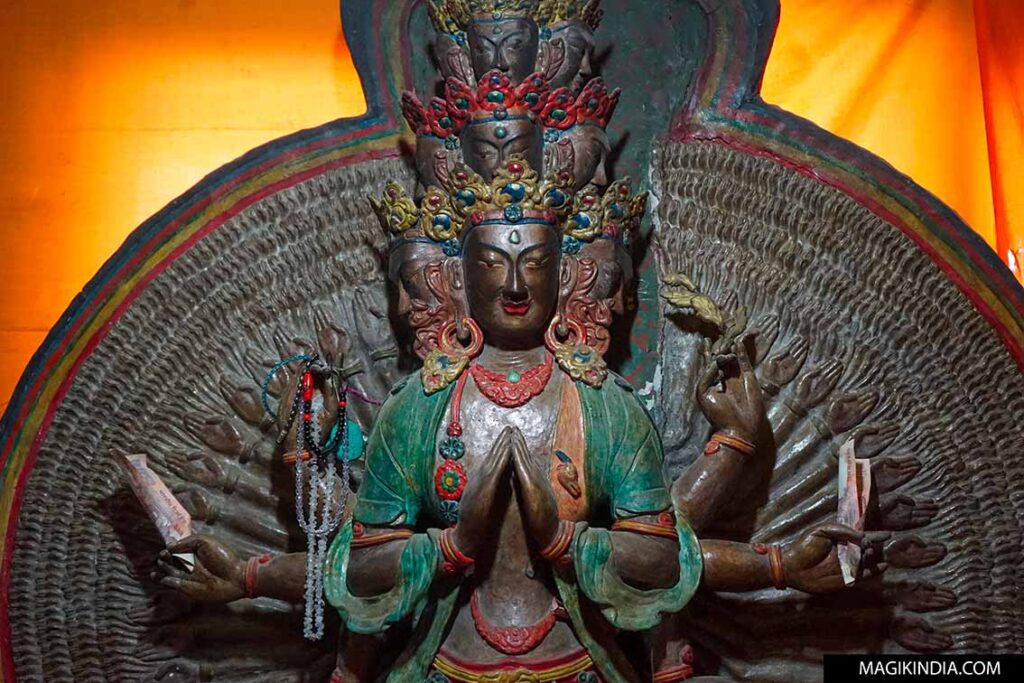
In this same sanctuary stands a work of great beauty: a statue of Avalokitesvara, the Bodhisattva of universal compassion. In Chemrey, this figure manifests itself in its form known as “with a thousand arms and eleven heads” (Sahasrabhuja), whose halo of hands seems to radiate infinite benevolence on the assembly of masters.
Practical information
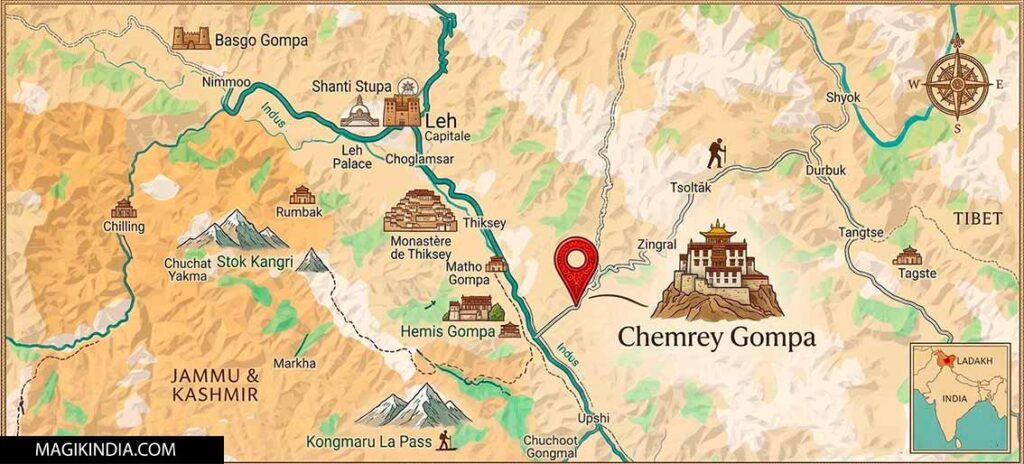
Location: Located approximately 45 km east of the capital Leh. It is ideal to combine it with a visit to the monasteries of Thiksey, Hemis and Matho.
Accommodation: Although the Chemrey region today offers many options for more conventional guesthouses and hotels, I always favor immersion in exceptional heritage mansions, such as Nimmu House or Stok Palace which are living witnesses of Ladakhi history.
Nimmu House: this former noble residence, with its apricot orchard and carefully restored vernacular architecture, offers absolute tranquility and an aesthetic that echoes the monasteries of Ladakh.
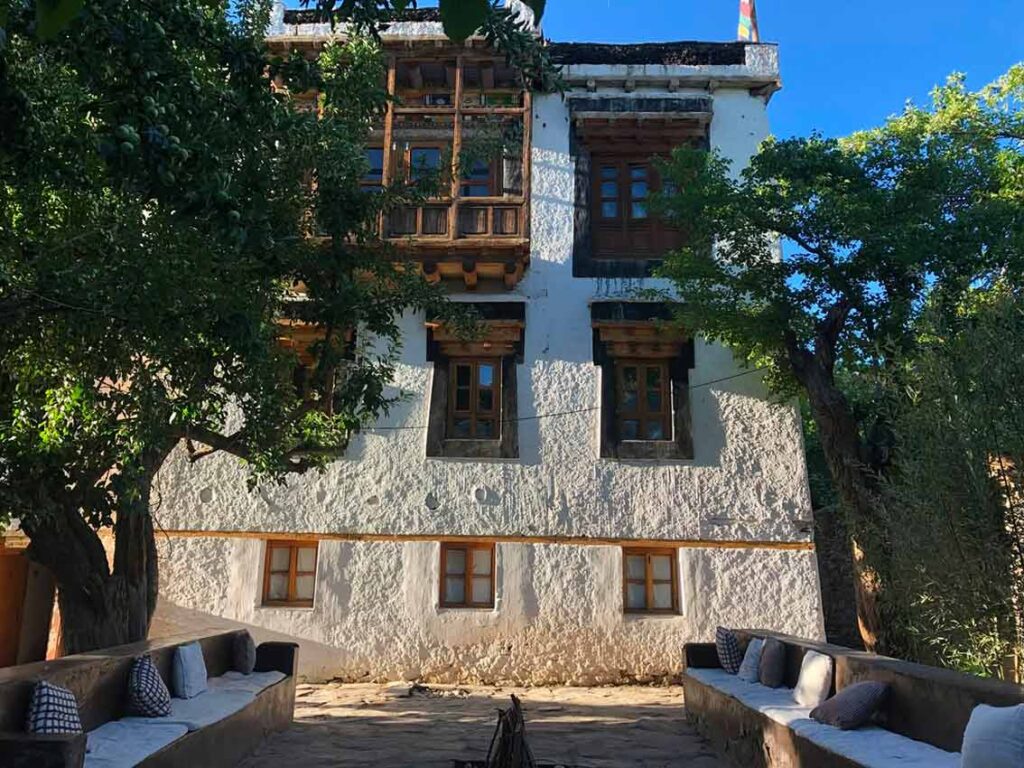
Stok Palace: Sleeping in the palace of the royal family of Ladakh (where the Namgyal lineage still lives) adds an unparalleled historical dimension.
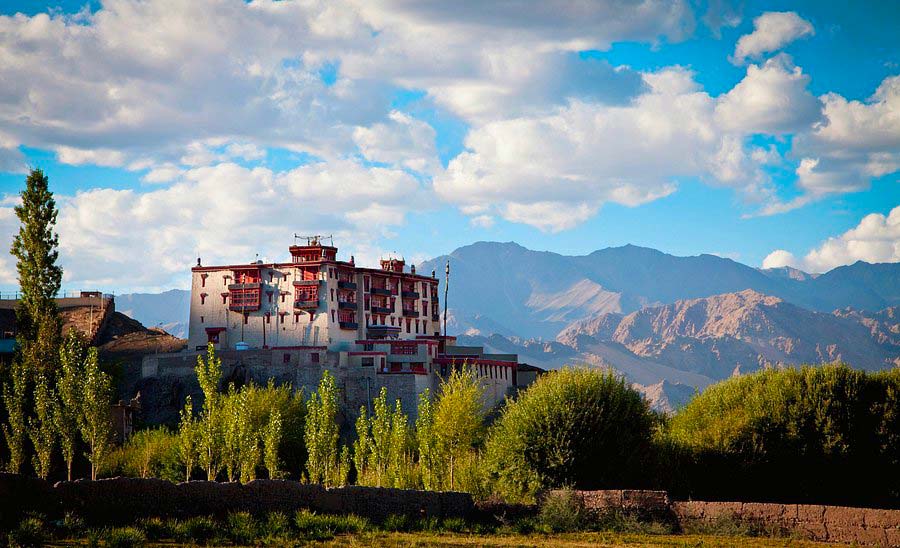
Ambiance: Unlike very touristy sites, Chemrey maintains an atmosphere of deep serenity, conducive to meditation and silent observation of the daily life of the monks.
Travel Tip: As the monastery is located at altitude, make sure you are well acclimatised to Leh before climbing the steep stairs to the main temples.
TRAVEL WITH US IN THE FABULOUS LADAKH !Vous aimerez peut-être aussi...
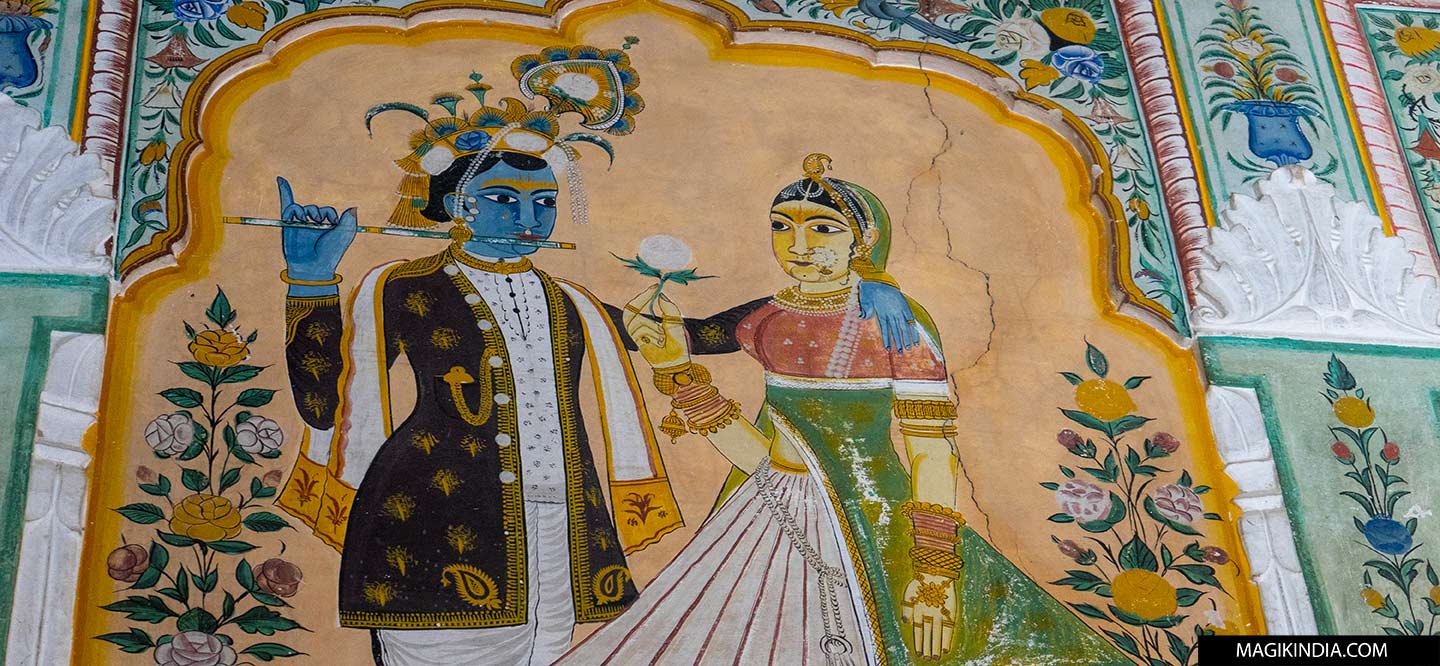
Jhunjhunu is the administrative headquarters of Shekhawati, a cultural region renowned for its palatial homes adorned with sumptuous frescoes. Having...
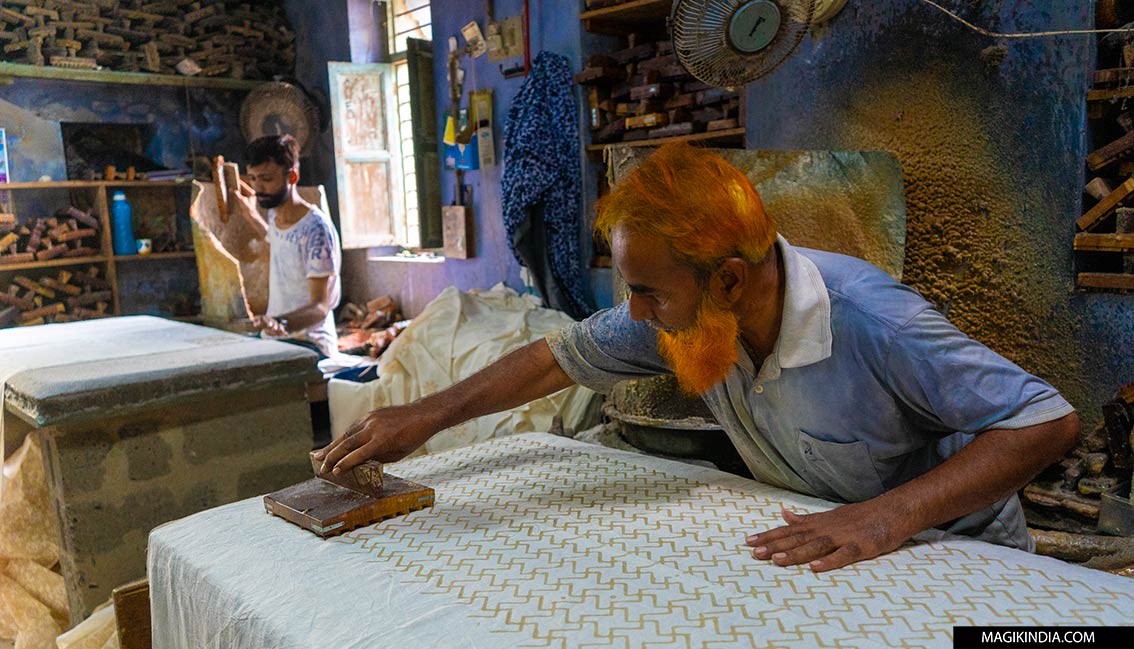
Batik is among the most vibrant textile arts of Kutch, alongside ajrakh, bandhani, and the distinctive embroideries of the Ahir,...
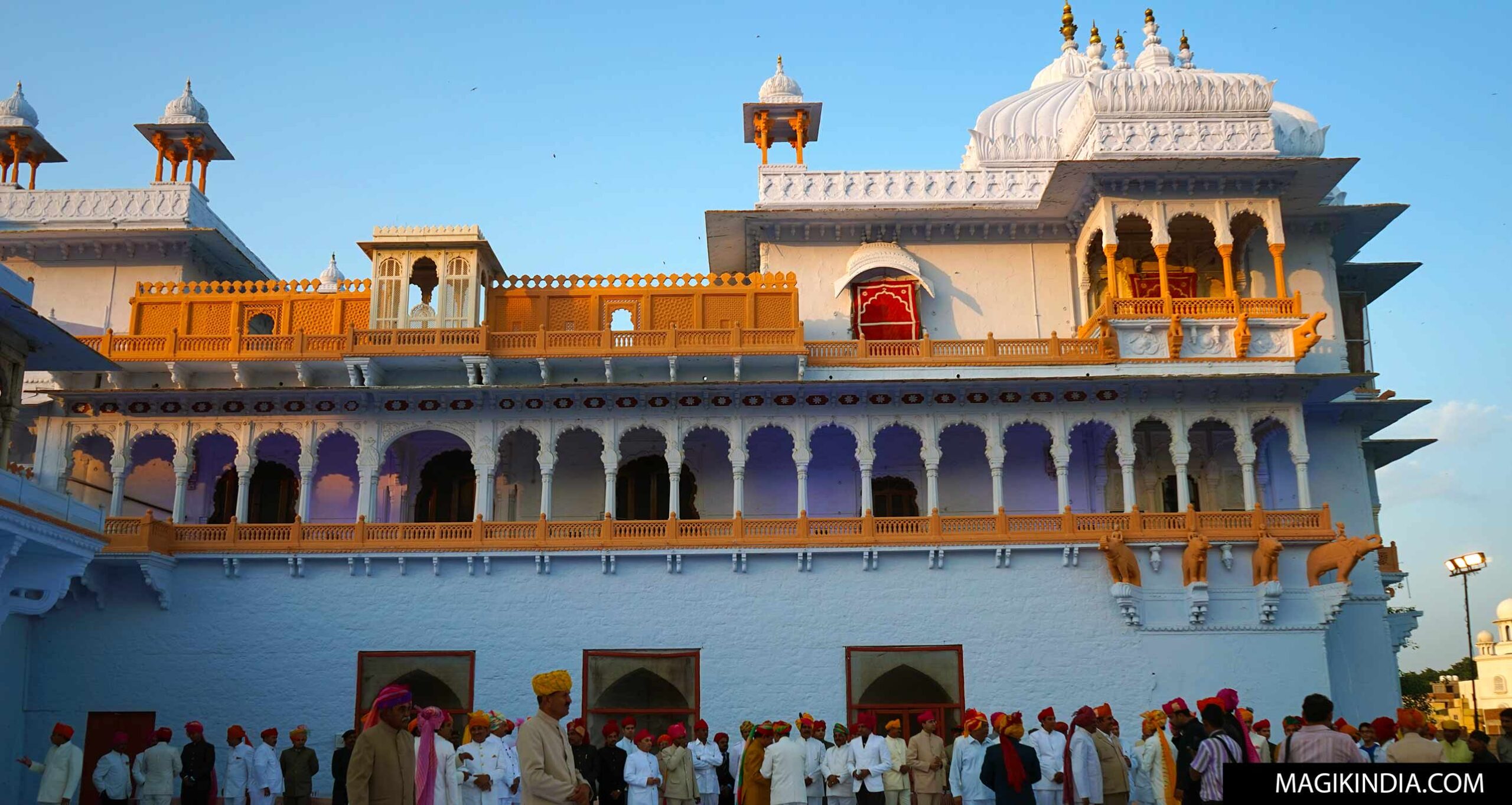
Often overshadowed by its neighbors in Rajasthan, the city of Kotah, south of Bundi, nevertheless conceals unsuspected treasures. Its palace,...
Delwara is a town nestled in the heart of the Aravalli Mountains, barely thirty kilometers from Udaipur, the romantic city...
Sandhya is a form of traditional mural art that originated in the region of Braj (Uttar Pradesh). From there it...


thanks arti, have a good trip
I’m planning to go in September, thanks for the information