
If Gujarat captivates me, it is above all by the human richness of its communities. After exploring the world of...
Dandami Maria: The Lords of the Bisons
Inhabiting the high plateaus of Bastar (Chhattisgarh), the Dandami Maria tribe constitute an emblematic branch of the Gond people, distinguished by their preserved cultural identity. Their culture reaches its zenith during the “Bison Dance”, a ritual in which animal power is invoked to the sound of monumental drums. This vitality is fully manifested during Bastar Dussehra, a unique 75-day festival when the people converge upon Jagdalpur to pay homage to the goddess Danteshwari, blending mystical fervor with warrior dignity.
The Dandami Maria: A tribe of the Bastar Plains
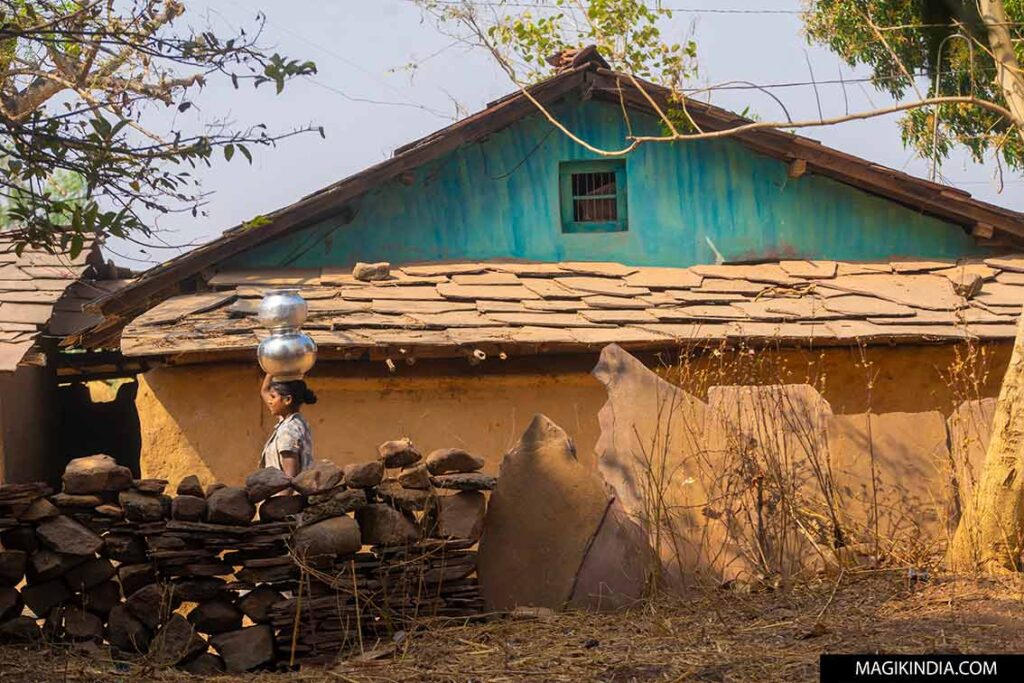
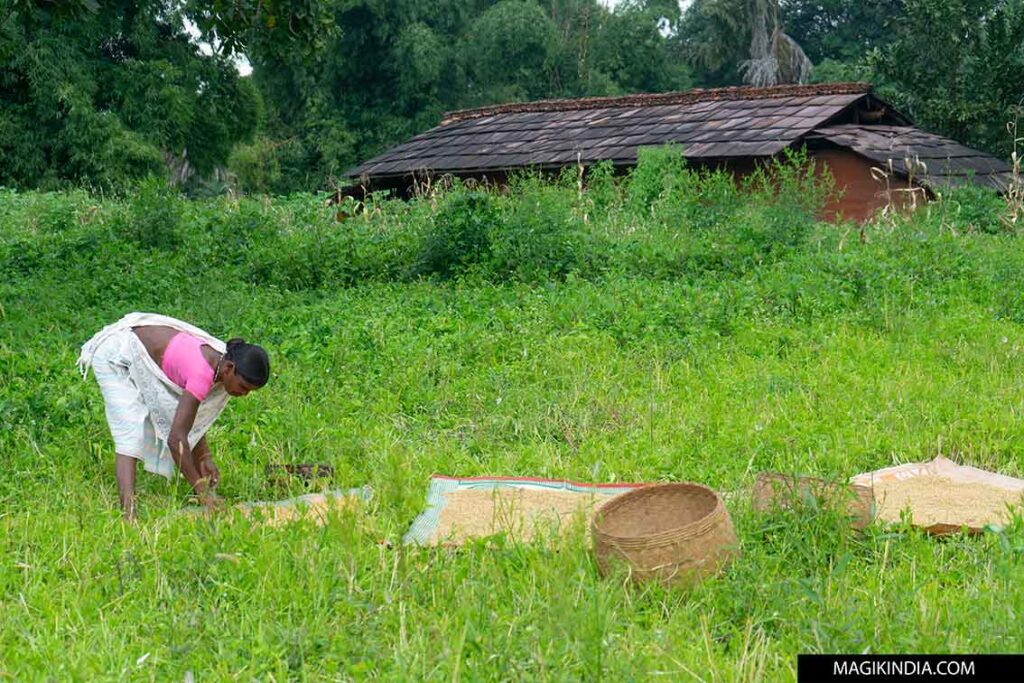
The Dandami Maria constitute a major branch of the Gond ethnic group, established in the heart of the Bastar plains in the state of Chhattisgarh. Unlike groups inhabiting higher altitudes such as the “Hill Maria” they have developed a plains-based culture centered on sedentary agriculture, while simultaneously preserving a sacred bond with the primordial forest.
Linguistically, they speak a Dravidian dialect that bears witness to their ancient presence on Indian soil, long predating the Aryan migrations. This origin identifies them as Adivasi, a term designating the original inhabitants of the Indian subcontinent underscoring their status as guardians of a pre-Hindu culture.
Adhering to a rigorous clan system, such as that of the Muria people, they place respect for ancestors and nature at the very heart of their existence. This devotion finds tangible expression in the Mritak Stambh: shrines that embody the community’s gratitude and serve as a vibrant tribute to the memory of a loved one.
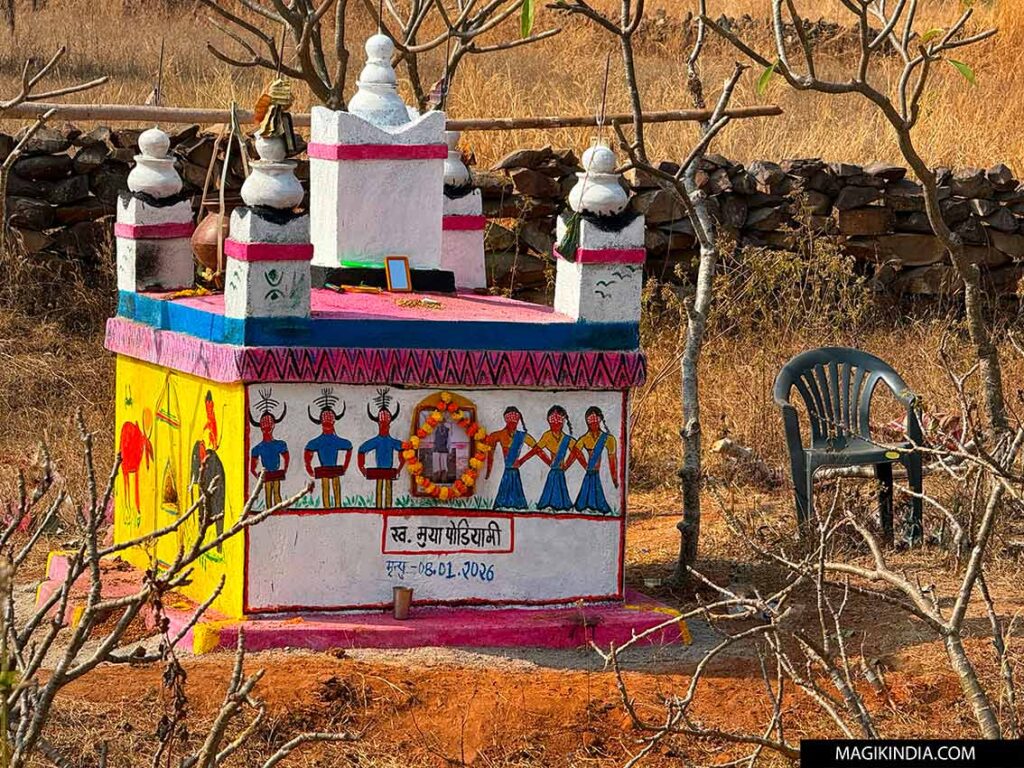
Dandari, the bison dance
The Bison Dance (or Dandari) constitutes the most emblematic artistic and ritual expression of the Dandami Maria, standing as the central pillar of their cultural identity in Bastar.
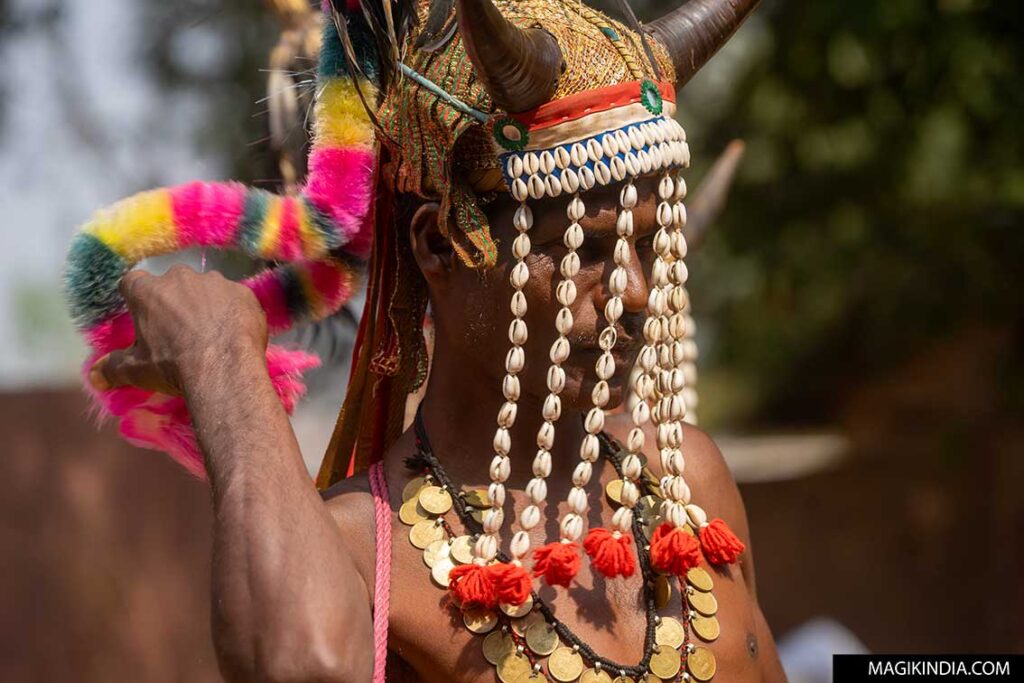
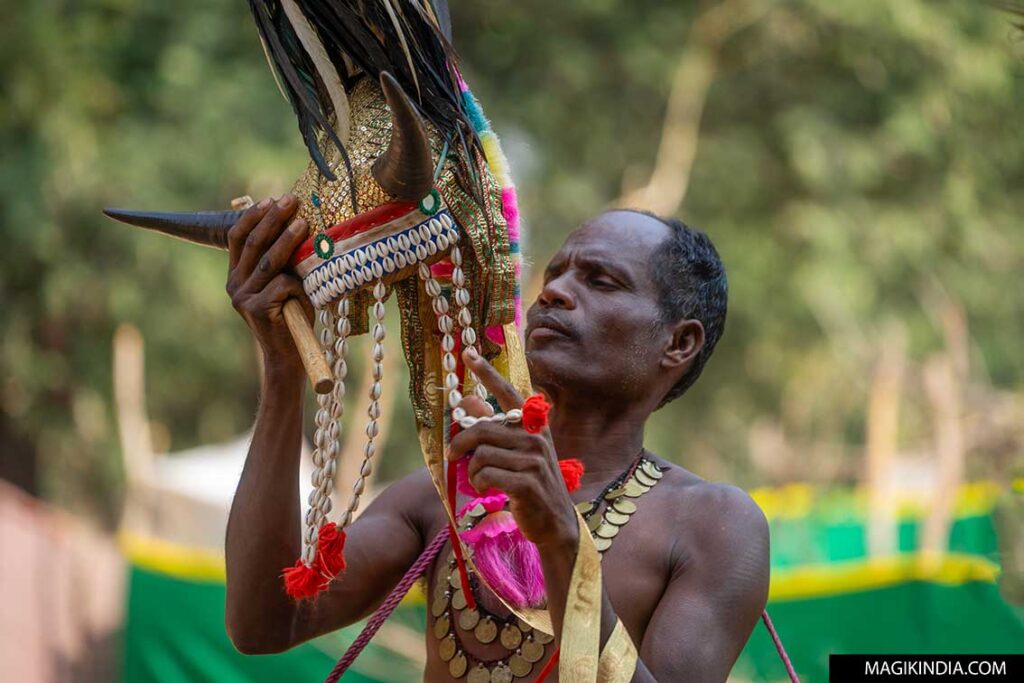
The iconic accessory: The bison headdress
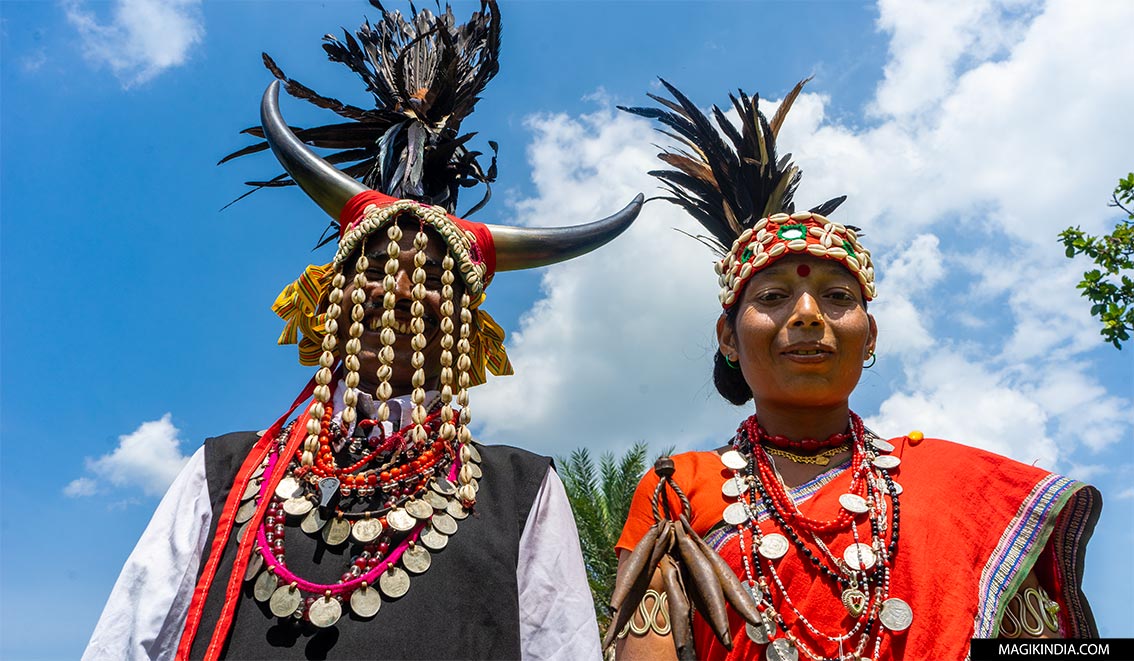
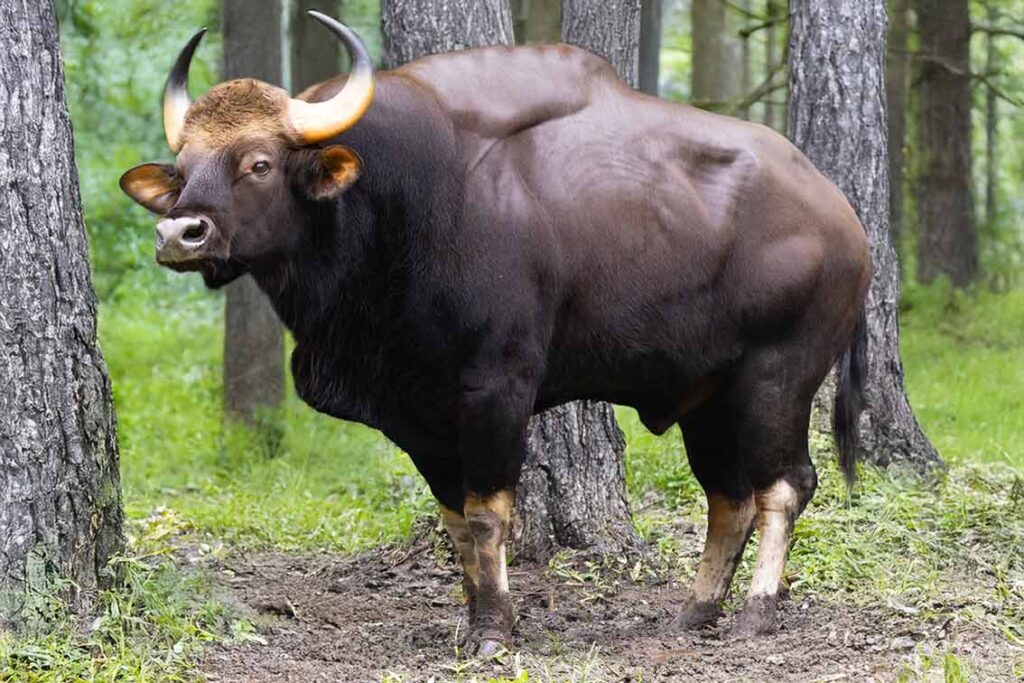
The fundamental element of this ceremony lies in the special headdress worn by the men crafted from authentic horns. It should be noted that the animal referred to as the “Indian bison” actually belongs to the Gaur species, the largest wild bovine on the planet. This iconic mammal is impressive in its dimensions, as adult males often reach a weight of one ton and a height of two meters at the withers.
Traditionally, the horns used for dance headdresses were obtained from Gaurs that had been hunted or found dead in the forest. Today, out of respect for the conservation of the species (classified as vulnerable), these horns may be replaced by those of the buffalo. Nevertheless, these precious objects circulate within families and are passed down from generation to generation like sacred relics.
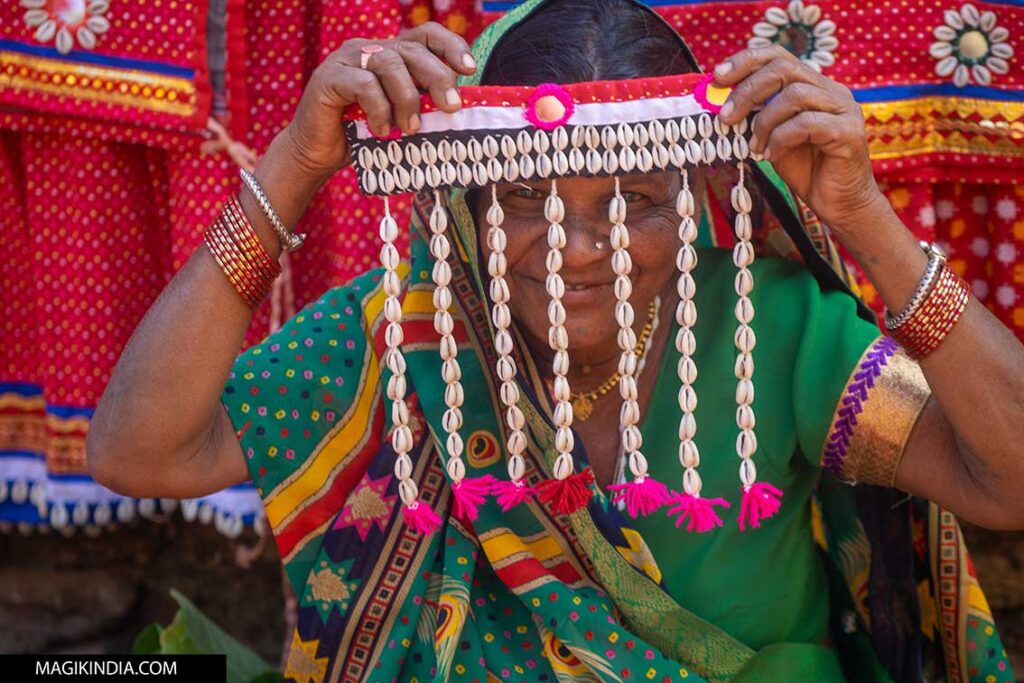
The bison regalia is magnified by rows of cowrie shells that cascade down in front of the dancer’s face. An immense crest, composed of peacock or rooster feathers, crowns the ensemble, lending a harmonious verticality to the structure.
Choreography: The Imitation of Life
The dance is a physical feat that mimics the behaviour of a moving herd of bisons: the dancers abruptly tilt and swing their heads, miming the animal’s thrusts of its horns and its vigilant observation.
The men generally move in circles or serpentine lines, striking the ground forcefully to mark their presence upon the earth. The dance alternates between moments of slow stomping and sudden charges, evoking the power of a dominant male.
Rhythmic accompaniment: The Dhol & the Tirududi
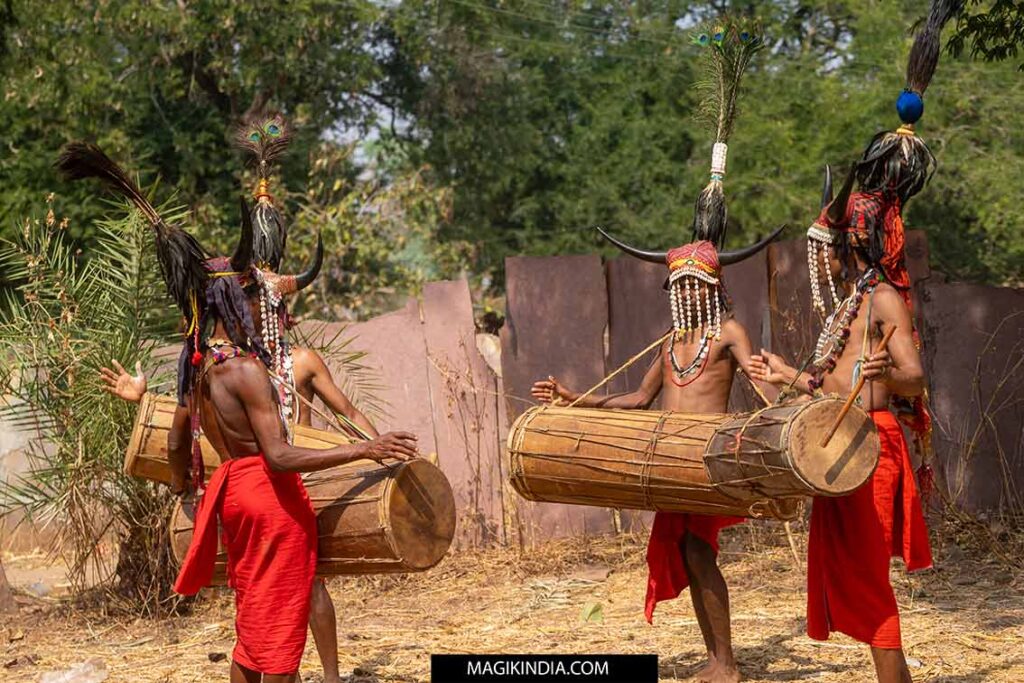
The rhythm is dictated by the men themselves, who carry heavy cylindrical drums, called Madiya Dhol, hollowed out from tree trunks. These percussion instruments, made of wood and goatskin, produce a deep, resonant sound that can be heard for kilometers through the forest.
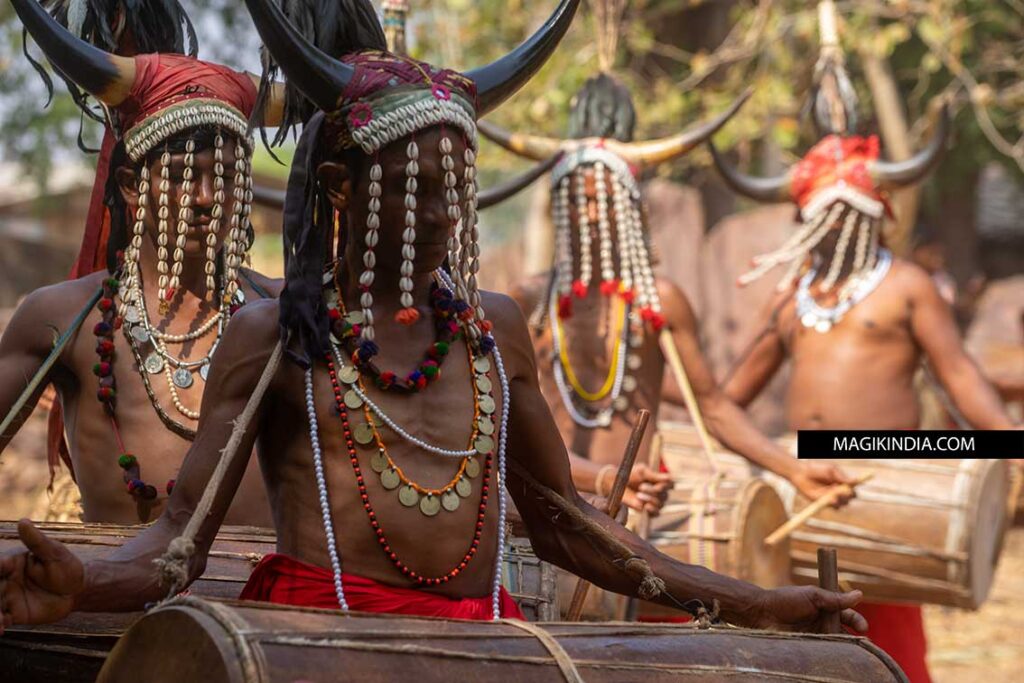
Carrying the enormous dhol while dancing all while wearing a headdress weighing several kilograms demands exceptional endurance. Under the alternating strikes of hand and stick, the drums resonate on both sides, creating a complex polyrhythm that hypnotises participants and spectators alike.
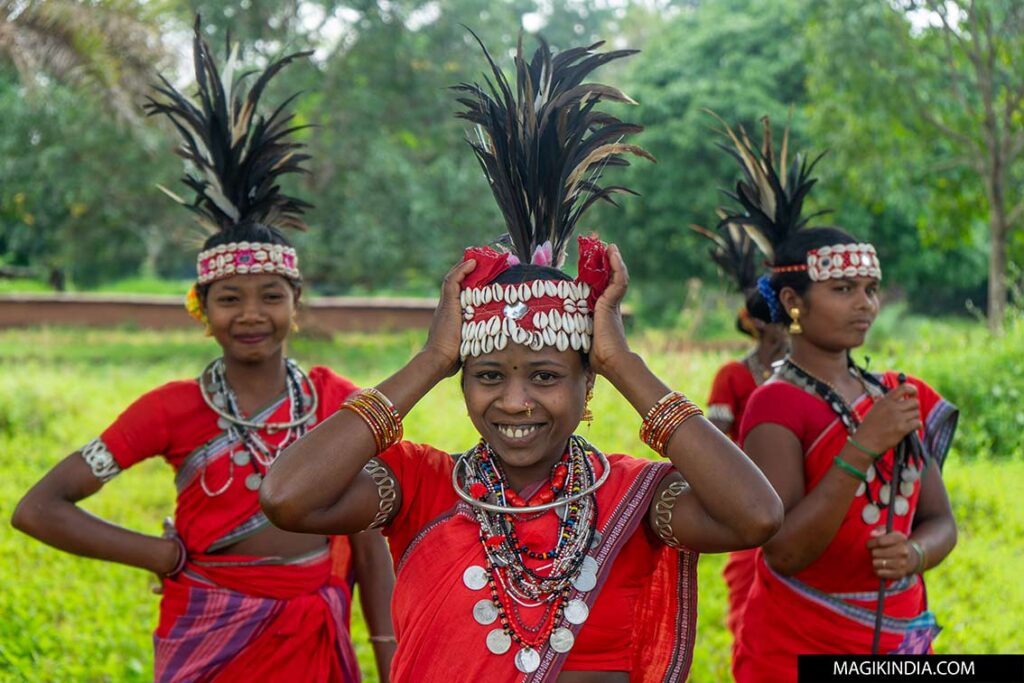
Complementing the male presence, the Dandami Maria women prove inseparable from the ceremony through their essential role as guardians of the rhythm. Clad in simplified red saris and adorned with multiple strands of beads as well as jewellery fashioned from coins, they form a protective outer circle around the dancers.
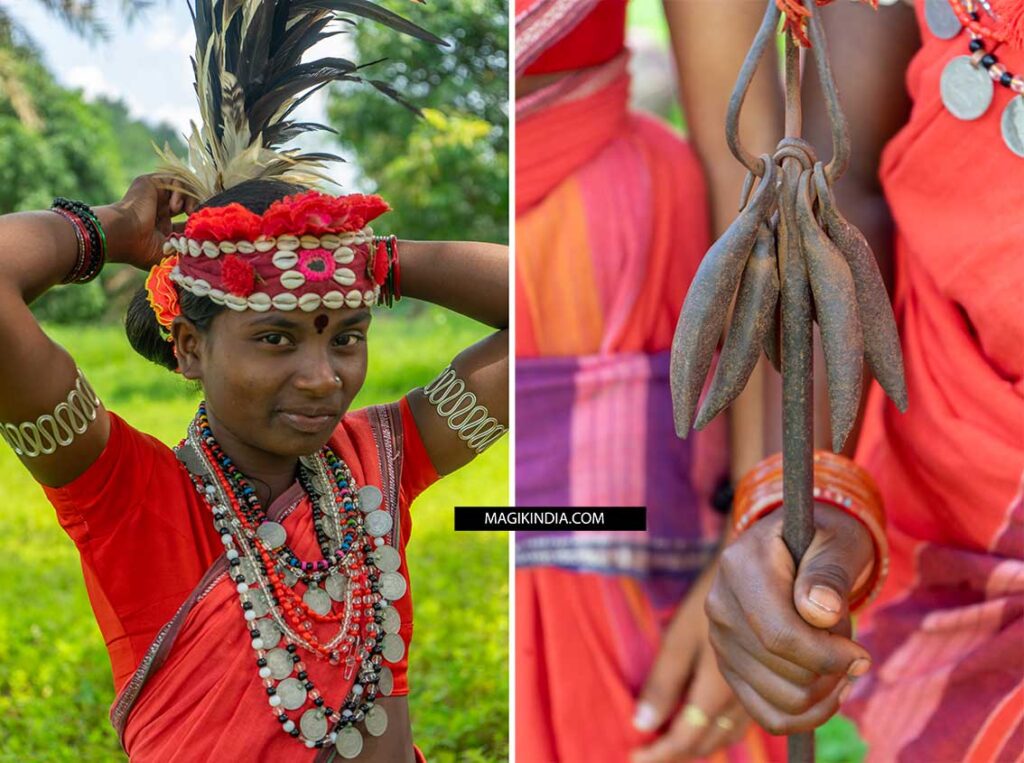
Their sonic contribution relies on the use of long iron staffs known as tirududi, which are topped with small bells evoking the shape of seed pods or folded leaves. By striking the ground in unison, they produce a metallic, crystalline percussion that contrasts sharply with the deep resonance of the drums. This interplay of timbres ensures the acoustic balance of the dance.
Bastar Dussehra: The Tribal Apotheosis
The true beating heart of the Dandami Maria’s spiritual life finds expression during Bastar Dussehra, a unique celebration that diverges from the classic narrative of the Ramayana to honour the goddess Danteshwari. This exceptional festival spans seventy-five days, standing as the longest in the world, and sees communities converge upon Jagdalpur in a surge of collective devotion.
As the festivities unfold, thousands of Adivasis leave their villages, carrying the Anga Deo upon their palanquins. This pilgrimage to the sovereign goddess marks the climax of this grand gathering of clans.
Although this event involves numerous esoteric rituals, the Bison Dance generally kicks things off, a tradition also found at the Madai Fagun festival in Dantewara.
In the streets of Jagdalpur, circles of dancers form spontaneously. Driven by incessant percussion and religious fervor, the dance attains a mystical dimension. The Dandami Maria no longer dance for spectacle, but to affirm their existence and their unwavering bond with the Goddess.
KNOW MORE ABOUT BASTAR DUSSEHRAVous aimerez peut-être aussi...

The Santhal people constitute one of India's largest indigenous communities, primarily settled in the states of Jharkhand, West Bengal, Odisha,...
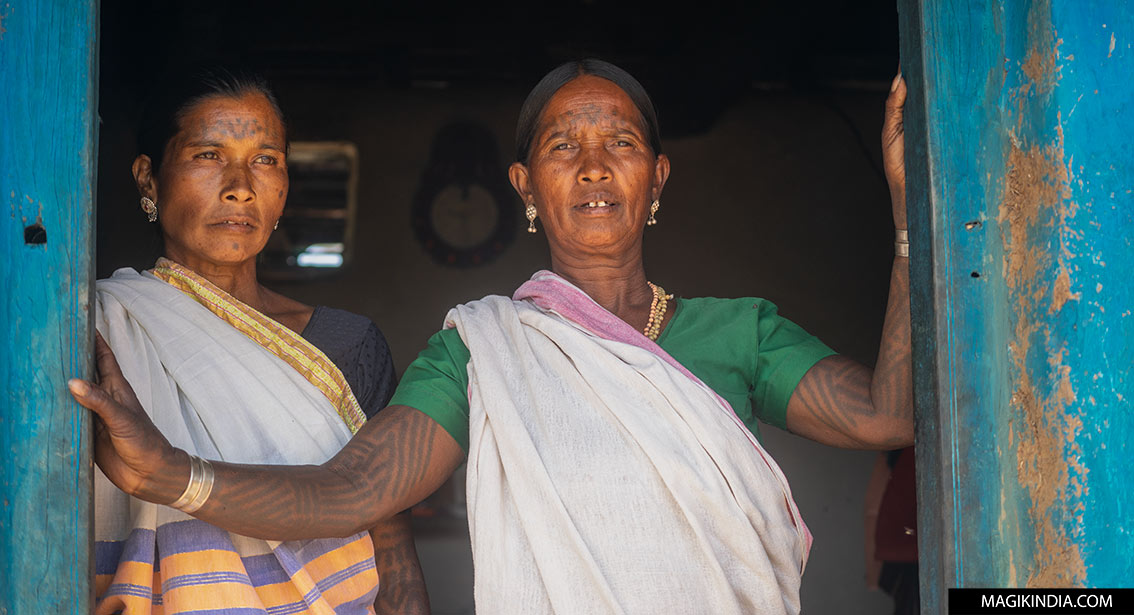
The Baiga tribe, nestled deep within the dense forests of northern Chhattisgarh, define themselves above all as the spiritual guardians...

The Muria tribe, a major branch of the Gond ethnic group, inhabits the highlands and forests of the Bastar district...
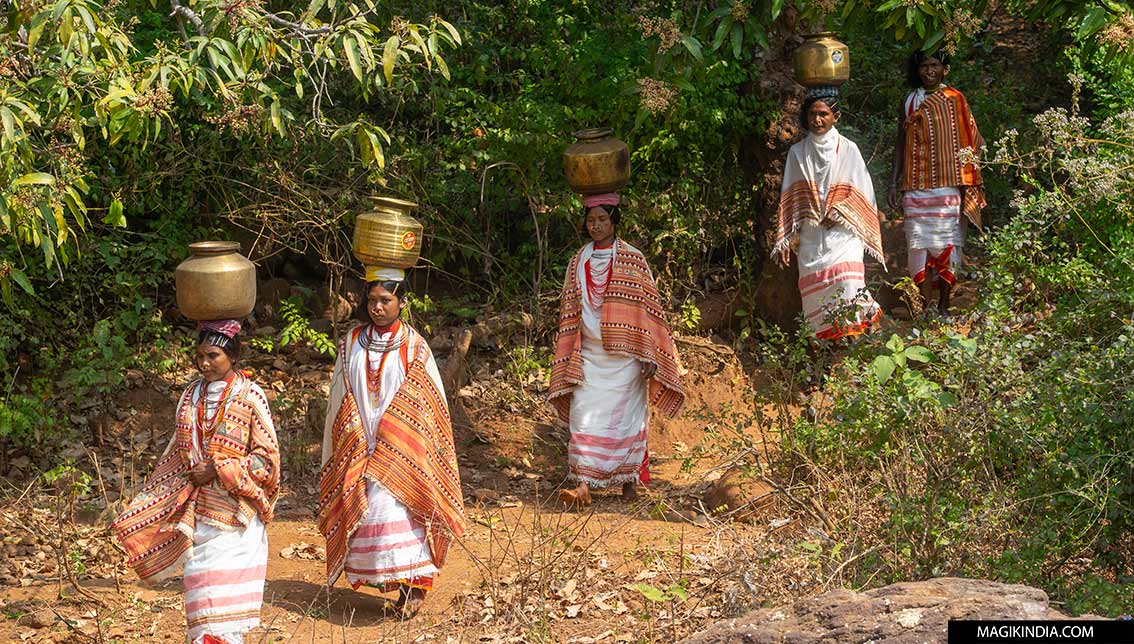
Nestled within the rugged terrain of Odisha’s Niyamgiri Hills, the Dongria Kondh cultivate a sovereign elegance that finds expression as...
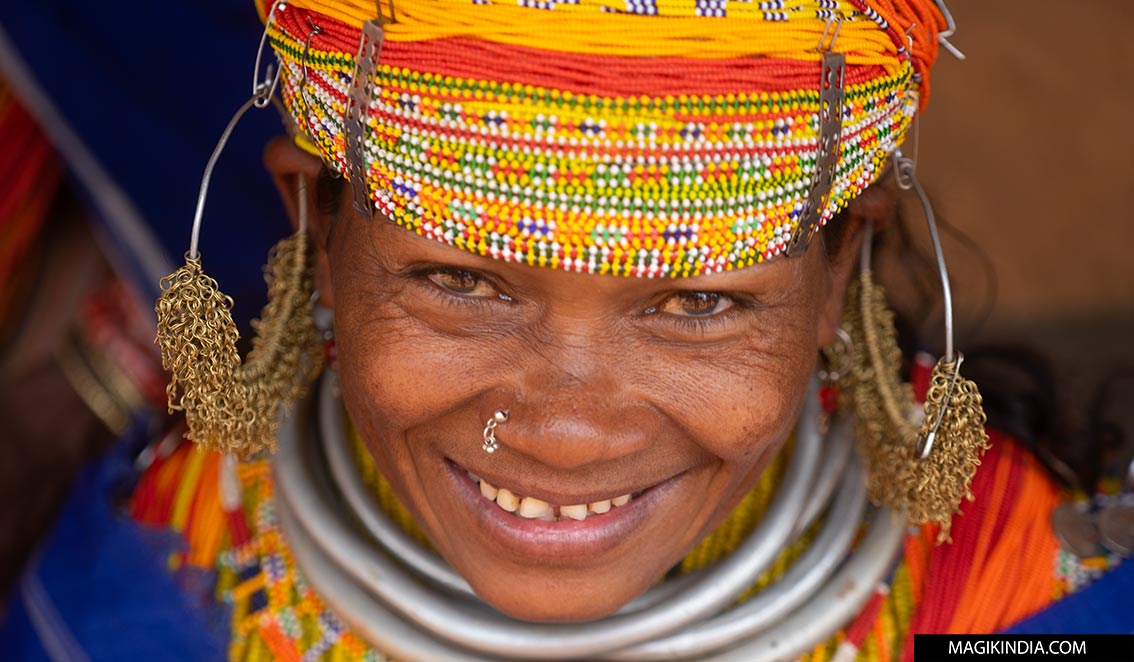
Nestled within the rugged folds of the Malkangiri district, on the fringes of the state of Odisha, lives the fascinating...

