
If Gujarat captivates me, it is above all by the human richness of its communities. After exploring the world of...
The Dongria Kondh: guardians of the peaks
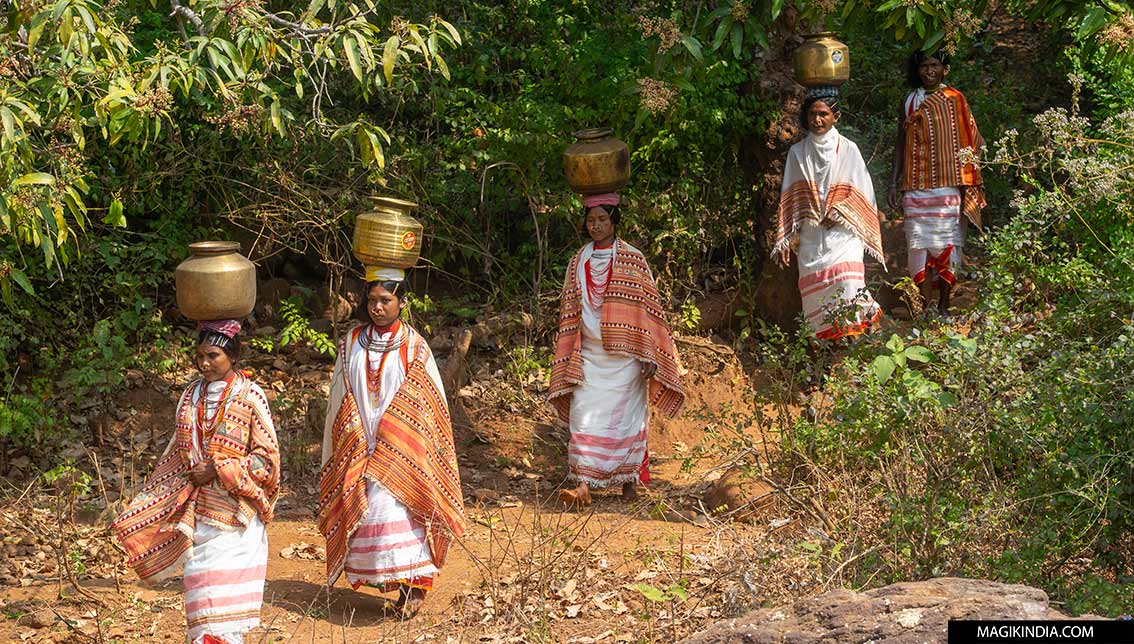
Nestled within the rugged terrain of Odisha’s Niyamgiri Hills, the Dongria Kondh cultivate a sovereign elegance that finds expression as much in their adornments as in their bond with the land. For these “guardians of the peaks,” aesthetics and ecology converge in a form of prayer: every spring and every ridge constitutes a sanctuary dedicated to their god, Niyam Raja. By fiercely protecting their forest against industrial exploitation, they offer us a profound lesson in spiritual survival, one in which the preservation of nature is inseparable from that of their own souls.
Dongria Kondh, heirs of Niyam Raja & Dharani Penu
Ethnologically, the Dongria Kondh belong to the Proto-Australoid group, bearing witness to prehistoric migrations linking India to the indigenous populations of Oceania. As Adivasi, they constitute the subcontinent’s First Peoples, established long before the waves of Dravidian or Aryan migration.

They also constitute a major branch of the Kondh people ,the largest tribal community in Odisha. Their name traces its roots to the Telugu term Konda, meaning “hill.” This identity has been shaped by elevation: while the Kutia Kondh inhabit isolated valleys and the Desia Kondh the plains, the Dongria Kondh are, in essence, those who dwell in the heights of the Niyamgiri Hills.
However, for this tribe, their origin is not migratory but theogonic: they were created by Niyam Raja, the god of justice. He descended upon the peaks of Niyamgiri to establish order and designated the Dongria as his representatives.
This sacred bond defines their identity: they are not “owners” of the forest, but rather heirs and guardians of a divine domain. Indeed, they call themselves the Jharnia Kondh (“the People of the Streams”), for they protect the “veins” of the mountain (its water sources) in exchange for the god’s protection.
Moreover, their social structure still rests today on clans (muthas), each of which claims descent linked to a specific peak or forest.

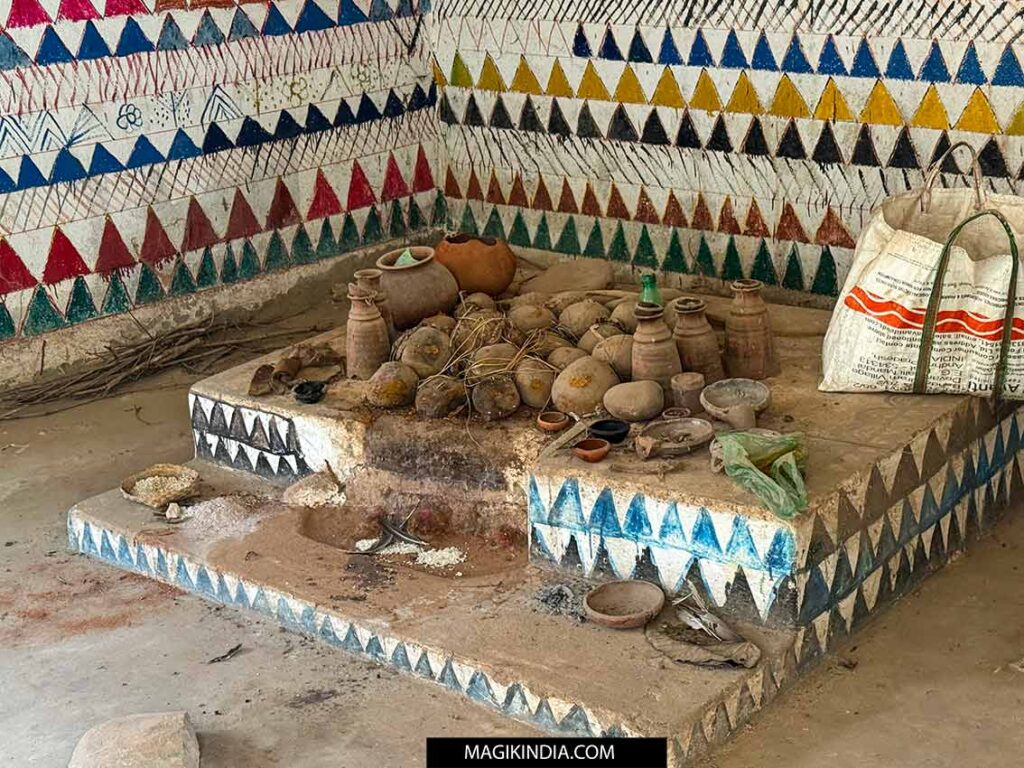
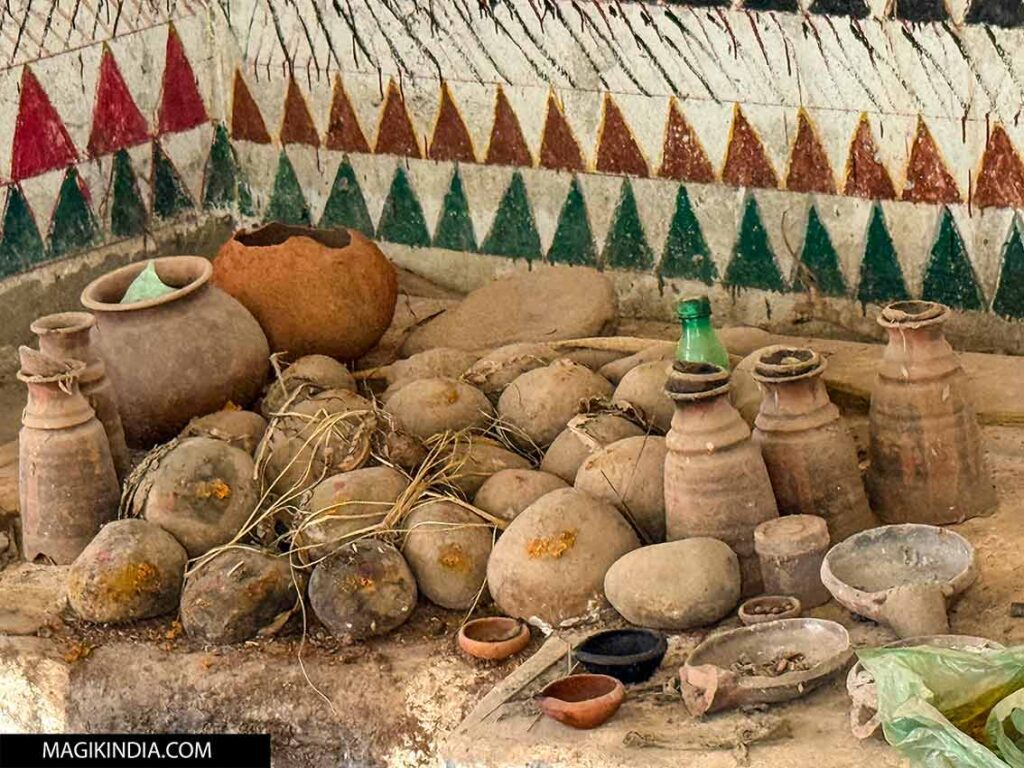
Beyond Niyam Raja, the tribe pays deep homage to Dharani Penu (the Earth Goddess), regarded as the consort of the Creator God. Each village maintains its own shrine, situated either within the hamlet or at its entrance. These structures are easily recognisable by the carved breasts adorning their wooden beams, symbols of fertility and nurturing protection. This sacred site serves as the hub of community life: every significant event, such as a wedding, must invariably be presented there to receive the deity’s blessing.

This symbiosis with Dharani Penu manifests as a spirituality in which the earth, perceived as a living being, must be nurtured and honoured. While human sacrifice (Meriah) now belongs to the past, the Dongria perpetuate this tradition during ritual festivals through the sacrifice of buffaloes or goats. The offering of blood to the earth remains a sacred act, which, according to their beliefs, ensures the fertility of the soil and safeguards the health of the tribe.

This spiritual reverence manifests in remarkable agricultural mastery. On the slopes, they cultivate “hill gardens” where pineapples, wild oranges, and bananas grow alongside turmeric, their signature crops, well as cassava and ginger. These ecosystems are designed so that each plant protects the others, reflecting their role as guardians of ecological balance.
The Kapdaganda Shawl: A Source Code
A centerpiece of Dongria Kondh craftsmanship, the Kapdaganda encapsulates the culture of this people. The enduring continuity of its traditional weaving today reflects the community’s determination to preserve its intangible heritage.

The Kapdaganda, whose name literally means “garment-offering” in Kui (the language of the Kondh), serves as a sacred bridge between the material world and the spiritual realms. Traditionally embroidered by young women, this shawl is presented to deities during festivals, yet it also plays a central role in courtship rituals conducted within “youth dormitories.” By offering this piece to the man she favors, the young woman initiates a romantic dialogue in which the acceptance of the textile seals the couple’s mutual consent.


Each geometric motif embroidered on the white cotton background (hand-woven) tells a story linked to their environment:
- The triangles (also found on their homes): they represent the Niyamgiri Hills, their sacred home.
- The lines: they represent the steep forest trails and the streams that irrigate their lands.
- Red: it symbolises blood, strength, and ritual sacrifices.
- Yellow: it evokes the connection to the sun, the earth, and the ancestors.
- Green: it represents omnipresent nature, the forests, and the life that flows from them.

The recent granting of the Geographical Indication (GI) for Kapdaganda marks a historic victory, protecting this craft from industrial imitations and guaranteeing the Dongria exclusive ownership of their traditional expertise. Beyond the realm of textiles, it has become the banner of the Dongria Kondh’s resistance against the mining of their sacred lands. Wearing this shawl is a powerful act of both political resistance and identity, affirming their unwavering bond with the mountains.

Dongria Aesthetics
Among the mosaic of people I have had the privilege of meeting in India, the Dongria undoubtedly rank among the most elegant!

Among the Dongria, tradition dictates that one wear one’s hair long; while this is today the exclusive practice of women, it was historically the norm for men as well. Hair is regarded as an extension of one’s vital energy. A healthy, meticulously groomed head of hair is a sign of vigor and of respect for the gifts of Niyam Raja.
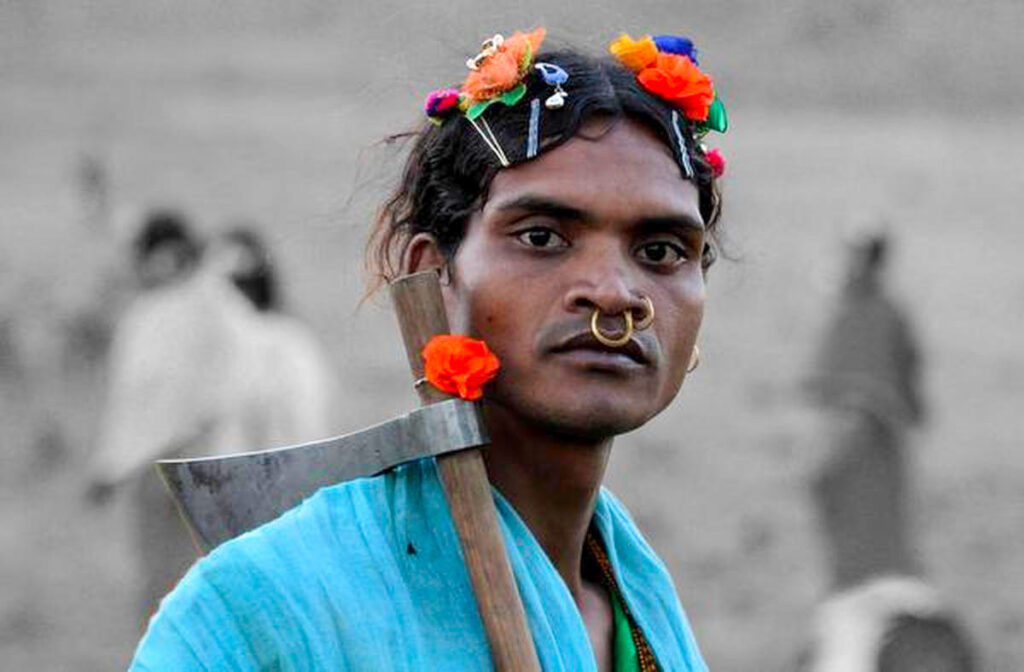
A true visual signature, the khosa is a side bun emblematic of Dongria women. The hair, oiled and smoothed, is coiled around a ball of twine to create a sculptural volume at the side, transforming the hair into an artistic and perfectly ordered structure.

The hairstyle is enhanced by a multitude of metal pins arranged in a fan shape or symmetrically. This intricate ornamentation, which may comprise up to twenty pins, draws upon a repertoire of fifty traditional designs known as Bala Chapa. Specific silver pieces, the Aska for instance serve to complete this adornment.

Another distinctive feature of Dongria Kondh women is that they wear a small, sharp knife, known as a Pipli or Sipna, tucked into their hair bun. Crafted from aluminum or metal, this object serves simultaneously as an aesthetic element of their traditional hairstyle and as a utilitarian tool for foraging or performing minor cutting tasks in the forest.

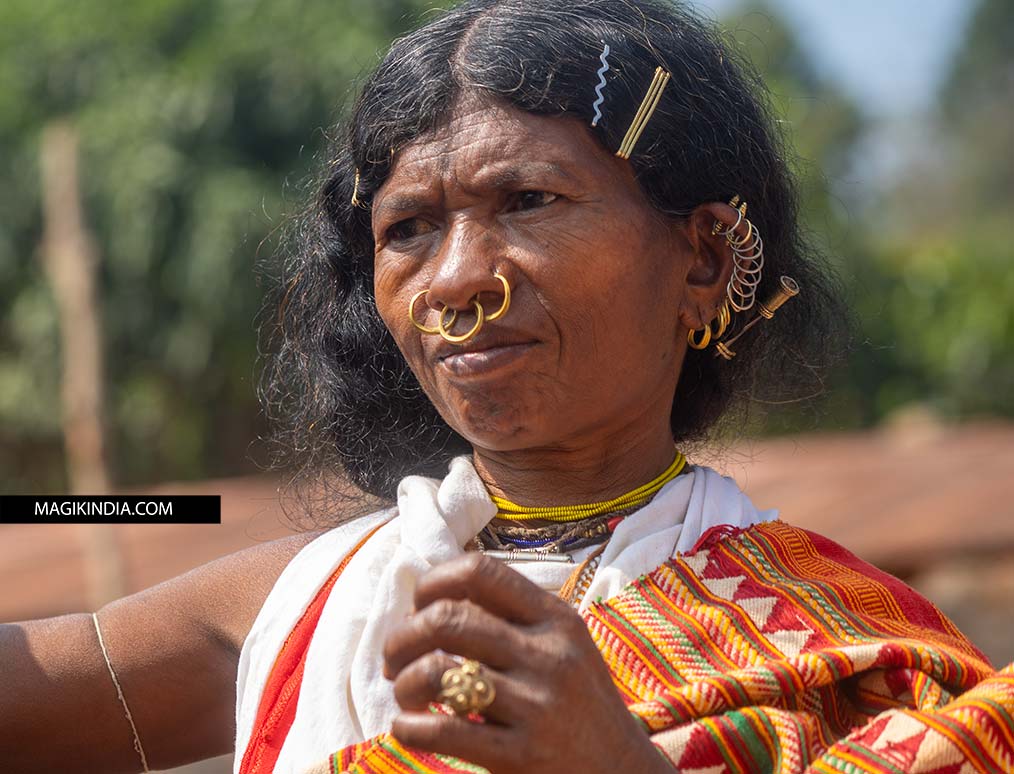
Facial ornamentation is distinguished by the Mungeli Murma, an emblematic nose ring. Thus, every woman sports three pieces of nasal jewellery: two rings inserted into the wings of the nostrils, and a third placed at the center of the septum (men wear only two). This adornment is complemented by dozens of Murma, simple metal rings that encircle the outer edges of the ears.

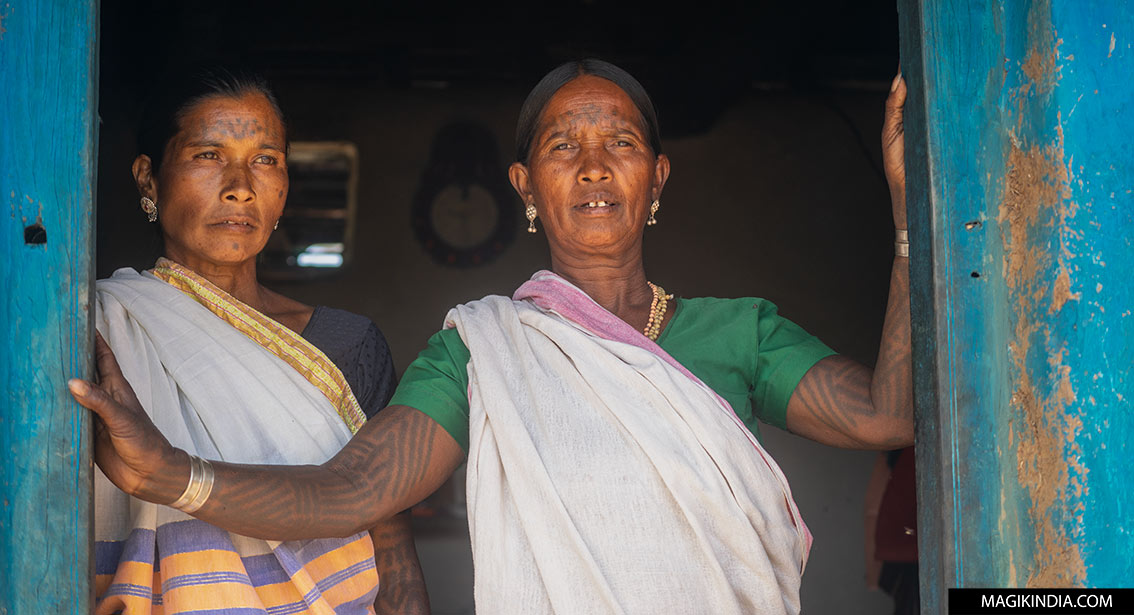
Around their necks, the Dongria combine necklaces of colourful glass beads (often red, yellow, and white) with more substantial aluminum necklaces. Tattoos on the forehead, the corners of the eyes, the chin, and the arms serve to extend this adornment, mimicking traces of the forest or the stylised motifs of mountain deities.

Victory of the Earthen Pot over the Iron Pot
Let us conclude this portrait on a note of victory and hope. For over ten years, the Dongria Kondh stood their ground against the mining giant Vedanta Resources, which planned to extract bauxite from their sacred lands. This struggle culminated in 2013, when the Supreme Court of India handed down a historic ruling: it empowered village councils (Gram Sabhas) to decide the future of their mountain.
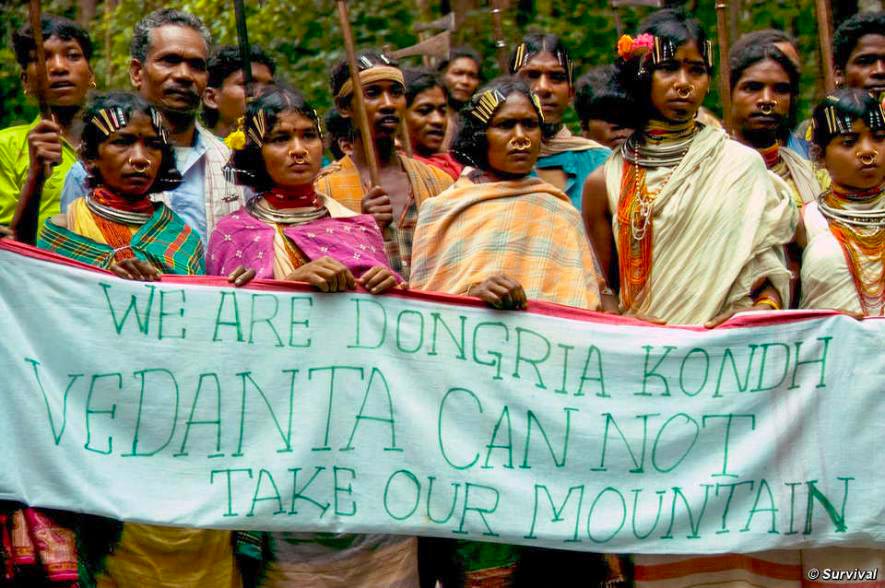
Unanimously, the 12 villages consulted rejected the project, asserting that mining operations would destroy their environment. This victory however fragile remains, to this day, a global symbol of Indigenous people’ resistance in defense of their territorial sovereignty and the protection of biodiversity.
MEET THE INCREDIBLE DONGRIA KONDH!
Vous aimerez peut-être aussi...

The Santhal people constitute one of India's largest indigenous communities, primarily settled in the states of Jharkhand, West Bengal, Odisha,...
Inhabiting the high plateaus of Bastar (Chhattisgarh), the Dandami Maria tribe constitute an emblematic branch of the Gond people, distinguished...
The Baiga tribe, nestled deep within the dense forests of northern Chhattisgarh, define themselves above all as the spiritual guardians...

The Muria tribe, a major branch of the Gond ethnic group, inhabits the highlands and forests of the Bastar district...
Nestled within the rugged folds of the Malkangiri district, on the fringes of the state of Odisha, lives the fascinating...

