
If Gujarat captivates me, it is above all by the human richness of its communities. After exploring the world of...
Lanjia Saura: Guardians of the Spirits of Odisha
The Lanjia Saura of Odisha constitute one of India’s most extraordinary tribes. Mentioned in millennia-old chronicles, this community maintains a constant dialogue with the invisible realm under the guidance of female shamans, veritable bridges between worlds. Amidst perched villages and ancestral rituals, setting out to meet them offers an enriching immersion into the very roots of a lesser-known India a place where the last guardians of the earth spirits still endure.
The Lanjia Saura, an ancient tribe
The Lanjia Saura constitute a branch of the great Saura lineage, already mentioned in the epic texts of the Ramayana. Descendants of Austro-Asiatic populations established long before the Aryan migrations, they found refuge in the rugged hills of eastern India, in the heart of the Rayagada and Gajapati districts of Odisha.
This link with Southeast Asia is reflected in their language, Sora, whose affiliation with the Munda branch linguistically aligns them with the Khmers. Although it is an oral tradition, this dialect has, since 1936, possessed a sacred alphabet, Sorang Sompeng, designed to preserve their ritual chants.
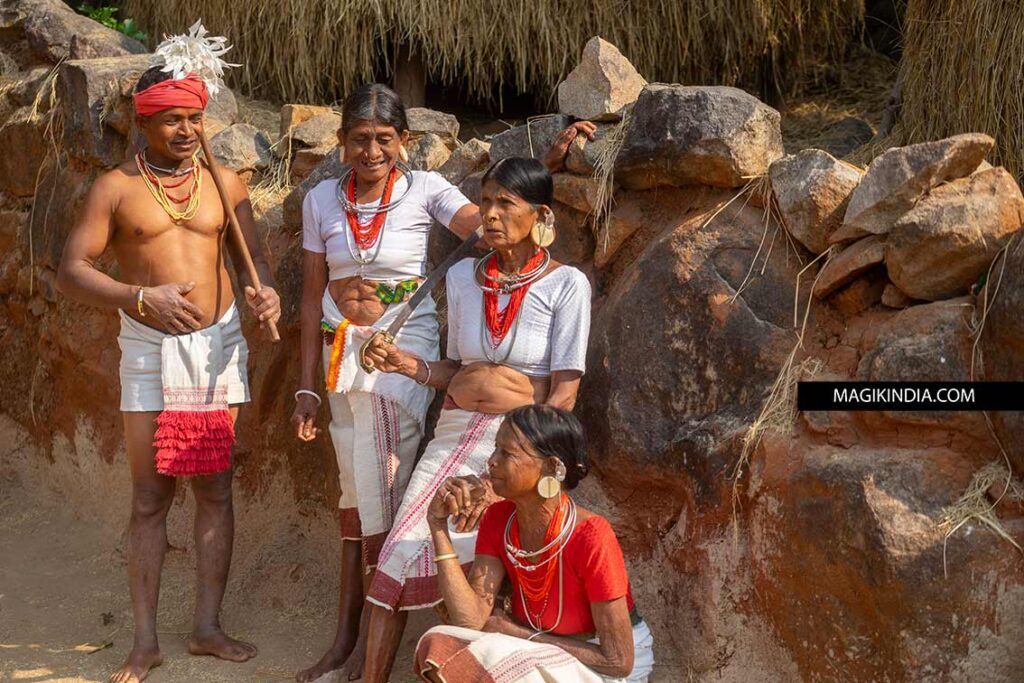
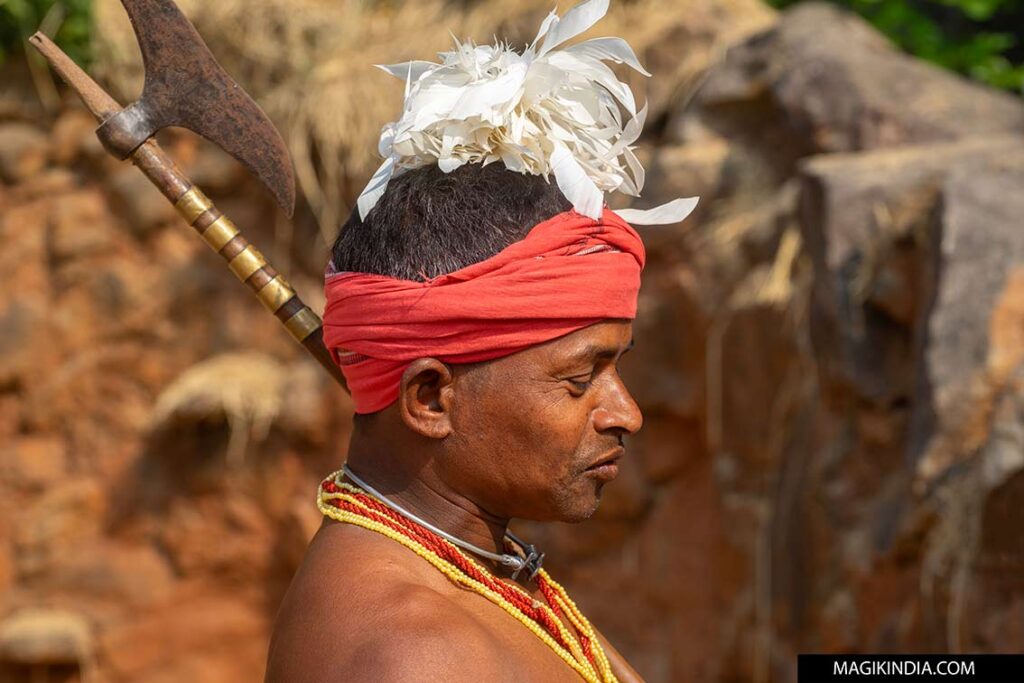
Their identity is also rooted in a way of life dedicated to the land. Gifted farmers, they have shaped hostile landscapes by sculpting the mountainsides into terraces for rice cultivation. This distinctiveness is reflected even in their name, “Lanjia,” which refers to the traditional male loincloth, a long strip of fabric hanging down in front, evoking an animal’s tail (lanja in the local language).
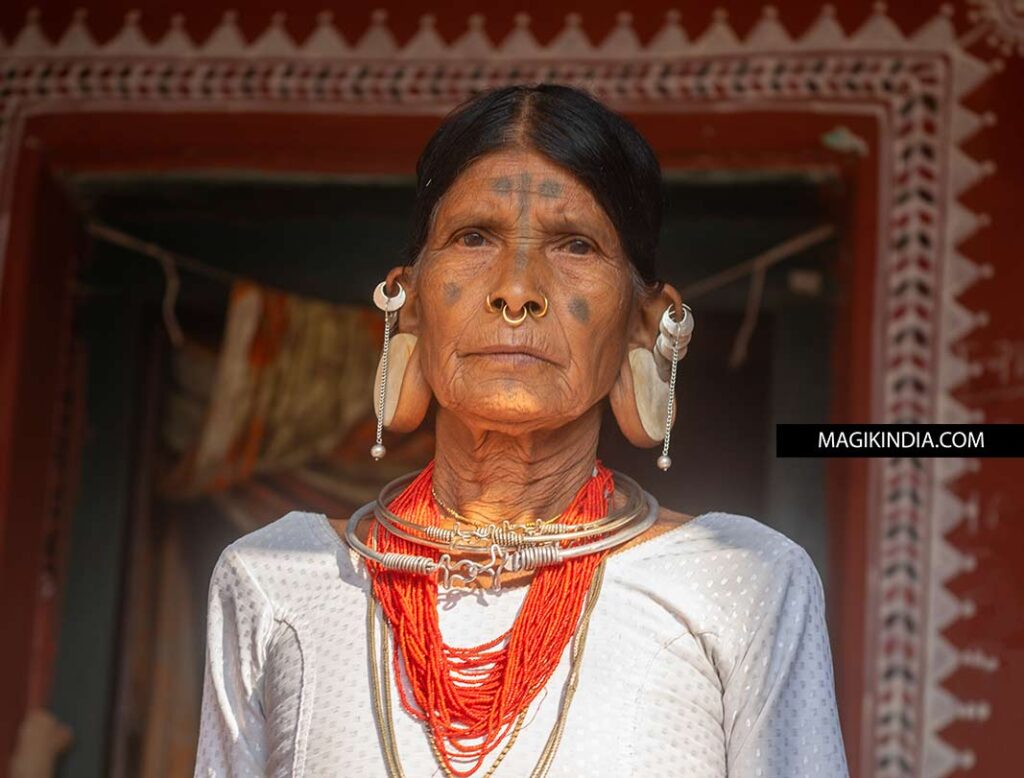
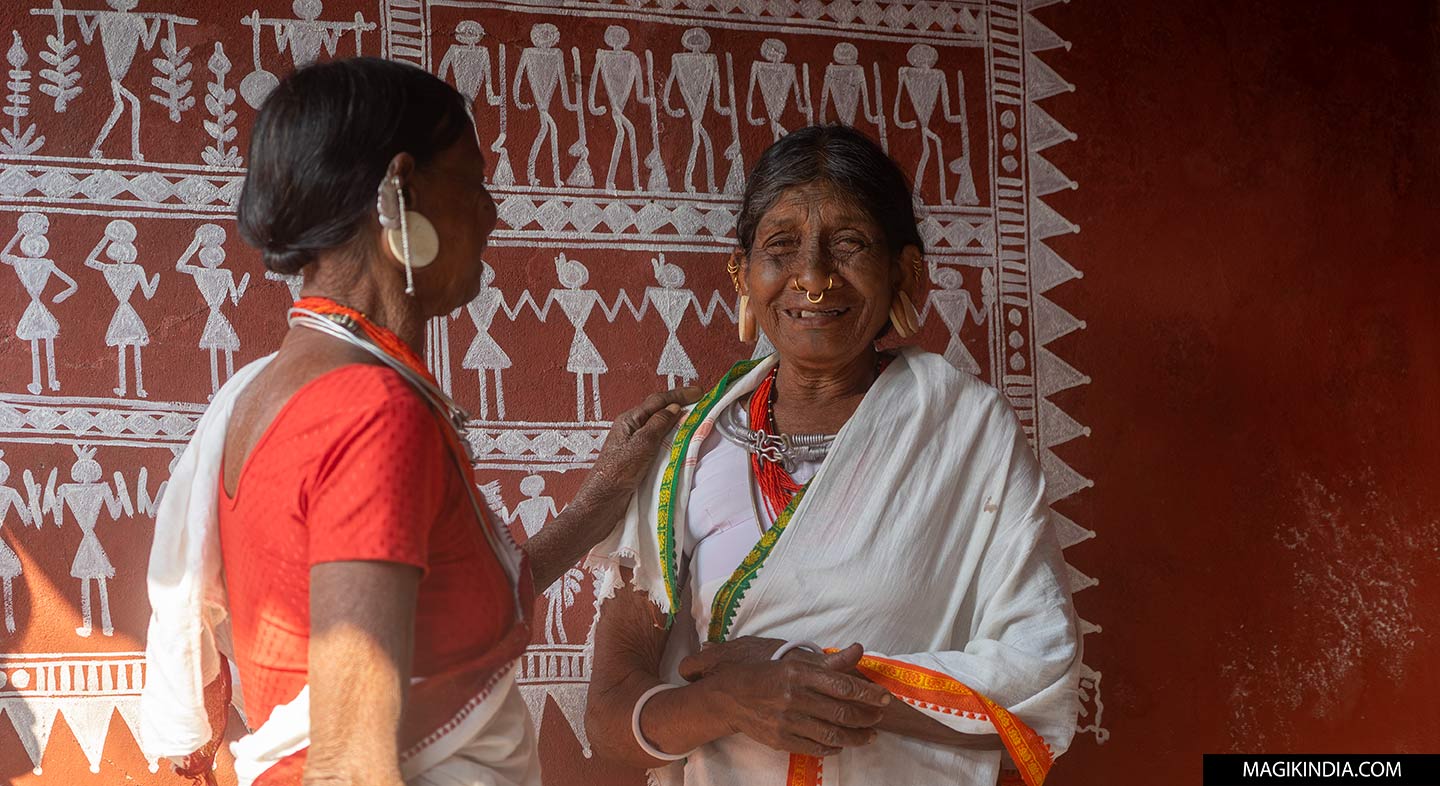
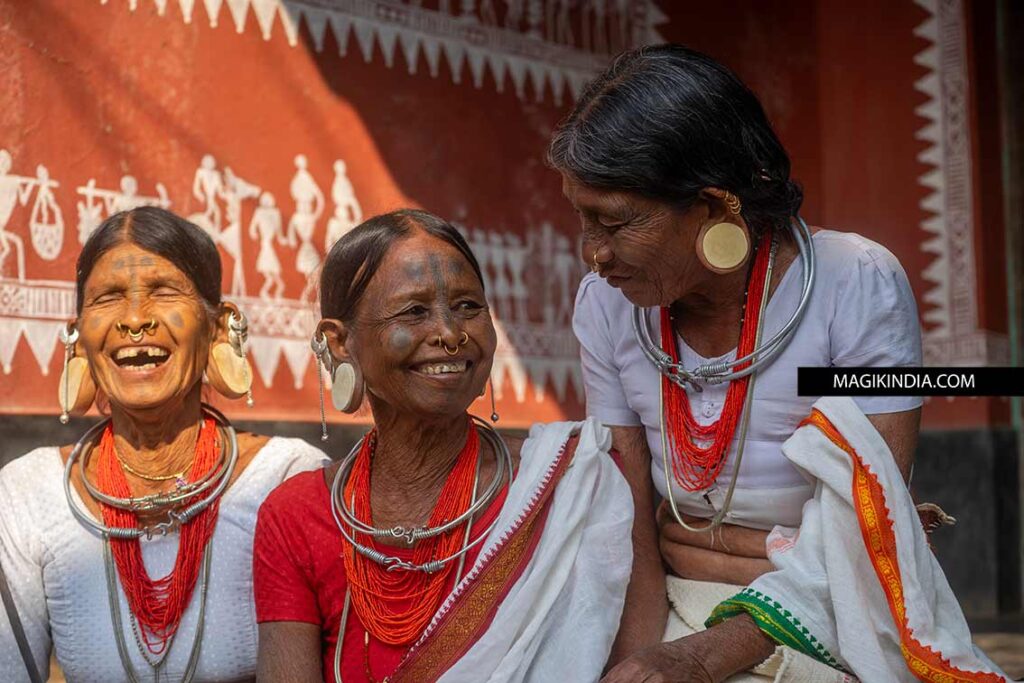
The appearance of Saura women also signifies their clan affiliation. Their aesthetic is distinguished by the pronounced stretching of the earlobes, adorned with wooden discs, as well as by the tantangbo, the facial tattoo.
The tattooing is characterized by a vertical line extending from the forehead to the nose, enhanced by dots on the cheeks and forehead. For these women, these marks represent the sole wealth carried into the afterlife: while jewelry and fabrics remain on earth, these indelible imprints enable their ancestors to recognize their souls during their passage into the spirit world.
The Idital: A Sacred Portal
The cult of the Lanjia Saura is one of the most complex belief systems in tribal India. Far removed from organised religions, this shamanic and animist system abolishes the boundary between the living and the dead.
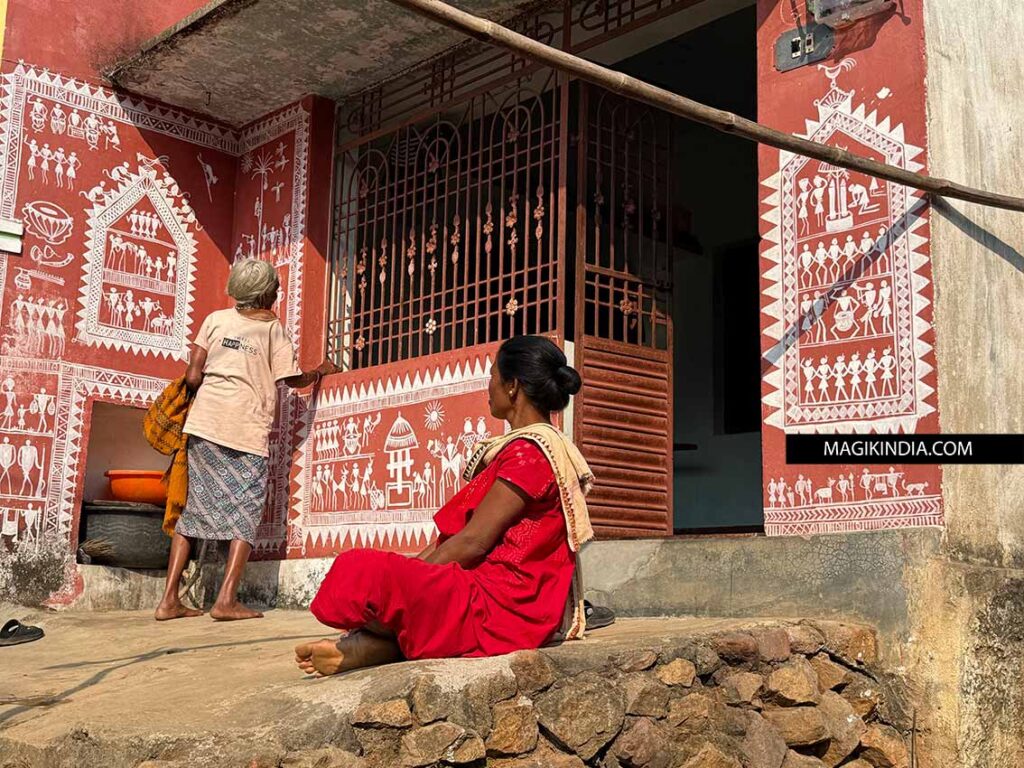
For a Saura, the universe is saturated with hundreds of deities known as “Sonums.” These entities reside both within natural elements (such as cliffs, springs, or trees) and within the family lineage. Indeed, the ancestors (Kuran-ba) constitute the very heart of the cult: they never leave the home, but rather become spirits that interact with their descendants.
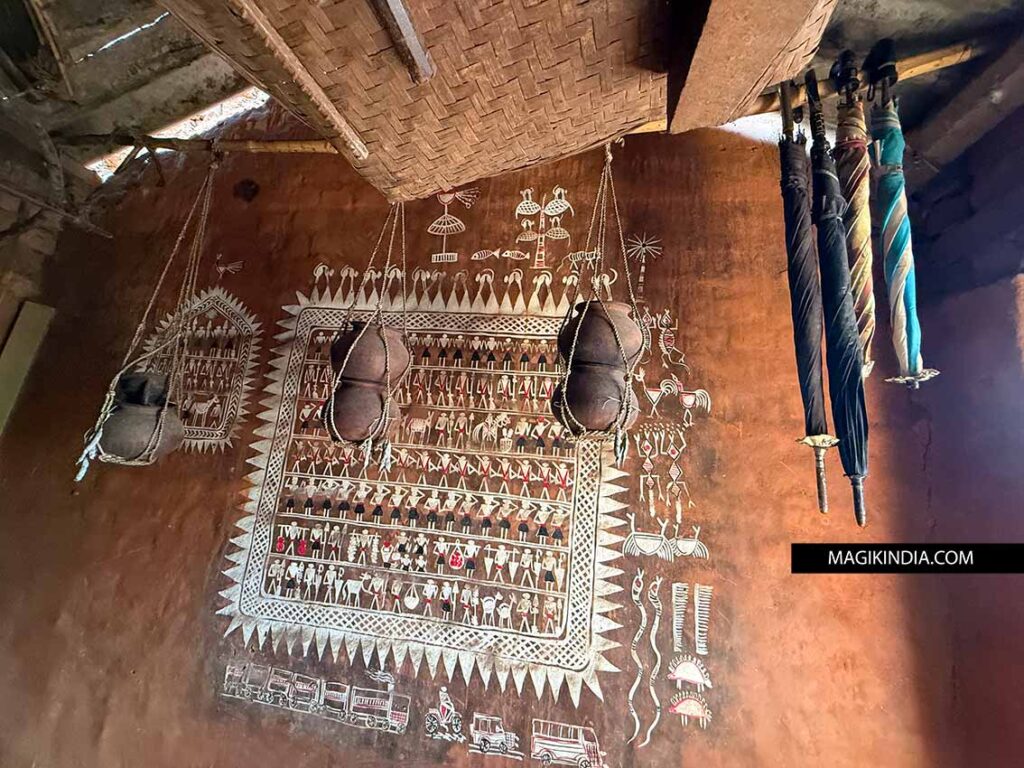
If the spirits are honored, they offer protection; if forgotten, they manifest their displeasure through illness. This pantheon is organic: there is no fixed list, for new spirits may emerge while others fade away.
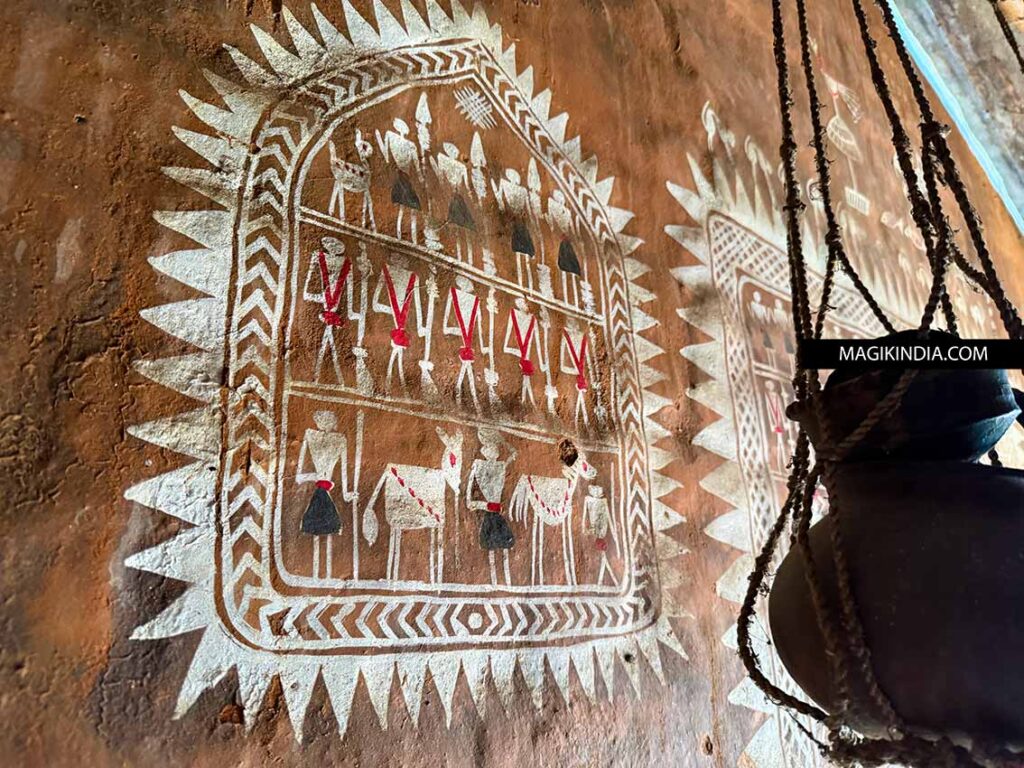
The most famous expression of this spirituality is undoubtedly the Idital (or Ikon) murals, which literally amounts to building a dwelling for a spirit.
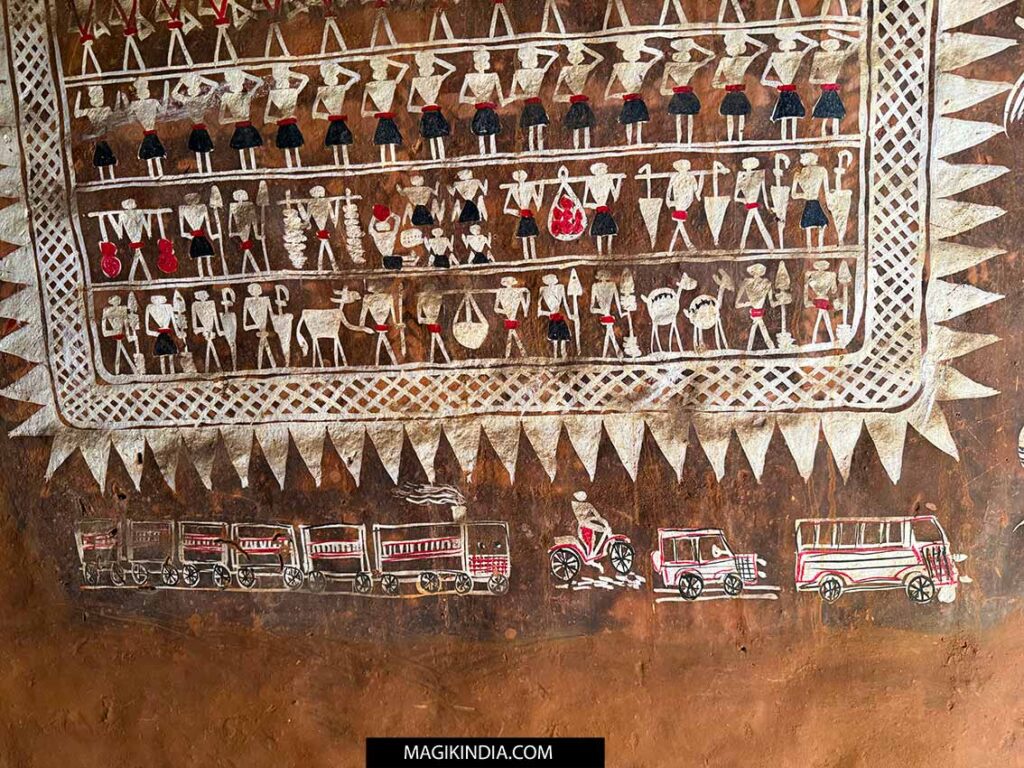
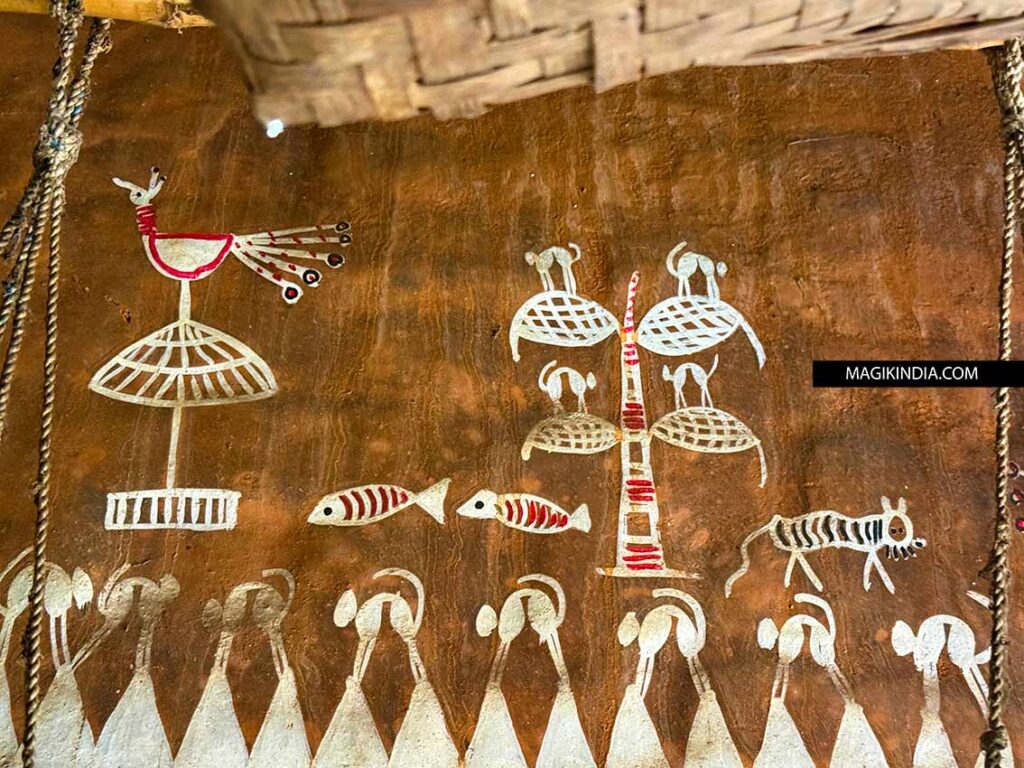
Unlike other forms of Indian tribal art, Idital is traditionally the work of a “Kudan” (shaman). The latter enters a trance to identify which spirit is causing a problem or requesting an offering. The spirit then “dictates” the elements it wishes to see depicted in its mural dwelling: a horse for travel, a tree for shelter, or even modern objects (rifles, cars) to demonstrate its power. Once the painting is complete, consecration rituals (prayers, food offerings) are performed to “activate” the image.
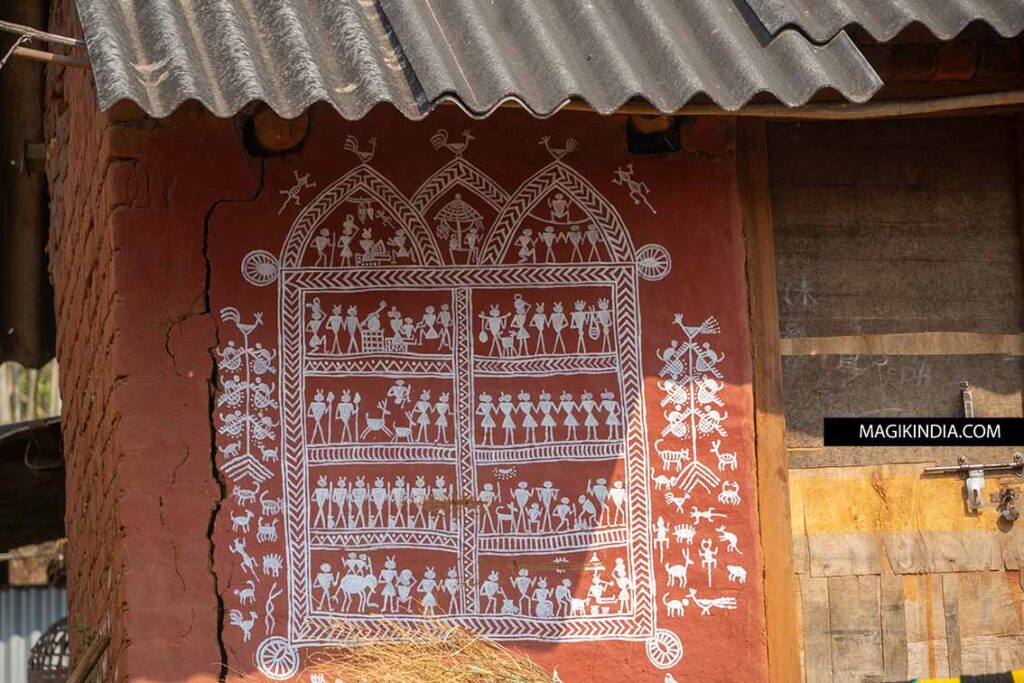
The aesthetic of the Idital adheres to strict codes: each work is enclosed within a richly ornamented rectangular frame, depicting the walls of the Palace of Spirits, where the space is filled with details so as to leave no void. The painting is executed using white rice paste (a symbol of purity and spiritual sustenance) against a background of red ochre derived from the iron-rich soil of the hills and symbolizing blood and fertility.
The human body is reduced to two inverted triangles meeting at their tips. This hourglass silhouette is the stylistic signature of the Saura, representing the balance between the earthly world and the underworld.
Although it may be confused with the Warli art of Maharashtra, Idital is distinguished by its metaphysical depth. Whereas Warli celebrates social life, Saura art is oriented toward shamanism and the cult of the dead.
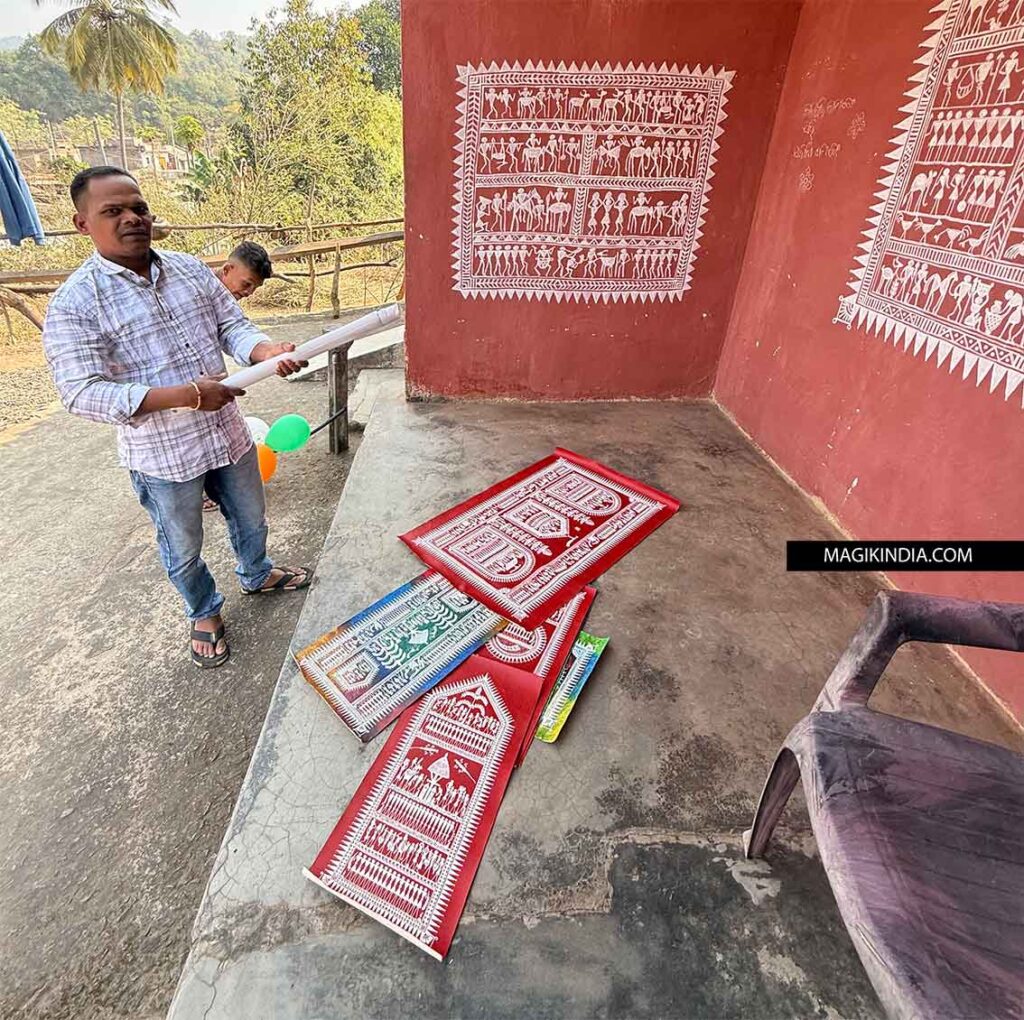
Long confined within the mud walls of villages, this sacred art is experiencing a second birth. Thanks to the granting of a Geographical Indication (GI) in 2024, Idital is now making its way onto canvas, paper, and fabric. This recognition enables the tribe’s artists to safeguard their heritage against industrial reproductions while bridging the gap between a millennia-old tradition and the contemporary art market.
Kudan Boi: The Feminine Spiritual Power
Unlike many traditional societies where religious power is exclusively male, the Lanjia Saura accord a central place to the “Kudan Boi”; this female shaman acts as the indispensable pivot for communication with the invisible.
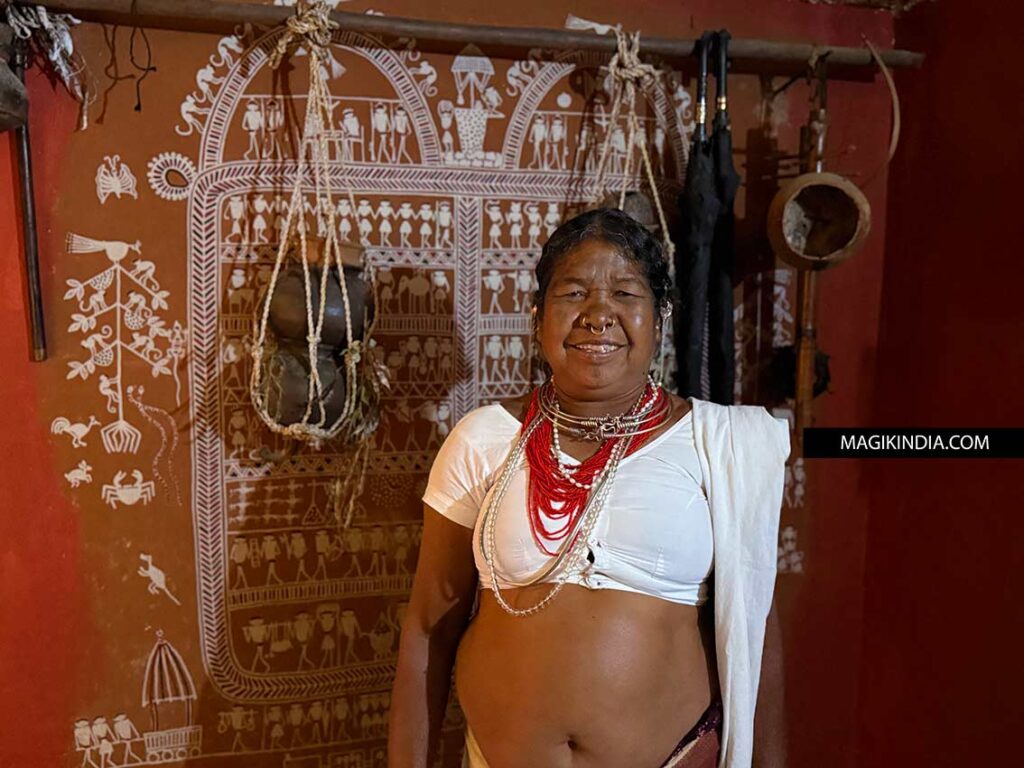
Regarded as the mystical wife of an underworld spirit, she derives her legitimacy from this sacred bond: it is he who, through dreams or whispers, reveals to her medical diagnoses and remedies for the village’s ailments.
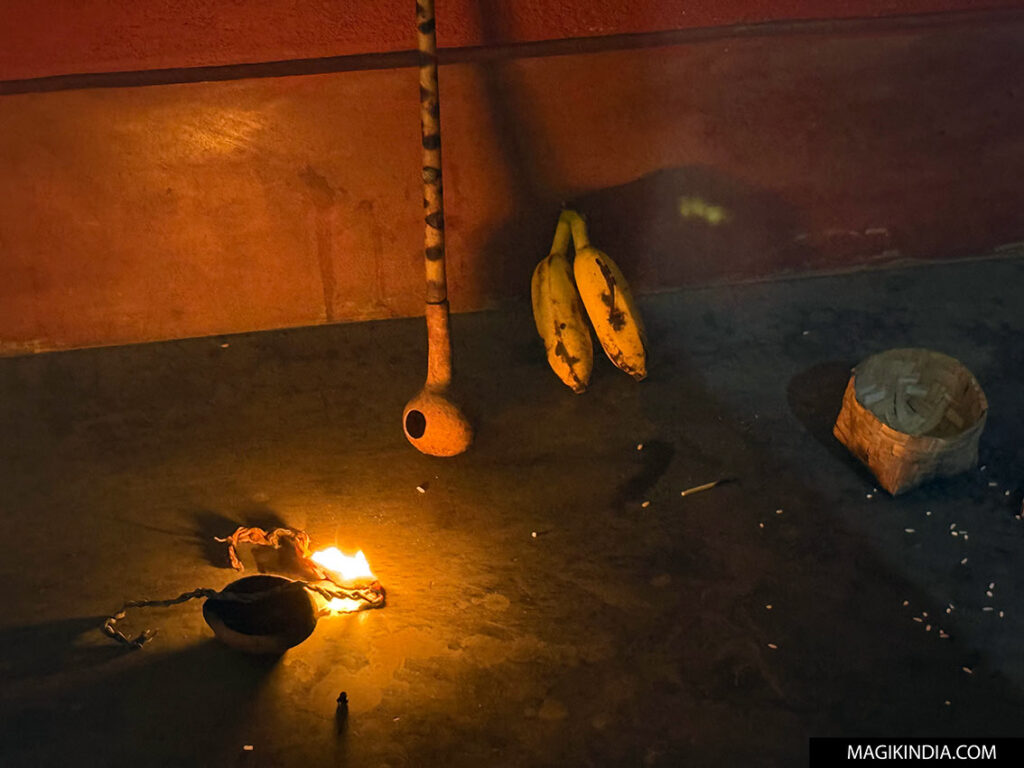
During rituals, the passage between worlds unfolds amidst a striking theatrical staging: seated before an Idital, the shaman recites rhythmic mantras until she slips into a trance. The sudden shift in her voice signals that a spirit has seized her body to voice its demands, call for a sacrifice, or lift the veil on persistent misfortune.
My encounter with the female shaman Lakshmi Sabara undoubtedly remains one of the most memorable moments of my journey through Odisha. This humble, smiling woman radiates a quiet strength and a form of serenity that seems to draw its source directly from the earth.
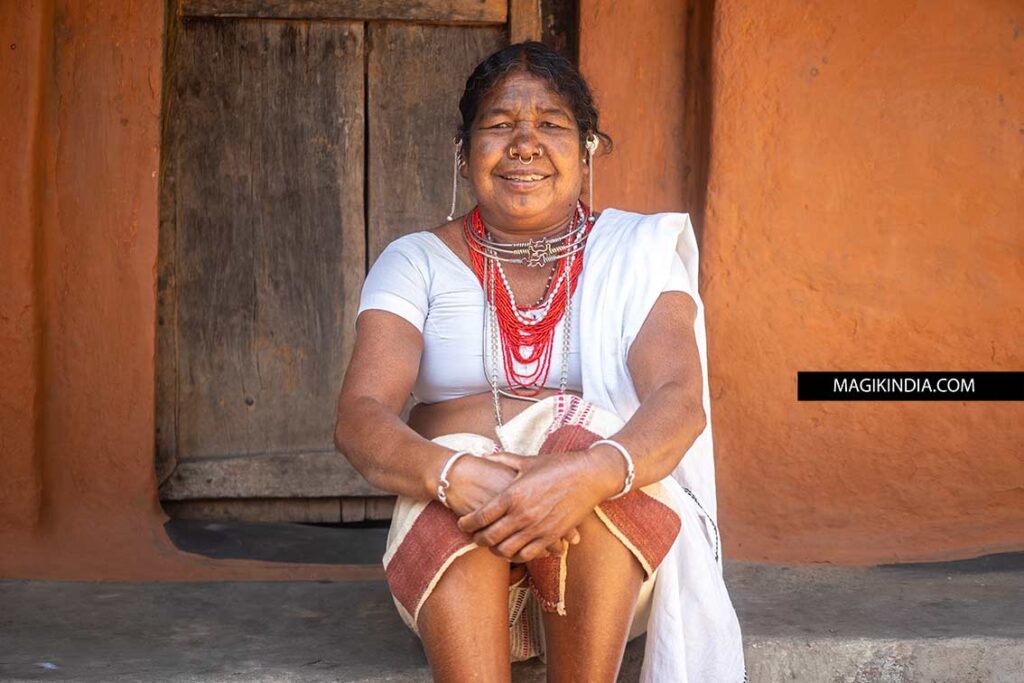
Yet, in the course of a conversation, seated on the porch of her ancestral home, that veil of serenity took on a tinge of nostalgia: “I am the last shaman in the village; no one wants to take my place,” she confided to us. This realisation highlights the fragility of a millennia-old heritage. Under the mounting pressure of conversions to Christianity and the irresistible momentum of globalised modernisation, younger generations are turning away from the whispers of the spirits in favour of the promises of the new world.
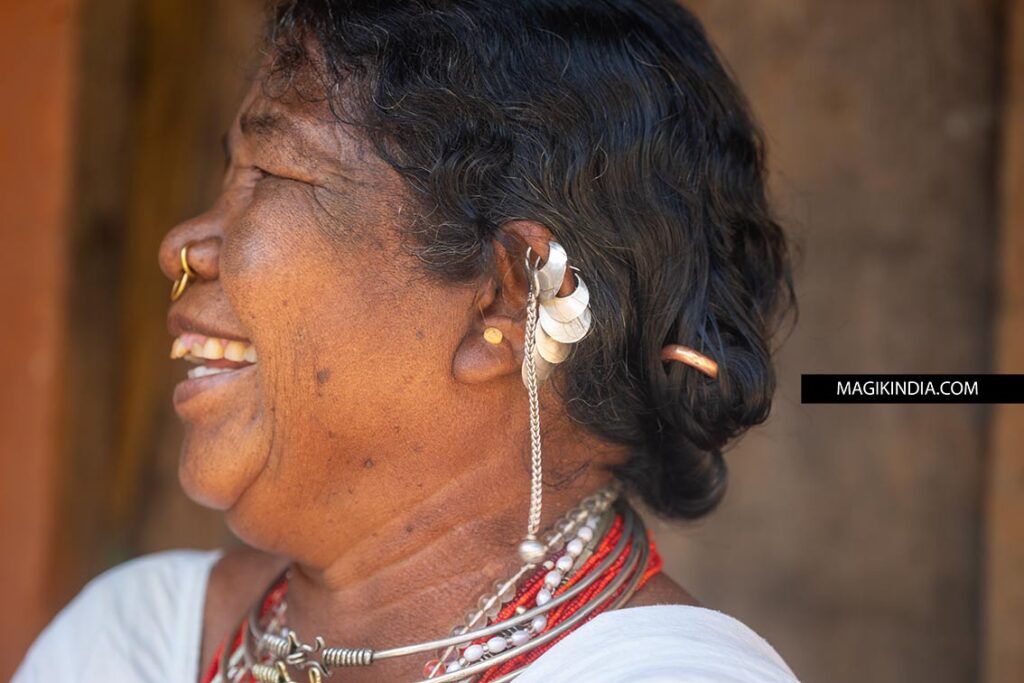
Behind the radiance of her warm smile, one could then perceive the solitude of a woman who bears upon her shoulders alone the twilight of a world. Lakshmi is not merely a healer; she is the ultimate guardian of an invisible library that will vanish with her, leaving behind the memory of an India where human beings still knew how to speak to the gods.
MEET THE FABULOUS LANJIA SAURA!Vous aimerez peut-être aussi...

The Santhal people constitute one of India's largest indigenous communities, primarily settled in the states of Jharkhand, West Bengal, Odisha,...
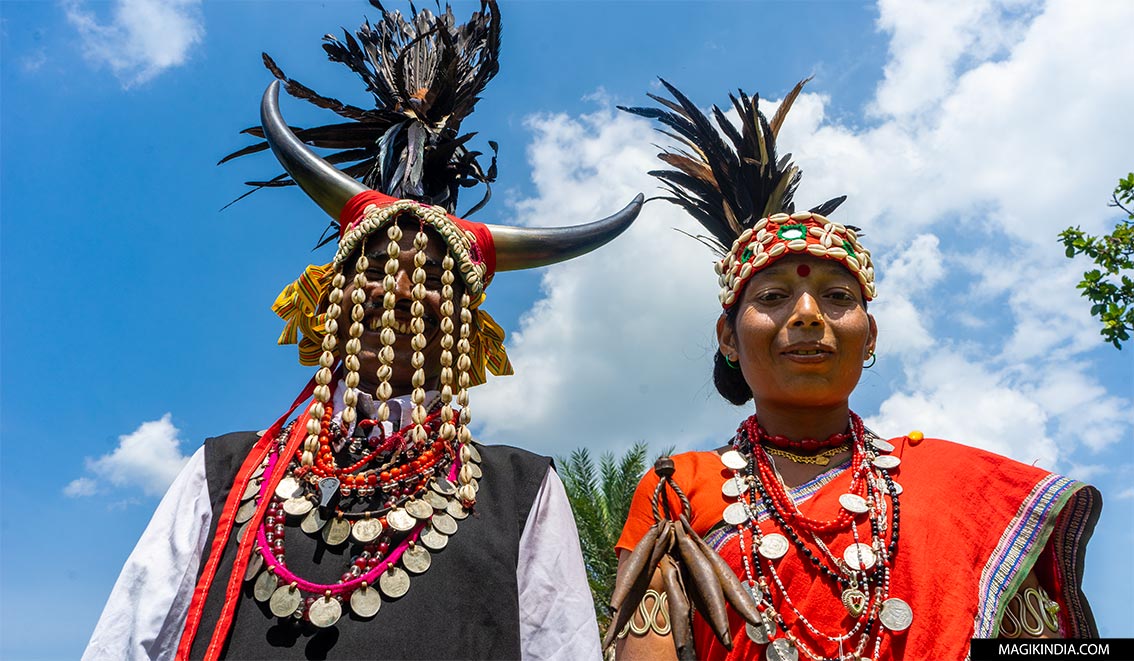
Inhabiting the high plateaus of Bastar (Chhattisgarh), the Dandami Maria tribe constitute an emblematic branch of the Gond people, distinguished...
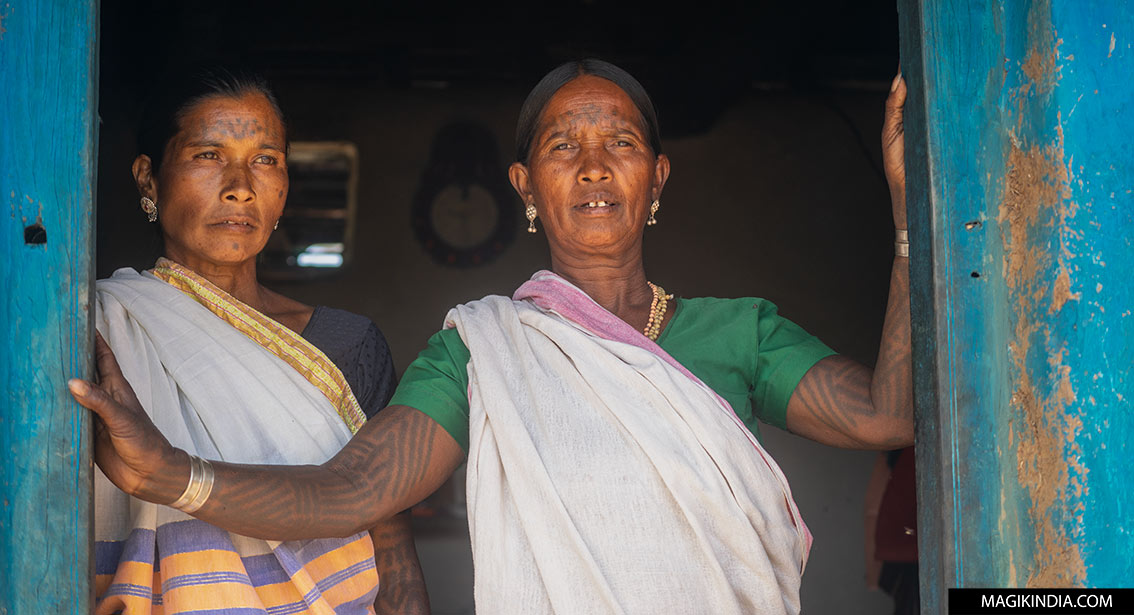
The Baiga tribe, nestled deep within the dense forests of northern Chhattisgarh, define themselves above all as the spiritual guardians...

The Muria tribe, a major branch of the Gond ethnic group, inhabits the highlands and forests of the Bastar district...
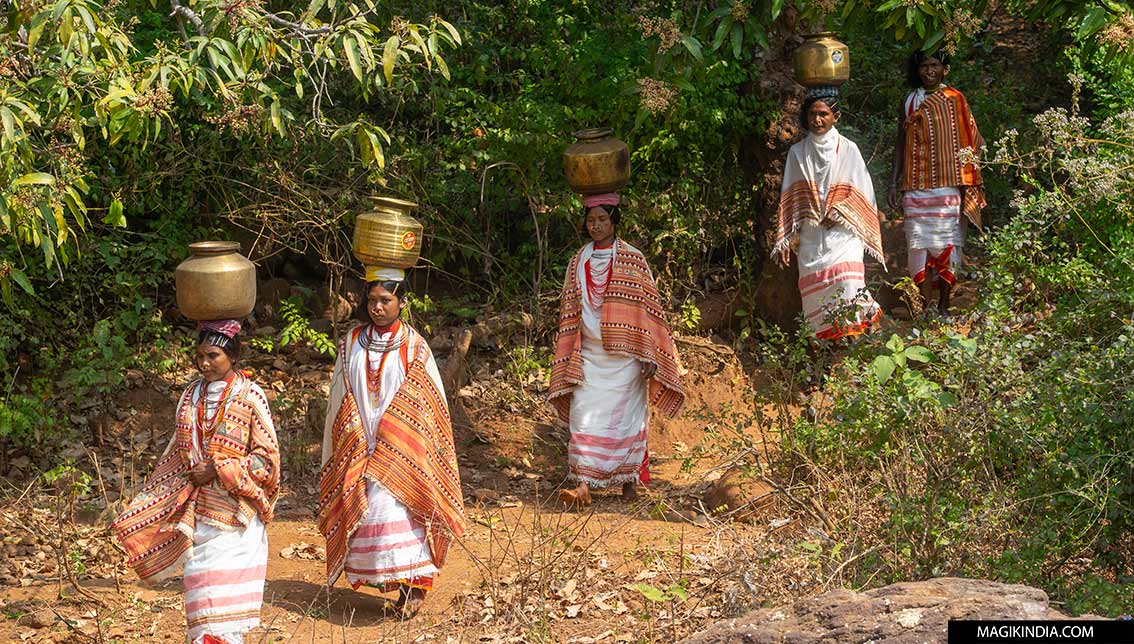
Nestled within the rugged terrain of Odisha’s Niyamgiri Hills, the Dongria Kondh cultivate a sovereign elegance that finds expression as...

