

If Gujarat captivates me, it is above all by the human richness of its communities. After exploring the world of...
The Bonda: A Living Museum of Humanity
Nestled within the rugged folds of the Malkangiri district, on the fringes of the state of Odisha, lives the fascinating Bonda tribe, a true mirror of our most distant origins. According to prevailing anthropological theories, they are the direct descendants of the first great human migration to emerge from the African continent. Approximately 60,000 years ago, these pioneers are believed to have left the African cradle to traverse the continents, ultimately finding refuge in the impenetrable heights of the Eastern Ghats. This geographical sanctuary acted as a temporal time capsule: by living in isolation from the outside world, the Bonda have preserved a genetic and cultural heritage of exceptional purity. Thus, they stand as the last living witnesses, at the very heart of India, to that ancestral bond which unites us all to the lands of Africa.
African Roots in the Heart of India
The striking resemblance between the Bonda and certain African ethnic groups is not a mere aesthetic coincidence, but the vestige of an epic journey.
The history of the Bonda is believed to be rooted in the first major human migration out of Africa, a coastal epic that led these pioneers from the Horn of Africa all the way to Australia, via India and Southeast Asia, long before the migratory waves toward Europe. As members of the Austroasiatic ethnic group, they share ancestral origins with the hill tribes of Southeast Asia a kinship reflected notably in their language, Remo (meaning “people”).
As Adivasi (India’s indigenous inhabitants), the Bonda constitute a remarkable genetic isolate whose DNA has remained free from any influence linked to subsequent Indo-Aryan migrations. According to research conducted by the Centre for Cellular and Molecular Biology in Hyderabad, their genetic markers link them directly to the Ancient Ancestral South Indians (AASI). This unique lineage establishes them as the custodians of one of humanity’s most archaic genetic heritages.
The geographical isolation of the Bonda served as their first line of defense, but it was their warlike temperament that guaranteed their freedom. Feared by all, they never bowed before local rajas or the British administration, their reputation as warriors safeguarding the integrity of their territory.
The distinctive appearance of Bonda women
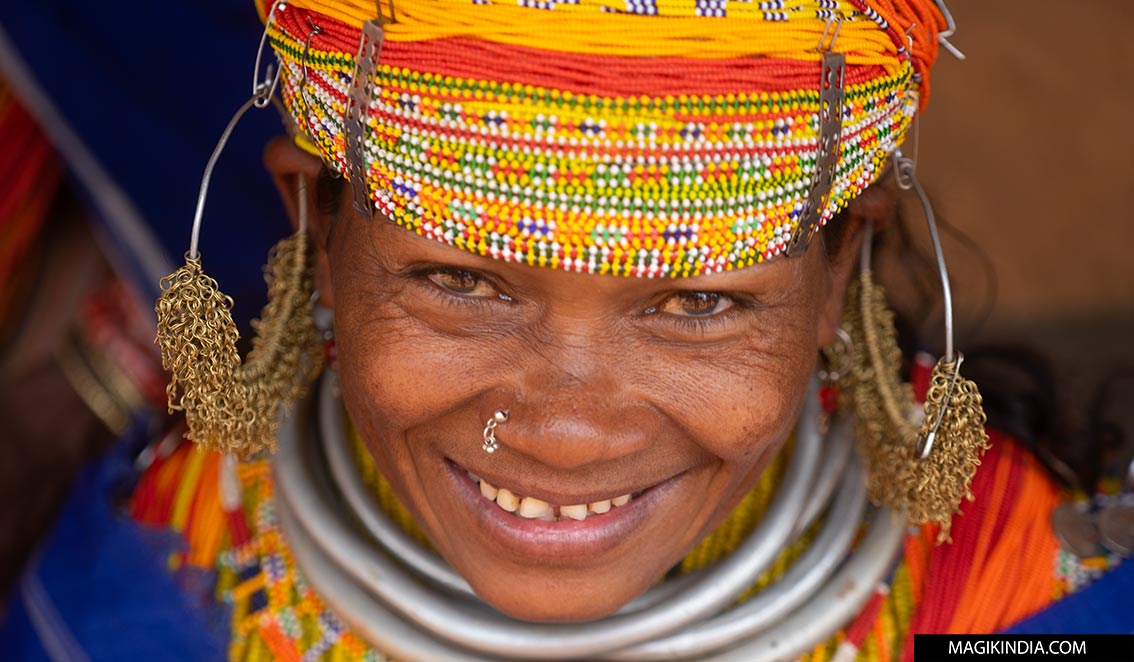
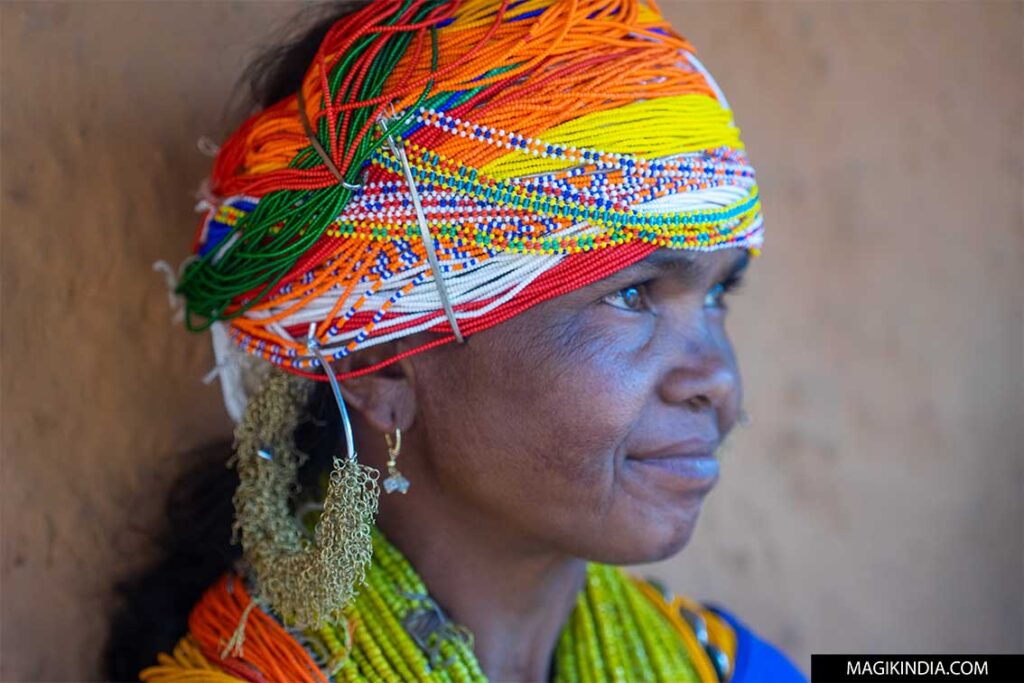
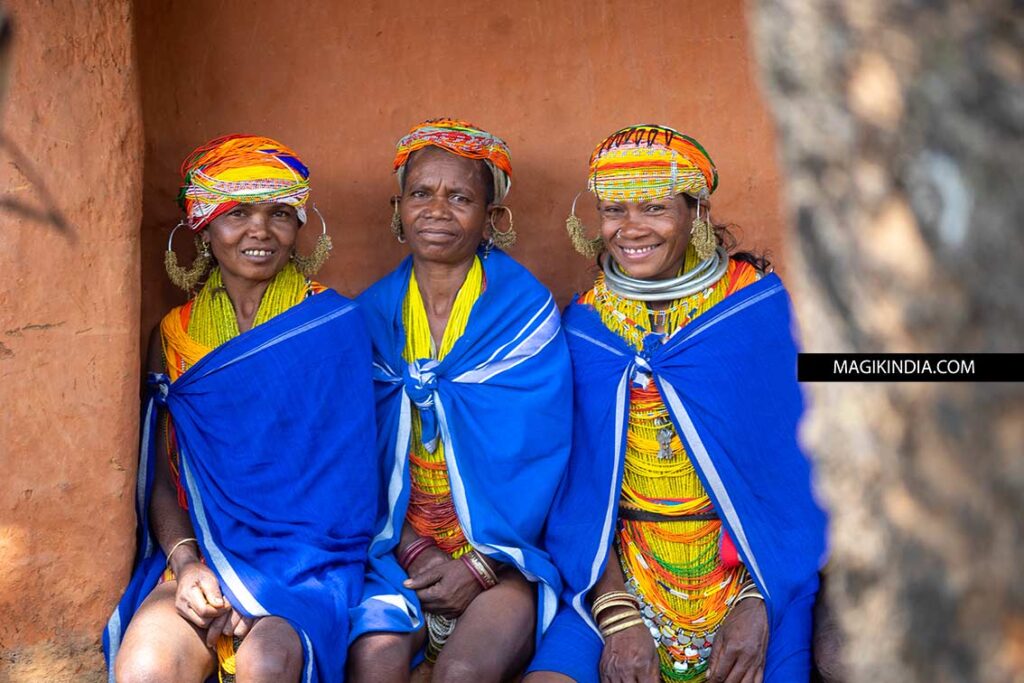
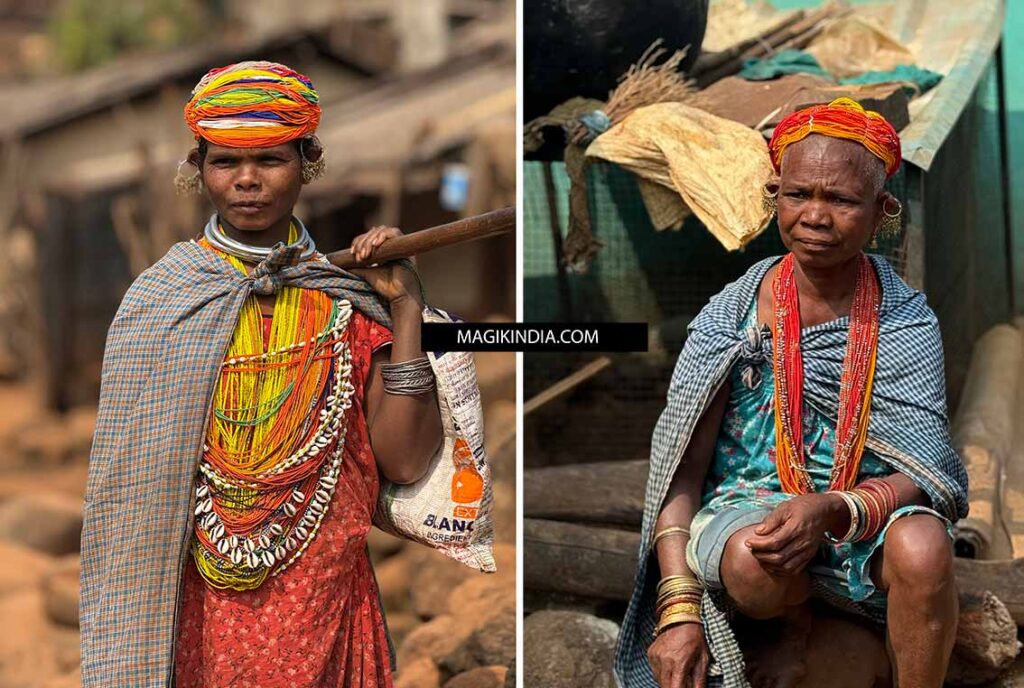
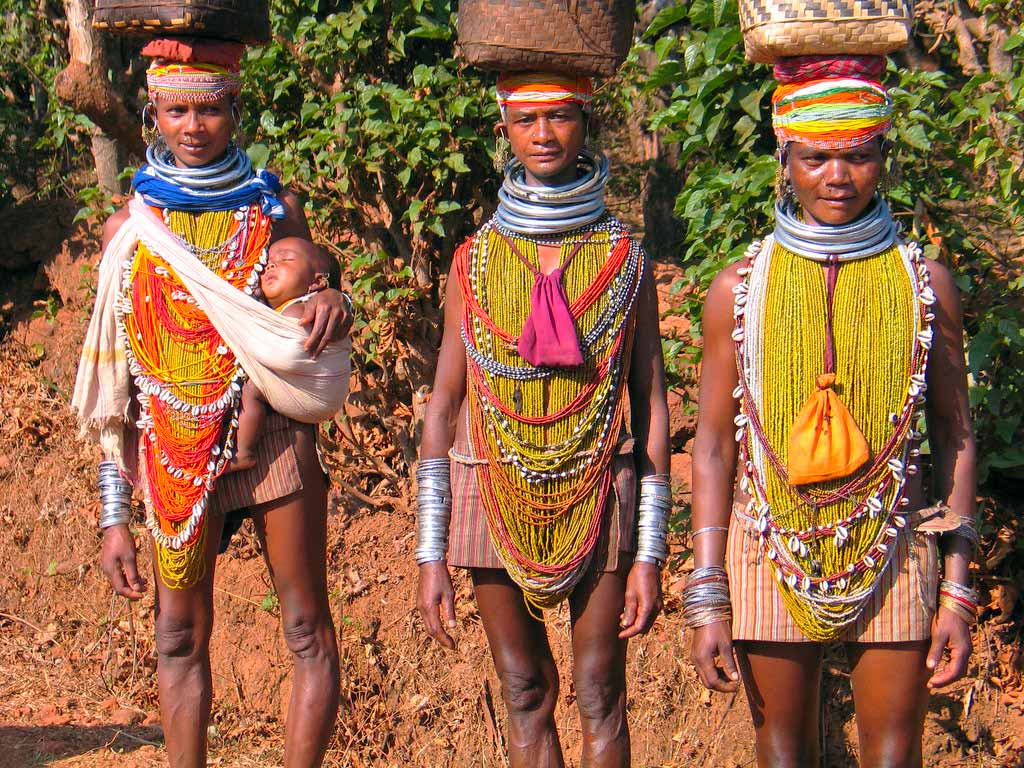
The aesthetic of the Bonda women resembles no other in India. It constitutes a true visual code that tells the story of their history, their resistance, and their connection to the sacred.
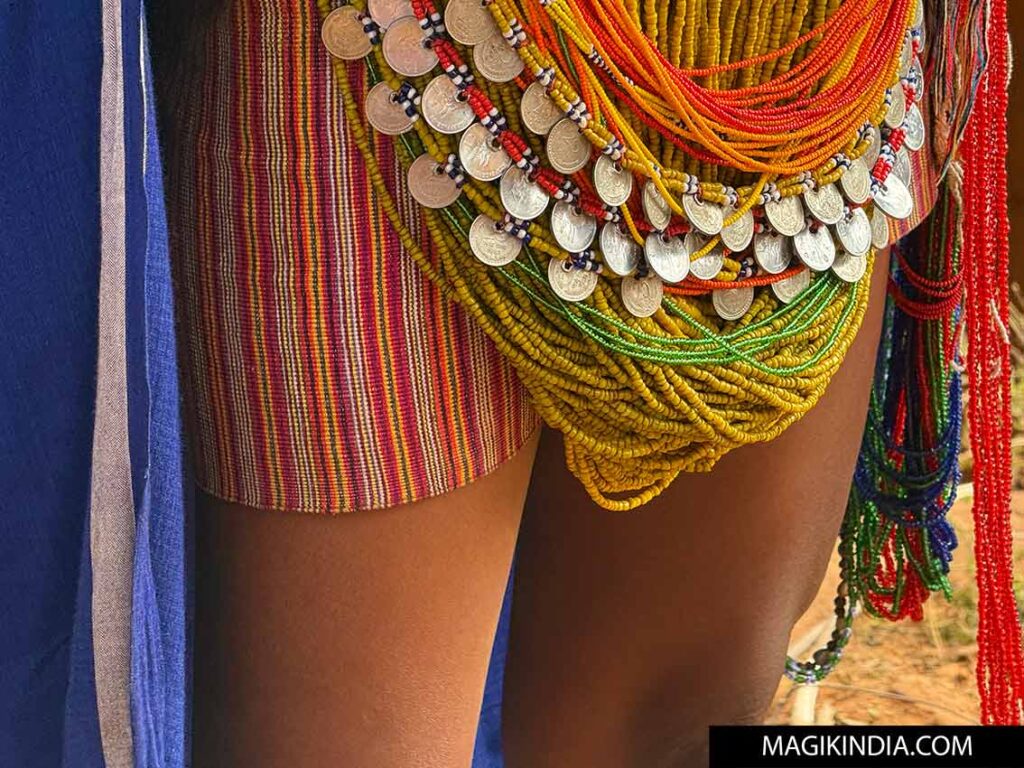
Women traditionally wear the Ringa, a very narrow loincloth made from the bark fibers of a local shrub called kerang. The fiber is boiled, dried, and then hand-spun. They use natural dyes derived from roots, charcoal, and plants to achieve dark or earthy colors. The weaving is carried out on rudimentary looms.
See the Instagram link regarding the weaving of RINGA: https://www.instagram.com/reel/C5BS2kqICBt/?utm_source=ig_web_copy_link&igsh=MzRlODBiNWFlZA==
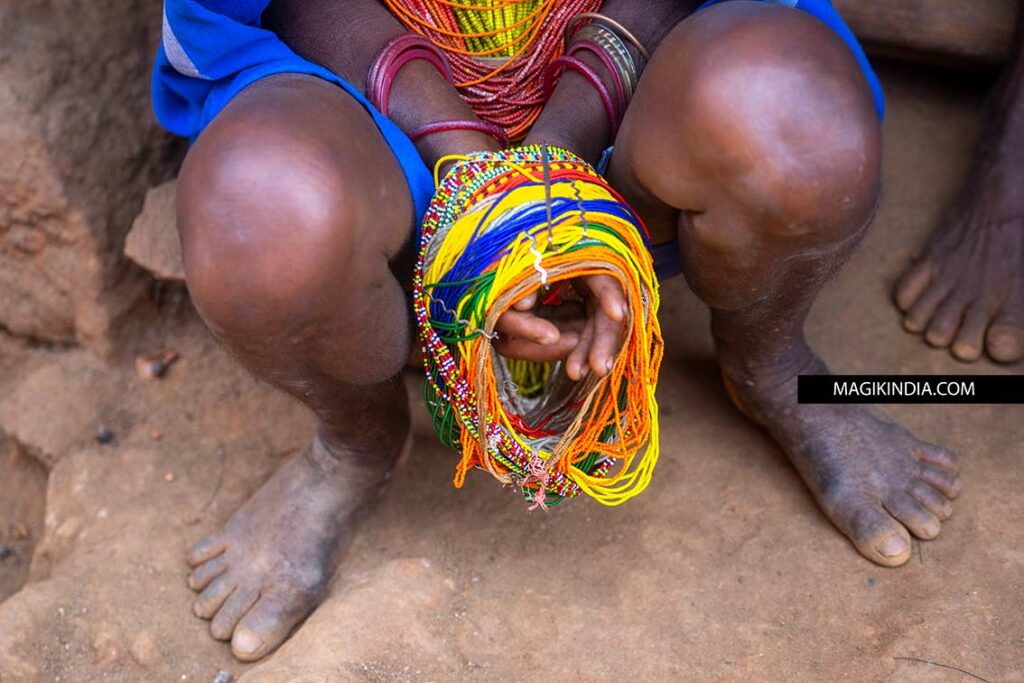
A profusion of multicoloured glass beads completely covers the head and torso, while massive rings of aluminum or brass, known as khagla, encircle the neck. A woman may wear up to 6 kilograms of beads and metal. A knotted length of electric-blue fabric completes this exceptional adornment.
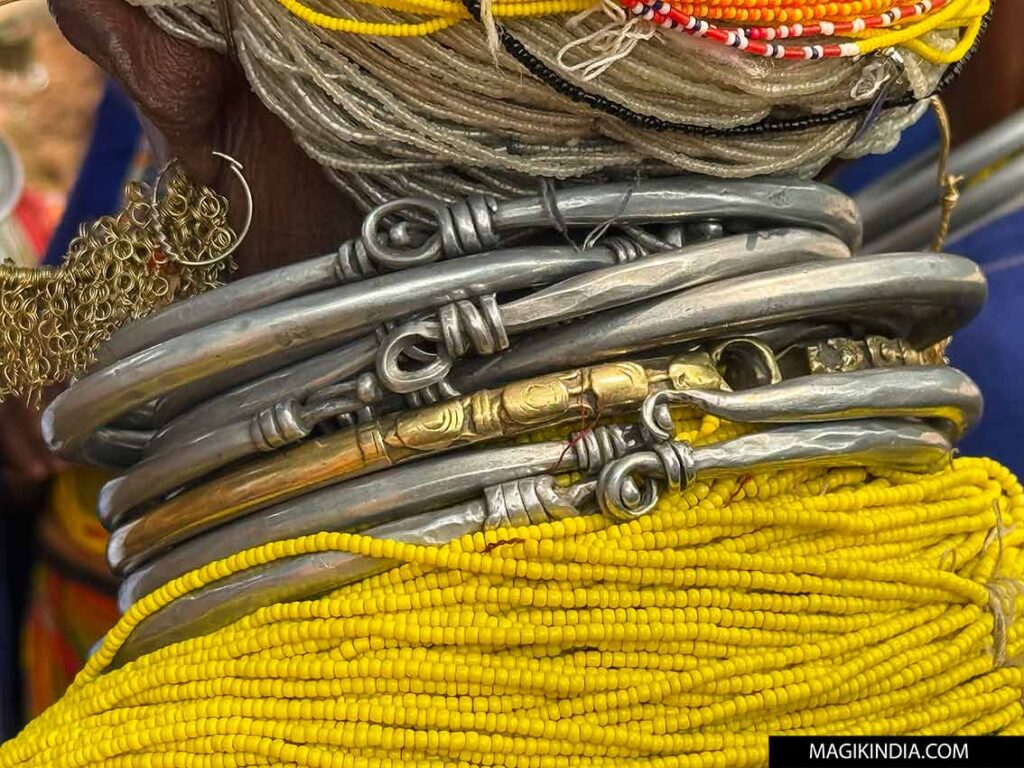
Pearl necklaces are not merely aesthetic; they also serve as a symbolic form of armor and as a covering, given that women traditionally do not wear tops. Similarly, khagla, which are often passed down from mother to daughter, help ward off tiger attacks, as the animals’ instinct drives them to prioritise targeting the throat.

Although younger generations are gradually moving away from it, tradition dictates that Bonda women shave their heads, adorning them solely with beaded headbands.
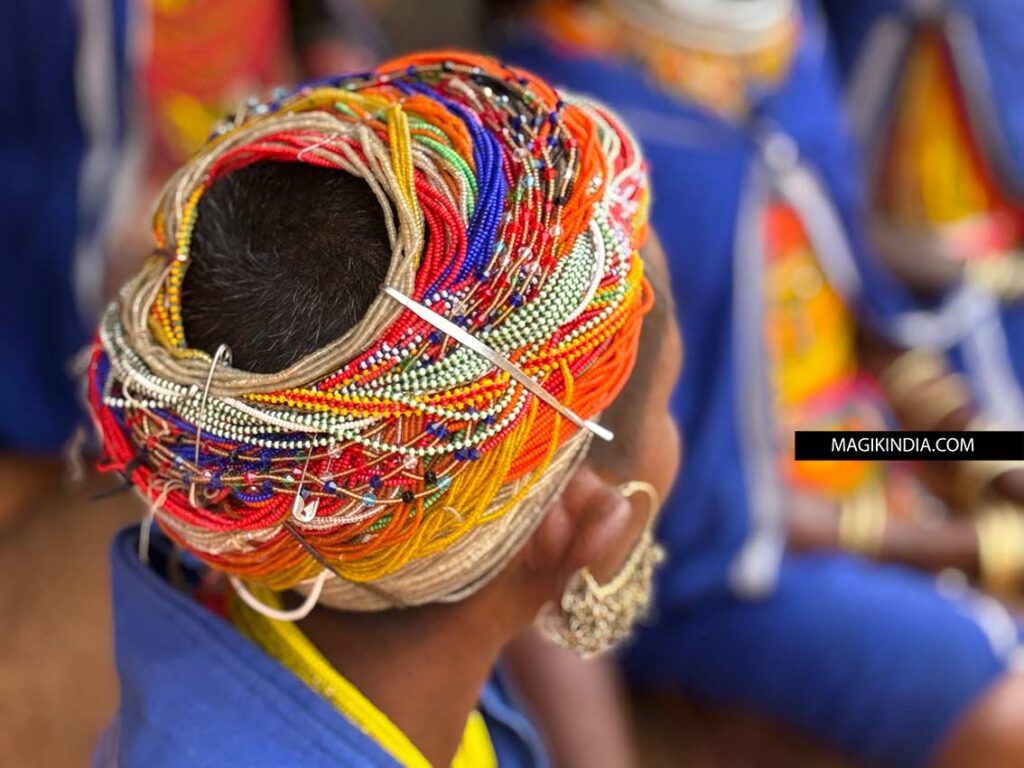
According to Hindu mythology, the shaved heads and partial nudity of Bonda women can be explained by the following tale: during the exile of Lord Rama, the goddess Sita was surprised while bathing naked in the waters of the Kapurchua spring by a group of Bonda women, who mocked her. Outraged, Sita cursed them, condemning them to remain naked and with their heads shaved. Faced with their supplications and unable to revoke her spell the goddess offered them a piece of her own garment so that they might cover themselves. Thus, according to legend, is explained the scant traditional attire and hairstyle worn by Bonda women today.
The Inverted Marriage: A Natural Life Insurance Policy
One of the most baffling practices for outside observers is the “inverted marriage.” Among the Bonda, it is common for a woman to marry a boy 10 to 15 years her junior. Far from being a mere eccentricity, this custom is a contract of intergenerational solidarity of absolute pragmatism.
Why this choice?
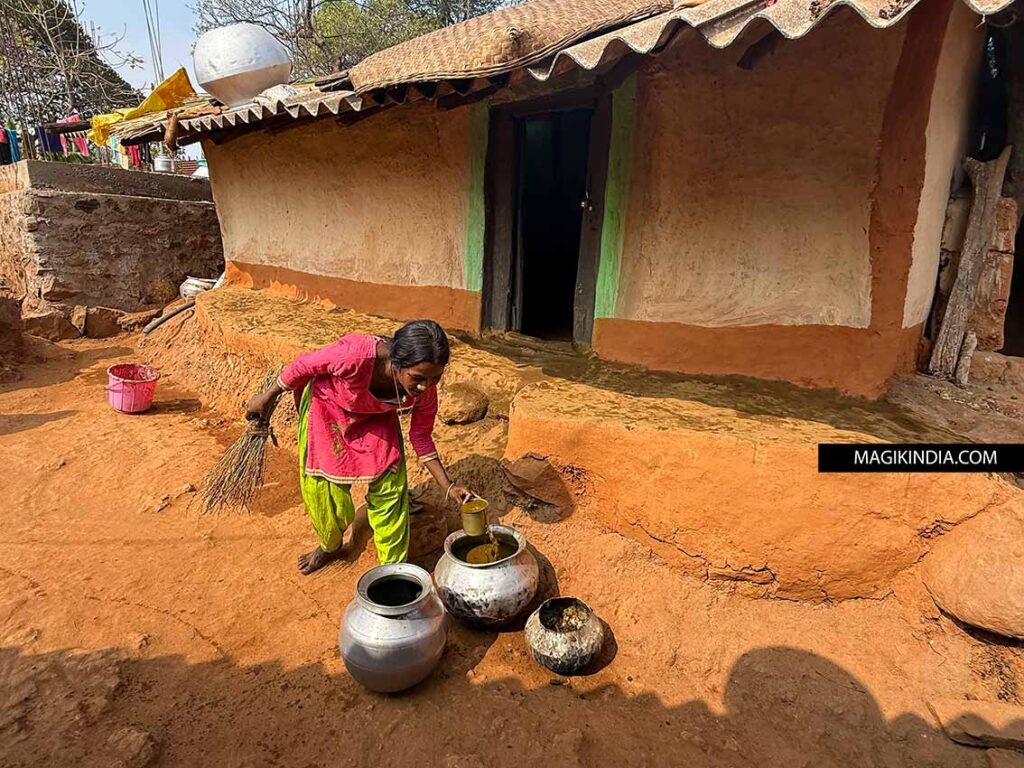
- The guarantee of care: In the hostile environment of the Odisha hills, physical strength is the sole currency of survival. By marrying a husband significantly younger than herself, the Bonda woman ensures that, by the time she ages and her strength declines, her spouse will be at the peak of his vigor, ready to cultivate the fields, hunt, and protect her.
- The role of “guide-wife”: The woman is not merely a spouse; she is the one who trains the young man in the responsibilities of the tribe. She manages the household and handles bartering, while her husband matures under her protection.
- Stability and matriarchy: This system reinforces women’s decision-making power. Being more mature and experienced than their husbands throughout the majority of the couple’s active working life, conflicts over authority within the marriage are minimized during those crucial early years. The woman manages the household and the family economy (specifically market bartering), while the young husband learns hunting and cultivation techniques under her supervision.
Millet and the art of bartering
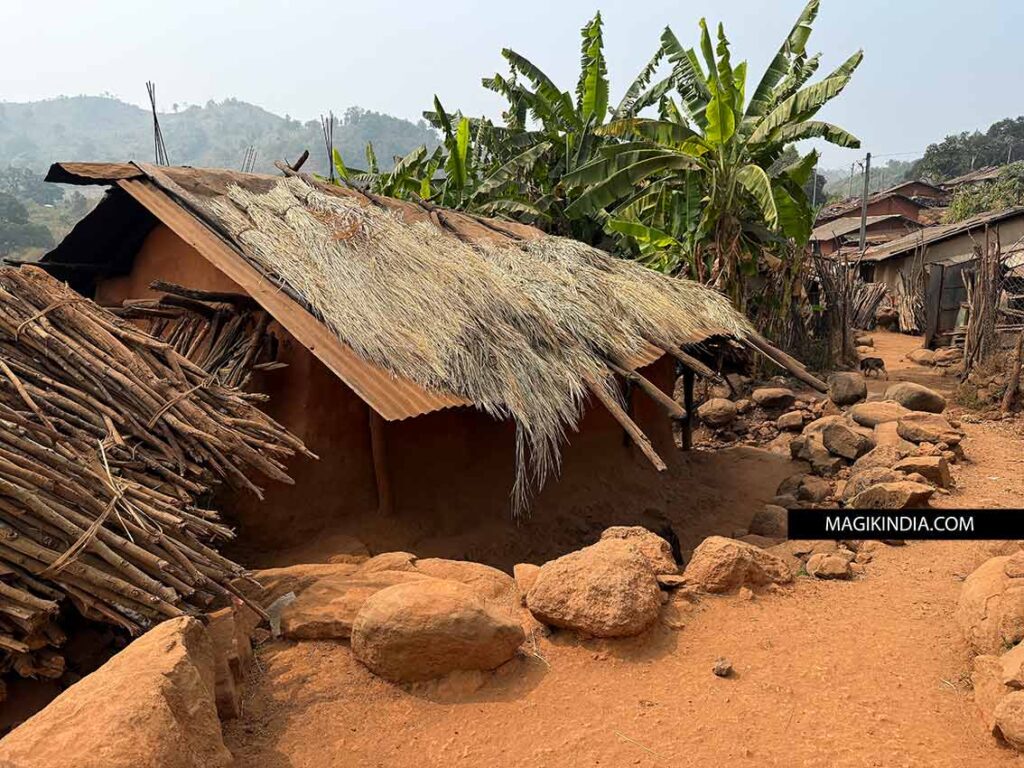
The Bonda practice a form of mountain agriculture known as Podu (slash-and-burn cultivation). They primarily cultivate millet (ragi), which forms the staple of their diet, as well as legumes and ancient grains.
Their connection to the outside world is often limited to the Onukadelli market, held every Thursday. It is a fascinating scene of barter: Bonda women bring brooms, mustard seeds, or palm wine (Salap) to trade for salt, oil, or new beads. They often refuse paper currency, preferring the tangible value of exchanging goods, a practice that shields them from external economic fluctuations.
Bonda Spirituality
Bonda spirituality revolves around a polytheistic pantheon and an animist worldview. To ensure the benevolence of these invisible forces and avert any dire fate, the Bonda practice regular sacrificial rituals, such as during the Patkhanda Jatra festival.
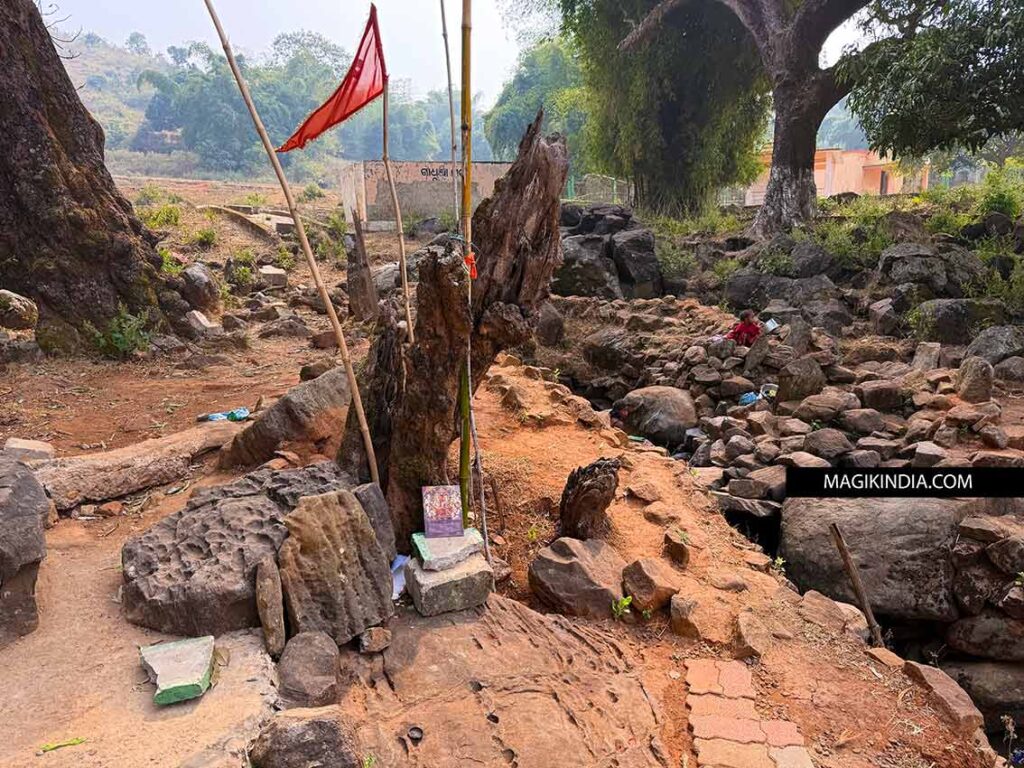
At the pinnacle of their pantheon sits Patkhanda Mohaprabhu, the creative entity at the very origin of the cosmos and of humanity. A symbol of absolute goodness, this deity is also invoked under the name Singi-Arke, uniting the forces of the sun and the moon. The deity is embodied in a sacred sword, jealously guarded within the hollow of a centuries-old banyan tree. This natural sanctuary, nestled within the sacred grove of Mudulipada, remains the spiritual heart of the community.

This supreme deity finds its earthly anchor through the ritual dyad formed by the Sisa (priest) and the Sindabor, the village’s sacred stone altar. It is upon this platform, forbidden to the uninitiated, that the spirits of the ancestors reside.
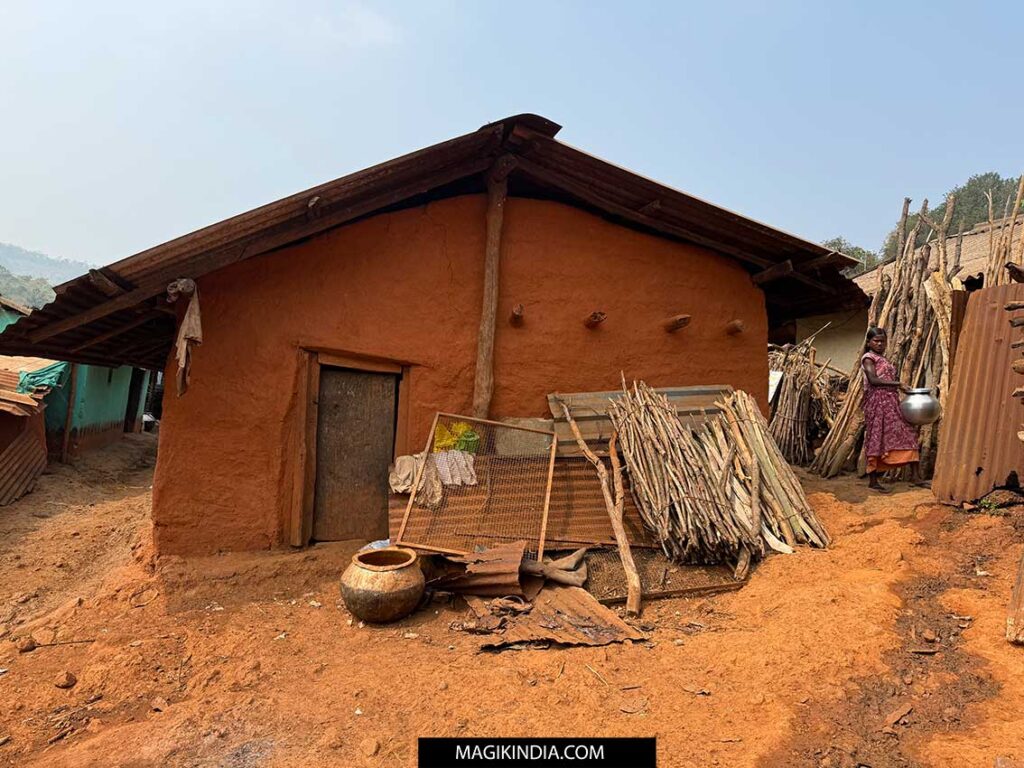
The Sisa is the only one capable of activating this site: during rituals, he channels the energy of the sacred sword into it to invoke the forces of the sun and the moon. Without this synergy, the deity would remain a distant power, and the vital link between the cosmos and the community’s daily life would be severed.
The Challenge of Modernity
Although the Indian State’s classification of the Bonda as a PVTG (Particularly Vulnerable Tribal Group) provides vital support in terms of health and education, it also acts as a catalyst for cultural change. Under the influence of modern life, young people are turning away from tradition, posing a crucial dilemma: how can one open oneself to the world without renouncing one’s roots? This challenge integration without assimilation now looms over the future of all tribal communities in India.
MEET THE UNIQUE BONDA OF ODISHA!
Vous aimerez peut-être aussi...

The Santhal people constitute one of India's largest indigenous communities, primarily settled in the states of Jharkhand, West Bengal, Odisha,...
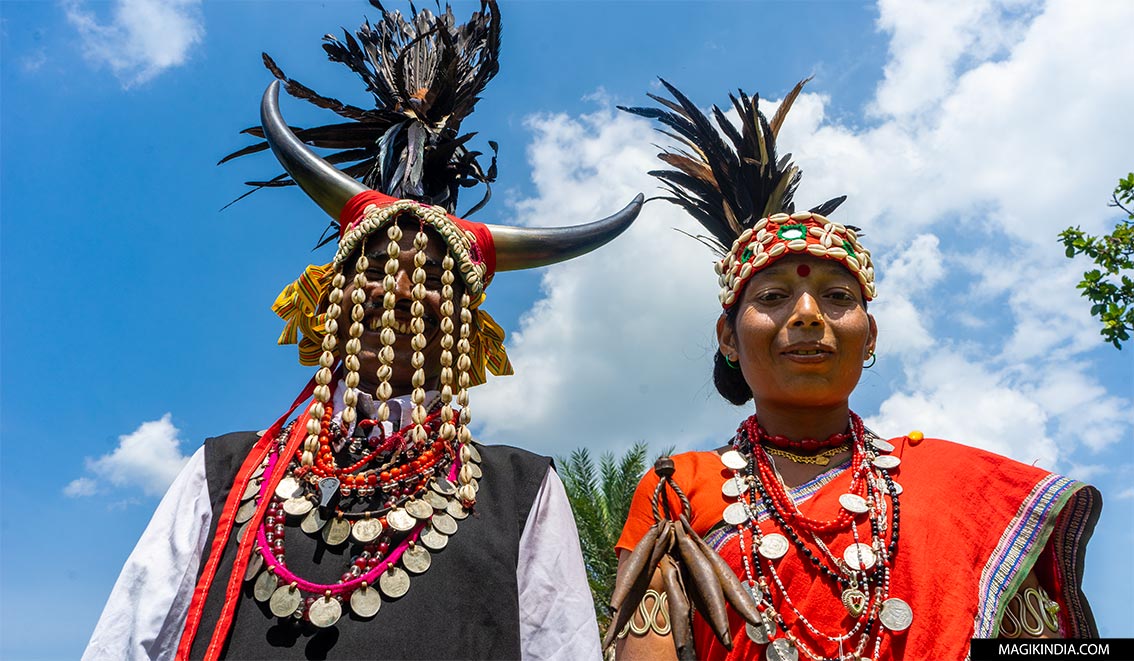
Inhabiting the high plateaus of Bastar (Chhattisgarh), the Dandami Maria tribe constitute an emblematic branch of the Gond people, distinguished...
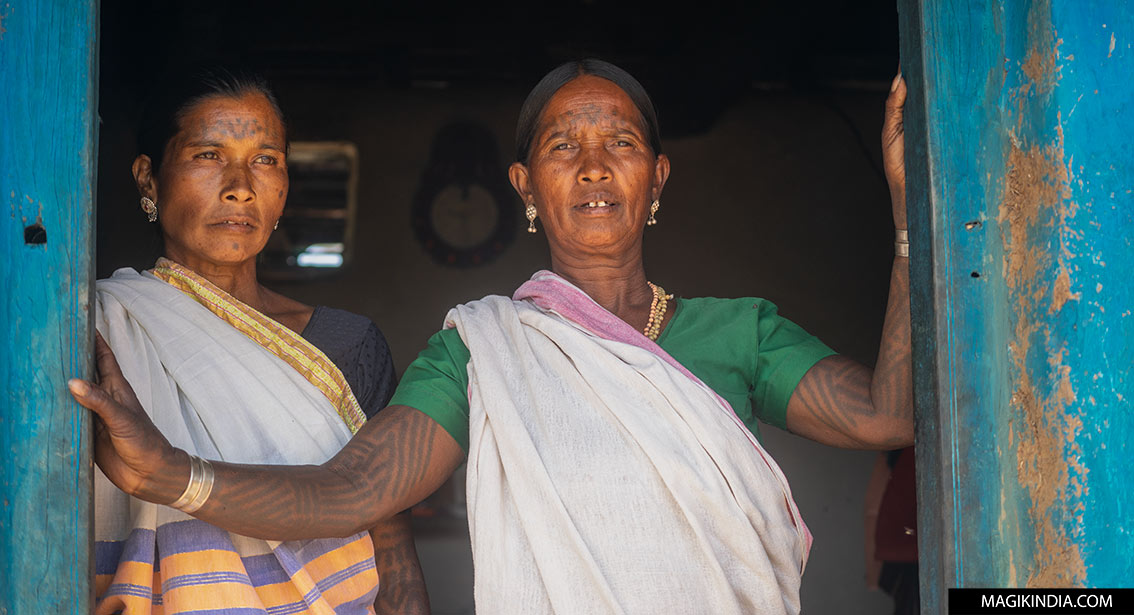
The Baiga tribe, nestled deep within the dense forests of northern Chhattisgarh, define themselves above all as the spiritual guardians...

The Muria tribe, a major branch of the Gond ethnic group, inhabits the highlands and forests of the Bastar district...
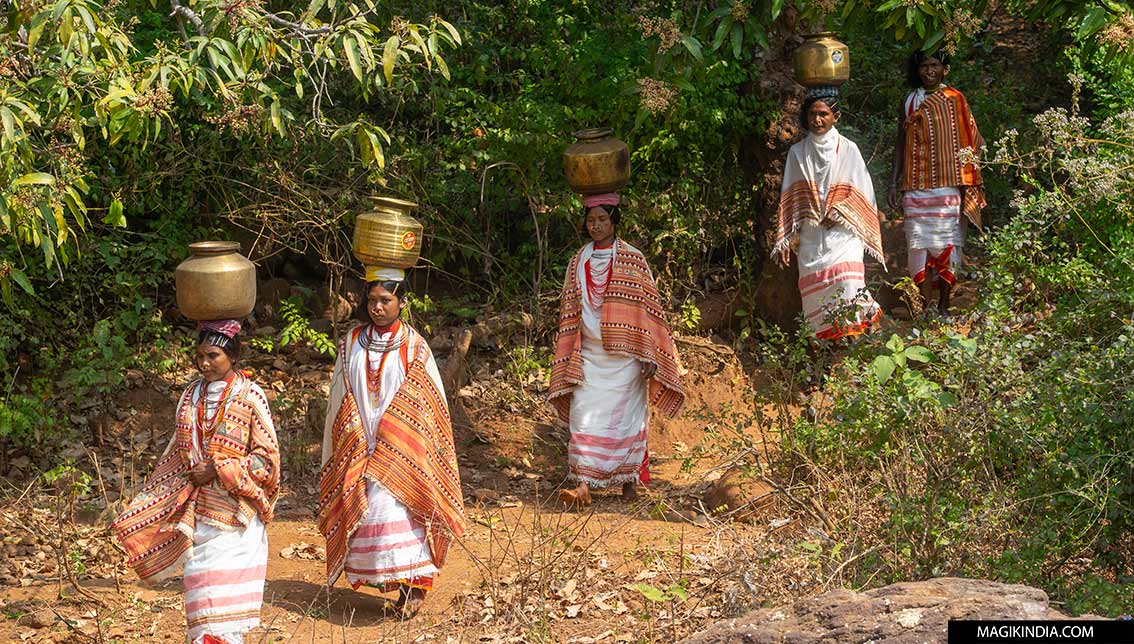
Nestled within the rugged terrain of Odisha’s Niyamgiri Hills, the Dongria Kondh cultivate a sovereign elegance that finds expression as...

