
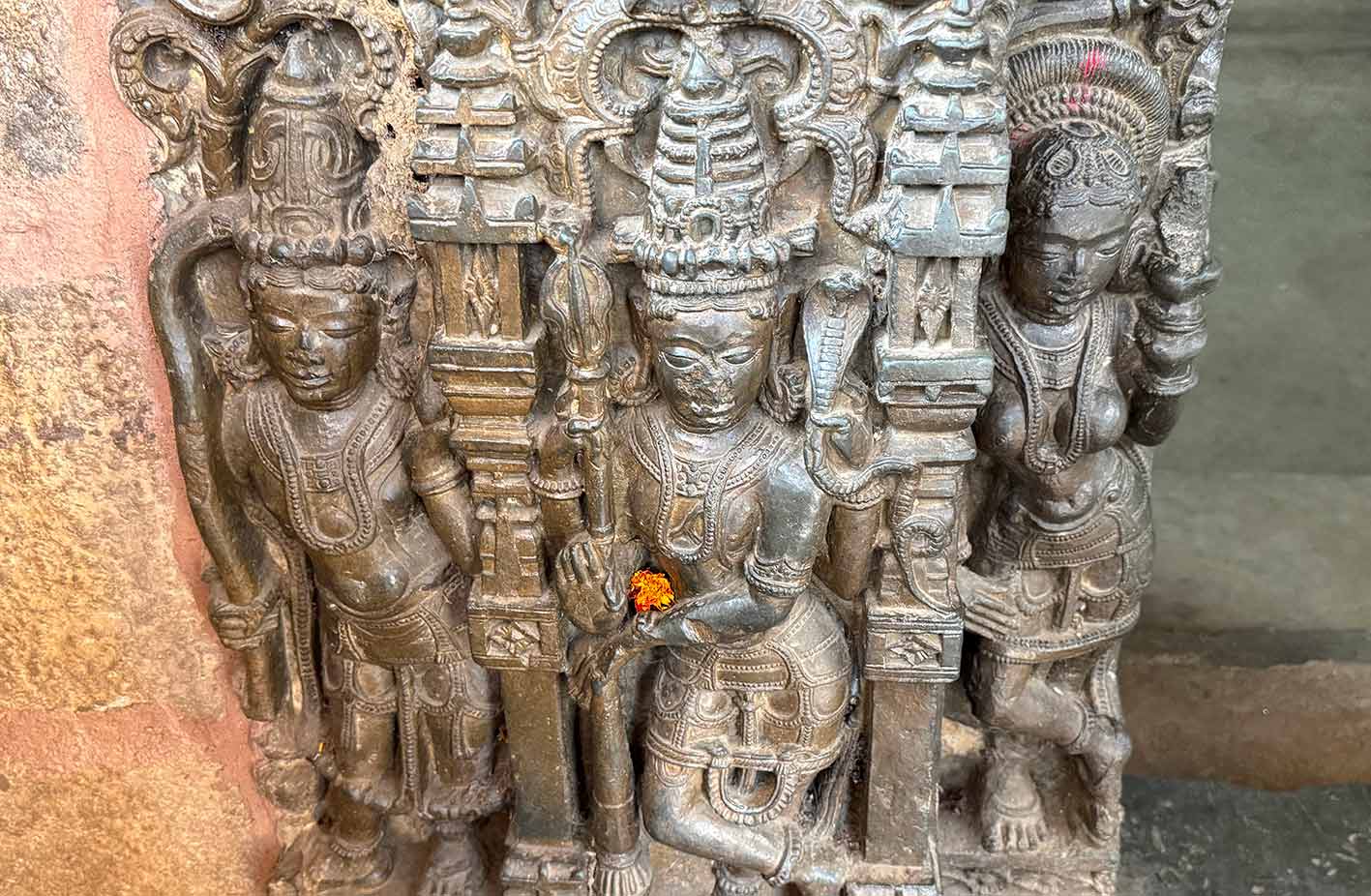
In the hollow of the wooded hills of the Maikal range, in the wild setting of Chhattisgarh, the Bhoramdeo temple...

Maheshwar, in the footsteps of Queen Ahilyabai
Languid on the banks of the Narmada, in the southwest of Madhya Pradesh, Maheshwar offers the image of a city frozen outside of time. Preserved from the beaten track, this city imbued with the memory of Queen Ahilyabai Holkar cultivates a discretion that contrasts with the depth of its history. It offers travelers a peaceful pace where remarkable Marathi architecture, a deeply mystical atmosphere and centuries-old artisanal know-how are revealed.
From mythology to the Maratha Golden Age
The history of Maheshwar spans millennia, mixing Hindu epics and successive dynasties:
Mythological roots

In ancient texts (the Ramayana and the Mahabharata), the city was known as Mahishmati. It was the sumptuous capital of the kingdom of King Kartavirya Arjuna (Sahasrarjuna). Its current name, Maheshwar, is a derivation of Mahesh (one of the names of the god Shiva), literally meaning “the abode of the great lord Shiva”.
Successive developments

Over the centuries, the region came under the control of various empires: the Mauryas, the Gupta emperors, the kings of Malwa, then the Muslims with the Sultanate of Gujarat and the Mughal Empire (notably under Akbar in 1601).
The rise under the Holkars

In the 18th century, after the Mughal decline, the Marathas conquered Malwa and in 1733 entrusted the territory of Indore to Malhar Rao Holkar, founder of the dynasty. This ends with the last maharaja, Yashwant Rao Holkar II (1908-1961), whose sovereign reign ended on August 11, 1947 with the signing of the act of accession to the Dominion of India.

Abolished in 1971, the sovereign titles of the Holkar no longer have political value, but the family retains a major patrimonial role in Madhya Pradesh. Represented by Princess Usha Devi Holkar (15th Maharani of Indore) and her half-brother Richard, the dynasty watches over its cultural and artisanal heritage. In March 2026, the Maharani officially designated her nephew, Yeshwant Rao Holkar (son of Richard), as her successor (uttaradhikari) in a traditional ceremony at the Rajwada Palace in Indore.
Maharani Ahilya Bai Holkar
We cannot talk about Maheshwar without talking about his tutelary figure, Ahilyabai Holkar (1725–1795), considered one of the greatest sovereigns in Indian history.
An extraordinary rise
Born into a modest family in Maharashtra, Ahilyabai was spotted by Malhar Rao Holkar, who married her to his son Khanderao.

After the death of her husband (1754) and then of her father-in-law, Malhar Rao Holkar (1766), she ensured the brief regency of her son Male Rao before the latter’s death in 1767. Refusing the practice of sati (committing suicide on her husband’s funeral pyre), she put her great administrative skills to good use and obtained the support of Maratha chiefs to officially ascend the throne of Indore in December 1767. She led alone the kingdom, assisted on the military level by Commander Tukoji Rao Holkar.
Maheshwar’s Choice

In 1767, she moved the state capital from Indore to Maheshwar. Deeply pious and devoted to the god Shiva, Ahilyabai found in this natural setting a place conducive to meditation, prayer and the spiritual management of her kingdom. During her 28-year reign, she transformed the town into a thriving center of commerce, art, politics and spirituality.
The Philosopher Queen

Nicknamed the “philosopher queen” or the “Mother of the poor”, she devoted her fortune to the construction of roads, wells, shelters and the renovation of countless temples throughout India from Varanasi to Rameshwaram.

She also put in place protection and aid measures for widows, orphans and destitute women, offering them more dignified living conditions throughout her kingdom. Even today, the people of Maheshwar revere the memory of Ahilyabai with immense devotion.
Maheshwar Fort
Perched on a cliff directly overlooking the tumultuous waters of the Narmada, Maheshwar Fort is the beating heart of the city.
Defensive architecture

Its imposing stone ramparts rise more than 30 meters above the river. They are punctuated by massive bastions (like the Fateh Burj) once armed with cannons. It is accessed through sculpted fortified gates including the Kamani Darwaza and the Ahilya Dwar.

Rajwada
Behind the fortified gates stands the royal palace (Rajwada), a two-story wooden building with sober and elegant architecture.

The palace houses an intimate museum containing the sovereign’s personal effects, including her modest Rajgaddi, her throne, where she received her subjects.

Heritage hotel
Respecting the architectural integrity and spirit of modesty of the site, part of the historic complex today houses the Ahilya Fort, a renowned boutique hotel managed by the descendants of the Holkar family, including Prince Richard Holkar.

Along the Narmada
The royal cenotaphs
After passing through several fortified gates, we begin the descent from Maheshwar Fort towards the ghats. This is where the complex of royal cenotaphs (Chhatris), built in homage to the sovereigns of the Holkar dynasty, is revealed. These funerary monuments are distinguished by their exquisite Marathi architecture, enhanced by graceful domes and sculpted ornamentation.

On the right stands the Chhatri dedicated to Vithoji Rao Holkar, younger brother of Yeshwant Rao Holkar, ruler of Indore from 1806 to 1811. This pavilion with red sandstone domes rests on a richly carved base, decorated with elephant friezes. It is accessed by a flight of steps leading to a hexagonal sanctuary.

The chhatri has a lingam and a white marble statue of Vithoji Rao Holkar. The interior walls are delicately sculpted and punctuated by small niches with Mughal influences, typical of Indian palatial art.


The other cenotaph, located on the left and much more imposing than that of Vithoji Rao Holkar, is naturally dedicated to the memory of the great queen Ahilyabai Holkar, emblematic figure of the dynasty.

Although serving the function of a cenotaph, this monument looks exactly like a Nagara-style Hindu temple. In addition to its small pavilions, it is topped with a black bell tower (shikhara) topped with a brass pinnacle. Its inner sanctum houses a Shiva-lingam as well as a statue of the queen.


The ghats of Maheshwar
Below the cenotaph of Vithoji Rao Holkar, an imposing door flanked by two Maratha sentries reveals the famous geometric steps. From there, the path leads straight to the ghats, large stone terraces that plunge into the waters of the Narmada.

The main ghat, known as Ahilya Ghat, is dotted with miniature shrines and structures dedicated to the worship of Shiva, where numerous Nandi statues stand vigil. In this atmosphere imbued with spirituality, the faithful come to perform their ritual ablutions and meditate facing the river.


When the monsoon recedes, the small temple of Baneshwar is revealed on its islet in the middle of the waters. Accessible for a brief boat trip, it offers one of the most enchanting panoramas to contemplate the sunset setting the banks of Maheshwar ablaze.

The artisanal weaving of Maheshwar
Maheshwar is not just an open-air history book; it is also a living center of Indian textile crafts.

It was Ahilyabai Holkar herself who invited weavers from Gujarat and Madhya Pradesh to settle here in the 18th century to create a distinctive royal cloth to be gifted to dignitaries.

“Maheshwari Sarees” are known for their lightness, subtle geometric patterns, stripes and stunning reversible borders (gold or silver zari). Originally woven in pure cotton, they now include silk.

Today, local NGOs like Women Weave or Rehwa Society, founded to promote women weavers, continue to operate traditional looms, thus perpetuating the artisanal and social legacy of Queen Ahilya.
Practical information
How to get to Maheshwar?
The most common combination for travelers is to fly to Indore (by plane or train) and then complete the journey by taxi or local bus. Taxis are plentiful outside the Indore airport or railway station and are the easiest way to reach Maheshwar Fort.
Where to stay?
The Ahilya Fort undoubtedly remains the benchmark in terms of charm in Maheshwar. Established in the very heart of the historic citadel, this establishment offers breathtaking views of the Narmada River; an exceptional setting enhanced by peaceful gardens and a swimming pool, inviting you to take a timeless break.

For more modest budgets, the Labboo’z Café & Lodge is a good alternative, nestled directly in the heart of the Maheshwar Fort guardhouse.

Vous aimerez peut-être aussi...

Nestled on a fortified plateau of the Vindhya Hills, over 600 meters above sea level, Mandu (or Mandav) is one...
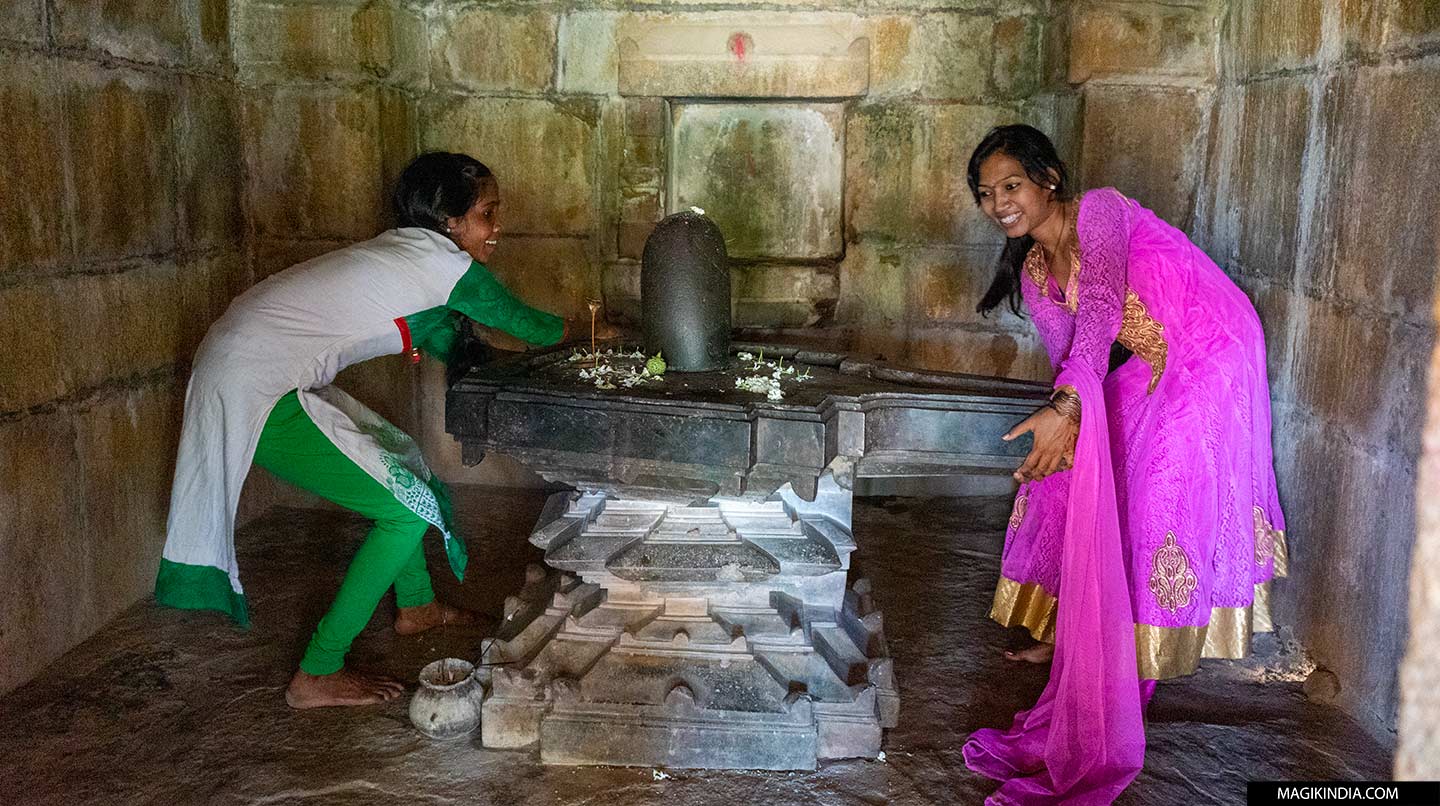
Located in the Bastar region (Chhattisgarh), the town of Barsoor stretches along the peaceful banks of the Indravati, witnessing its...
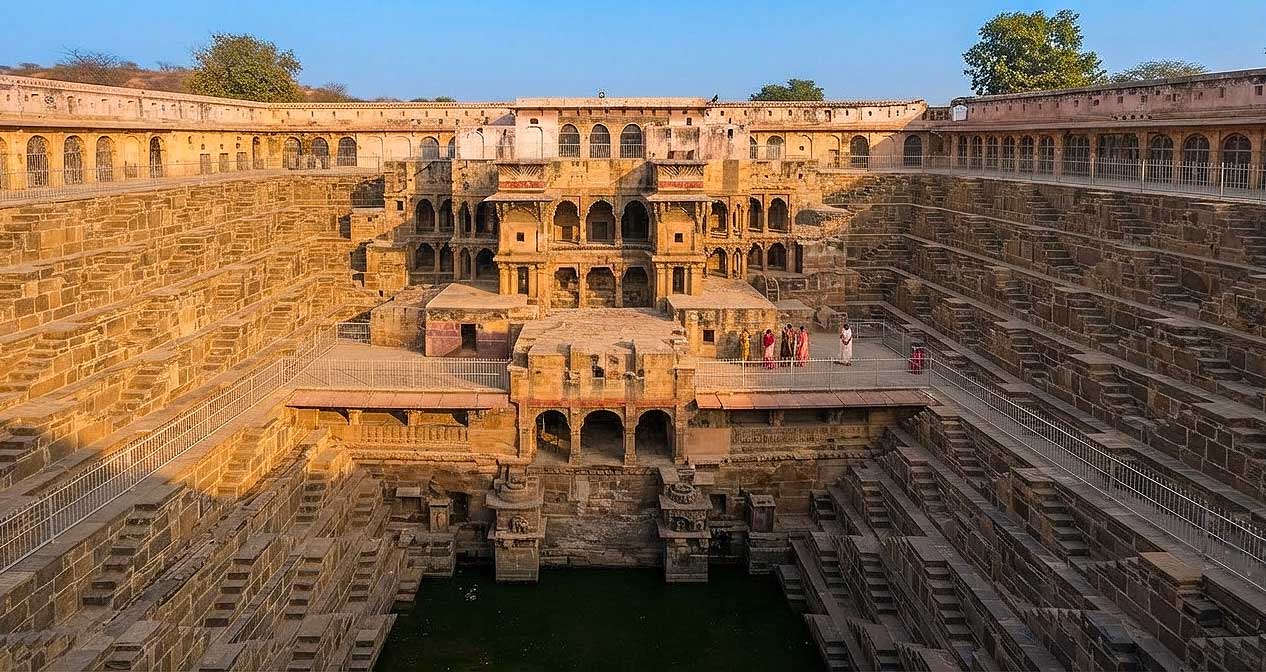
Situated between Jaipur and Agra, Abhaneri, the ancient "City of Brightness" (Abha Nagri), is a historical treasure. Its heritage rests...
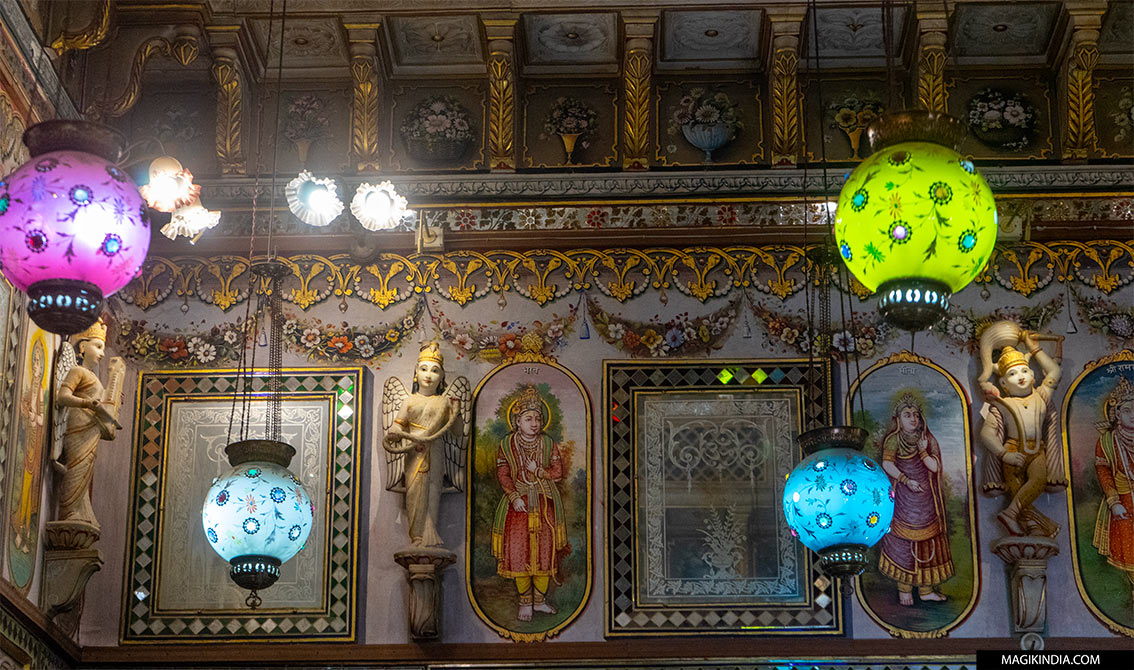
Located on the eastern edge of the Thar Desert, Churu is considered its gateway. It's a city often overlooked, but...
Far from the bustle of more well-known towns like Mandawa or Nawalgarh, the village of Mahansar offers a peaceful respite....

