
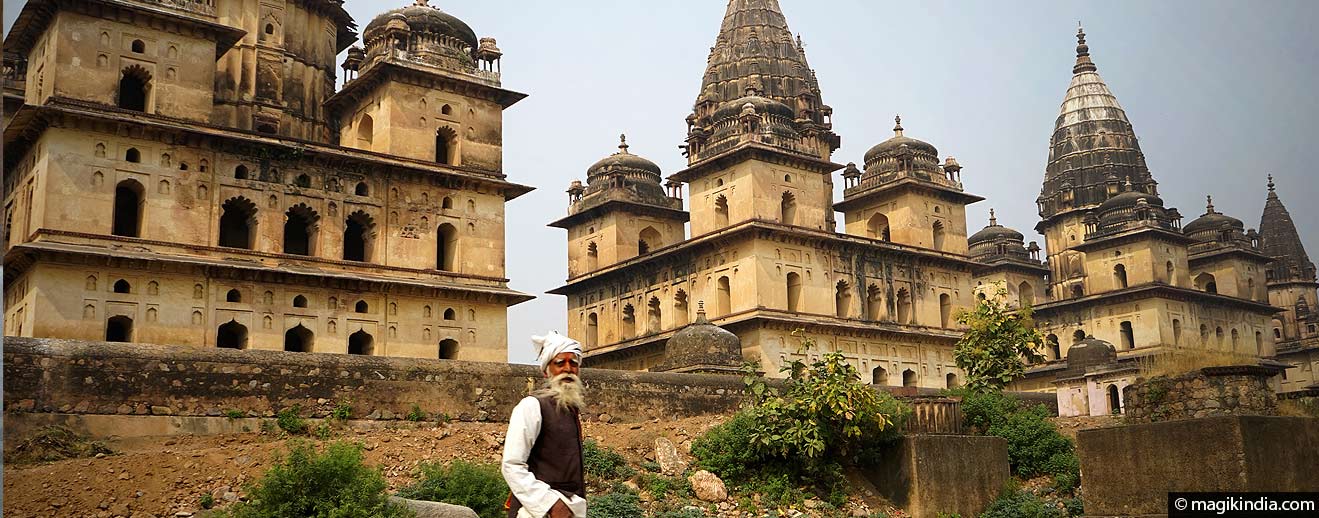
What's astonishing at Orchha is that such a small town, nestling peacefully beside the river Betwa, should have so many...

Mandu, Hanging Palaces & Afghan Romances
Nestled on a fortified plateau of the Vindhya Hills, over 600 meters above sea level, Mandu (or Mandav) is one of the most fascinating architectural and historical gems of Madhya Pradesh. Famous for its hanging palaces, elaborate hydraulic system and monumental Afghan monuments, this ghost city bears witness to a romantic and tumultuous past, immortalised by the tragic love of Sultan Baz Bahadur and poet Rani Roopmati.
History of Mandu
The story of Mandu is a great romantic fresco marked by power struggles and romantic passions. Originally known as Mandapa Durga, the town was first a strategic stronghold of the Paramara kings of Malwa.
The Golden Age under the Malwa Sultanate (1410–1531)
Resulting from the collapse of the Delhi Sultanate after the passage of Tamerlane in 1398, the Malwa Sultanate was born in 1410 when governor Dilawar Khan Ghori (from the province of Ghor in Afghanistan) emancipated himself to found an independent state. It will first be led by the Ghorids (from 1410 to 1436), initiated by Dilawar and consolidated by his son Hoshang Shah who transferred the capital to Mandu, then by the Khalji (from 1436 to 1531) brought to power by Mahmud Shah I who led the sultanate to its territorial, military and cultural apogee.
Baz Bahadur & Rani Roopmati (16th century)

Mandu’s most romantic period, this era associates Sultan Baz Bahadur with shepherdess Rani Roopmati. Gifted with a captivating voice and a deep piety towards the sacred river Narmada, she married the ruler who had a pavilion erected for her on the side of a cliff to admire the watercourse.
In 1562, Akbar’s Mughal invasion overthrew the sultan. Threatened with capture by enemy troops, Roopmati poisoned herself to save her honour and seal her loyalty to her lover
Mandu’s ingenious hydraulic system
Perched on an arid plateau devoid of permanent sources, the city of Mandu developed from the 15th to the 16th century one of the most sophisticated rainwater management networks in medieval India.
Collection and storage
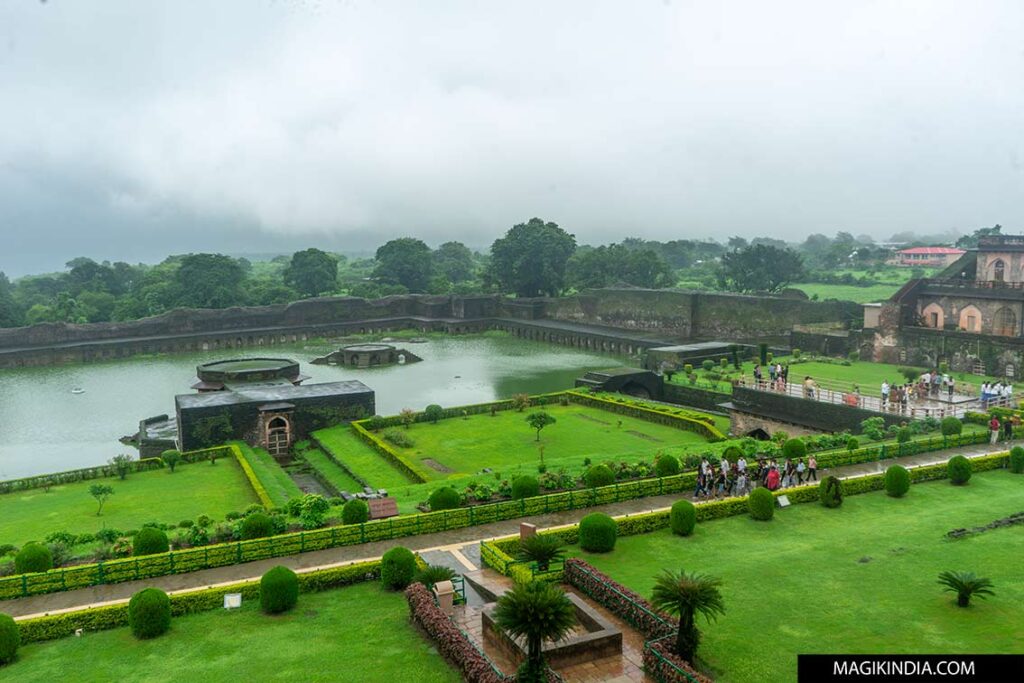
To supply the whole, the city relied on a vast network of more than 1,200 interconnected reservoirs and basins, such as the Munj Talab and the Kapur Talab (royal enclave), linked together by underground pipes made of stone and lime.
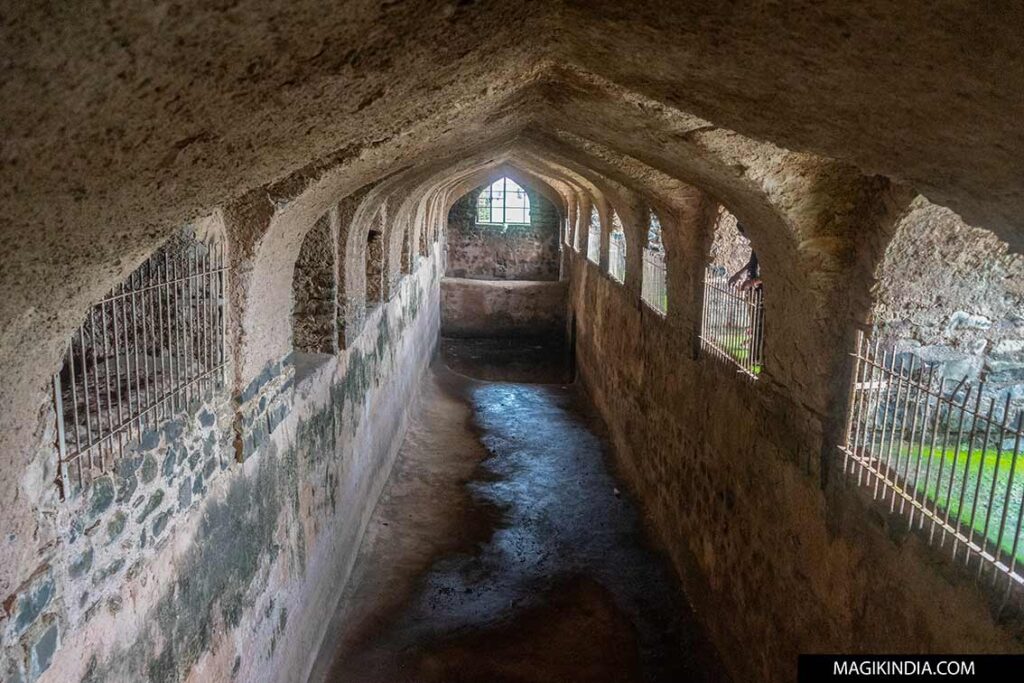
Vertical transport
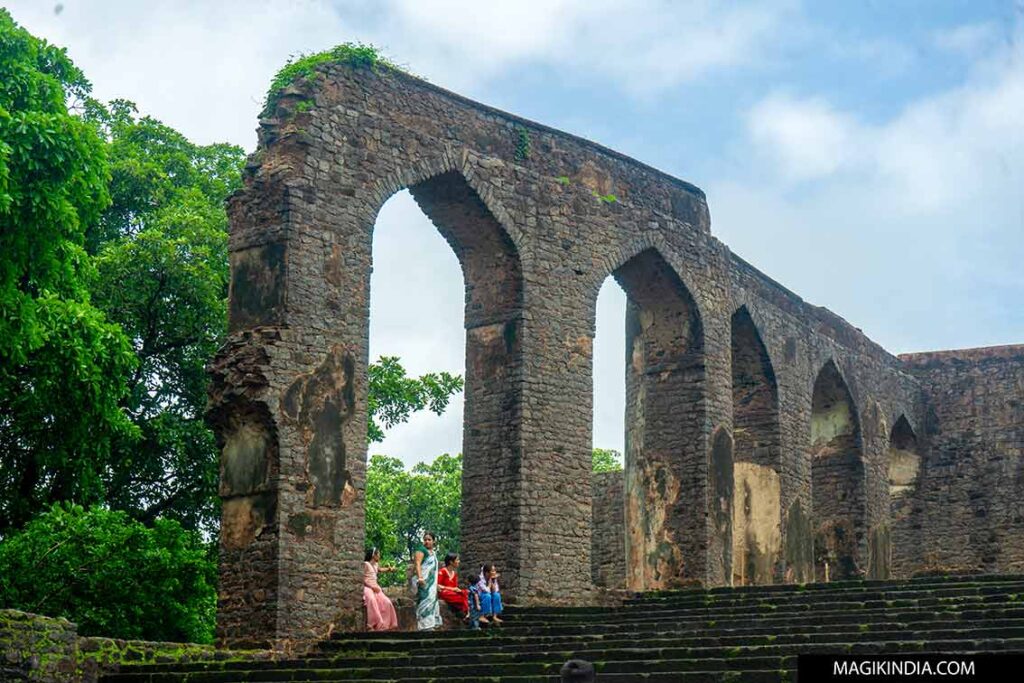
Water was hoisted onto the roofs of the palaces using pulleys or transported by aqueducts, like Baz Bahadur, before being redirected to the lower levels by pipes hidden in the heart of hollow pillars, relying on gravity and the principle of siphons.
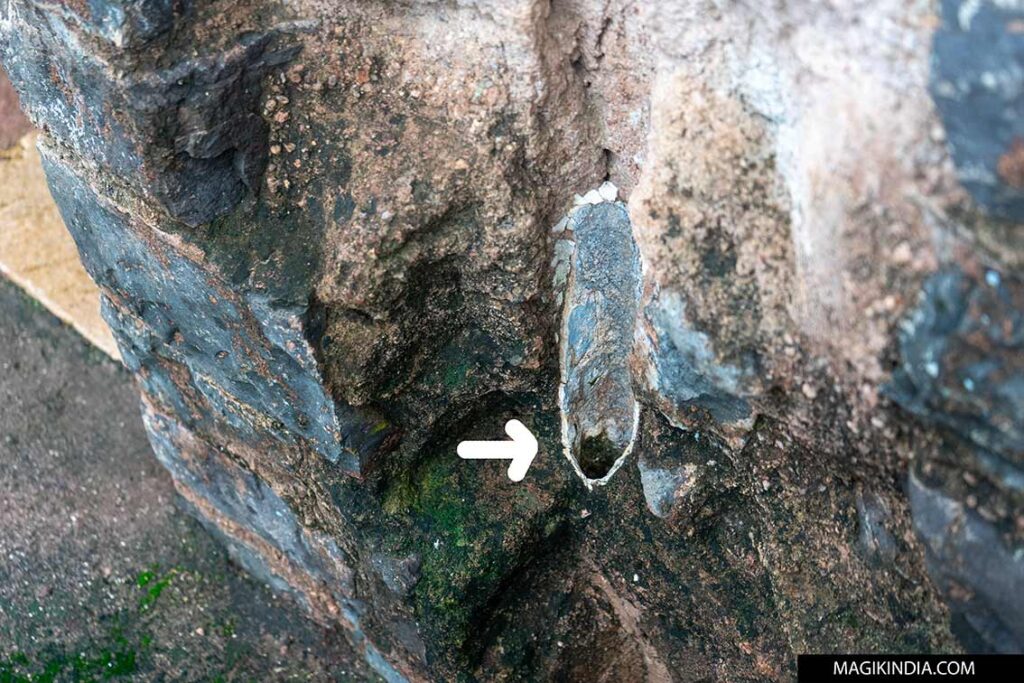
Filtration and wells
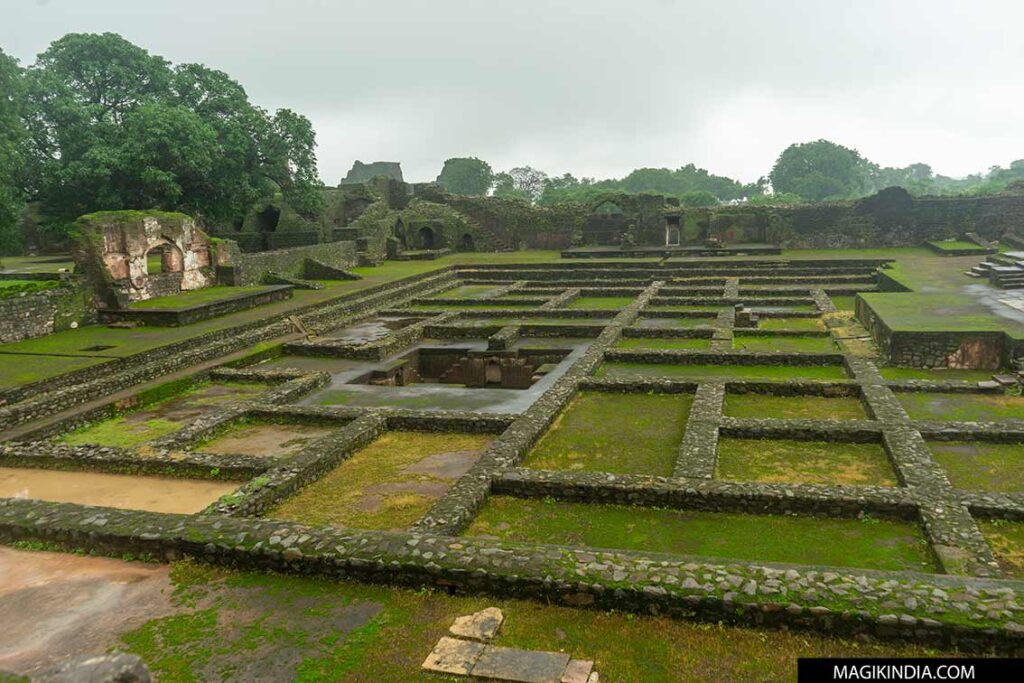
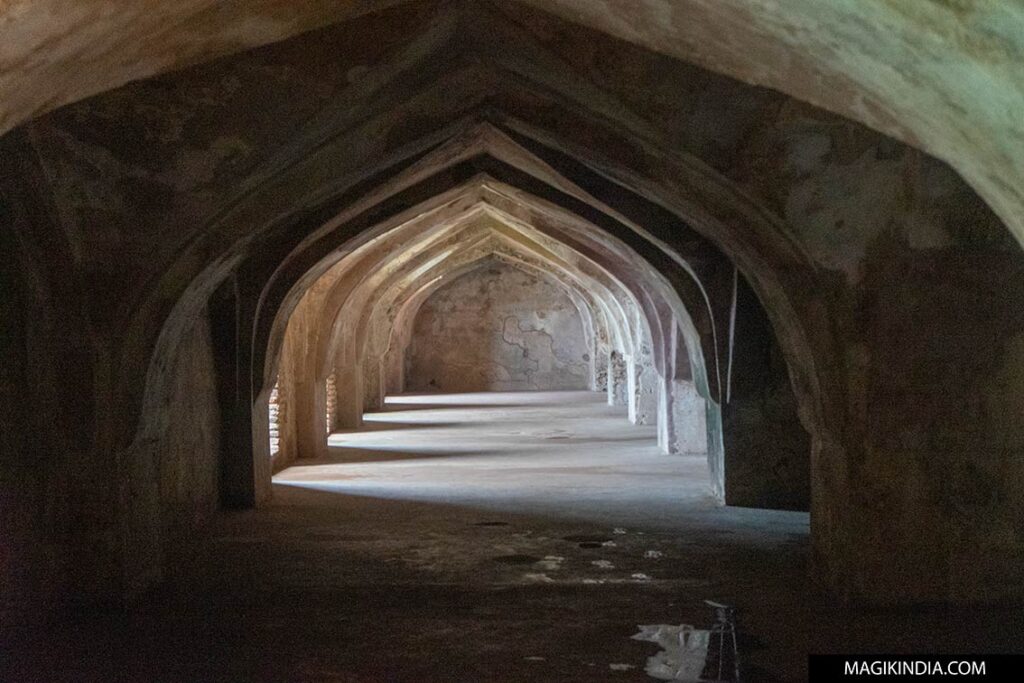
The water passed through natural sand and charcoal filters. Stepwells (baolis), such as the Champa Baoli, incorporated underground galleries to provide coolness.
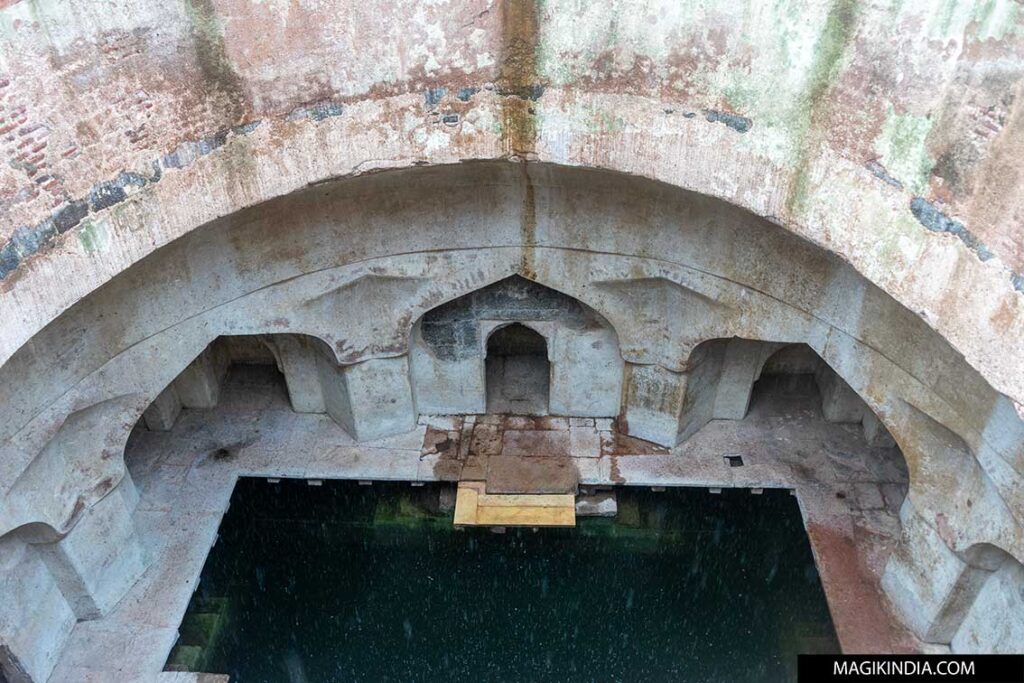
Air conditioning and baths
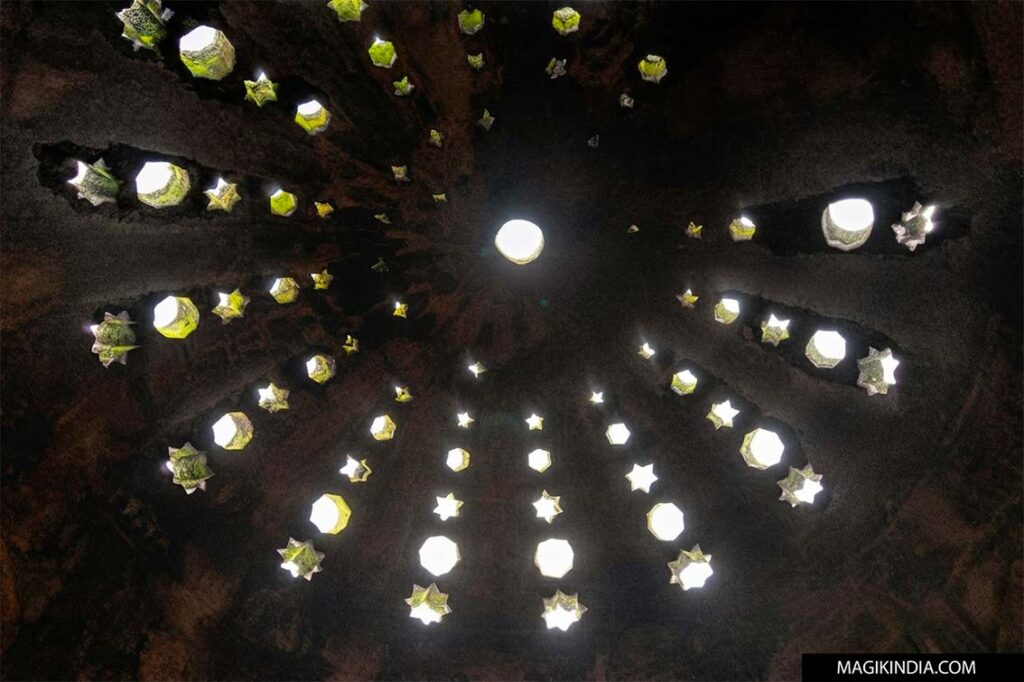
Water circulating through the walls regulated room temperatures (passive cooling) and supplied sophisticated hammams with adjustable temperatures.
African giants in the heart of India
One of the most unusual surprises for travellers visiting Mandu is the massive presence of baobab trees scattered across the entire plateau and the city’s ruins.
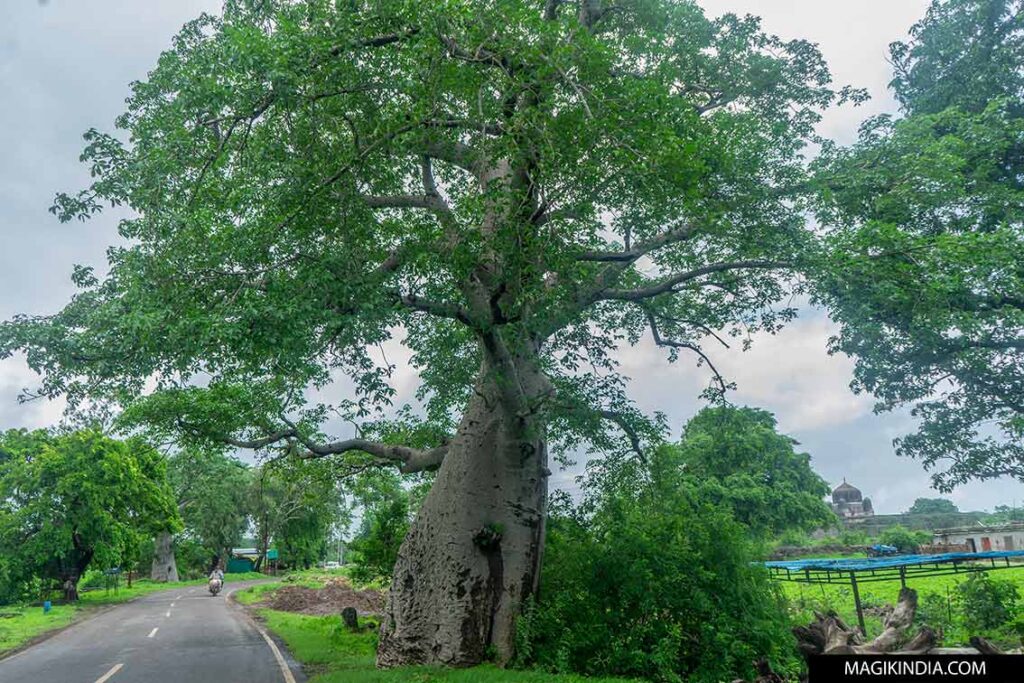
These monumental trees with gigantic trunks are, of course, not native: they were introduced from East Africa between the Middle Ages and the era of the Malwa Sultanate, facilitated by intense trade routes and cultural exchanges with the Arab-African world.
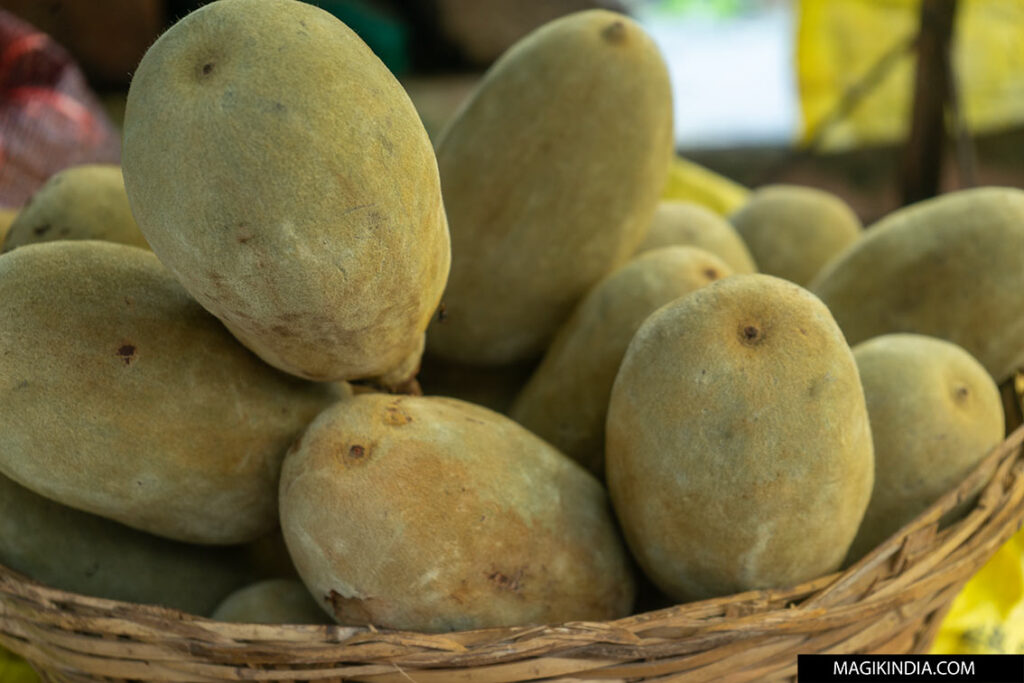
Perfectly adapted to the rocky soil and climate of the plateau, these trees have become naturalised. The fruits and products derived from the baobab (used for their medicinal or culinary virtues) are also commonly sold in the traditional markets of Mandu.

The Royal Enclave
Jahaz Mahal (the boat palace)
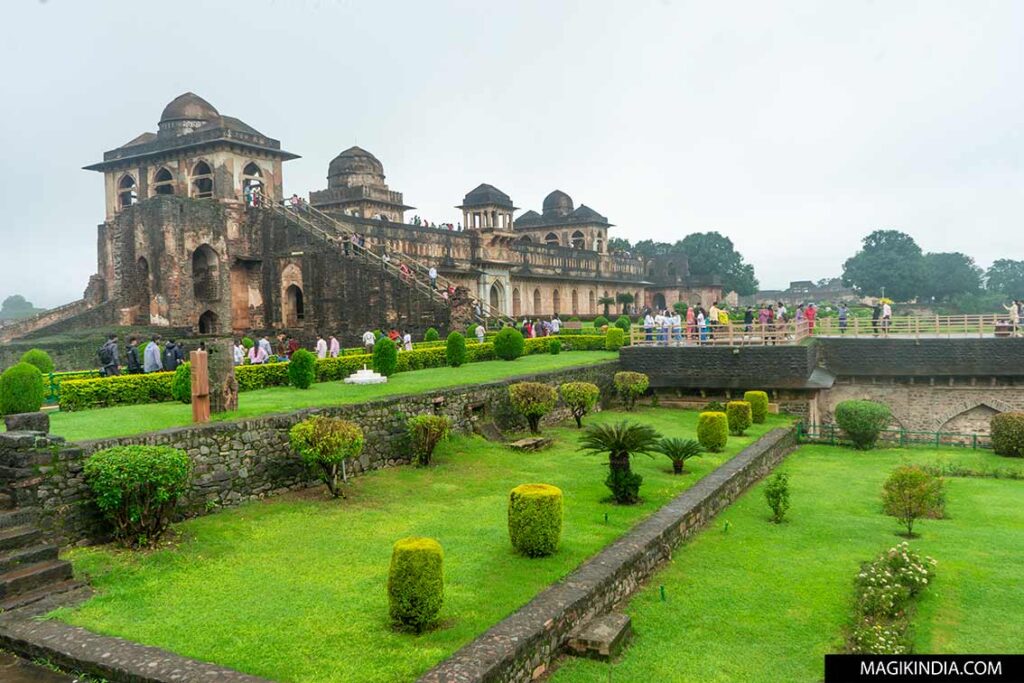
Built in the 15th century during the reign of Sultan Ghiyas-ud-din Khilji, it owes its name to its slender silhouette which seems to float between two bodies of water, the Kapur Talaq and Munj Talaq basins.
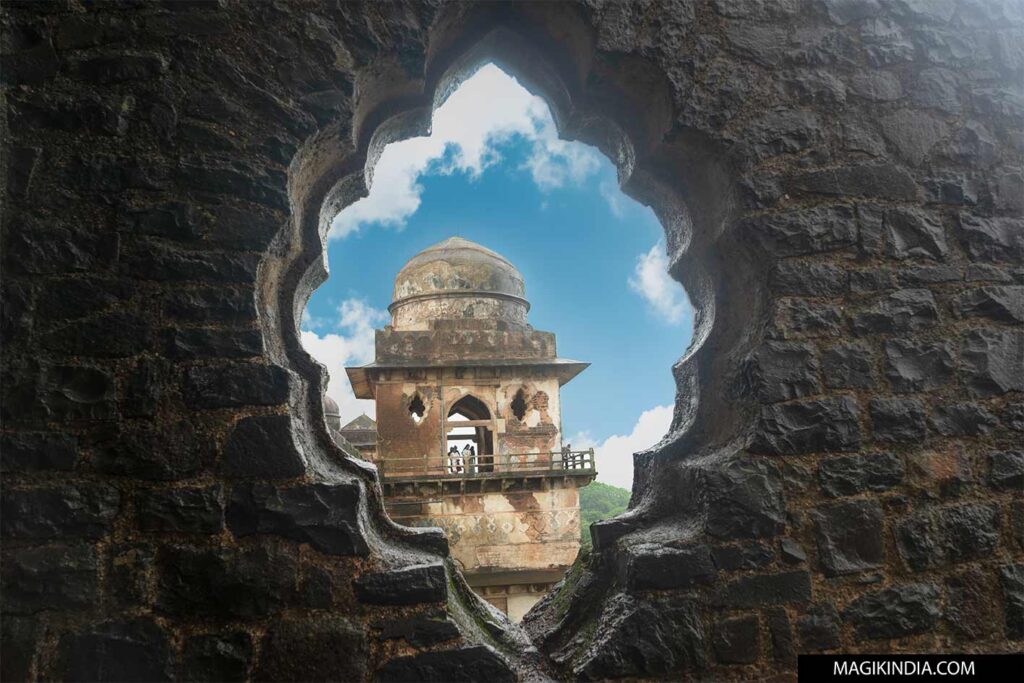
This palace, almost 120 meters long, once served as a residence for the thousands of women of the royal harem.
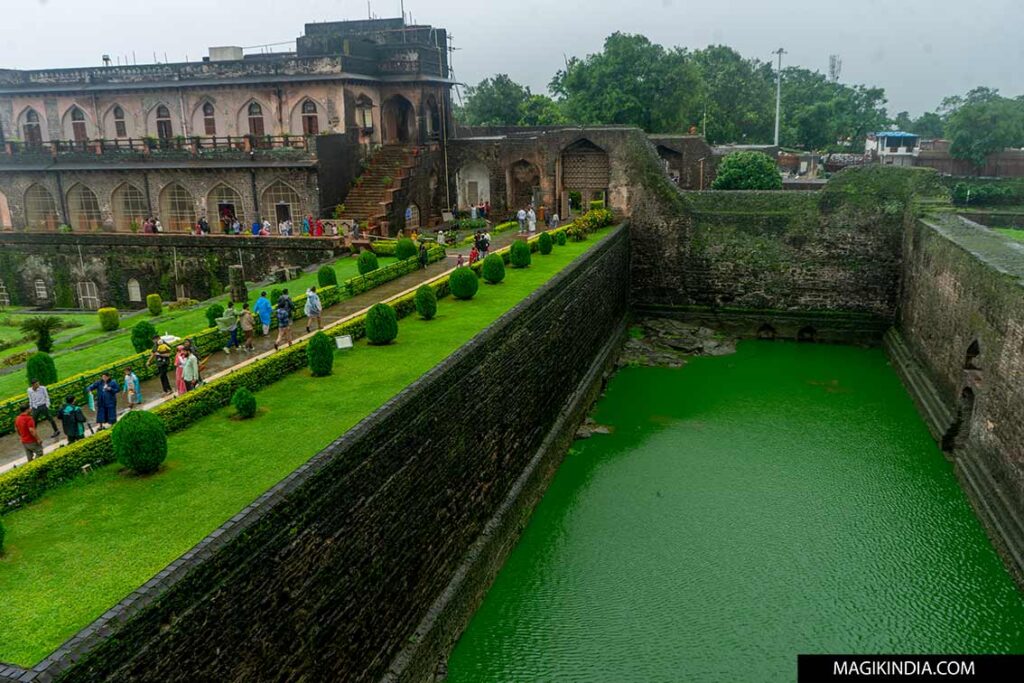
The whole is notably embellished with decorative basins and reservoirs, the most famous of which is a shallow basin with a sculpted structure in the shape of a giant turtle, testifying to the refinement and playful ingenuity of the period.
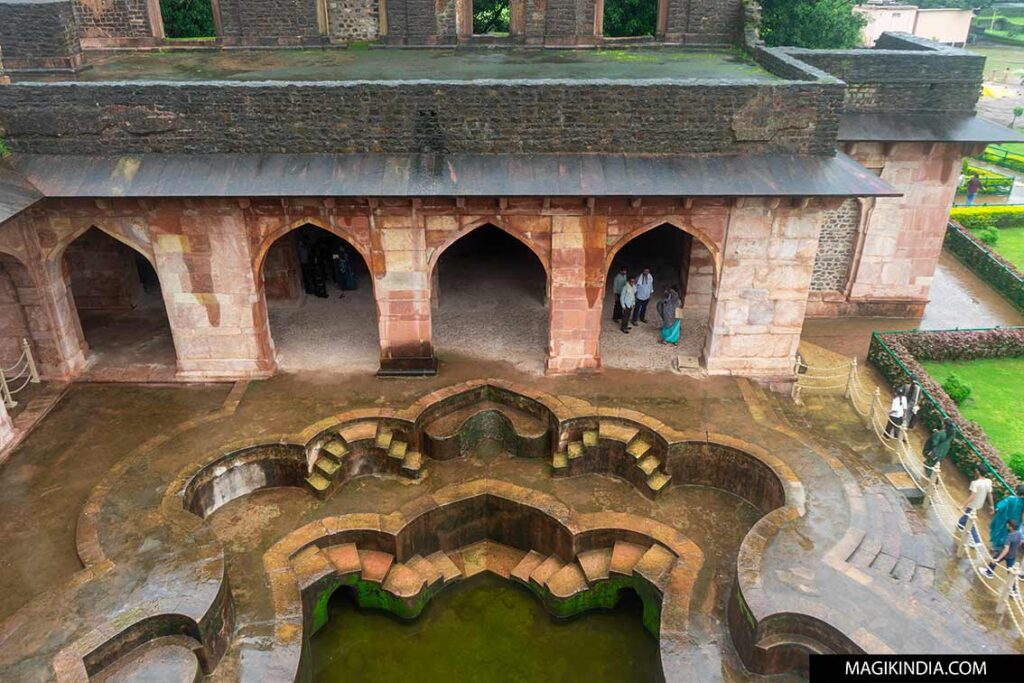
Mandu Archaeological Museum
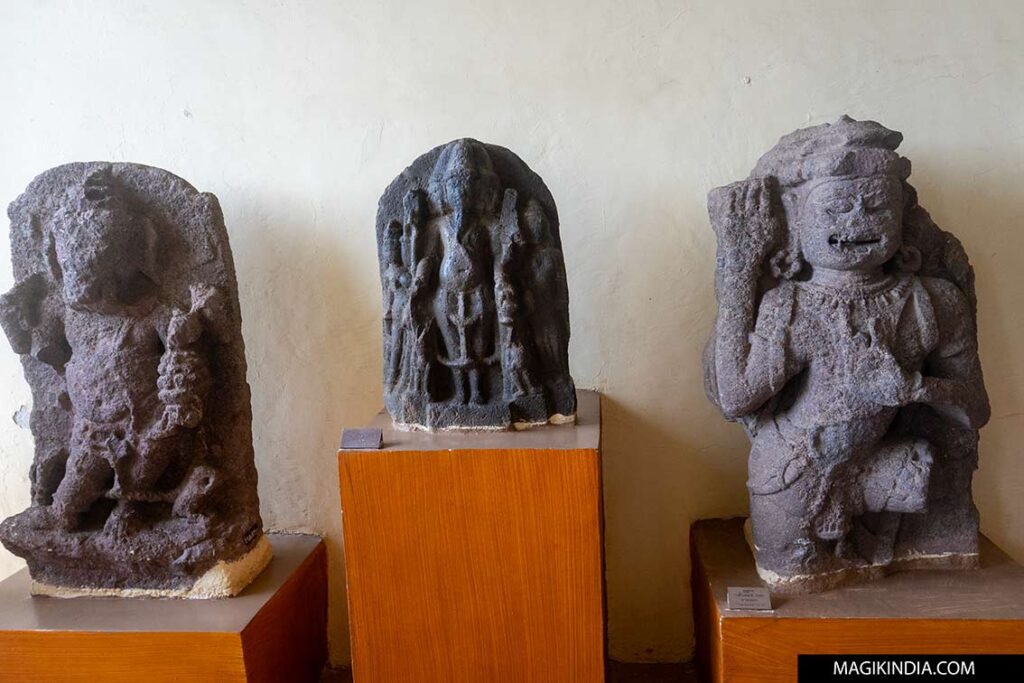
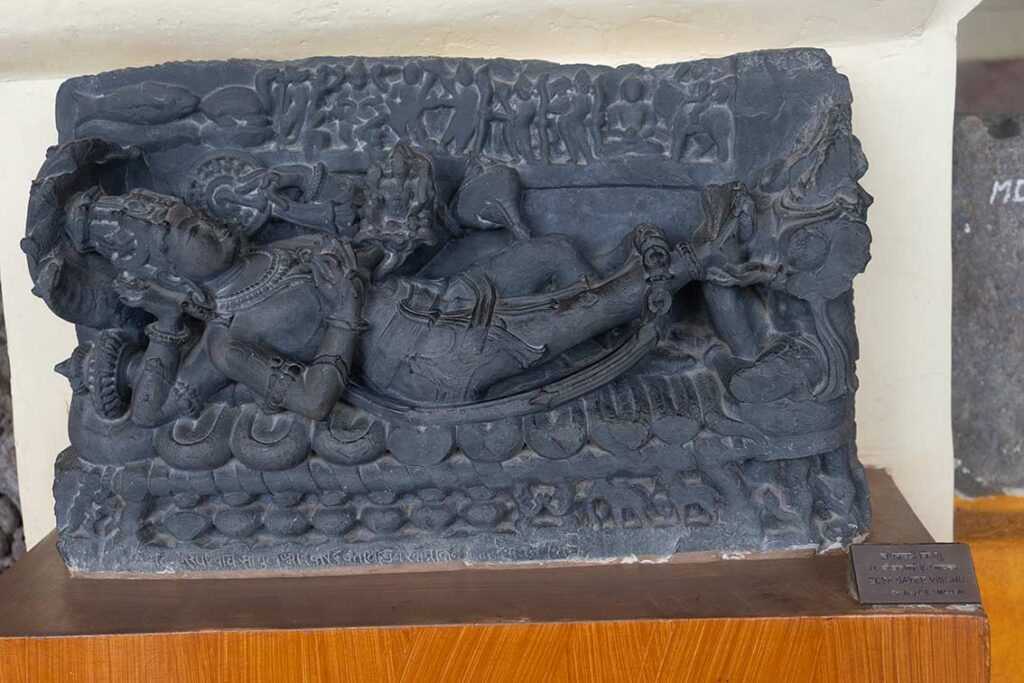
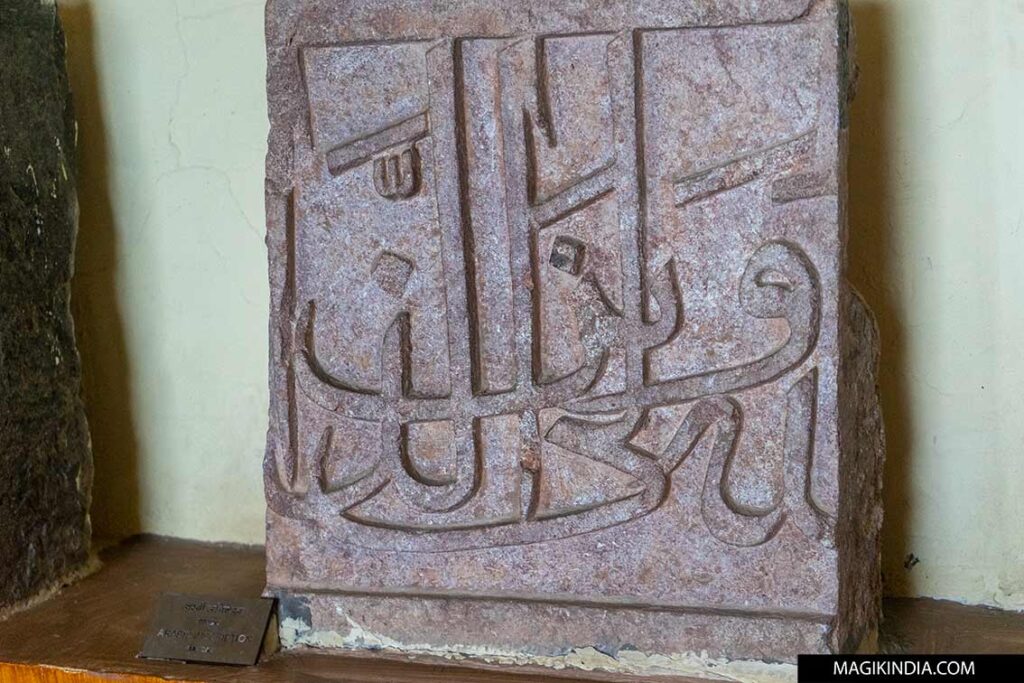
Installed within the Taveli Mahal (the old stables), in the immediate vicinity of the Jahaz Mahal, this museum presents the remains exhumed on the Mandu plateau. There we find ancient coins, inscriptions, architectural elements and especially Hindu and Jain sculptures from the 11th and 12th centuries of the Paramara period, supplemented by pieces from the Malwa Sultanate and steles with Islamic calligraphy.
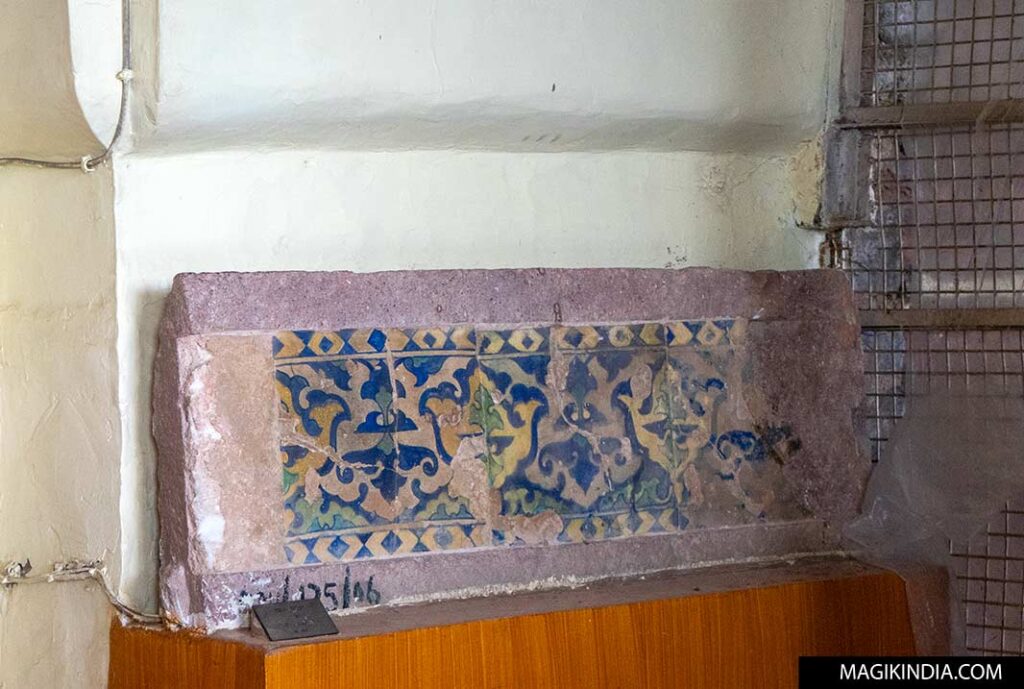
Hindola Mahal (swinging palace)
Located right next to the boat palace, the Hindola Mahal is a remarkable 15th-century monument, initially built during the reign of Hoshang Shah and completed under that of the Sultans of Malwa.
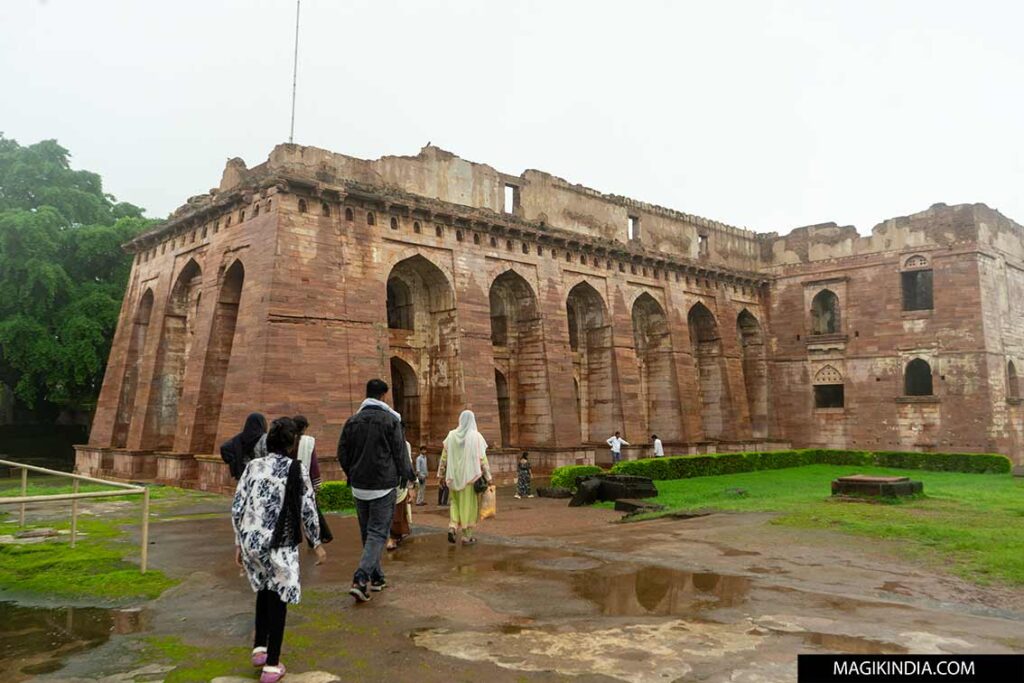
It gets its name from its steeply sloping exterior walls (forming an angle of approximately 77 degrees) and supported by massive buttresses, which visually give the impression that the building is swaying.
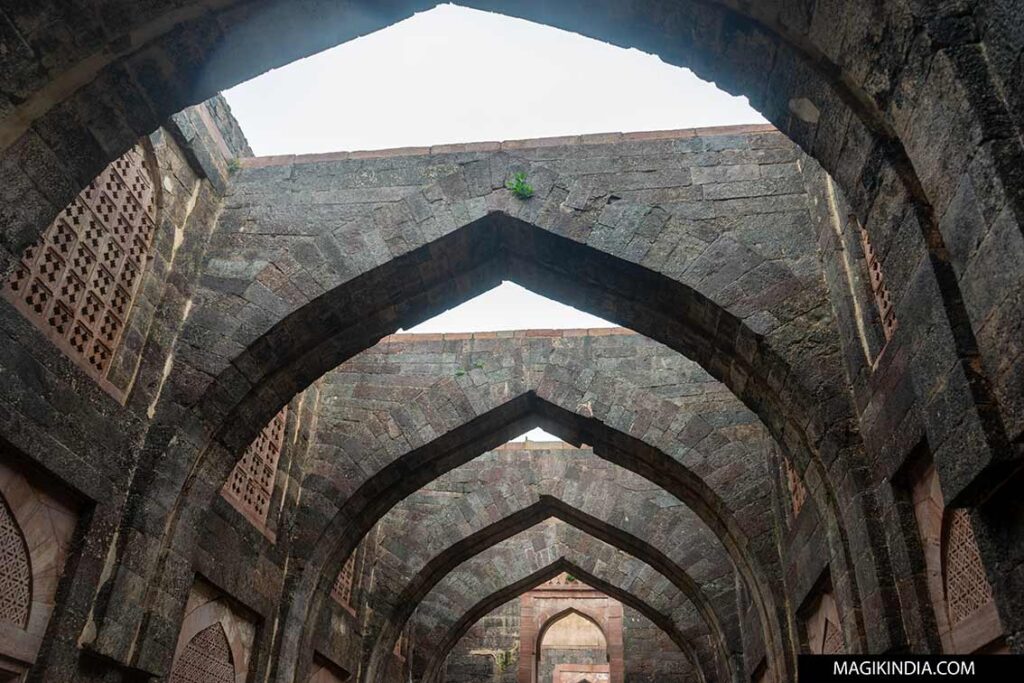
Built on a “T” shaped plan, it mainly served as a large audience hall (Durbar Hall) or gathering place for the royal court.
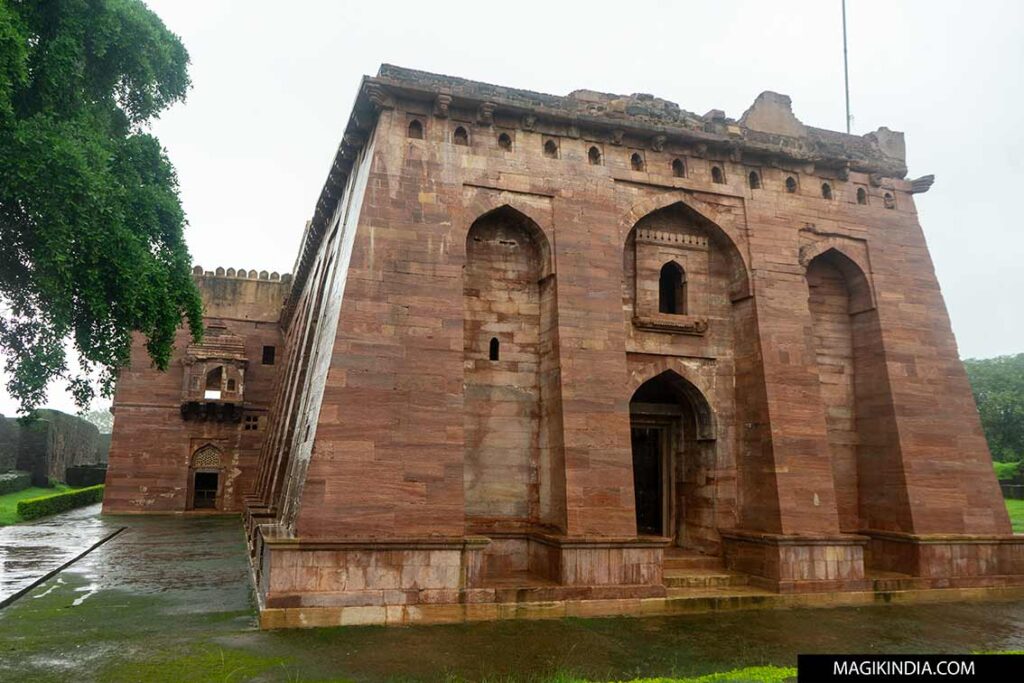
It is distinguished by the bold sobriety of its sandstone architecture, superb pointed arches and finely openwork windows ensuring optimal ventilation.
Dilawar Khan
The Dilawar Khan Mosque, built in 1405, is the oldest Islamic structure in Mandu. Built by Dilawar Khan Ghori, who took advantage of the weakening of Delhi to found the dynasty and the independent sultanate of Malwa, it marks the beginnings of Indo-Islamic architecture in the region.
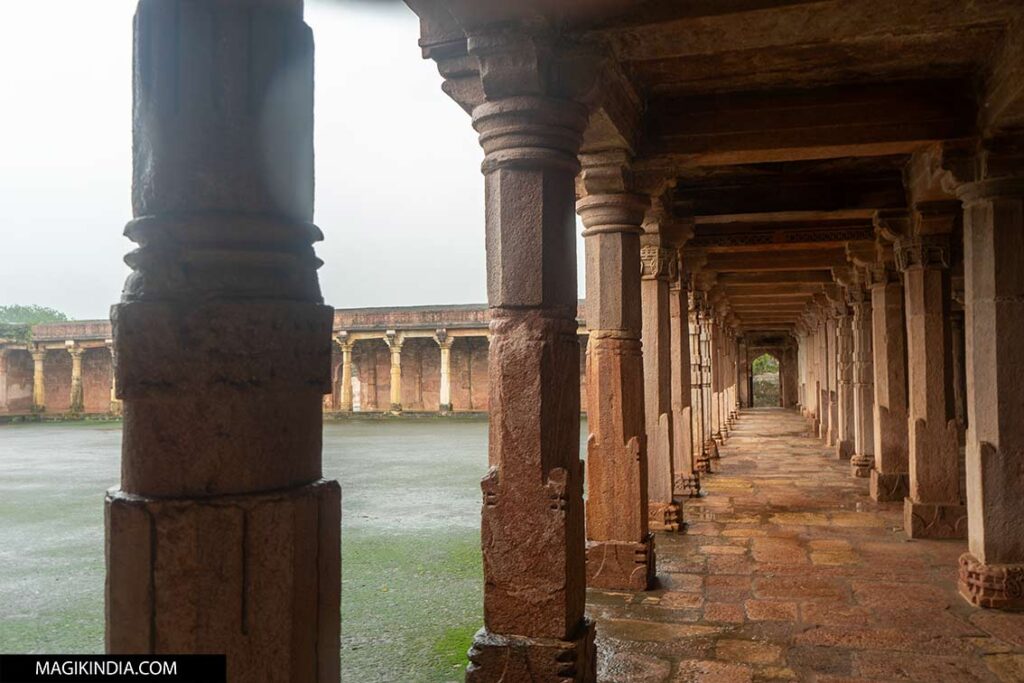
Originally reserved for the use of the royal family, it laid the artistic and political foundations which would later allow his son, Hoshang Shah, to transform Mandu into a great imperial capital.
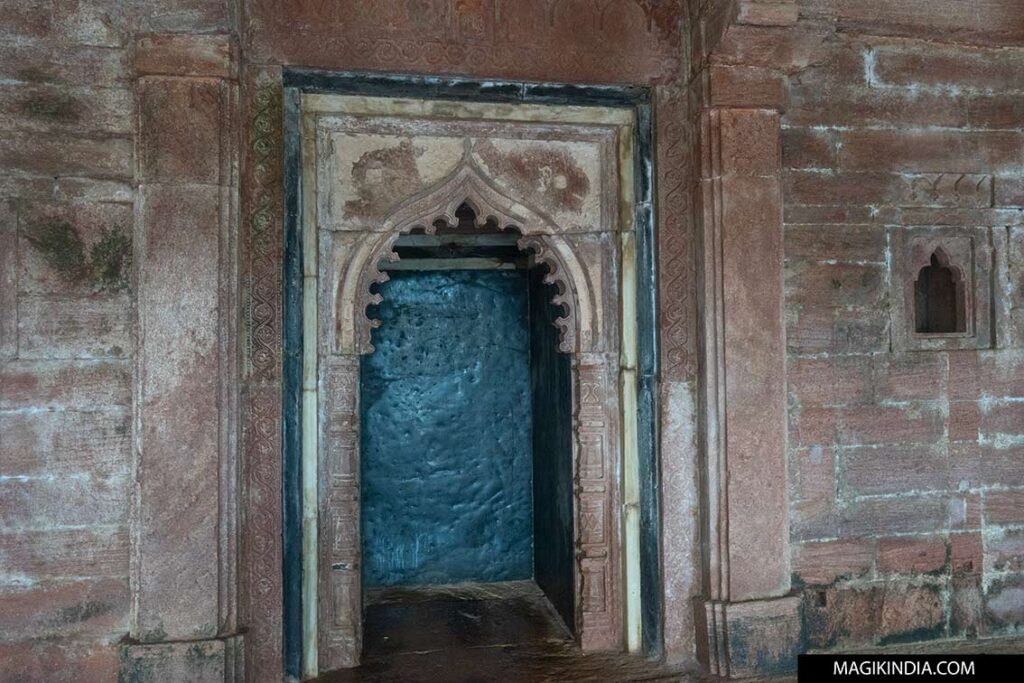
The village and the central group
The Jami Masjid Mosque
Begun during the reign of Hoshang Shah and completed in 1454 by Mahmud Khilji, this mosque, inspired by the Great Mosque of Damascus, is one of the most impressive and best-preserved monuments of Afghan architecture in India.
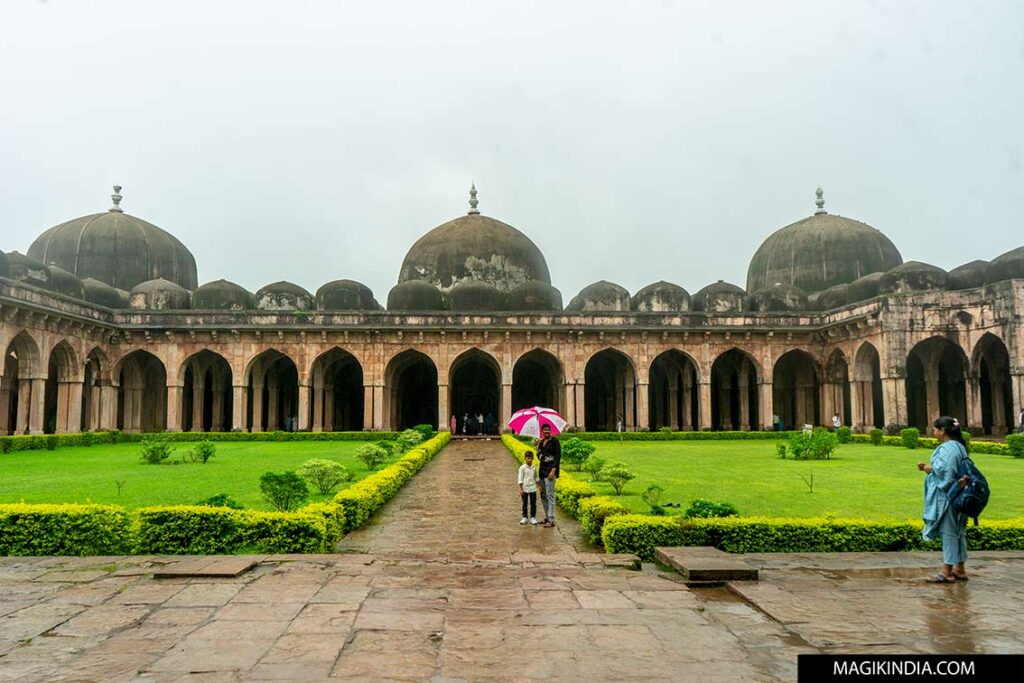
The building is built around a vast central open-air courtyard, framed on its sides by colonnaded galleries punctuated by rows of arches.
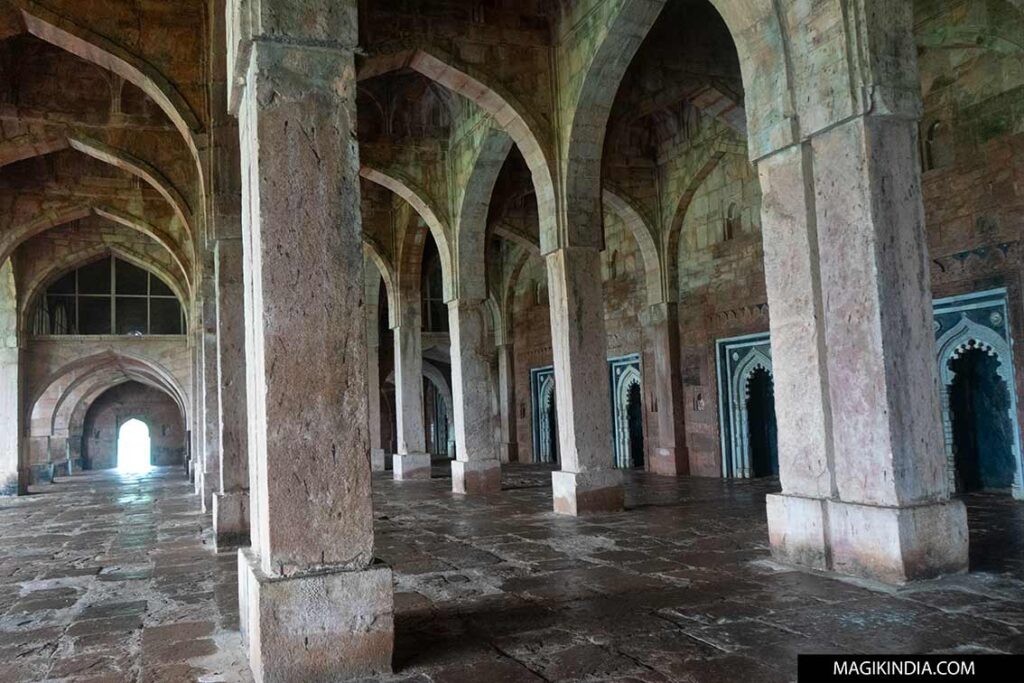
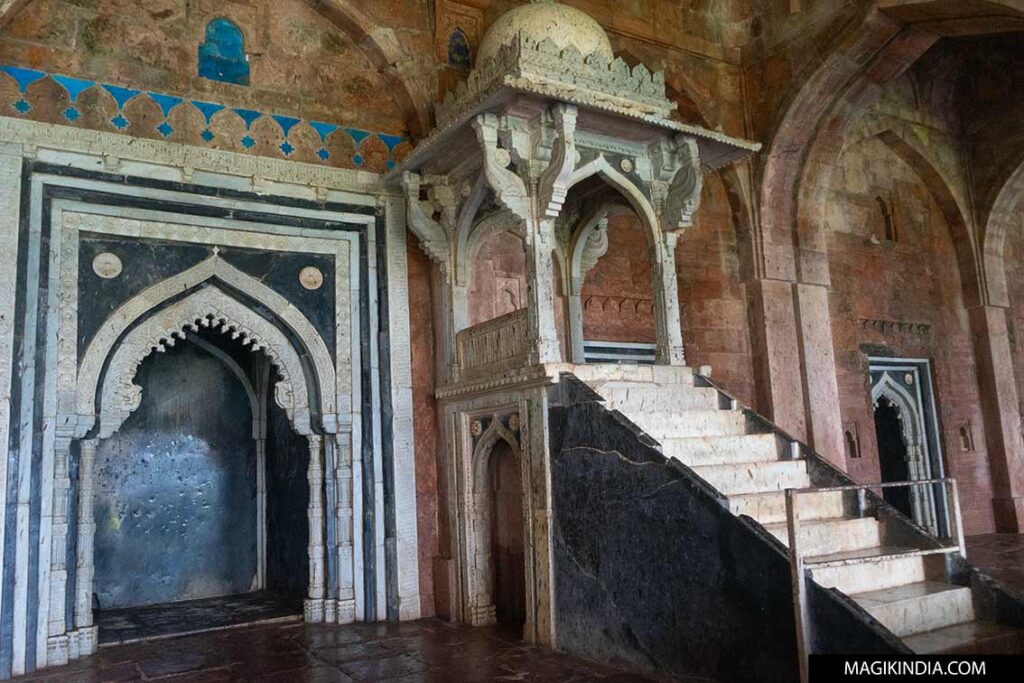
The prayer hall is dominated by three large majestic domes surrounded by a forest of more than fifty small domes and a multitude of pillars.The interior offers rigorous symmetry, adorned with superb prayer niches (mihrabs) carved from black sandstone from Karnataka and openwork window panels (jaalis).
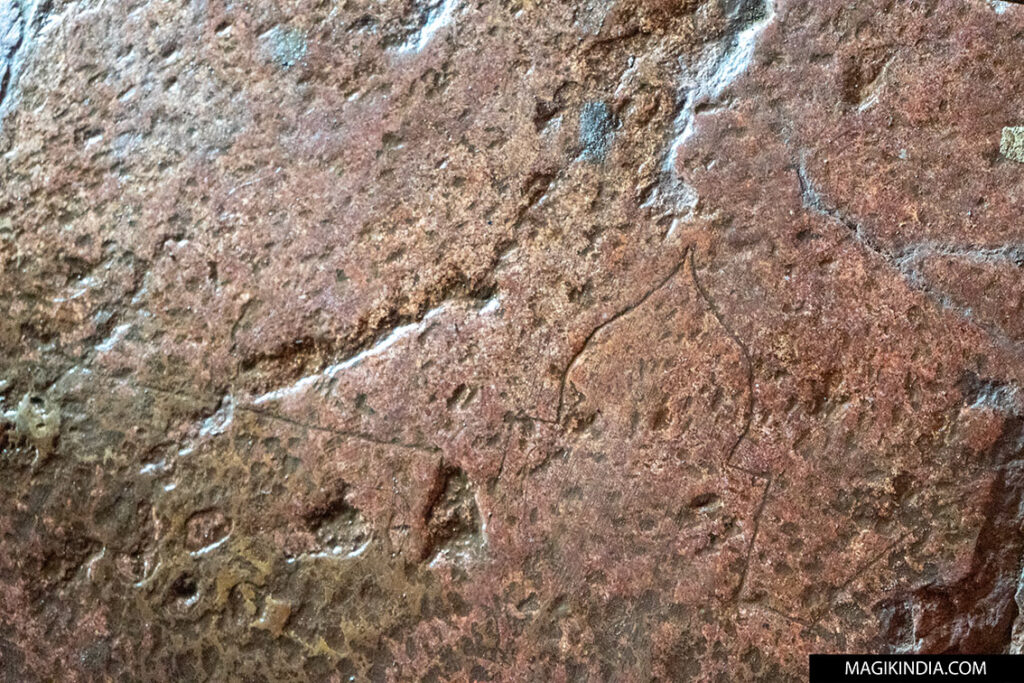
Did you know? To design certain parts of the building, the architects traced their plans directly on the stone. Even today, here and there we can see these original lines engraved on the floor of the mosque.
The Mausoleum of Hoshang Shah
Considered the first pure marble building in India, it is said to have served as a source of architectural inspiration for the construction of the famous Taj Mahal. The construction of the mausoleum began during the reign of Hoshang Shah and was completed around 1454 under his successor, Mahmud Khilji.
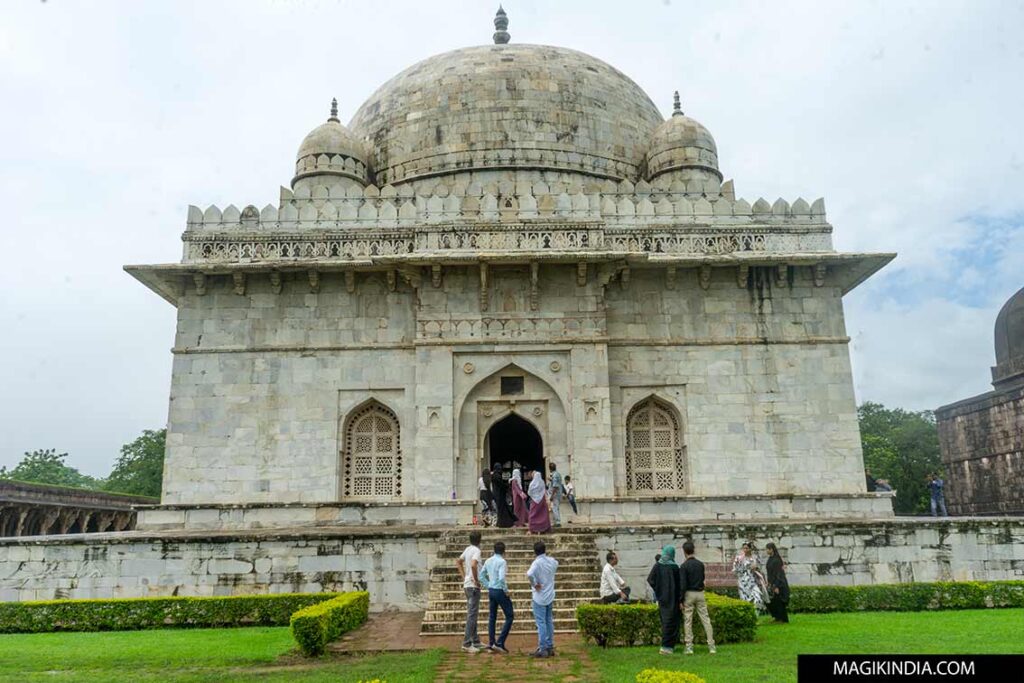
Built entirely of immaculate white marble, it stands on a high platform and has a square plan with harmonious proportions, topped with a central dome and surrounded by four corner domes.
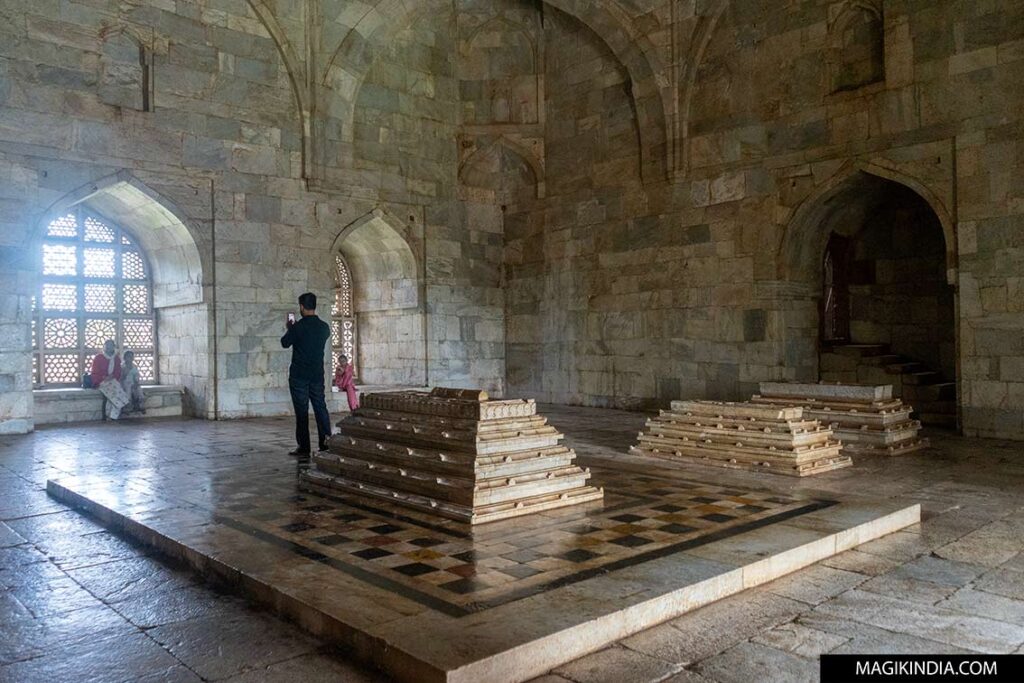
The funerary space houses in its center the sculpted marble sarcophagus of Hoshang Shah, surrounded by delicate moucharabiehs (openwork stone windows) which filter the natural light.
Rewa Kund’s group
Rani Roopmati’s Pavilion
Perched at the southern end of the plateau, this lodge offers breathtaking panoramic views of the Narmada River valley below.

Originally built as a military observation post to monitor the valley below, it became the symbol of the legendary love story between Sultan Baz Bahadur and the Hindu poet Roopmati, who could admire the sacred Narmada river from its terraces.
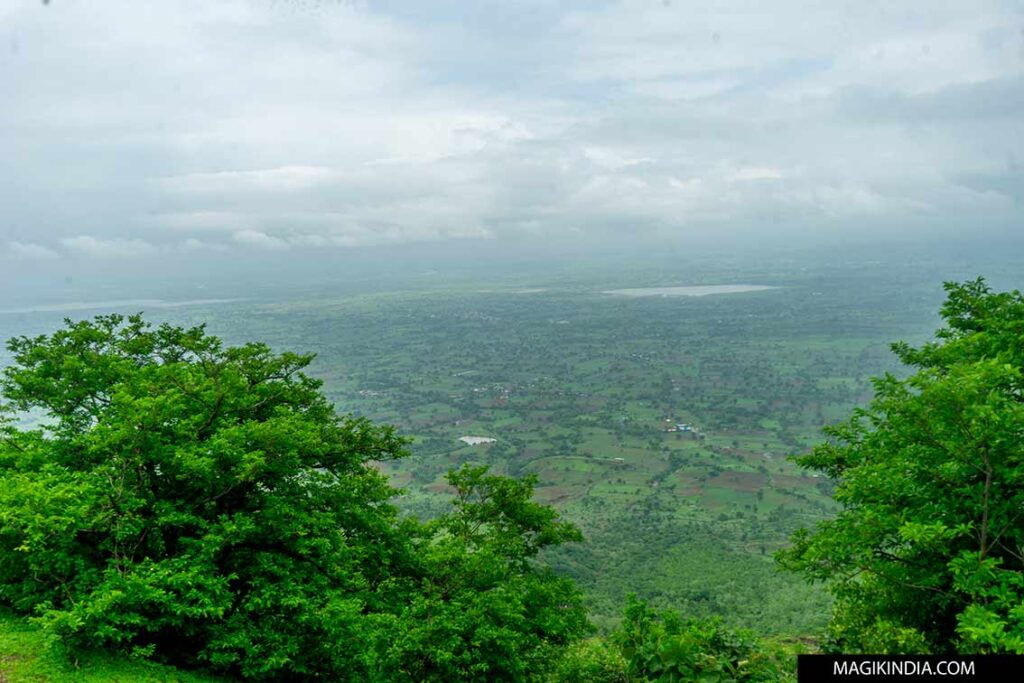
The two-story pavilion consists of central rooms flanked by two Rajput-style kiosks (chhatris) on its roof. Its graceful arches and harmonious proportions skillfully combine Afghan and Hindu influences.
Baz Bahadur’s Palace
Located below the pavilion of Rani Roopmati, the palace was built at the beginning of the 16th century before being enlarged by the last independent sultan of Malwa, Baz Bahadur.
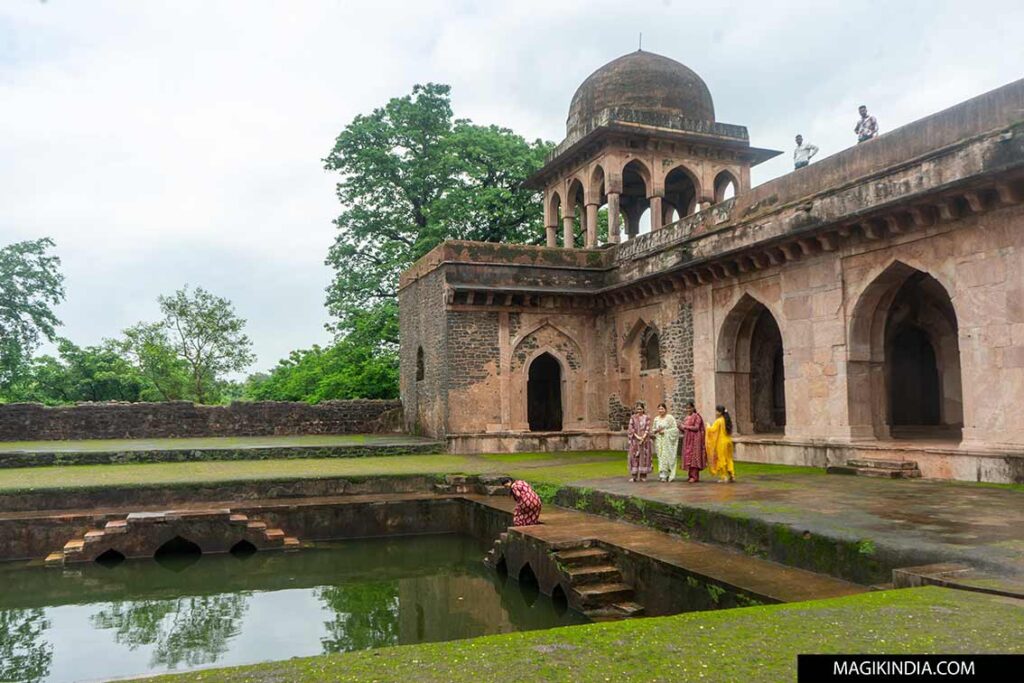
It offers a harmonious blend of Islamic (especially Afghan) and Hindu (marked by Rajput architecture) influences, visible in its elegant arches, massive pillars and open galleries.
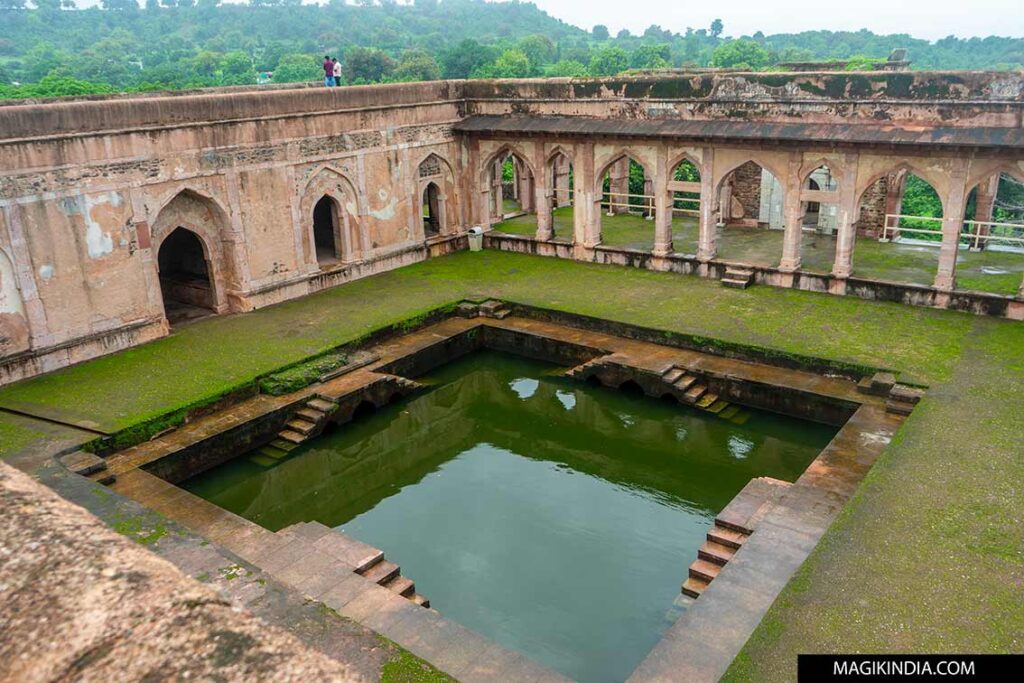
Residence of the Sultan, a great patron and music lover, the palace once resonated with classical songs and music, constituting the setting for his famous romance with the poet Roopmati.
Also worth seeing in Mandu
Long before becoming the sumptuous fortified capital of the Muslim sultans of Malwa, the Mandu plateau was a spiritual place housing numerous Hindu and Jain sanctuaries, notably during the height of the Paramara dynasty in the 11th and 12th centuries.
Although successive waves of conquests and the urbanisation of the sultanate led to the destruction or reuse of most of these ancient buildings, sacred Jain sites and a few Hindu temples have survived.
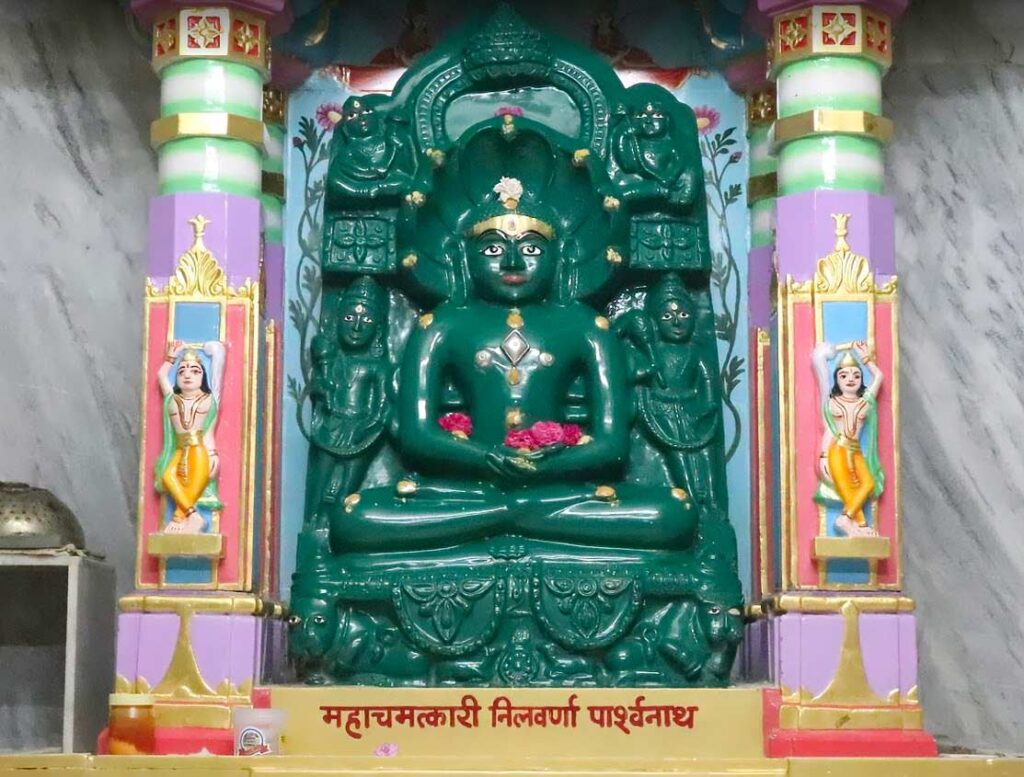
The Shri Mandavgarh Shwetambar Jain Tirth is the most famous active Jain temple complex in central Mandu. Mainly dedicated to the 7th Tirthankara, Lord Suparshvanath, it houses ancient idols some of which date back 2,000 to 2,500 years. The site includes several spiers (shikharas), a secondary shrine dedicated to Lord Samriddhi Parshwanath, and a well-maintained kitchen (bhojanshala) and guest house (dharamshala) for pilgrims.
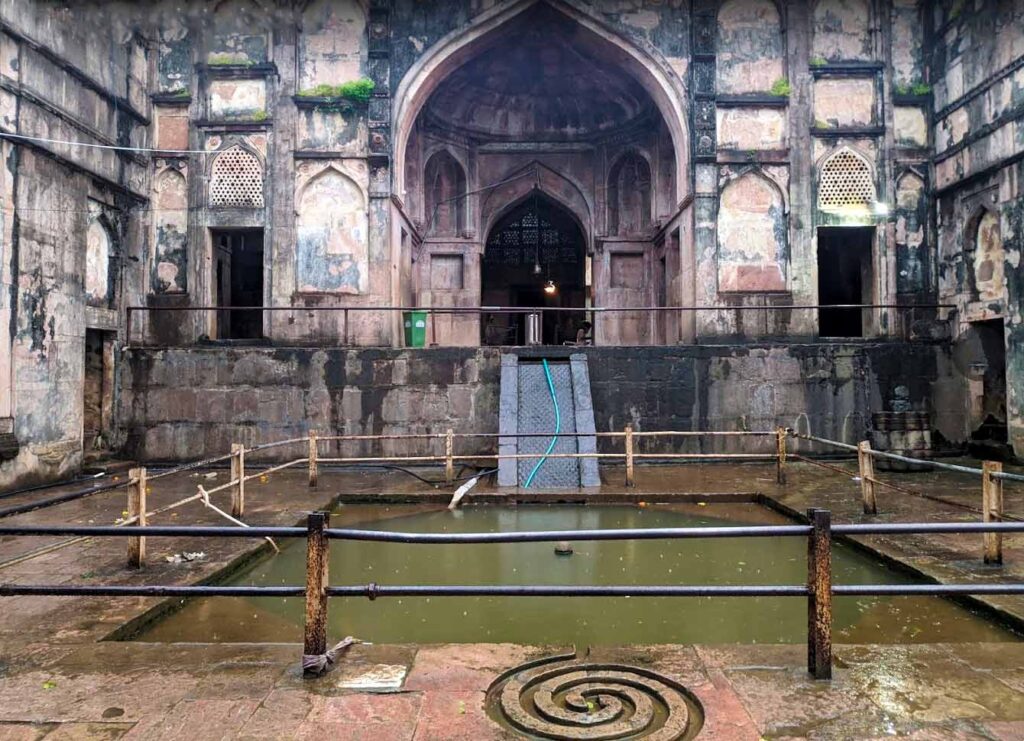
The Nilkanth temple palace is a must-see! Located about three kilometers from the center of Mandu and accessible by a staircase of around sixty steps on the edge of a steep gorge, Nilkanth or Imarat-i-Dilkhusha was erected in 1574 by Governor Shah Badgah during the reign of Mughal Emperor Akbar. The latter had it built for his favorite Hindu wife, Empress Mariam-uz-Zamani.
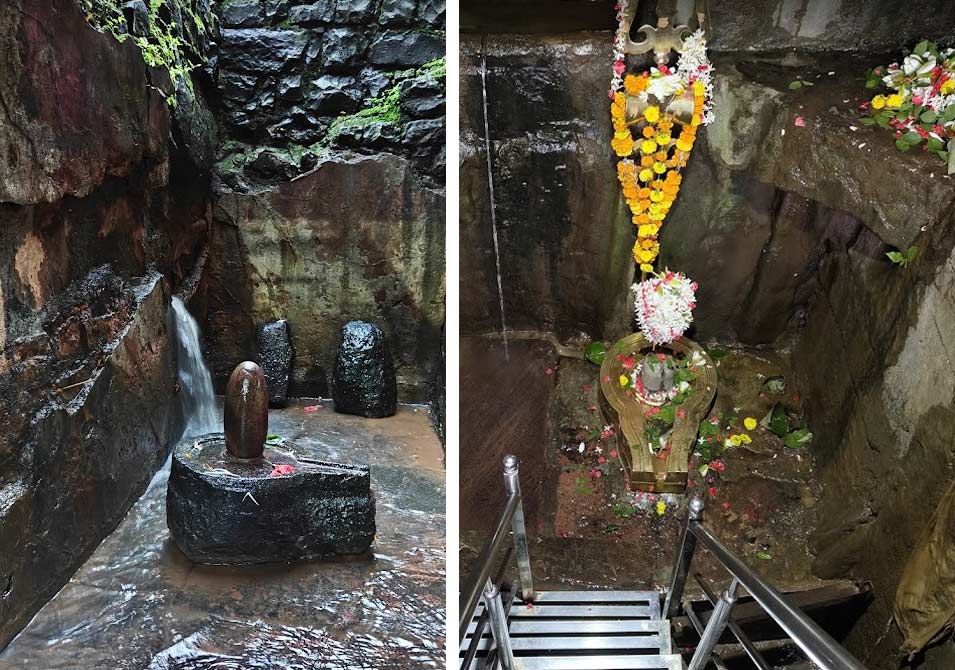
Built on the remains of an ancient temple dedicated to Shiva, the site has preserved its place of worship and its Shivalingam continuously fed by a natural stream, while integrating it into Mughal architecture. Subsequently appreciated by Emperor Jahangir, this sanctuary illustrates a remarkable religious syncretism mixing Hindu traditions and Islamic art.
Practical information
Best time to visit:
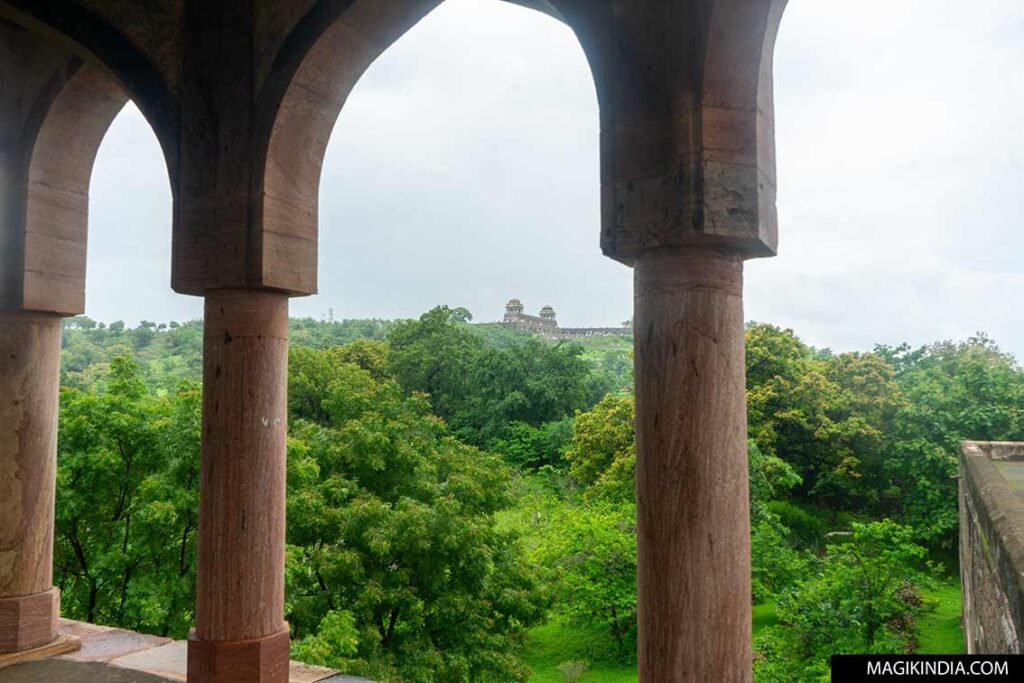
Monsoon or post-monsoon (July to October) is the ideal season to visit Mandu. The lakes fill up, the hills are adorned with lush green and numerous waterfalls appear, offering a magical spectacle. The winter period (November to March) is also very pleasant with mild temperatures.
How to get there?
- By plane: the nearest airport is Indore (Devi Ahilya Bai Holkar Airport), located approximately 90 kilometres away (allow 2 to 3 hours by road).
- By train: the nearest railway station is Ratlam or Indore, well served from major Indian cities (Mumbai, Delhi).
- By road: regular buses and private taxis can reach Mandu from Indore, Dhar or Ujjain.
Tips for your visit:
- On-site transportation: as the site is very large (more than 20 km in circumference), it is recommended to rent a taxi, an auto-rickshaw for the day or a scooter to travel easily between the different groups of monuments.
- Length of stay: allow at least 1 to 2 full days to explore all the palaces, mosques and viewpoints without rushing.
Where to stay?
As the site is very large, it is preferable to stay on site. Mandu offers a good choice of mid-range accommodation.
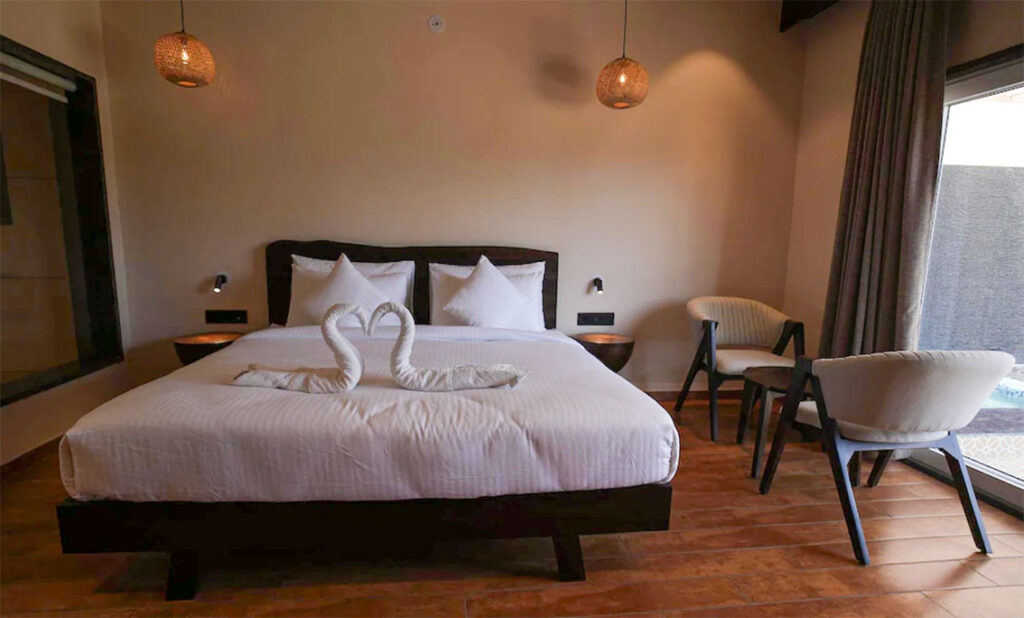
Velora The Luxury Resort : recently inaugurated, this 3* hotel has established itself today as the best establishment in Mandu (August 2026). Its cottages offer breathtaking views of the Jahaz Mahal and the Hoshang Shah mausoleum, complemented by warm rooms and excellent food.

If you prefer a quick visit, you can explore Mandu by taking an excursion from Maheshwar and staying in the 4* boutique hotel Ahilya Fort.
TRAVEL IN MADHYA PRADESH WITH US!Vous aimerez peut-être aussi...
In the hollow of the wooded hills of the Maikal range, in the wild setting of Chhattisgarh, the Bhoramdeo temple...

Languid on the banks of the Narmada, in the southwest of Madhya Pradesh, Maheshwar offers the image of a city...
Located in the Bastar region (Chhattisgarh), the town of Barsoor stretches along the peaceful banks of the Indravati, witnessing its...
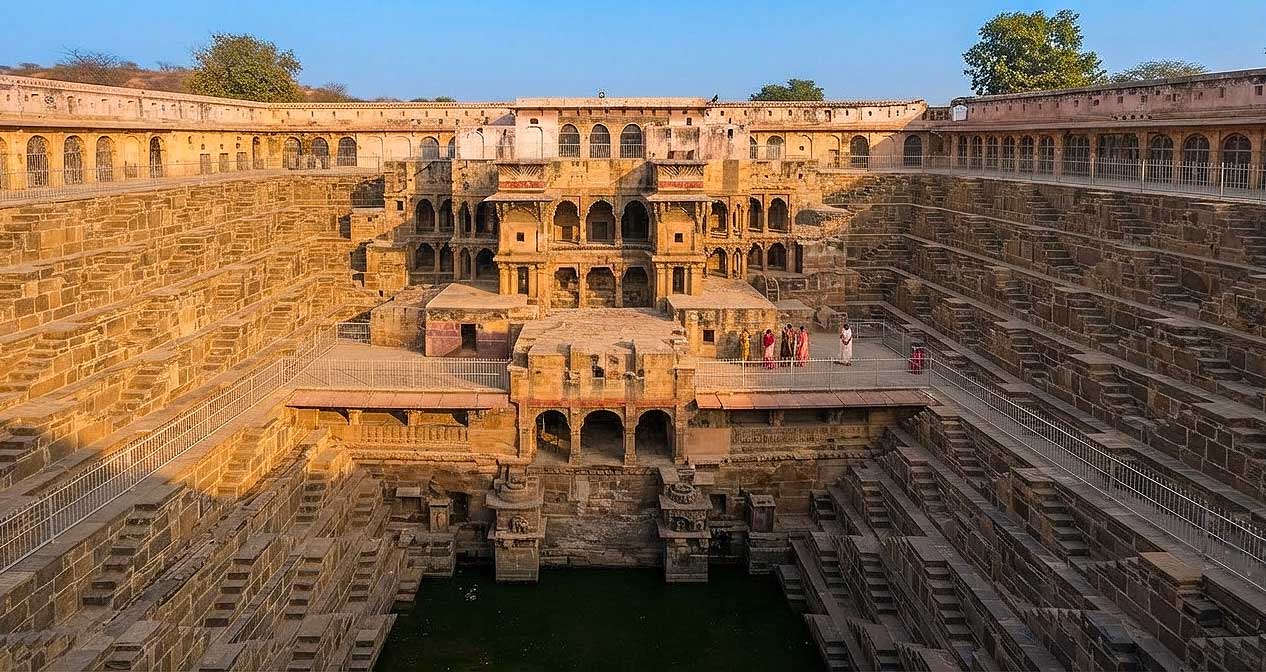
Situated between Jaipur and Agra, Abhaneri, the ancient "City of Brightness" (Abha Nagri), is a historical treasure. Its heritage rests...
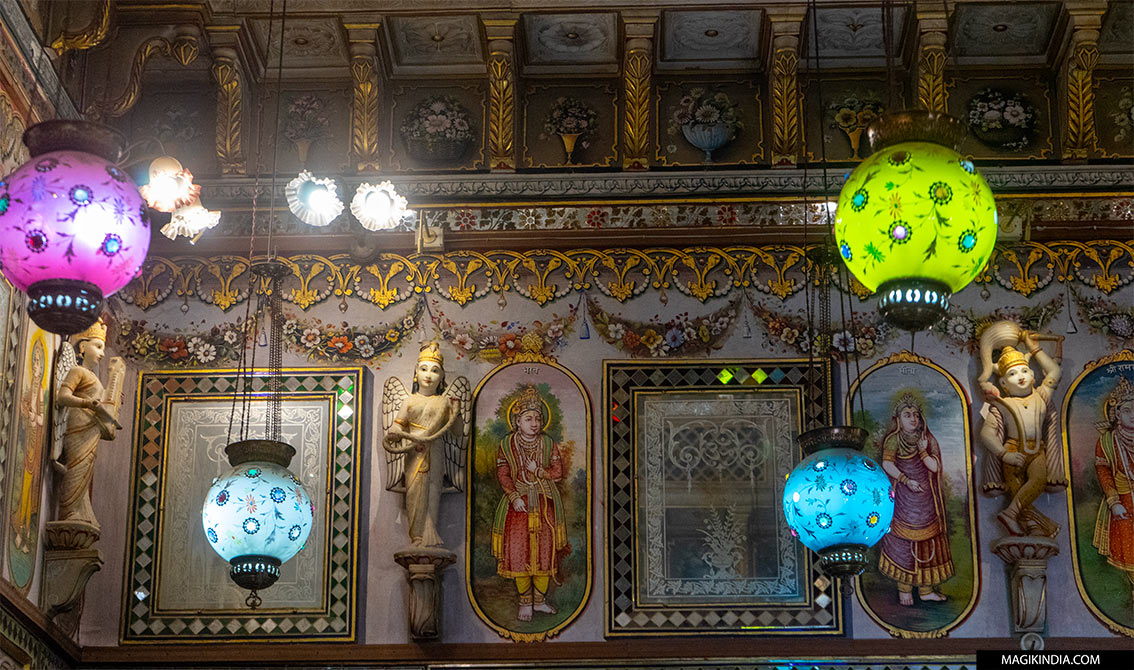
Located on the eastern edge of the Thar Desert, Churu is considered its gateway. It's a city often overlooked, but...

