

Situated in the vast expanses of Rajasthan, halfway between Udaipur and the Pink City, Shahpura cultivates the art of discretion....

Phad, an epic on canvas
Phad is one of India’s most fascinating artistic and cultural expressions. Originating from the district of Bhilwara and more particularly from the town of Shahpura in Rajasthan, this traditional art unites painting on a fabric scroll, epic narration, music and popular theater. A true nomadic temple, the Phad is both a visual masterpiece and a living heritage passed down from generation to generation.
What is a Phad?
If the word “Phad” literally means “fold” or “unfold” in the local dialects of Rajasthan, it probably has its origins in the Sanskrit patt, a term which describes a flat surface intended for art.
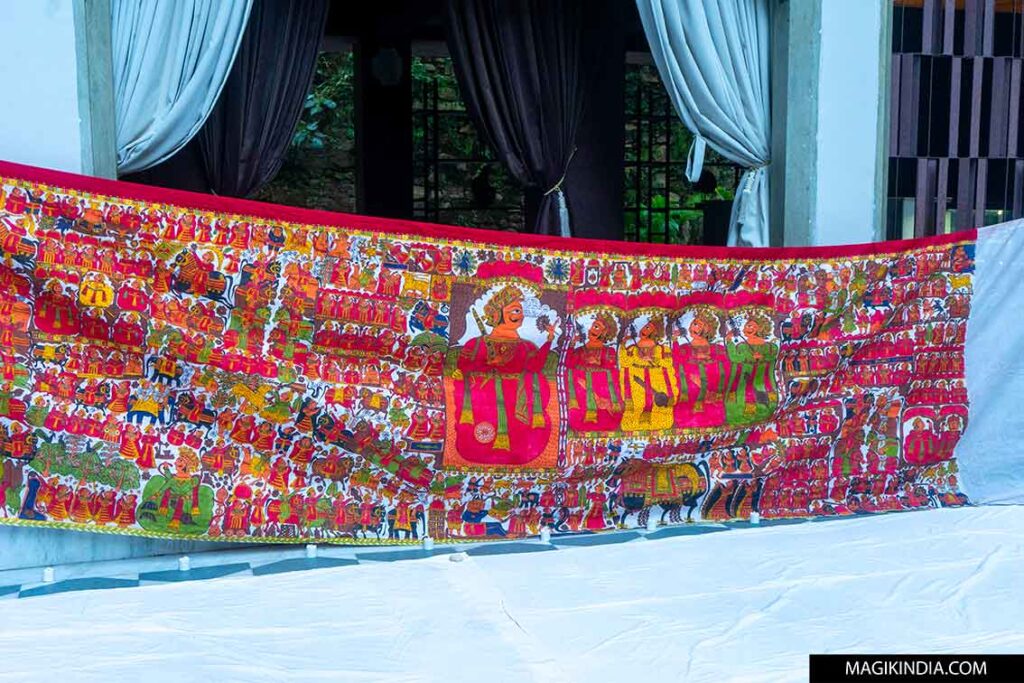
Functioning as a nomadic sanctuary during religious rituals, the Phad takes the form of a large vertical fresco painted on cotton or silk (khadi). With a length varying from 4.5 to 9 meters and a width of approximately 1.5 meters, this work owes its name to its very design: it is rolled up to facilitate transport and deployed during ceremonies.
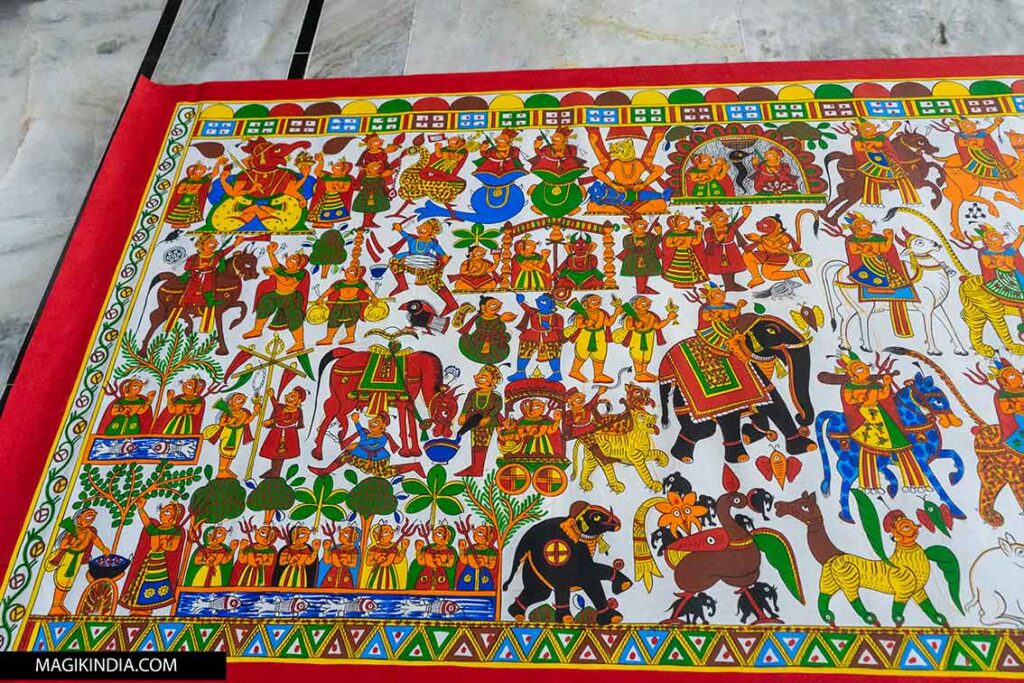
If India has several traditions of narrative painted scrolls, such as the Patachitra (Odisha and West Bengal), the Paitkar (Jharkhand) or the Cheriyal (Telangana), the word “Phad” remains exclusively linked to the traditions and epic stories of Rajasthan.
The origins of Phad
Historical cradle and nerve center of Phad, the town of Shahpura (Bhilwara district, Rajasthan) has been home to this art for more than 700 years. It was born under the leadership of itinerant bards, the Bhopa (men) and Bhopi (women), who peddled from village to village the epics of local heroes and warrior deities.

Nourished by Rajput culture and traditions of Bhakti (devotion), Phad offered rural populations nomadic access to the sacred, combining spirituality, religious education and entertainment. Jealously guarded from generation to generation, this traditional art has been codified by great families of artists, including the prestigious Joshi family, who today continue to bring this unique know-how to life in Shahpura.

The Role of the Bhopa and Bhopi
The Phad is an integral part of a living ritual. Its production, known as “phad banchana”, literally translates to “reading the legend”.
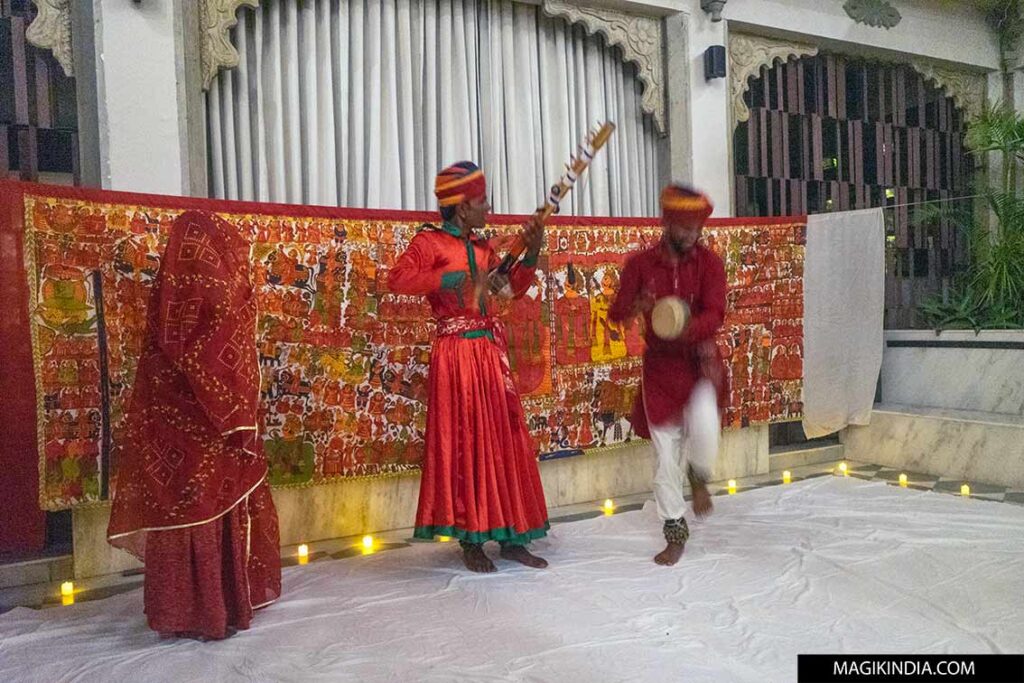
In the past, when night came, the Phad was stretched between two posts. Illuminated by the glow of a simple oil lamp, the Bhopa and Bhopi sang the praises and exploits of local deities and heroes, accompanied by traditional instruments such as the ravanhatha. Carried by the dance and the melody, the faithful listen to the epic, pray and enter into communion with the divine. In the early morning, the roll is delicately folded to be kept until the next performance.
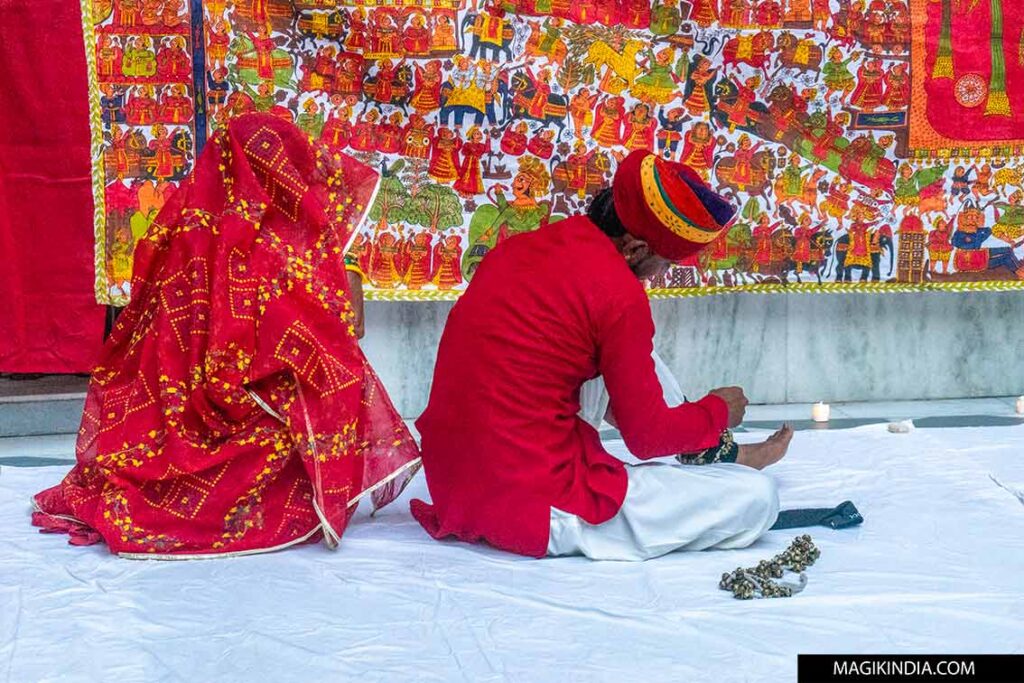
The Phad universe is based on a strict distribution of roles between artists and sponsors. The Nayak community carries the story of Pabuji, the Gujjar community that of Devnarayan, while other groups such as the Rajputs intervene in certain variations.
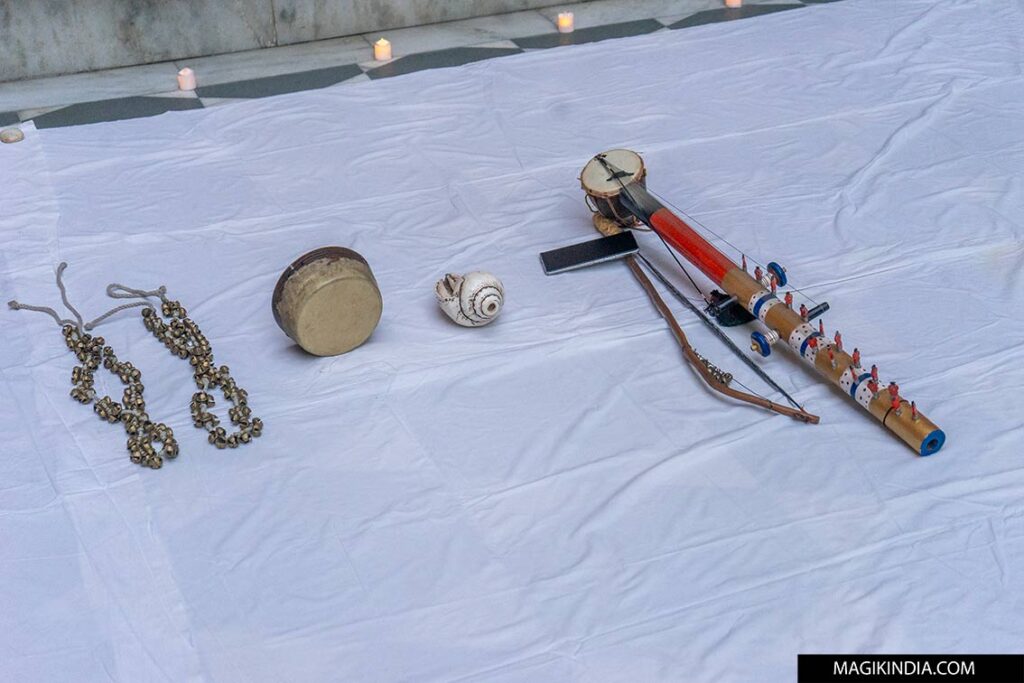
At the origin of these representations is often the nomadic pastoral community of Rabari, who invited the Bhopas for their rituals. As for the material creation of the phads, it is entrusted to the painters of the Joshi family, members of the Chipa community of Shahpura, the sole custodians of this art of painting on fabric.
The themes and deities depicted
The Bhilwara scrolls mainly narrate the mythological and historical adventures of figures revered as demigods in Rajasthan, whose epics structure the spiritual and social life of rural communities.

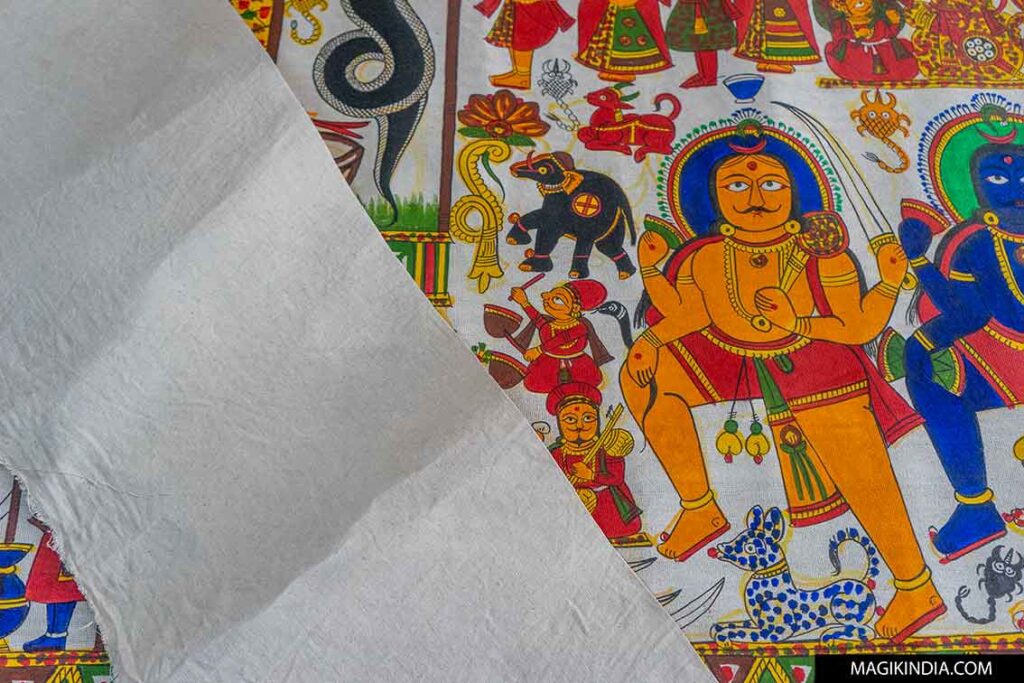
Among these great figures, Devnarayan Ji occupies a central place as a major deity fervently worshiped by the pastoral community of Gurjars. His Phad is one of the largest made, often reaching nine meters in length. Considered an earthly avatar of Vishnu, Devnarayan Ji shares his symbolism. Traditional Phad paintings emphasize his supreme divinity with the presence of a raised cobra, and popular tradition relates that he rides Basak Nag, the king of snakes.

Another essential hero, Pabuji is a 14th century Rajput chief who has spanned the centuries to become the revered protector of cows, camels and the oppressed. His epic tale recounts his unwavering dedication to the poor, his sacred oaths and his heroic sacrifice in battle, chivalrous values that resonate deeply with nomadic herders and local populations.

Other scrolls enrich this immense narrative heritage by illustrating the legends of equally venerated figures. This is the case of Ramdev Ji, a holy warrior venerated for his compassion towards the weakest, of Lord Krishna, whose mystical and loving exploits span the ages, or of Tejaji, another great popular deity invoked in particular to protect oneself from snake bites.

Through these painted stories, the entire collective memory and devotional fervor of Rajasthan are thus immortalised.
Phad Technique
The fruit of meticulous know-how passed down from generation to generation, the making of a Phad is based on a strict family tradition. It is the work of the Joshi (Brahman) community of Shahpura. Long reserved for men of the lineage, this transmission has now been opened to women, perpetuating the excellence of this art on canvas.

The artists use exclusively natural pigments from plants, minerals and crushed stones, linked by a mixture of water and vegetable gum, each shade being invested with a strong symbolic charge.

The final stage of creating a scroll is the ritual of Aankh Kholna (opening of the eyes). On an auspicious day, the artist paints the pupils of the main deity in the center of the canvas. This final brushstroke breathes divine life into the work, transforming the fabric into a living, moving temple before it is officially handed over to the priest-singer.

At the other end of his life, when a Phad is too worn out from decades of travel, he undergoes the ritual of Tandakarna (cooling). The Bhopa then performs a final prayer before respectfully immersing the sacred scroll in a body of holy water, such as the Ganges or Pushkar Lake, in order to release the presence of the deity.
Like all traditional arts, Phad and its representations are becoming increasingly rare in the face of modernity, and younger generations, attracted by new ways of life, often turn away from this ancestral heritage. However, despite the threat of extinction hanging over these sacred scrolls and the songs of the Bhopas, the transmission of this unique know-how survives thanks to the commitment of a few families of passionate artists like bablu_chanwriya. By adapting their art to contemporary galleries and making it discovered beyond the borders of Rajasthan, they attempt to keep the flame of this visual and spiritual memory alive.
Vous aimerez peut-être aussi...
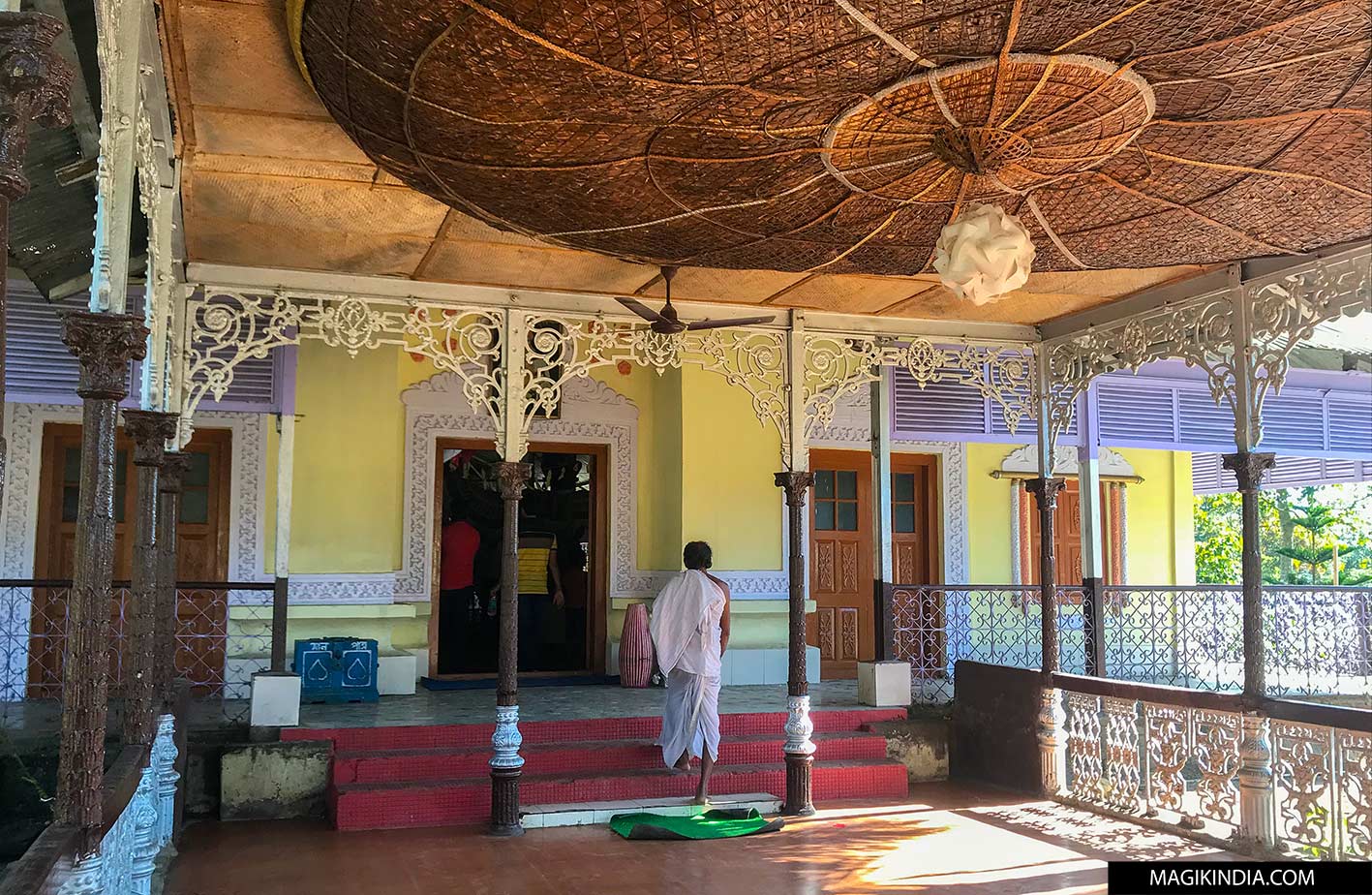
Lost in the middle of the tumultuous currents of the Brahmaputra, the island of Majuli is a world apart. As...
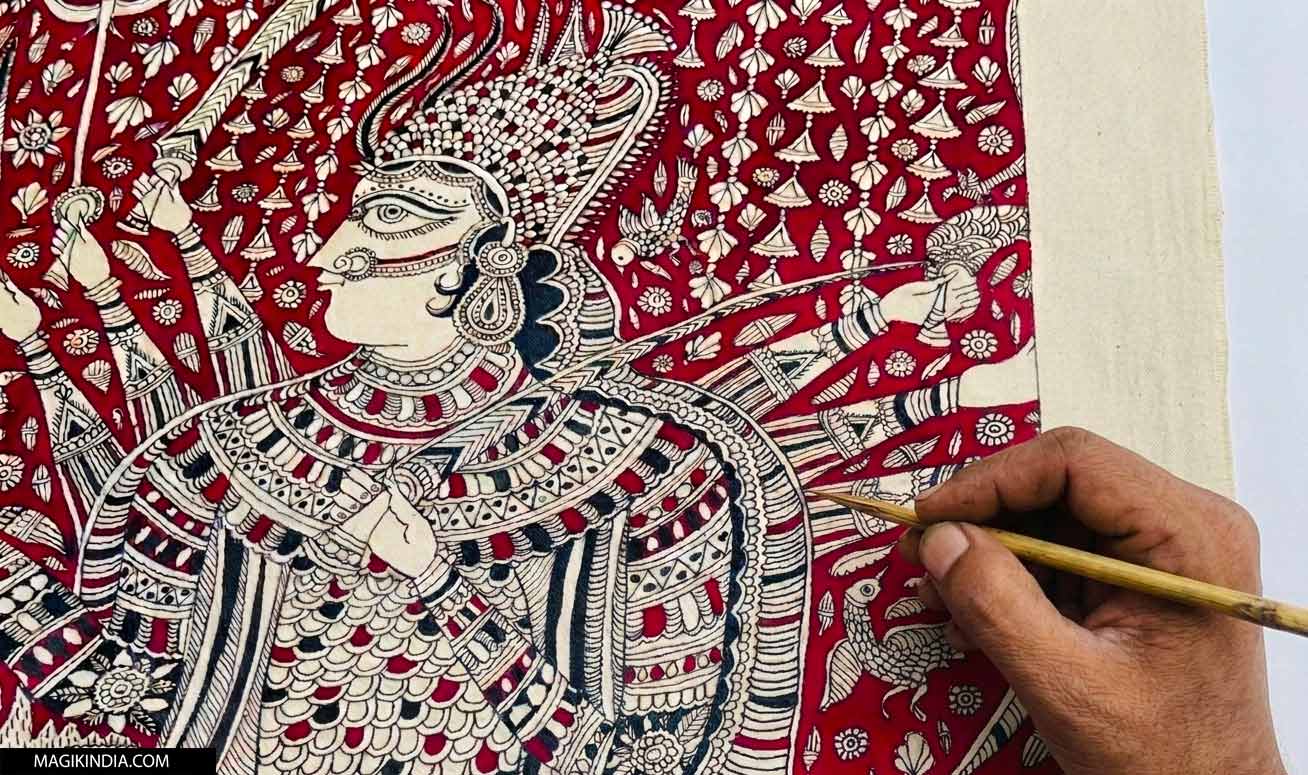
The Mata ni Pachedi, literally “the goddess in the background,” is the triumph of fervour over exclusion. Invented by the Vaghari...

Imagine a kitchen utensil capable of rivaling Teflon, yet born of the earth, long before the industrial era. Deep within...

Some forms of art do not merely traverse time; they suspend it. Deep within the tribal strongholds of India, where...
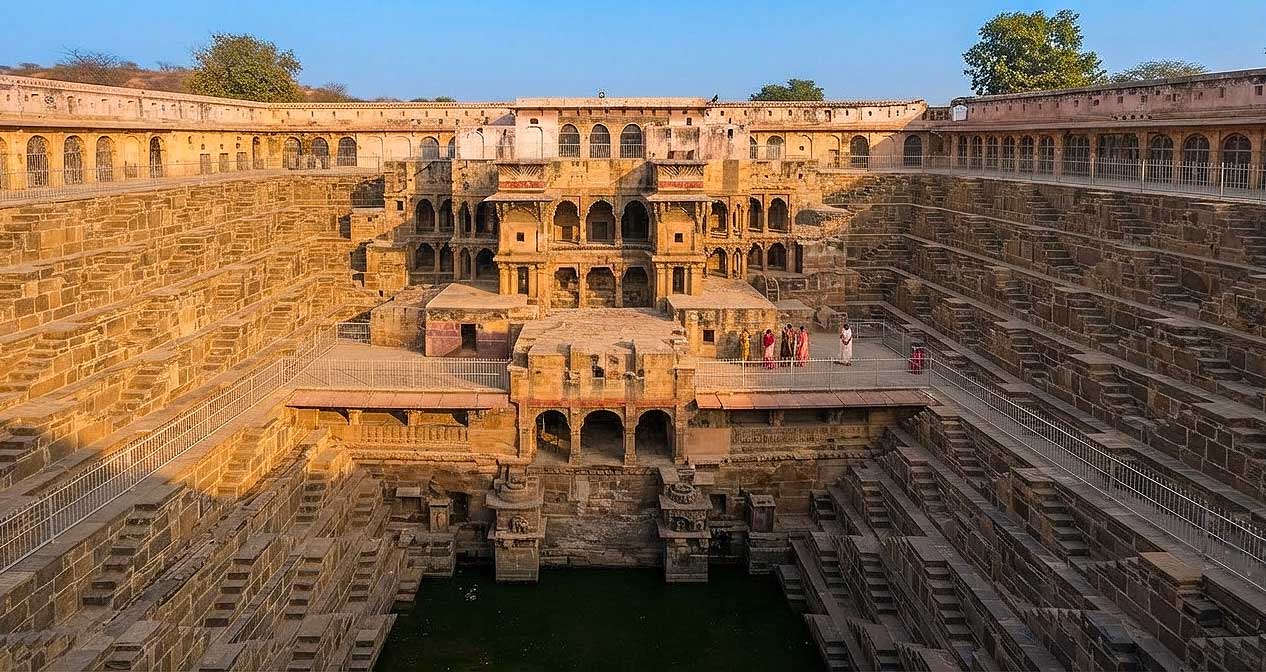
Situated between Jaipur and Agra, Abhaneri, the ancient "City of Brightness" (Abha Nagri), is a historical treasure. Its heritage rests...

