

Situated in the vast expanses of Rajasthan, halfway between Udaipur and the Pink City, Shahpura cultivates the art of discretion....
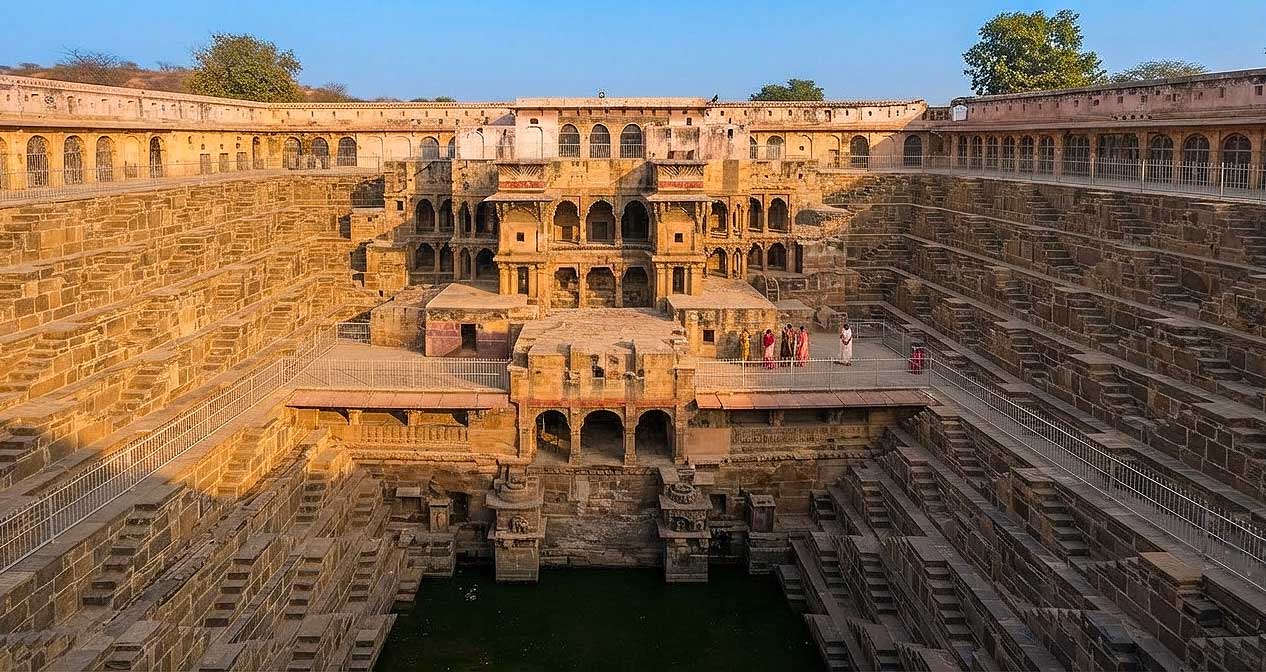
Abhaneri or the Sacred Geometry of Rajasthan
Situated between Jaipur and Agra, Abhaneri, the ancient “City of Brightness” (Abha Nagri), is a historical treasure. Its heritage rests upon two 9th-century CE marvels: the ingenious Chand Baori, a colossal stepwell and true feat of stone engineering, and the Harshat Mata Temple, whose carved ruins whisper of the fervor and finesse of medieval Indian art. Abhaneri stands as a living testament to the union of vital engineering and spiritual devotion in ancient India.
Chand Baori: Geometric Hypnosis
The beating heart of Abhaneri resonates to the rhythm of Chand Baori, one of the largest and deepest stepwells (baoris) in the world, a true defiance of both gravity and the imagination.
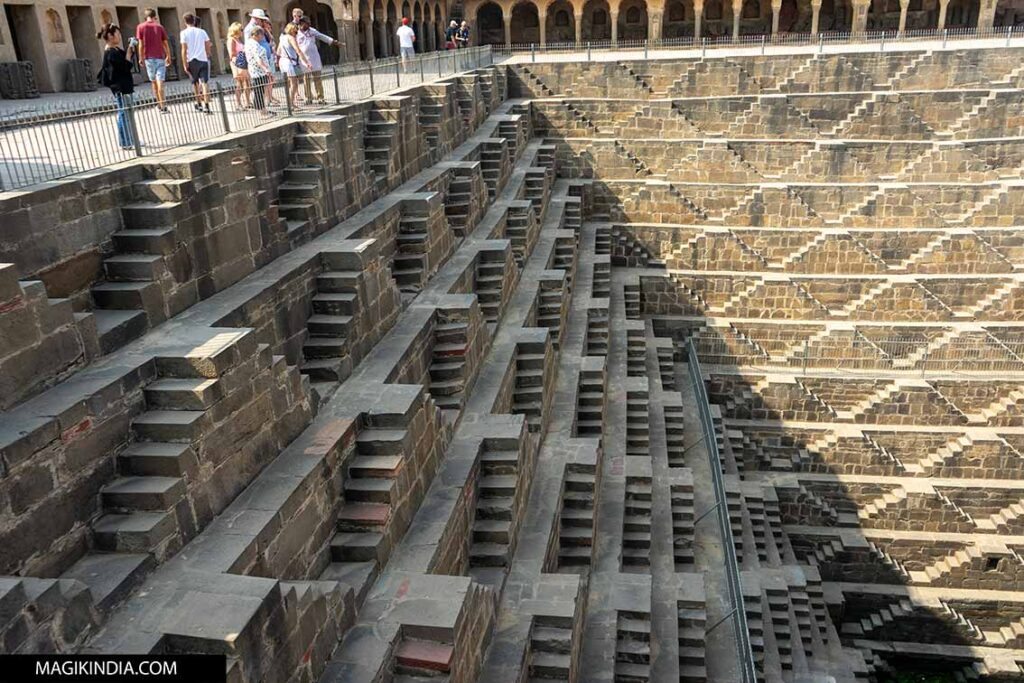
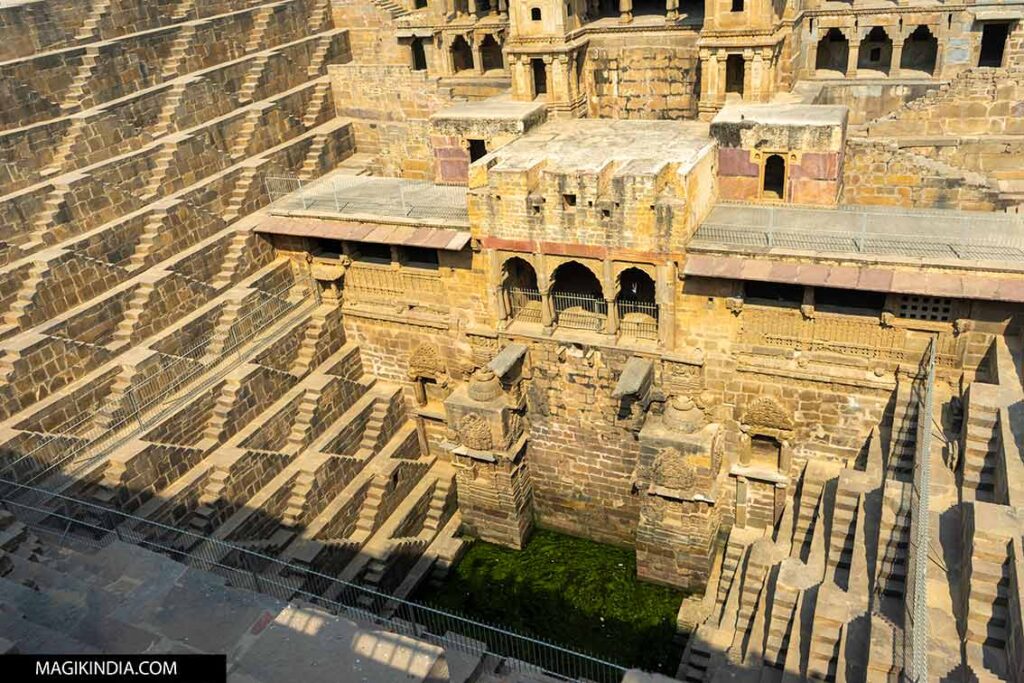
Built between the 8th and 9th centuries by Raja Chand of the Nikumbh Rajput dynasty, this monument is a sheer marvel of hydraulic engineering. With its 13 levels plunging to a depth of over 30 meters, it unfolds a breathtaking labyrinth of 3,500 steps arranged in perfect symmetry.
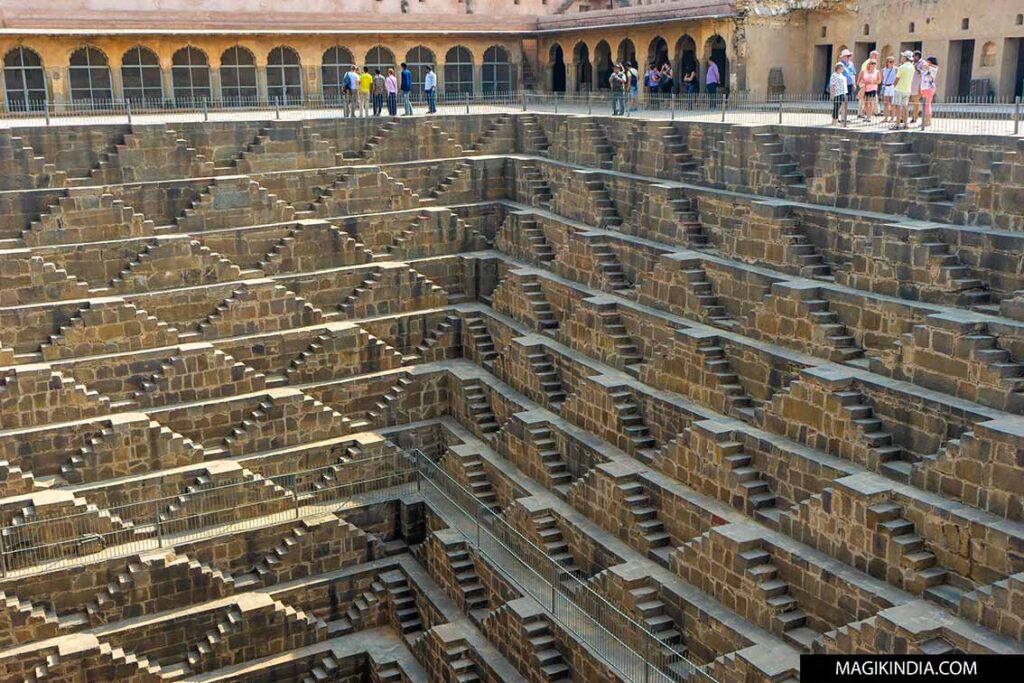
Viewed from above, the intricate pattern creates a powerful illusion of infinite depth and complexity. Each step can be described as a fractal, where the pattern repeats at different scales, accentuating the hypnotic effect.
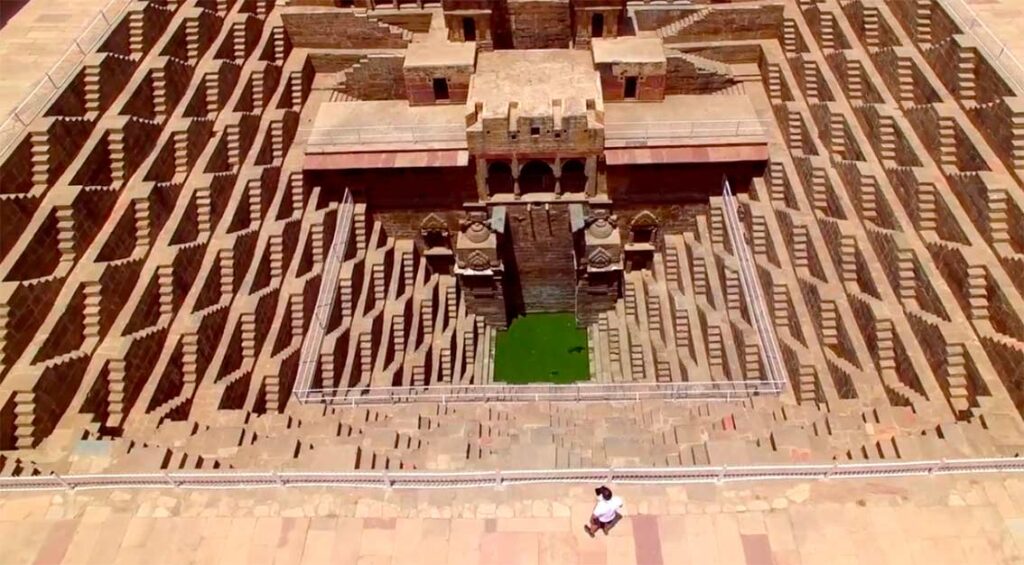
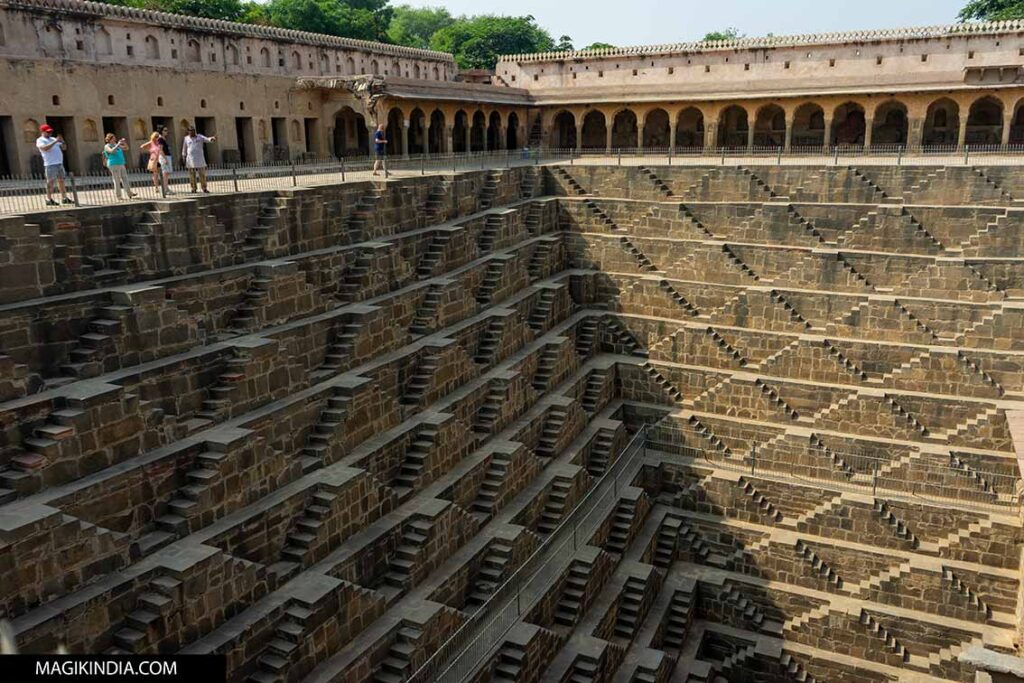
Beyond its visual impact, the chevron arrangement is by no means arbitrary. This perfect symmetry of the stairs maximizes efficiency by allowing a large number of people to descend simultaneously and ascend alongside the water without congestion. Furthermore, the 13 levels addressed an essential practical need: they provided access to the water regardless of its seasonal height, while the stepped structure acted as permanent buttresses, ensuring the stability of the edifice for centuries.
The ingenuity of the design also focused on the orientation and depth of the well to minimize evaporation and keep the water shaded. This mass of stone and the depth of the structure also create an inverted pyramid effect that keeps the air at the bottom 5 to 6 degrees Celsius cooler than at the surface, transforming the site into a vital, cool oasis in the Rajasthan desert.
The Sacred Symbolism of the Baoris
The integration of the sacred is evident in the function, location, and decoration of baoris in general.
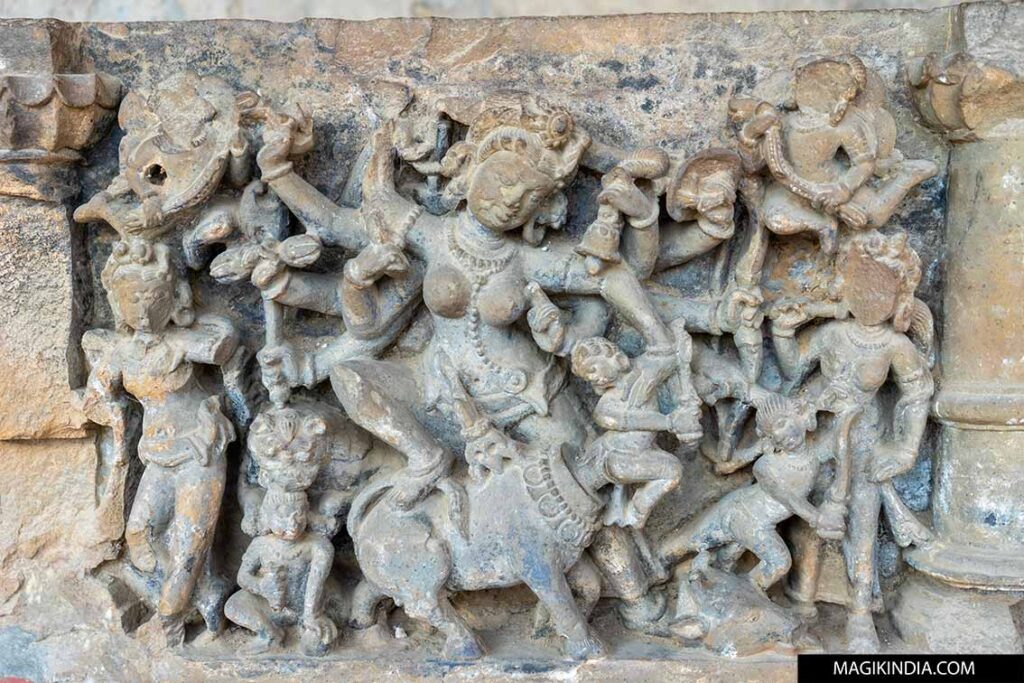
Baoris were considered sacred sites dedicated to the Mother Goddess (Shakti) or to water deities (Varuna). Descending into the well was, in a sense, undertaking a pilgrimage into the depths of the earth to purify oneself.
This descent can be viewed as a symbolic representation of the three worlds (Triloka) of Hindu cosmology:
- Upper World (Bhu-loka): the surface and the summit pavilions.
- Intermediate World (Bhuvar-loka): the numerous levels of steps.
- Lower World (Svar-loka): the water level, considered the realm of spirits and deities.
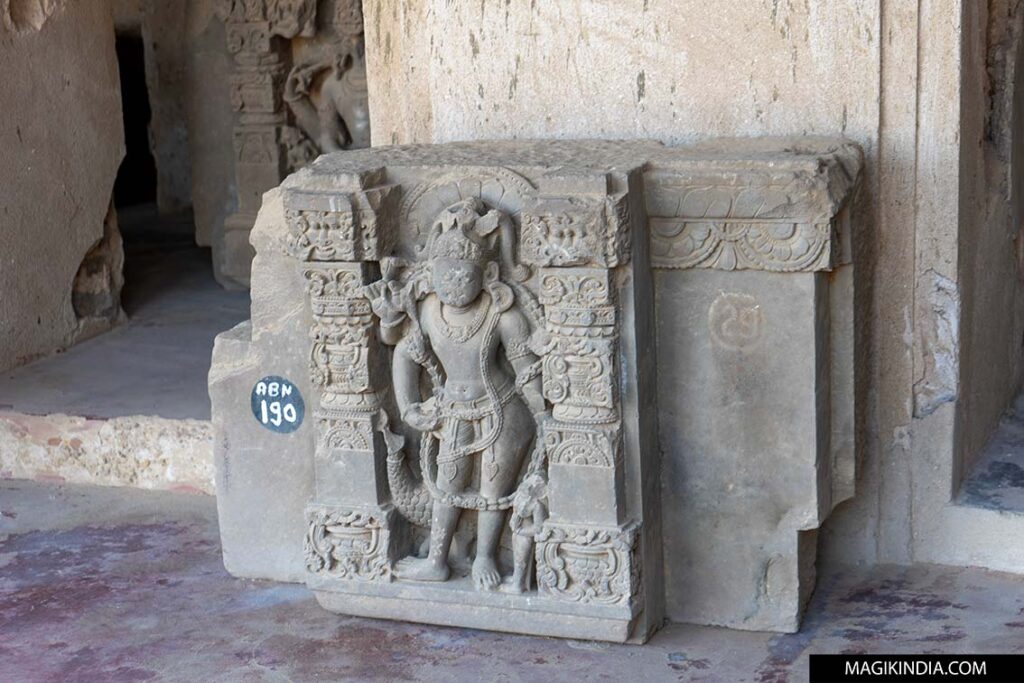
Moreover, baoris, particularly in their structure of colonnades and pavilions, often adopted the typical architecture of a temple, featuring shrines dedicated to Ganesha, Shiva, or Vishnu within their niches and galleries.
The Baori as the Societal Centre
Beyond their role in water engineering and their sacred dimension, baoris were central places that played an essential role in the social, cultural, and political fabric of Indian communities.
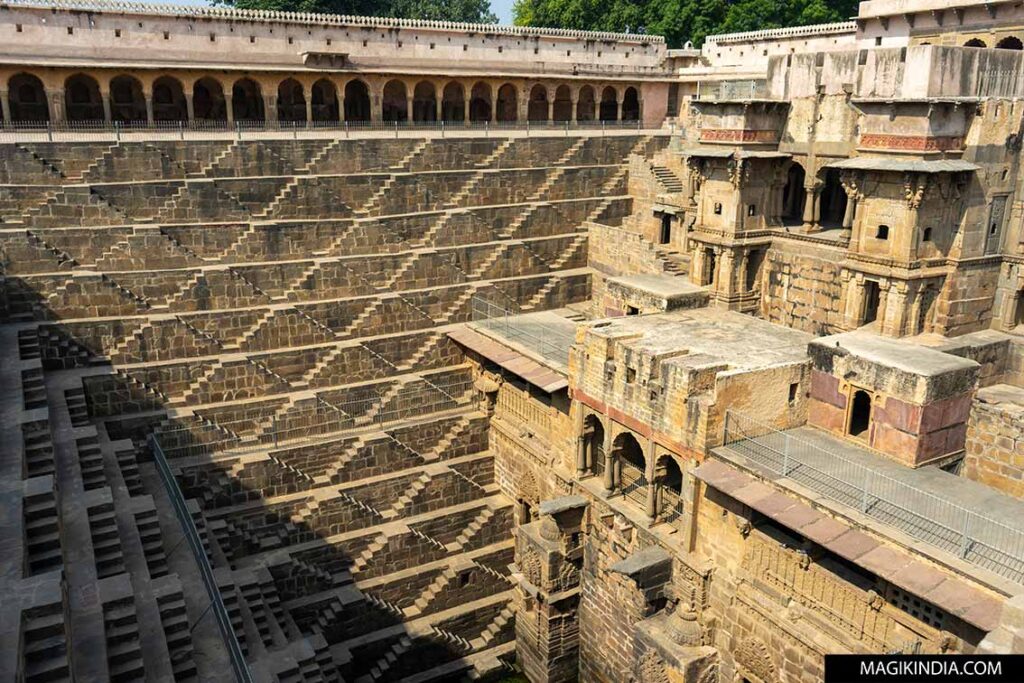
First and foremost, they served as a communal refuge from the heat thanks to their microclimate, offering spaces for rest and leisure. The upper levels and galleries were fitted out as places for relaxation and recreation, used for resting, informal gatherings, and social interactions, thereby transforming the well into a space of daily life that extended far beyond its primary function as a water source.
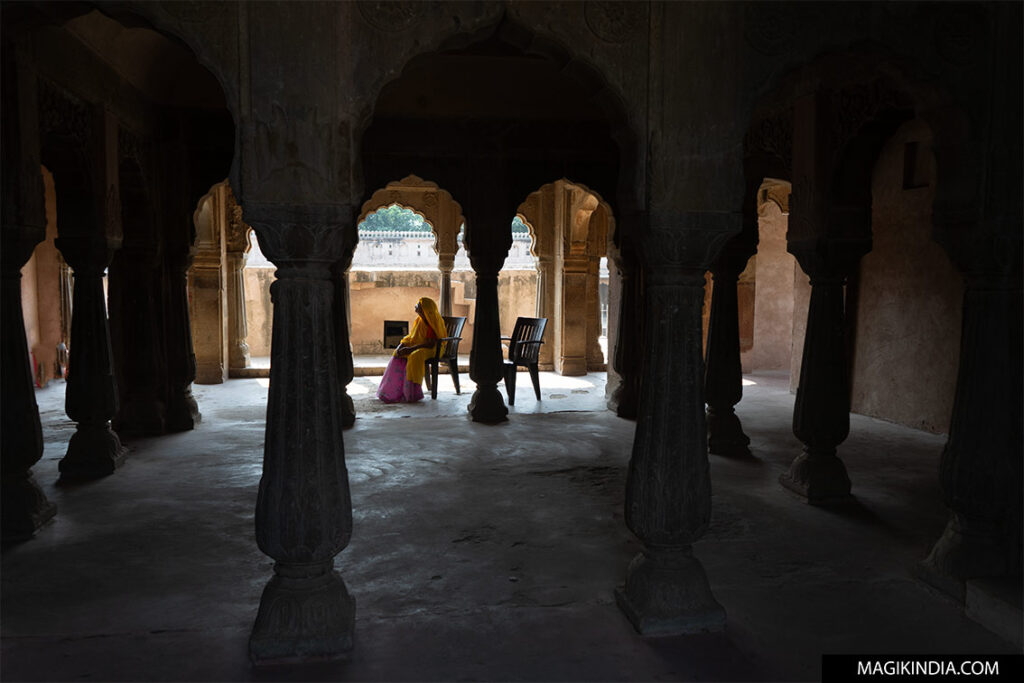
These sites also held major ritual significance, serving as privileged settings for ceremonies and festivals linked to water (such as monsoon festivals), which were essential for purification rites.
Harshat Mata: The Temple of Joy of Abhaneri

Directly opposite the well stands the Temple of Harshat Mata, a shrine dedicated to the goddess of the same name, who embodies joy and happiness. Erected by Raja Chand at roughly the same time as the Chand Baori, this temple bears witness to post-Gupta sculptural art.
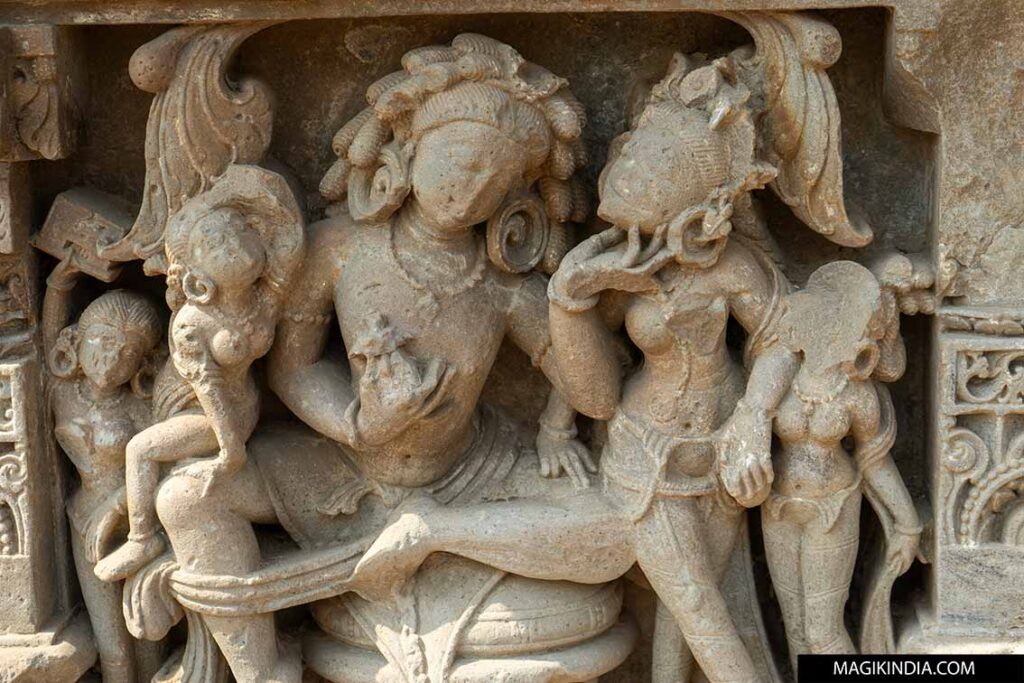
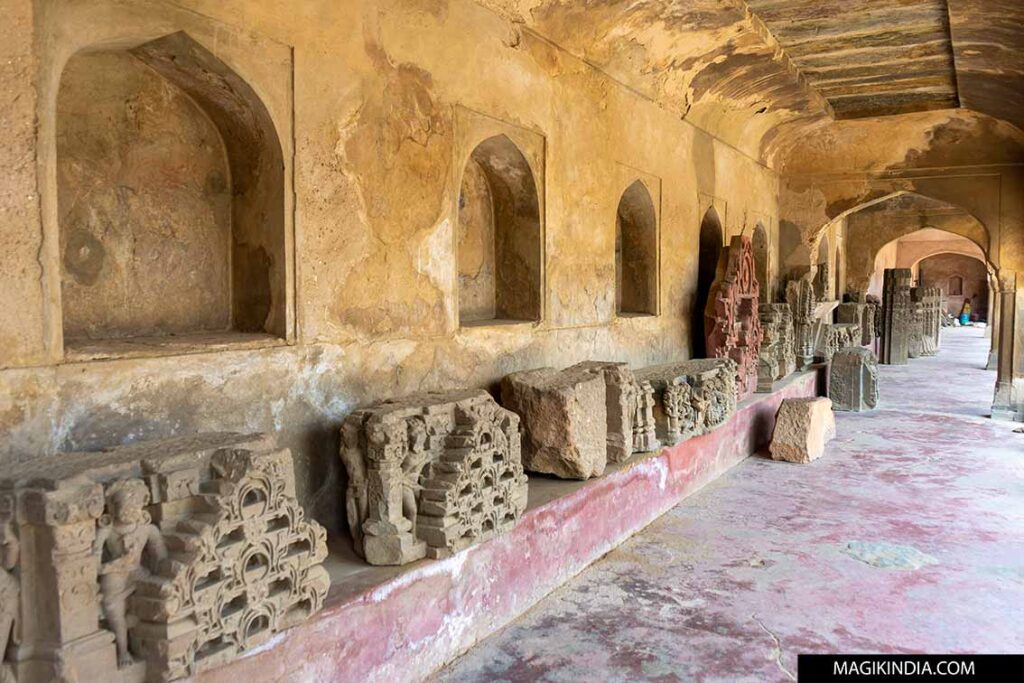
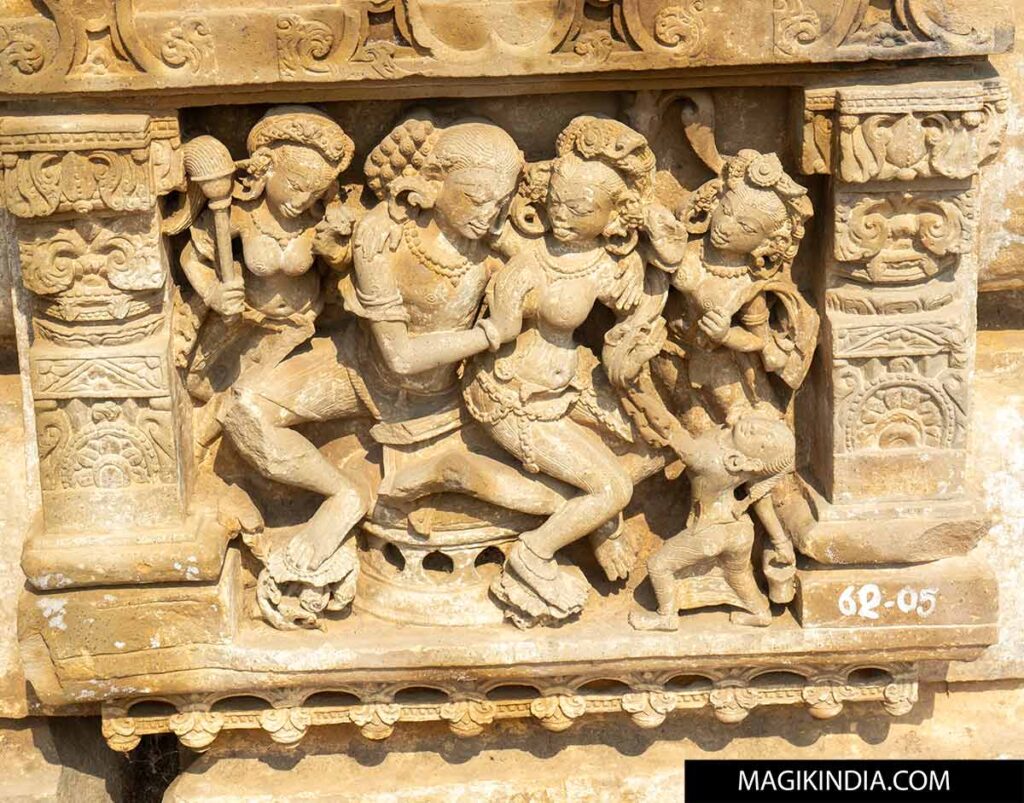
Although partially in ruins, having suffered the ravages of time and invasions, it nonetheless preserves magnificent vestiges. The fragments of its walls and pillars, displayed within the galleries of the baori, reveal sculptures of exceptional finesse, making Abhaneri a first-rate archaeological site.
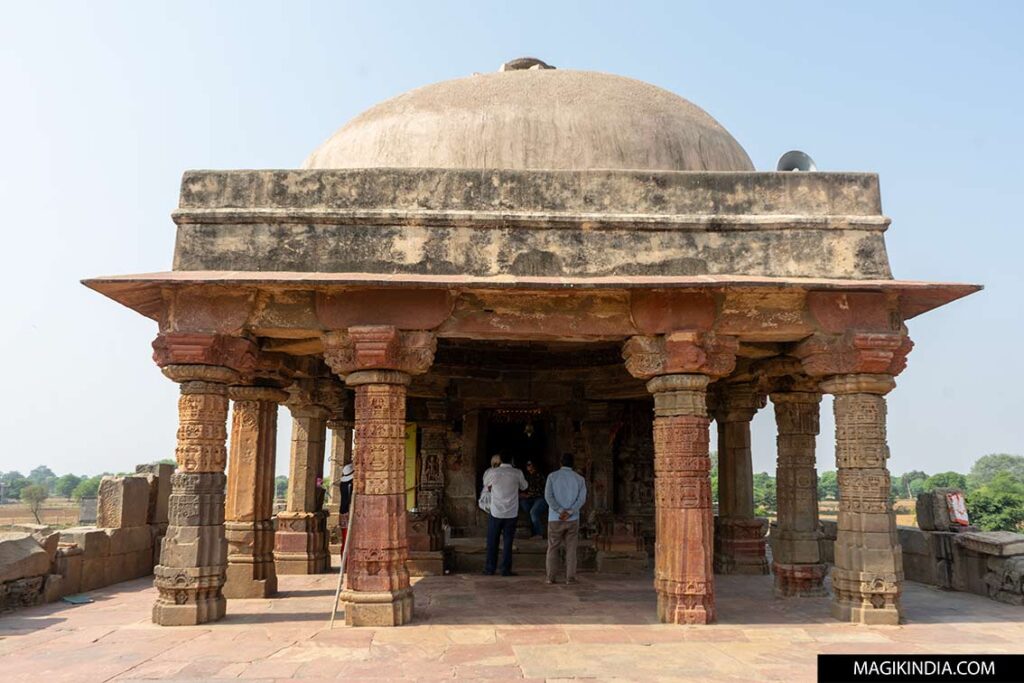

Some recovered fragments suggest that it may have originally been a sanctuary dedicated to Vishnu.
Vous aimerez peut-être aussi...

Phad is one of India's most fascinating artistic and cultural expressions. Originating from the district of Bhilwara and more particularly...
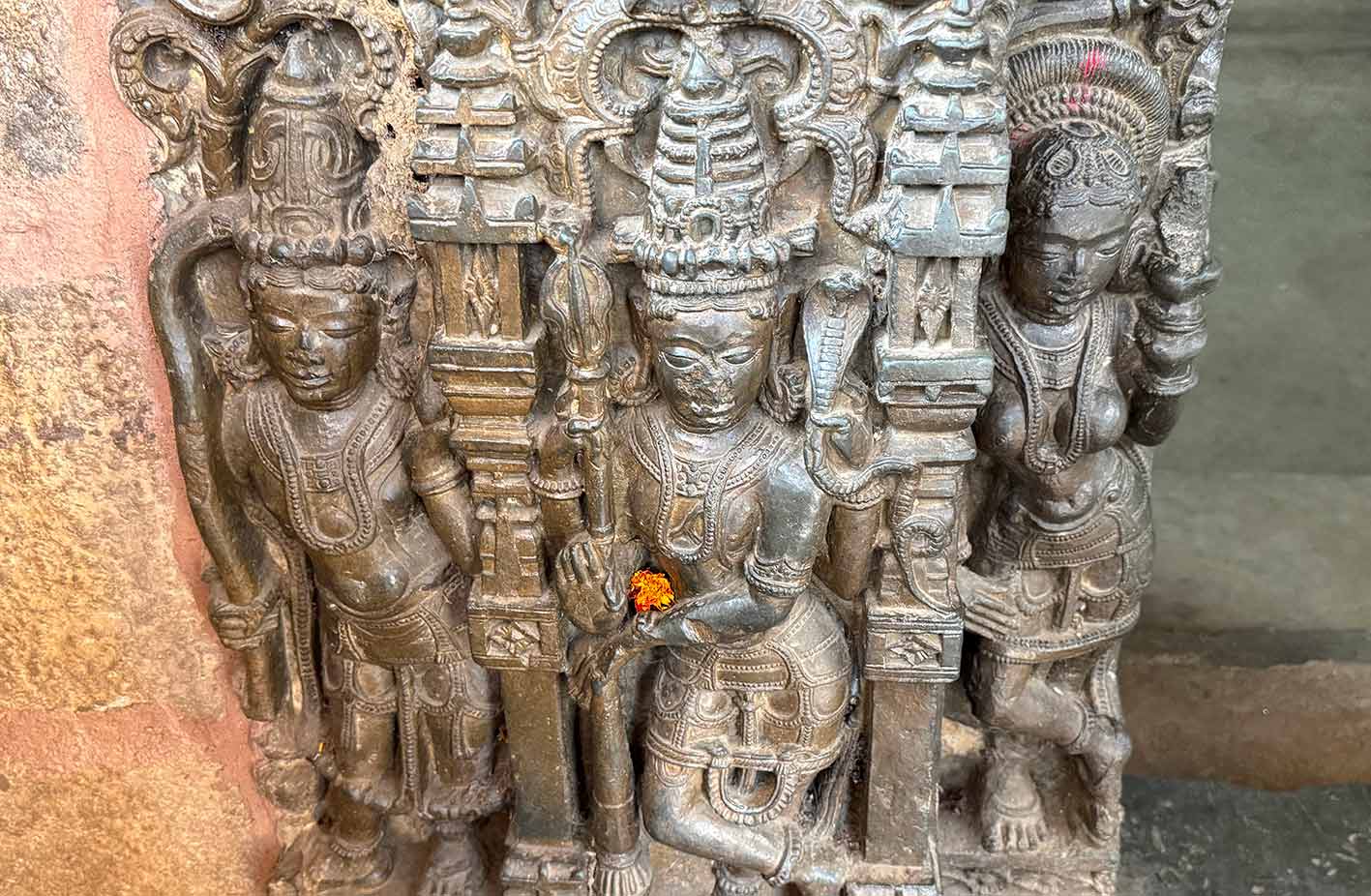
In the hollow of the wooded hills of the Maikal range, in the wild setting of Chhattisgarh, the Bhoramdeo temple...

Languid on the banks of the Narmada, in the southwest of Madhya Pradesh, Maheshwar offers the image of a city...

Nestled on a fortified plateau of the Vindhya Hills, over 600 meters above sea level, Mandu (or Mandav) is one...
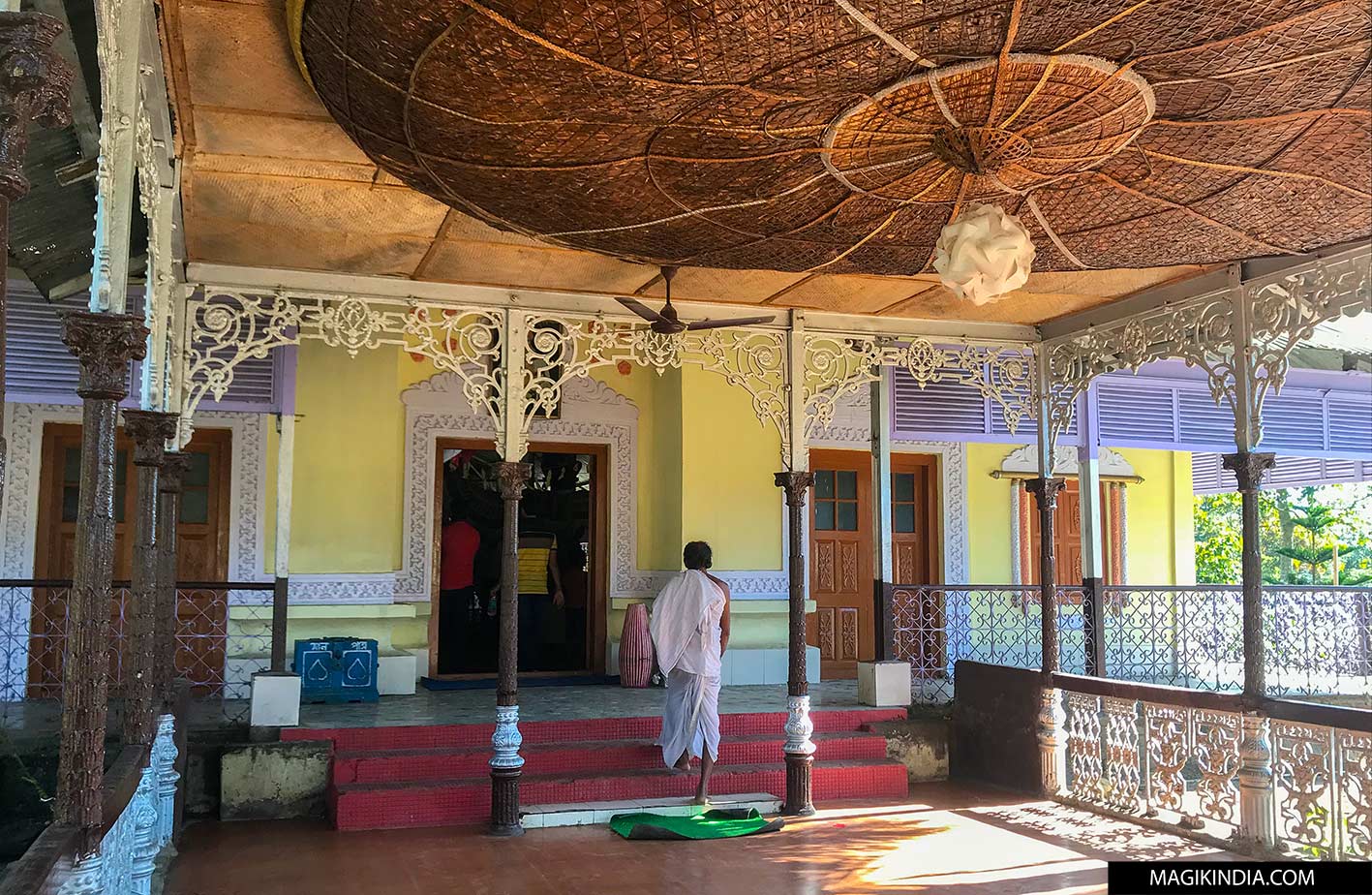
Lost in the middle of the tumultuous currents of the Brahmaputra, the island of Majuli is a world apart. As...

