

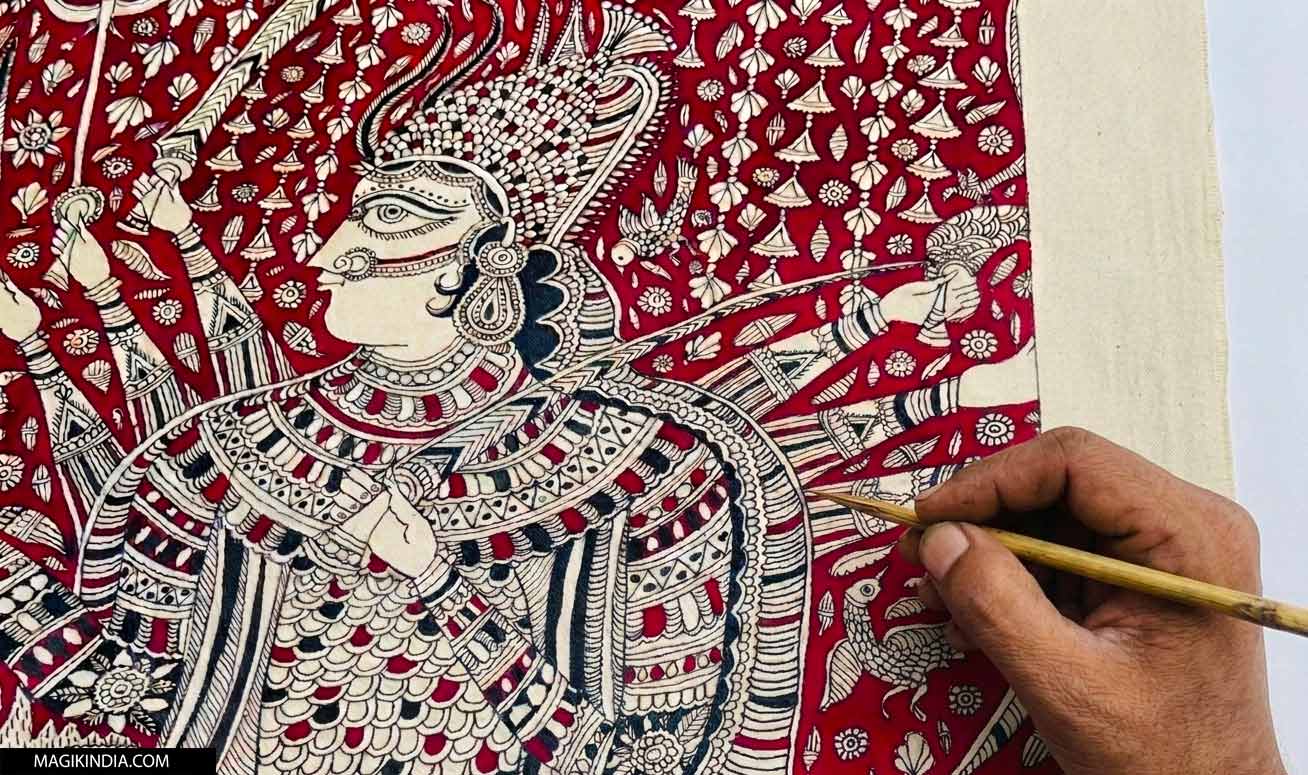
Phad is one of India's most fascinating artistic and cultural expressions. Originating from the district of Bhilwara and more particularly...
Majuli, a land of water and culture
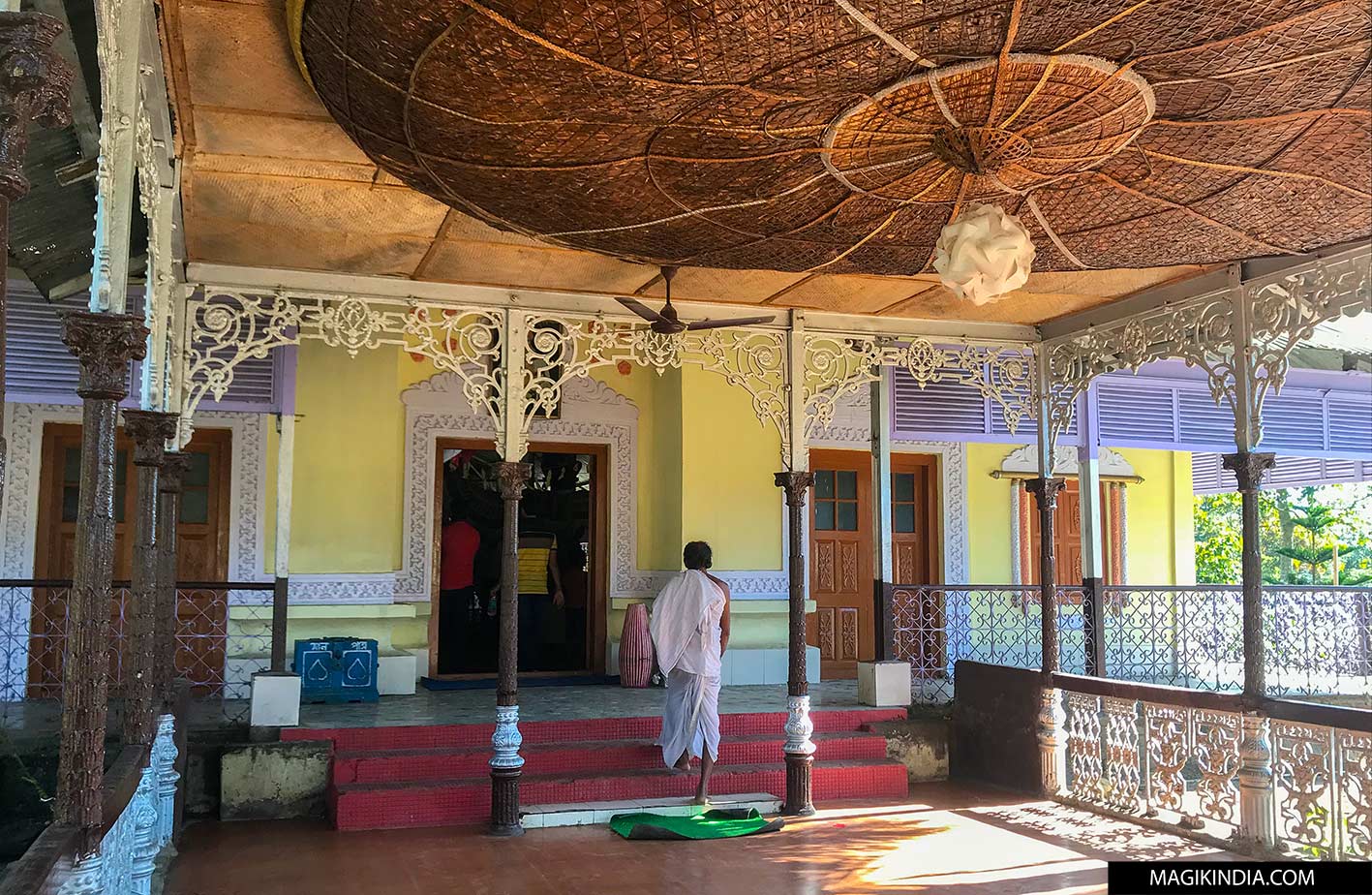
Lost in the middle of the tumultuous currents of the Brahmaputra, the island of Majuli is a world apart. As a land of contrasts, it unites the authenticity of tribal traditions with the artistic influence of the Satras, these monasteries which perpetuate a centuries-old culture through dance, masks and prayer. Despite the constant erosion that threatens its geography, Majuli remains the epicentre of Assam‘s identity, offering a rare immersion in a spiritual and wild India.
A land in unstable equilibrium

Majuli is located in the middle of the Brahmaputra, one of the mightiest rivers of India. Its geological nature is its greatest weakness: it is composed of loose alluvial deposits (sand and silt).
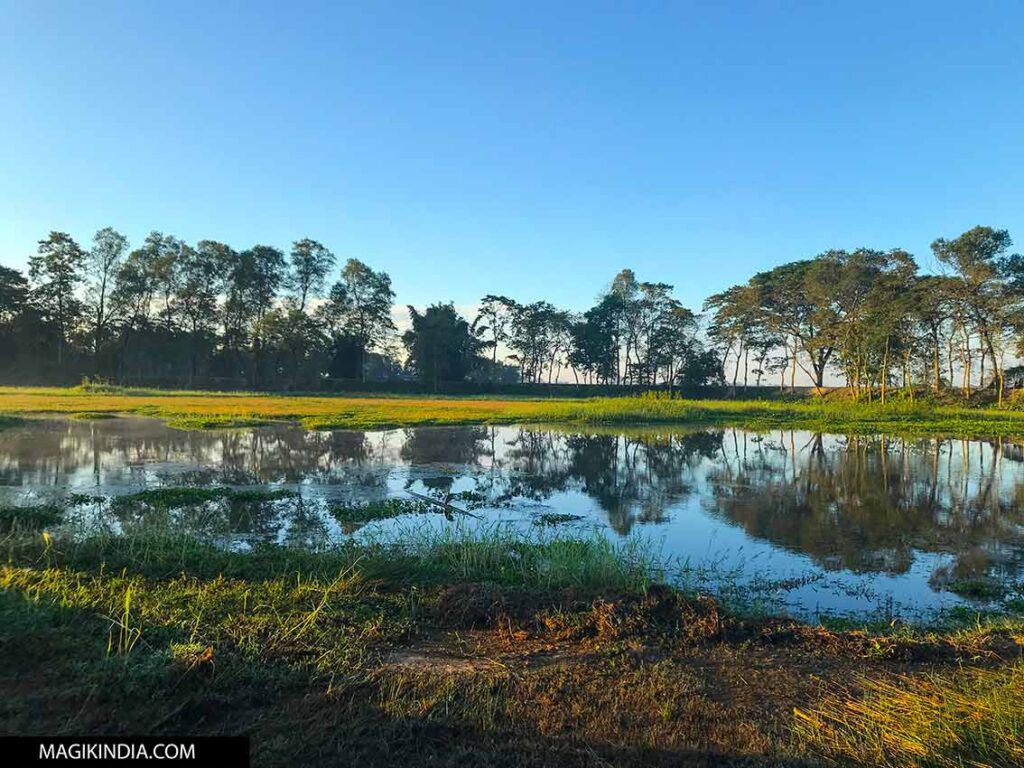
Since the devastating earthquake of 1950, the change in the course of the river has considerably intensified chronic erosion, reducing the surface area of the island from 1,250 km² at the beginning of the 20th century to less than 400 km² today. Despite efforts by the Indian government through the Brahmaputra Board to stabilise the banks through embankment and protection systems, the unpredictable force of nature remains an immense challenge.
The Satras: the spiritual heart
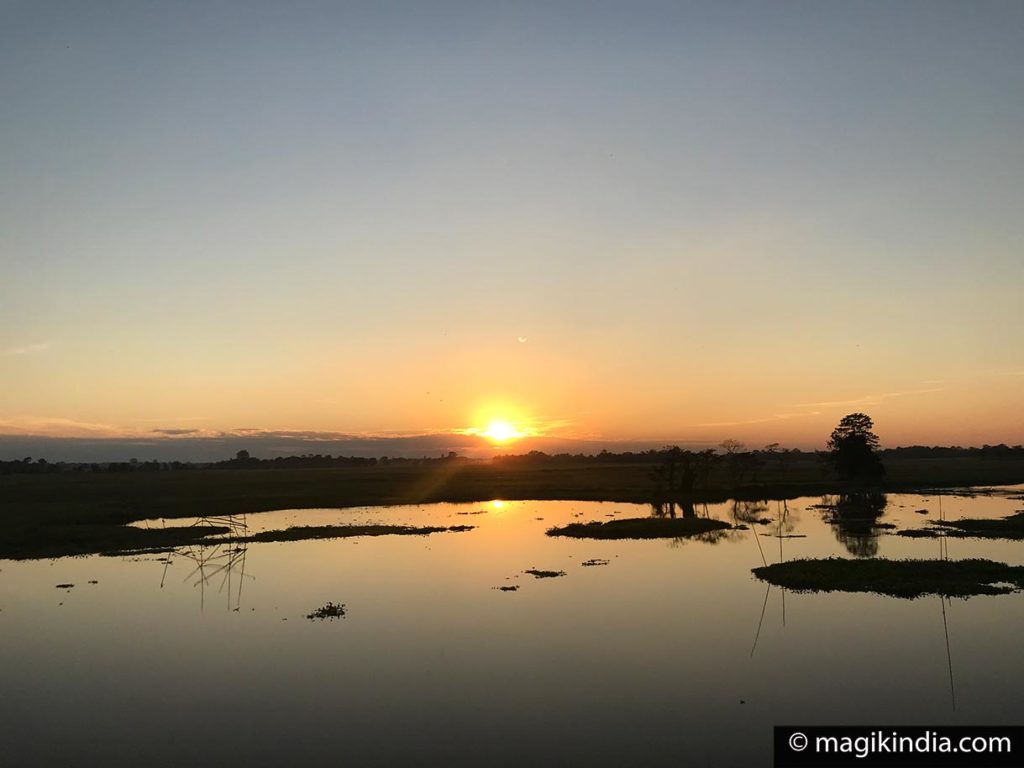
Majuli is home to a unique spiritual feature in India: the Satras, nerve centres of Ekasarana Dharma. This Assamese neo-Vishnuite culture was initiated in the 15th century by the saintly reformer Srimanta Sankardeva and his most devoted disciple, Madhavdeva, profoundly marking the religious and cultural identity of the Brahmaputra valley.
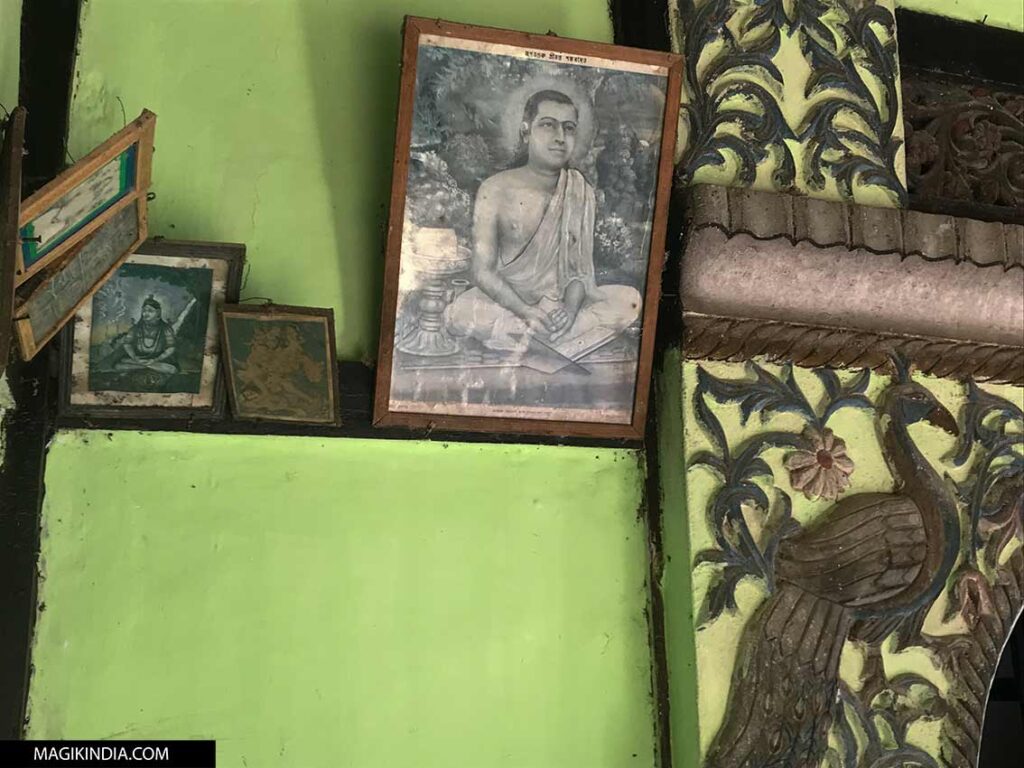
Srimanta Sankardeva, the founder
Srimanta Sankardeva, scholar and visionary reformer, made Vishnuism a powerful lever for social development, placing the arts at the heart of his approach. Drawing on ancestral traditions, he gave birth to unique forms of expression that still define the soul of Assam today: the spiritual music of the Borgeet, the devotional theatre of the Bhaona, the codified grace of the Sattriya dance and the literary richness of the Brajavali language.
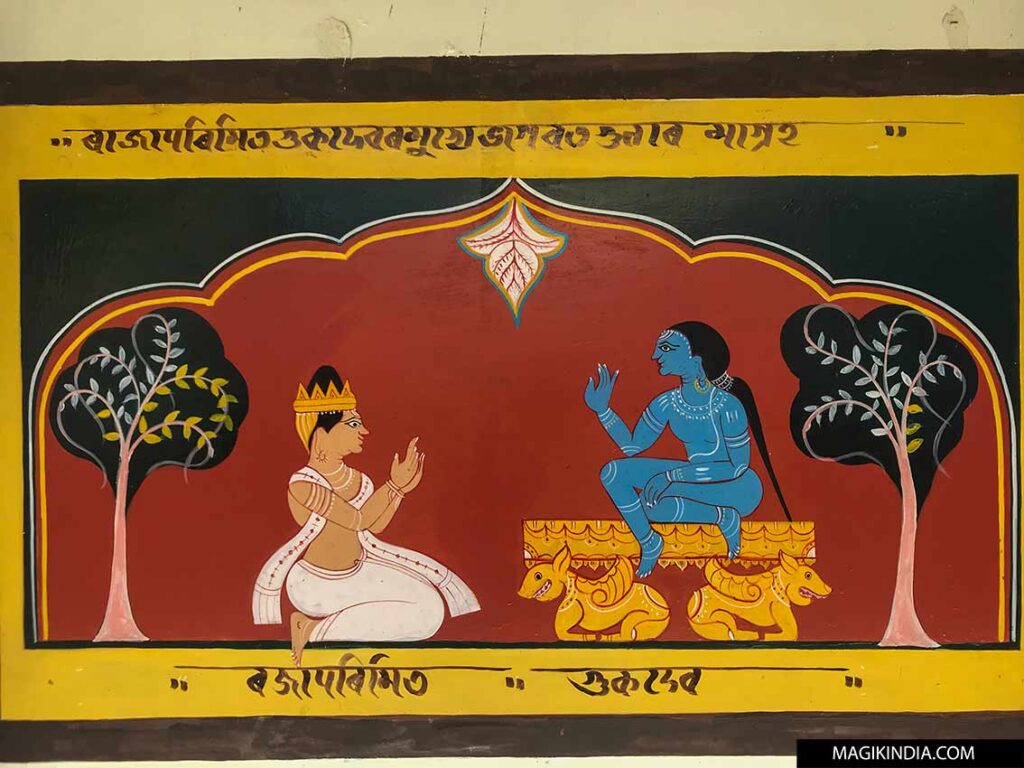
An egalitarian movement
Deeply monotheistic, this movement favours Sravana-Kirttana, a devotion centred on the invocation of the name of Lord Krishna. Rejecting caste hierarchies, Vedic rites and blood sacrifices, this movement stands out for its radical openness. Its egalitarian spirit has enabled a unique fusion of cultures, welcoming into its fold people from all backgrounds, whether Hindu or Muslim.
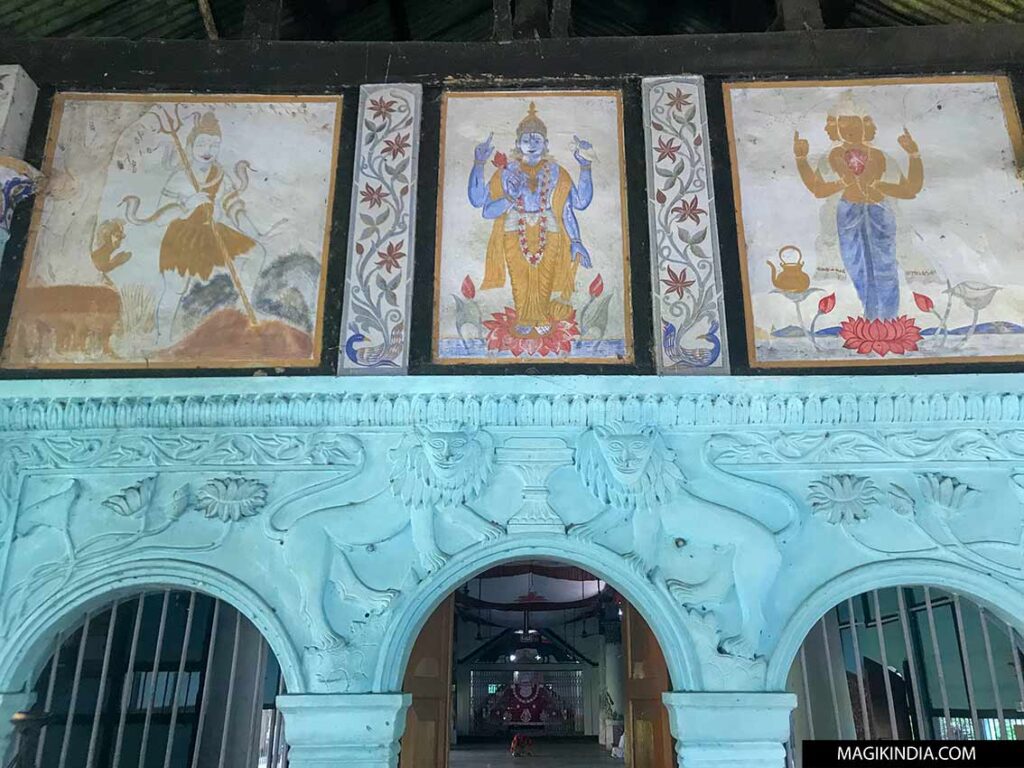
The Satras as Gurukul
Satra is similar to Gurukul, an educational tradition from ancient India where students lived in the home of their instructor (Guru). From six or seven years old, children are placed by their parents under the authority of the Satradhikar, head of the monastery. Within this community, they receive a demanding education, punctuated by the study of sacred texts, the practice of Vaishnavite rituals and the learning of ancestral arts, while being supervised by their elders.
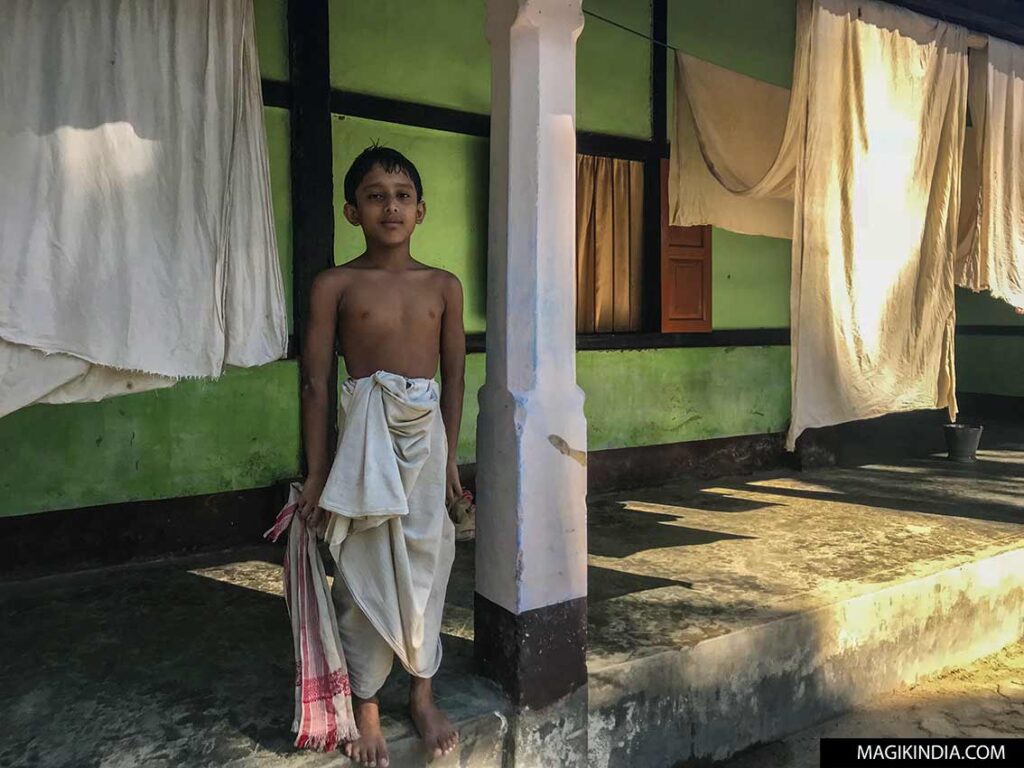
This path imposes celibacy, obedience and renunciation of family ties. At the end of this training, having reached spiritual maturity, the disciple pronounces his final vows to become a Bhakata (monk) in his own right within the community.
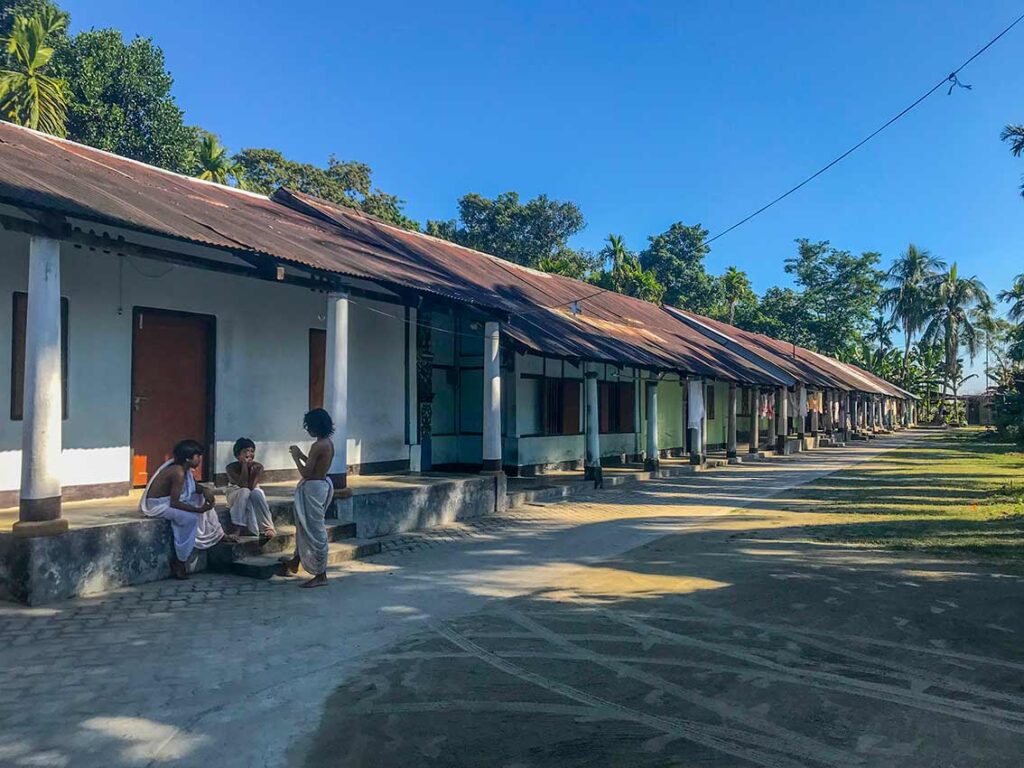
The monks reside in hati, which refers to the rows of rooms arranged in parallel lines around the nerve center of the Satra. These collective dwellings, organised according to an often rectangular or circular structure, delimit the monastic space and encourage close community life.
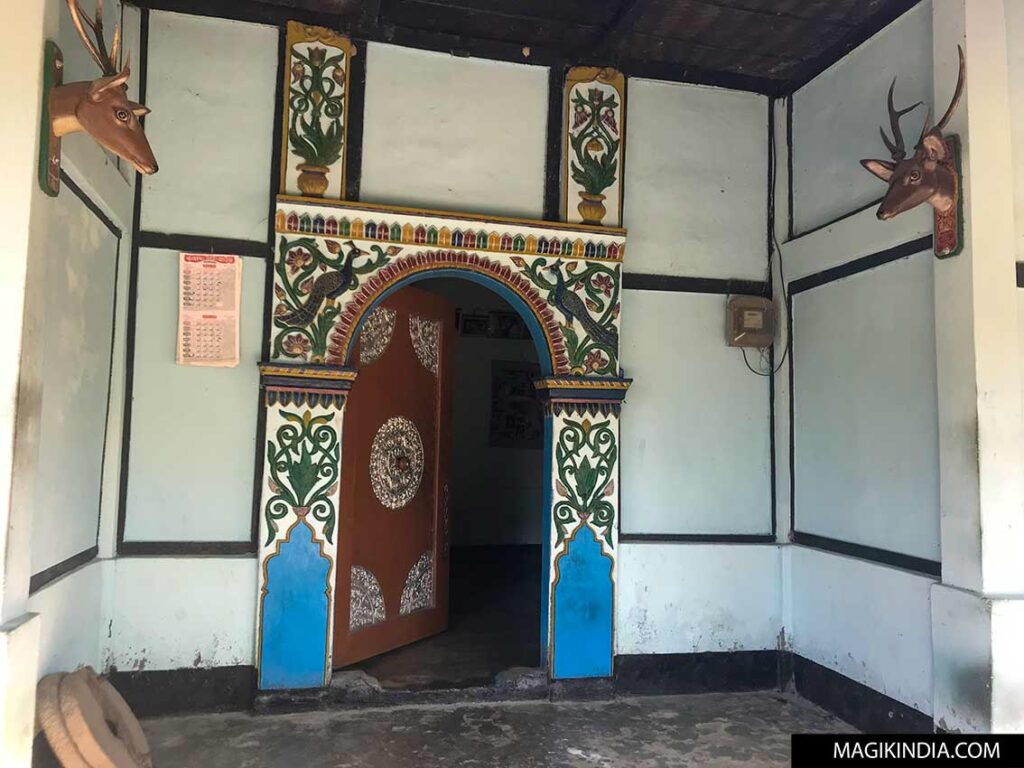
Experience of monastic life
Despite the rigour of their monastic life, the Satras offer visitors a welcome marked by respectful simplicity. Observing the monks as they go about their daily activities gives these places a rare authenticity, today preserved from the artifices specific to the usual tourist sites.
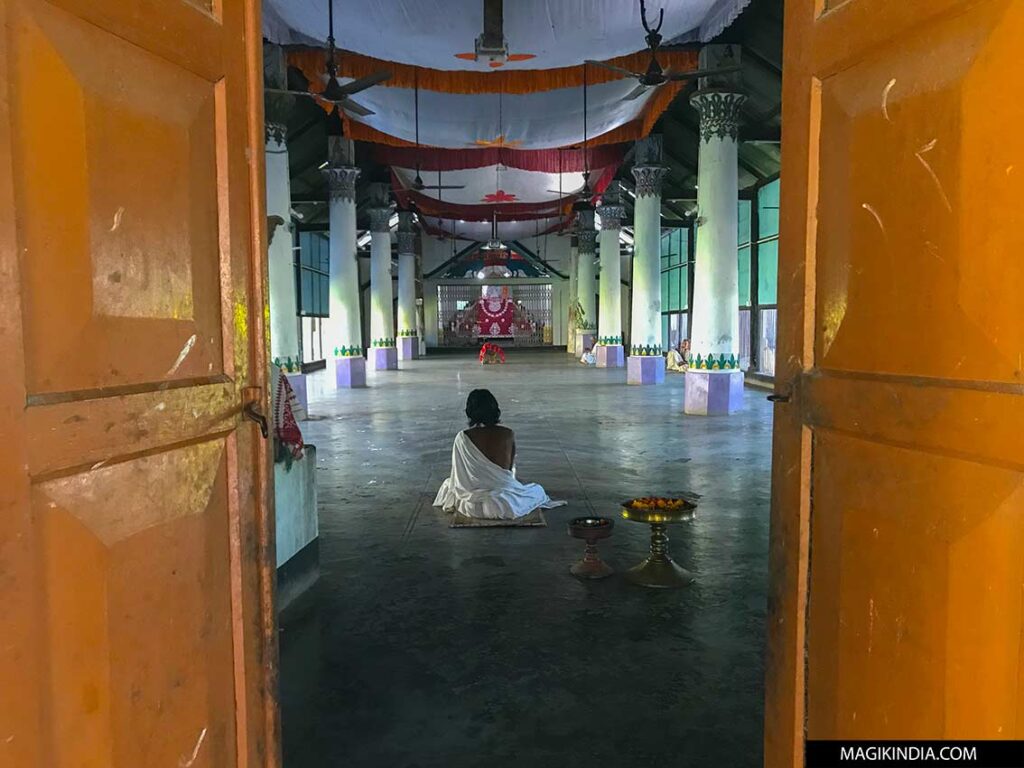
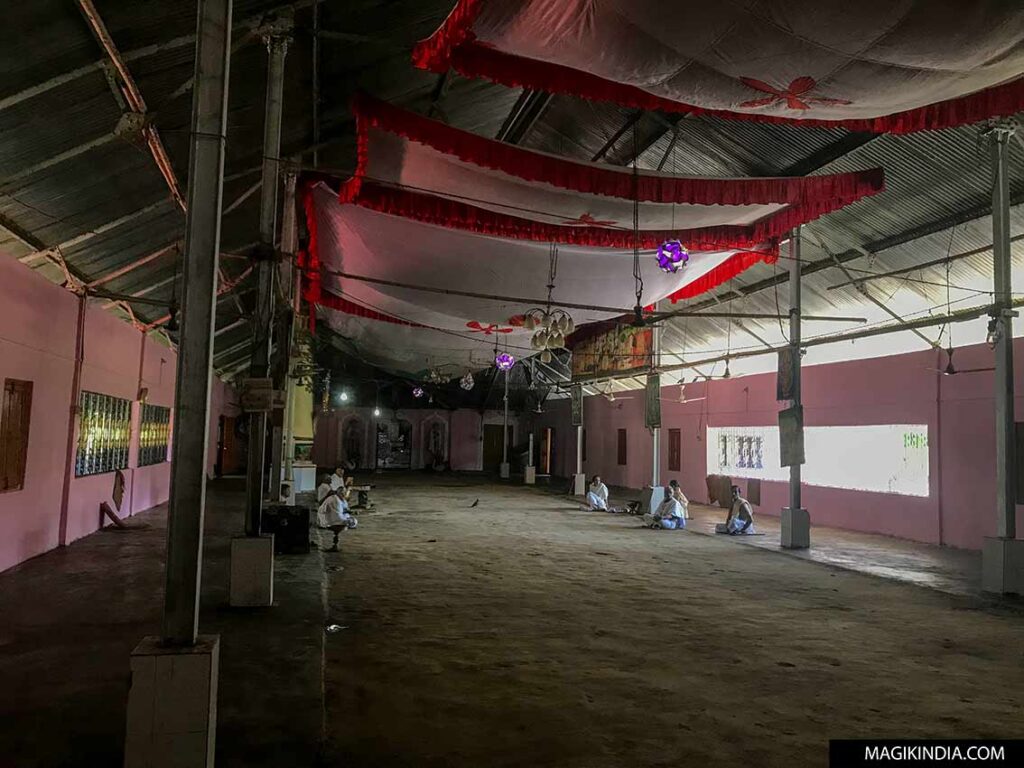
This serene atmosphere finds its anchor point in the very heart of the monastery, where spiritual life revolves entirely around Namghar. This vast prayer hall, a place of sacred contemplation, then becomes the vibrant theater of devotion, where prayers resonate to the sound of kirtans, carried by the deep rhythm of Khol and the tinkling of Kartal
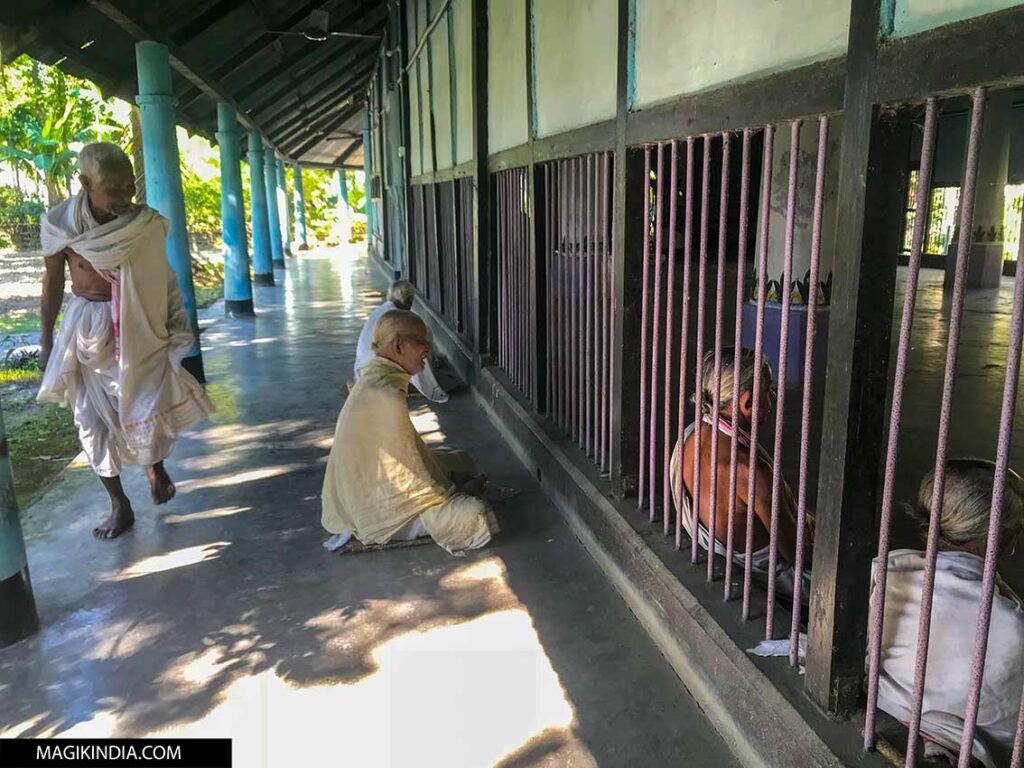
Today, of the original sixty-five Satras, thirty-one remain in operation on the island. Far from being uniform institutions, these monasteries are living conservatories: each place cultivates its own identity, specializing in forms of crafts, dance, theater or music that are unique to it.
Auniati Satra: spiritual radiance
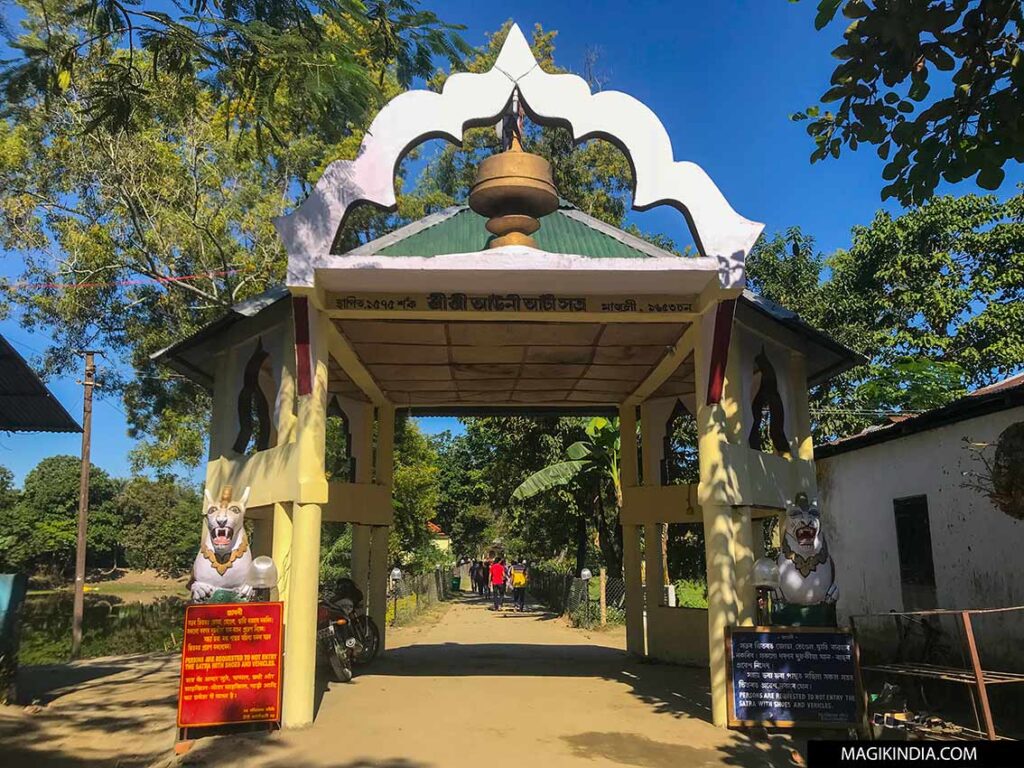
Founded in 1653 on high ground in Majuli, Auniati Satra derives its name from the local abundance of the Auni Paan plant. With the historical support of the Ahom kings, he was able to transform his royal patronage into a major spiritual and cultural authority, thus becoming a prestigious guardian of Assamese Vishnuism whose influence goes far beyond the island framework.
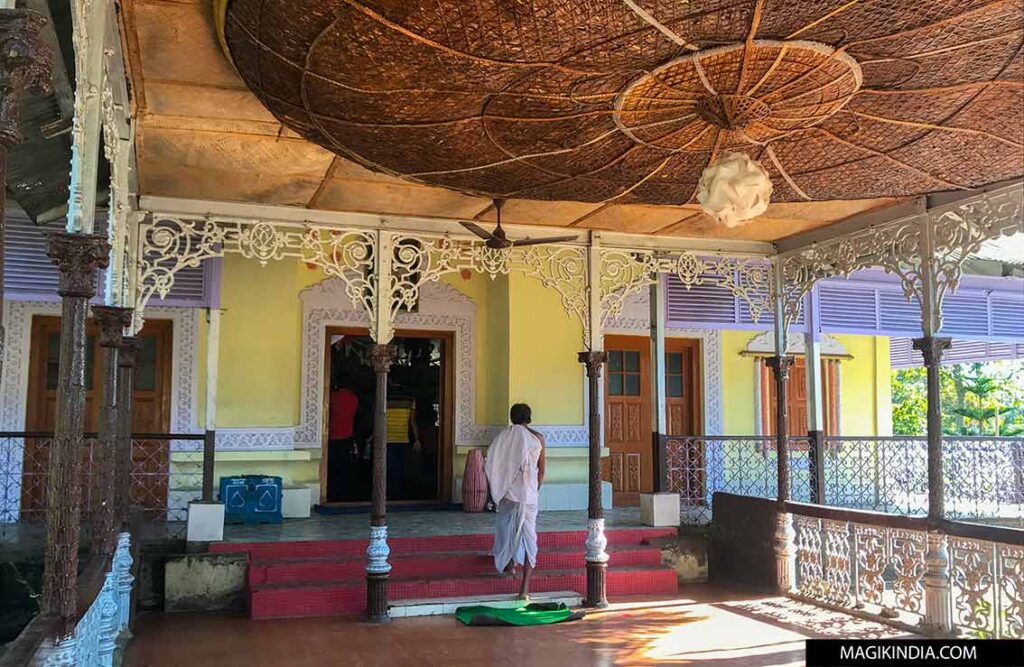
The Satra is animated by 550 ascetic monks dedicated to meditation, the sacred arts and literary creation, all supported by uninterrupted prayer which has resonated for more than half a century.
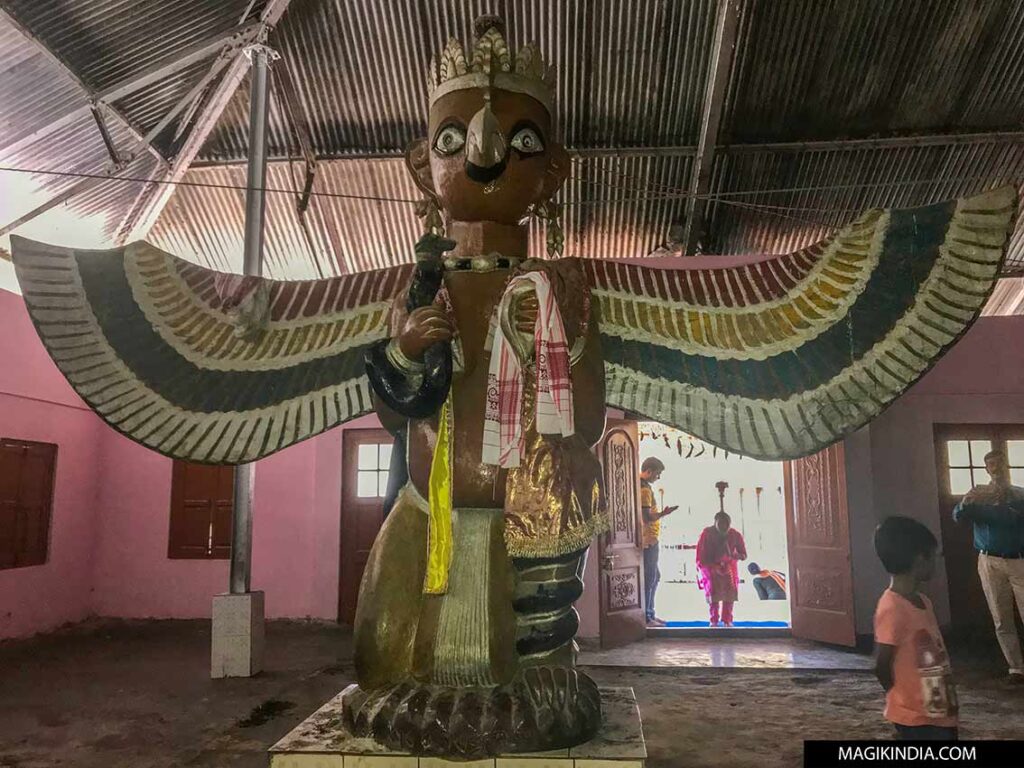
Organised according to a circular structure, the Satra deploys its dwellings, the Baha, on the outskirts. In the center sits the Namghara, this vast prayer room whose entrance is majestically guarded by a statue of Garuda, the sacred eagle, vehicle of the god Vishnu.
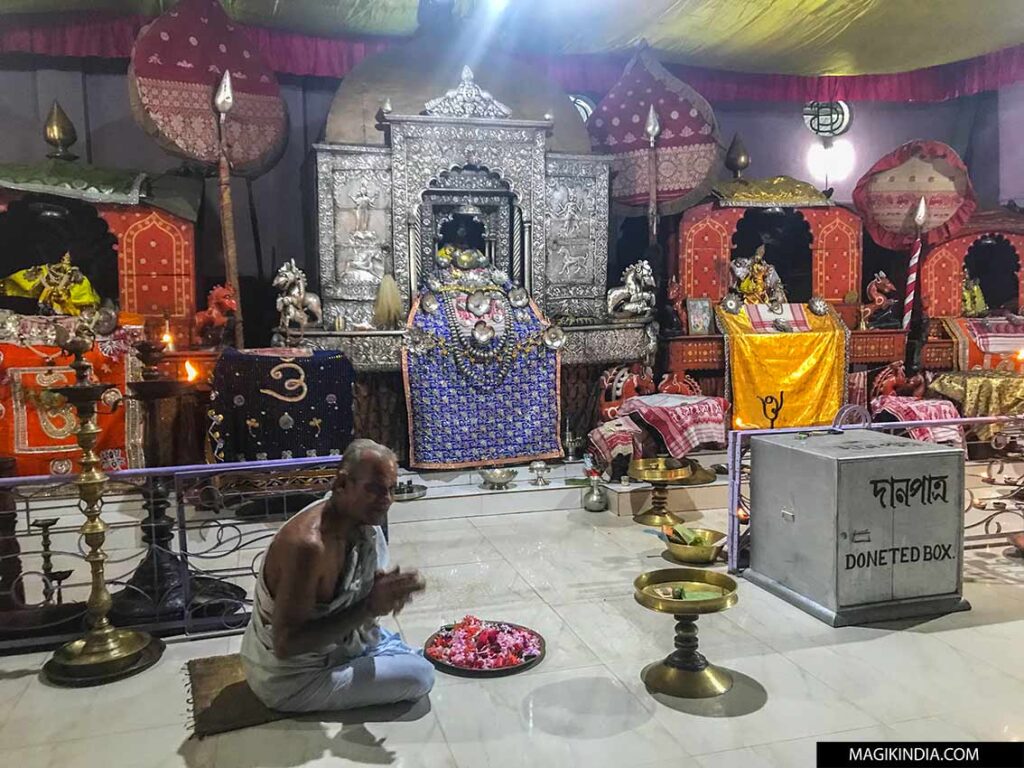
As an extension of this space, at the back of the building, stands the Manikuta (temple). This sanctuary houses the idol of Govinda, the incarnation of Lord Krishna, solemnly brought from Jagannath Kshetra in Puri and installed in strict compliance with Vedic rituals.
A repository of historical objects
The museum houses a valuable collection of objects that belonged to the kings of the Ahom dynasty, illustrating the close protection they accorded the Satra. There we discover ancient manuscripts written on palm leaves, royal utensils in worked metal, as well as jewellery and accessories used during ritual ceremonies.
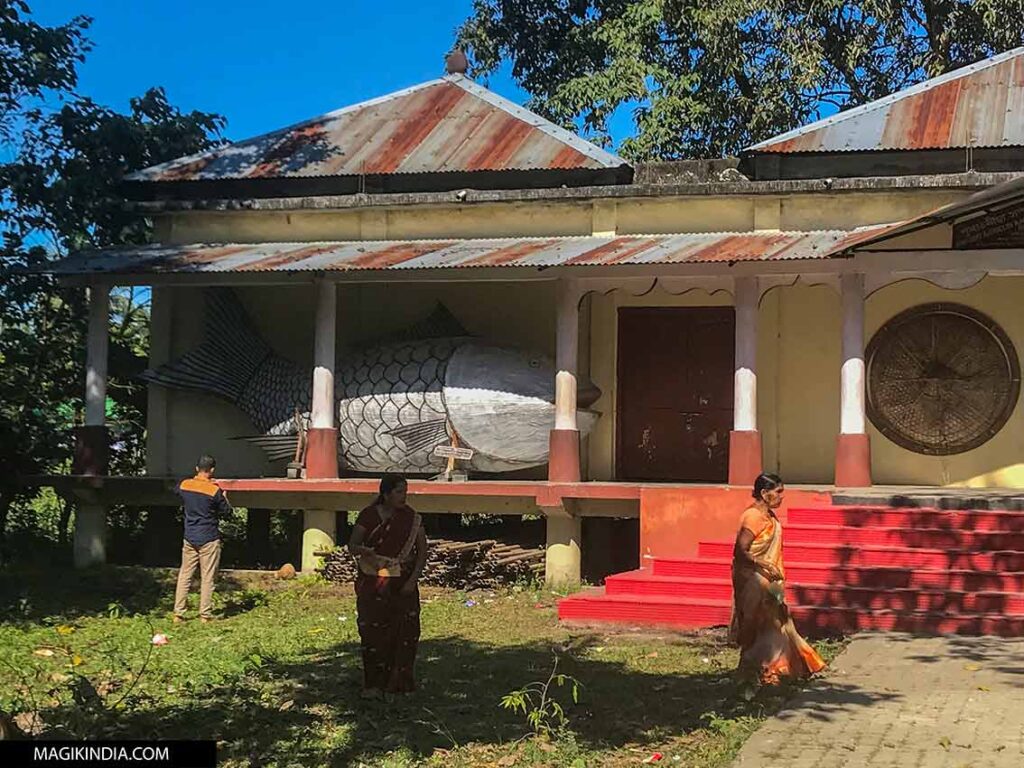
Kamalabari Satra: the artistic center
If all the monasteries of Majuli demonstrate a real artistic fervour, the Kamalabari Satra occupies a special place, establishing itself as the true intellectual center and the privileged center of creation of the island.
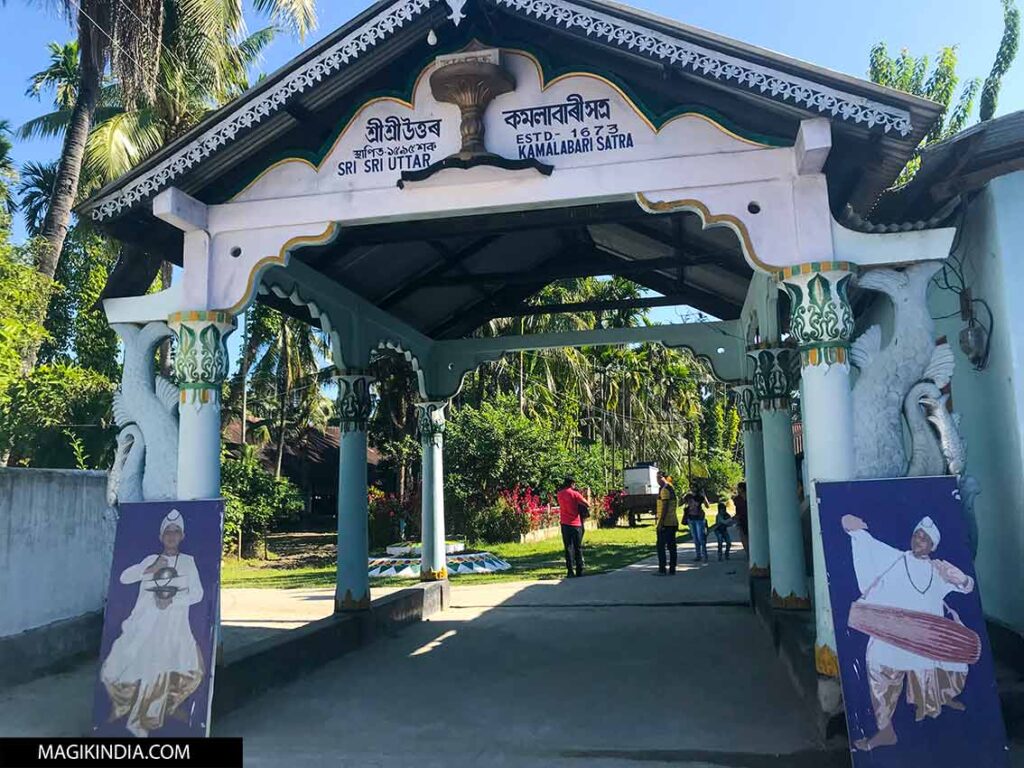
The preservation of Sattriya dance
A true conservatory of this ancestral art, the monastery jealously preserves this classical dance, listed among the eight great choreographic traditions of India.
Unlike a modern stage performance, the dance here is an act of prayer. Movements, hand gestures (mudras) and facial expressions have been transmitted without alteration for generations.
Chamaguri Satra: the art of masks
The Chamaguri Satra constitutes the major center of sacred crafts, specializing in the art of masks (Mukha Shilpa). This place is the cradle where the faces of the gods, demons and mythical creatures essential to the representations of the Bhaona take shape.
Bhaona: sacred theatre
Bhaona, a narrative theatre genre created by Srimanta Sankardeva. Performances often take place in the prayer room. Unlike modern theater, Bhaona uses stylised narration techniques, sung dialogues and codified gestures.
Through these plays which depict the epics of the Ramayana and the Mahabharata, the Satra educates the community on the moral and ethical values of neo-Vishnuism, making the philosophy accessible to all, literate and illiterate alike.
A transmission from master to student
In Chamaguri, knowledge is not found in books, but in the hands of master craftsmen. Becoming a master mask crafter takes years of patience.
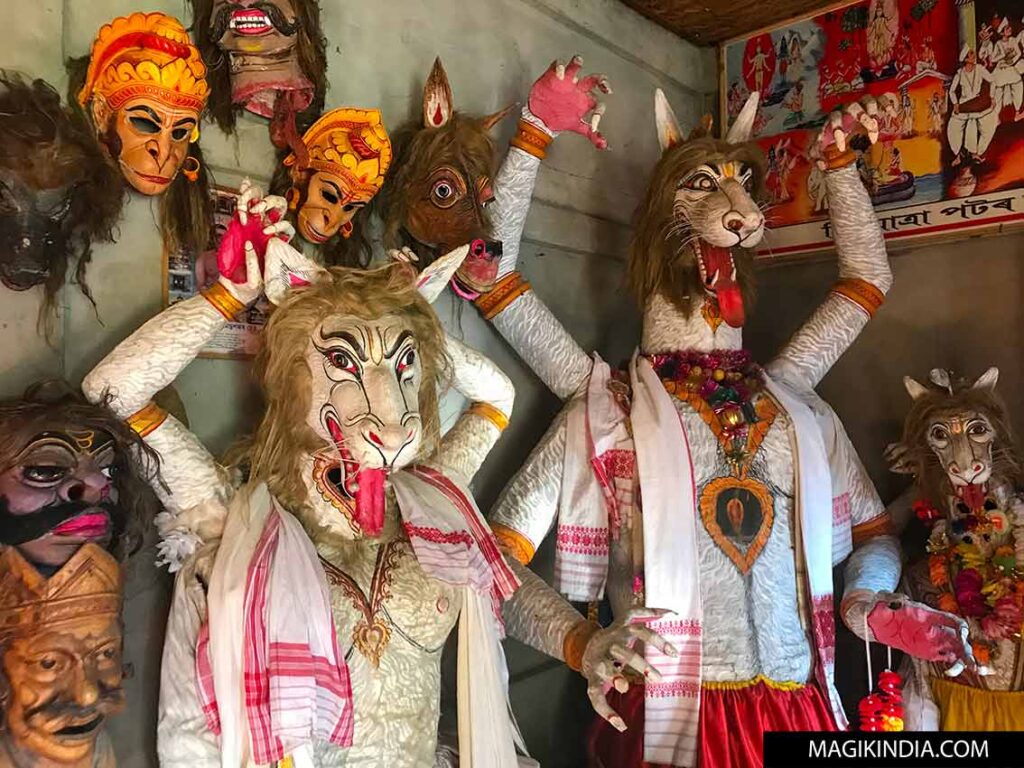
The apprentice learns to select bamboo, prepare clay mixtures and master symbolic facial expressions defined by sacred texts.
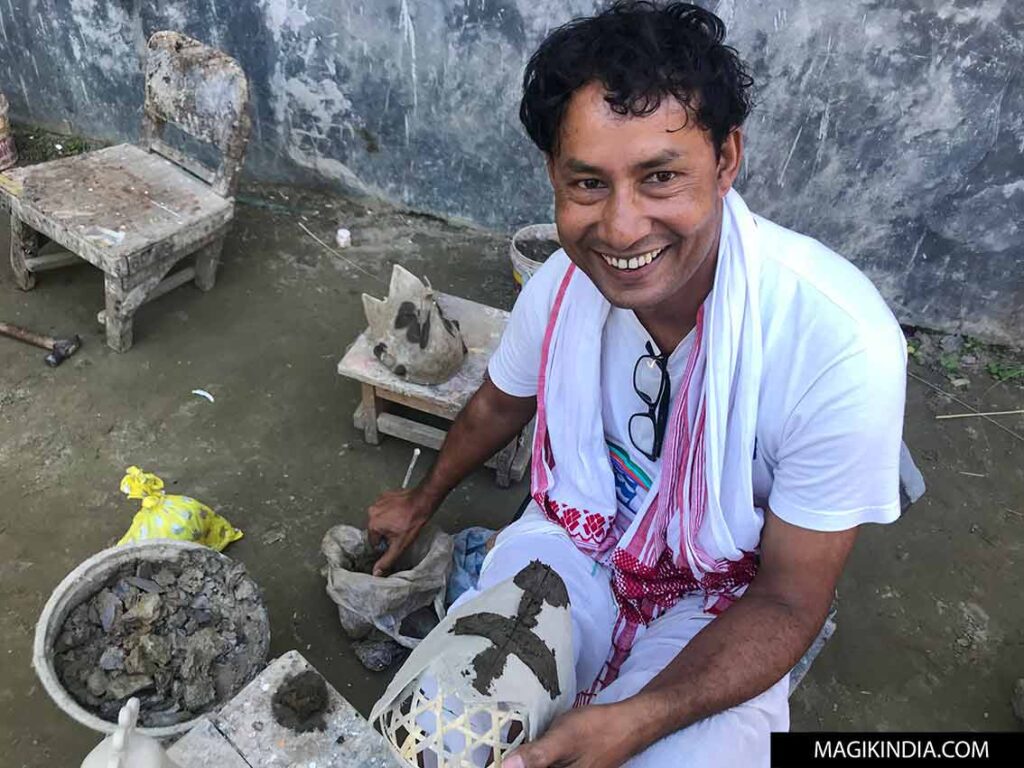
The Satradhikar ensures that these masks scrupulously respect the descriptions in ancient texts. It is not a question of “free artistic creation”, but of the faithful retransmission of divine iconography.
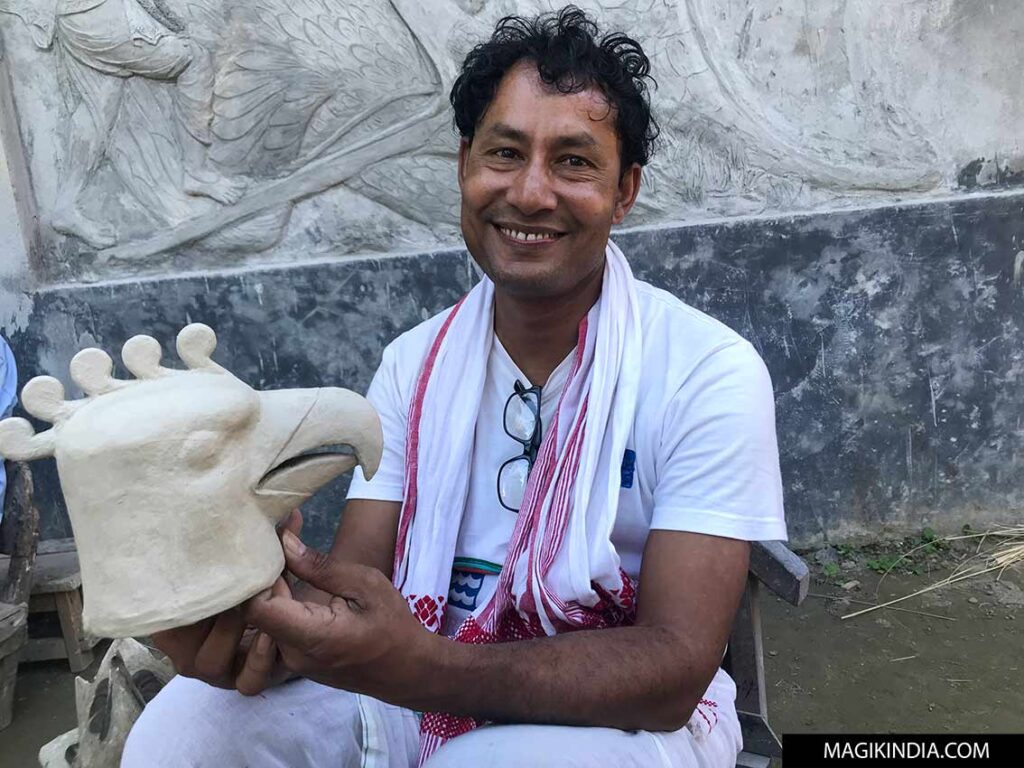
Satra produces an impressive variety of parts, classified according to their complexity:
- Face masks (Mukha): They only cover the actor’s face.
- Head masks (Bor Mukha): Larger pieces that cover the entire head and sometimes the shoulders.
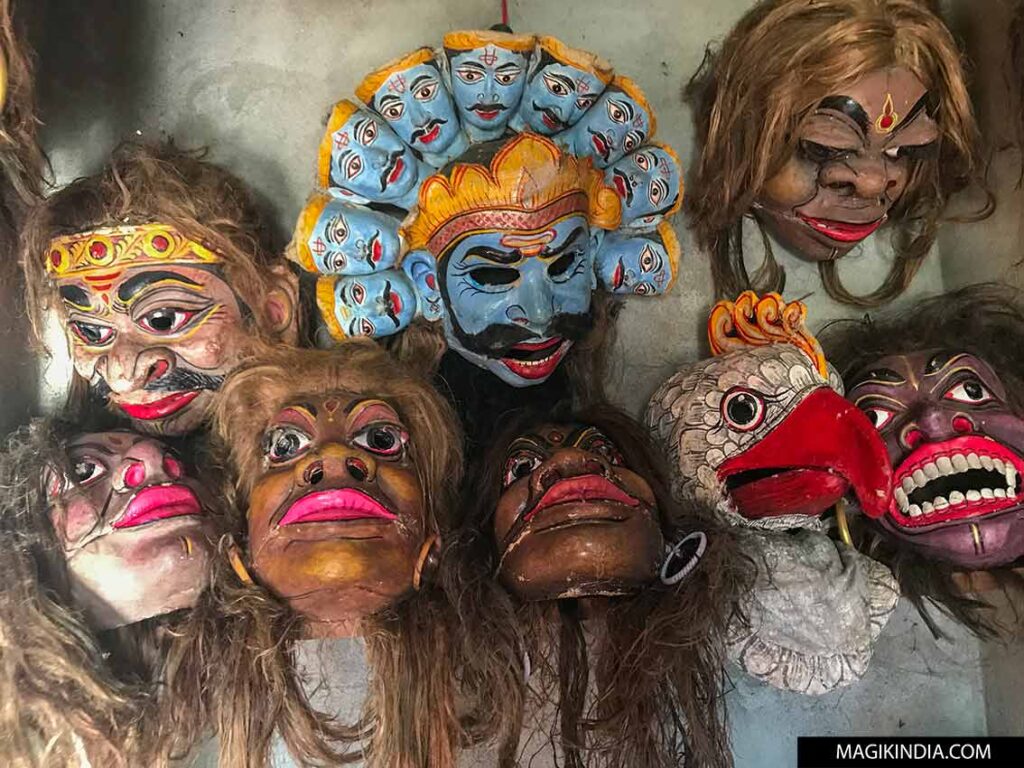
- Articulated masks (Lutukuri Mukha): these are the most complex pieces, where certain parts of the mask (the jaw, the eyes) can be operated by the actor using wires, making the character “alive” on stage.
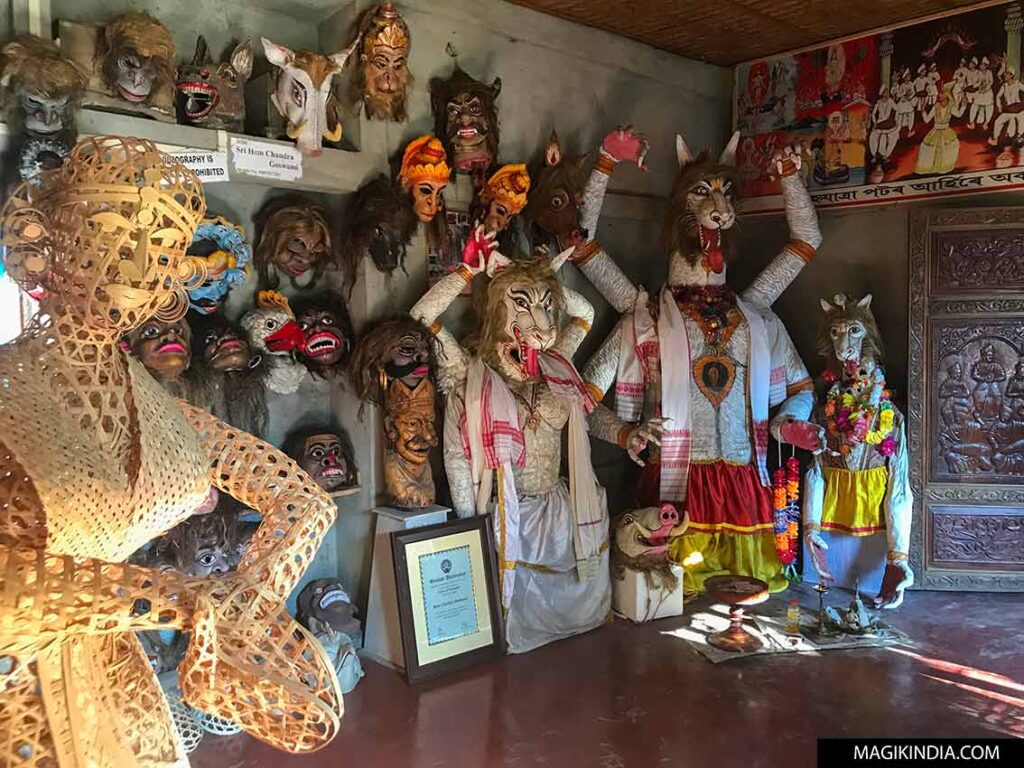
Raas Leela Festival
Celebrated during the full moon in November, the Raas Leela festival is the major spiritual and cultural event of Majuli, a vibrant tribute to the life of Lord Krishna. For four days, the entire island comes together to transform stories from the Bhagavata Purana into a living theater where dance, music, songs and handmade masks merge.
The Mishing people of Majuli
The Mishing make up the tribal soul of Majuli. They represent the majority of the island’s population and are the guardians of a unique culture, inseparable from the river environment in which they live. Originally from the mountains of Arunachal Pradesh, the Mishing migrated to the plains of Assam several centuries ago, settling along the banks of the Brahmaputra.

The chang ghar: the architecture of resilience
The most iconic element of the Mishing culture is their traditional habitat, the Chang Ghar. These are houses built on bamboo stilts, raised more than a meter or two from the ground.
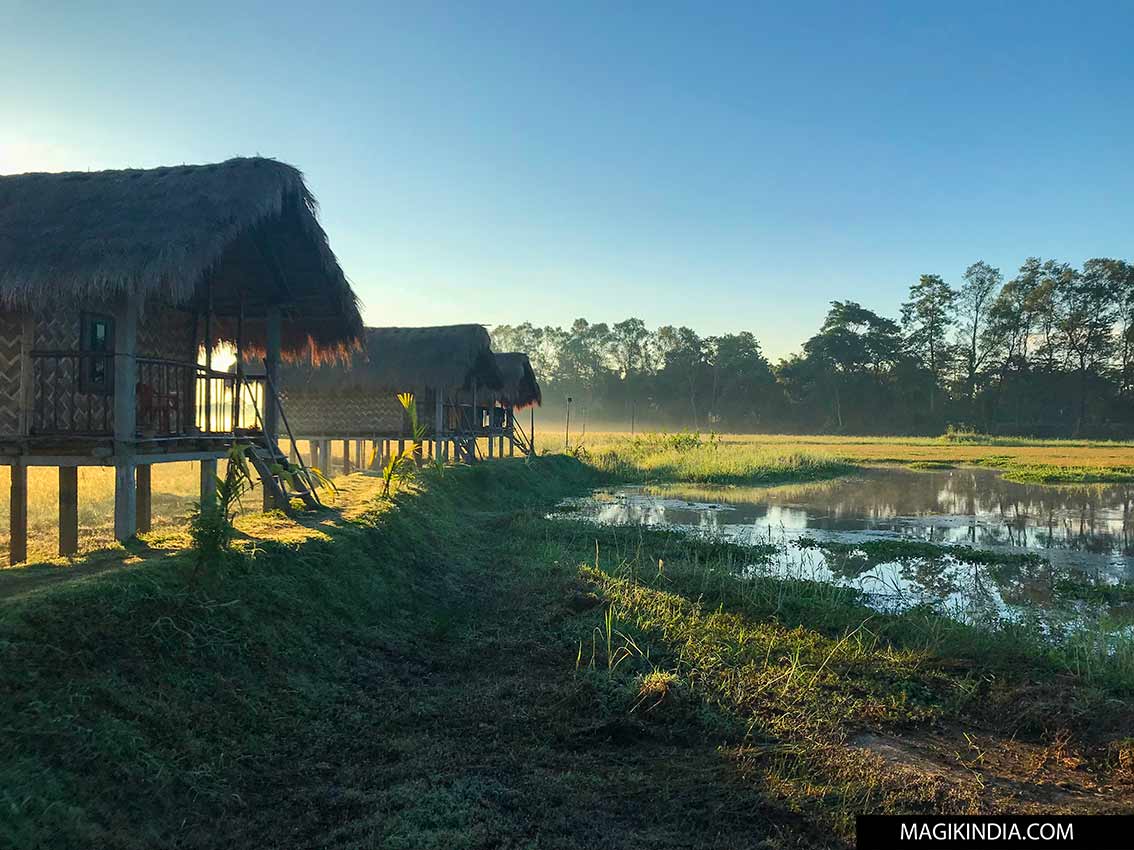
This architecture is not an aesthetic choice, but a vital necessity in the face of annual floods. During the monsoon period, when the waters of the Brahmaputra invade the land, the family’s standard of living remains dry, while the livestock are sheltered in the space under the floor.
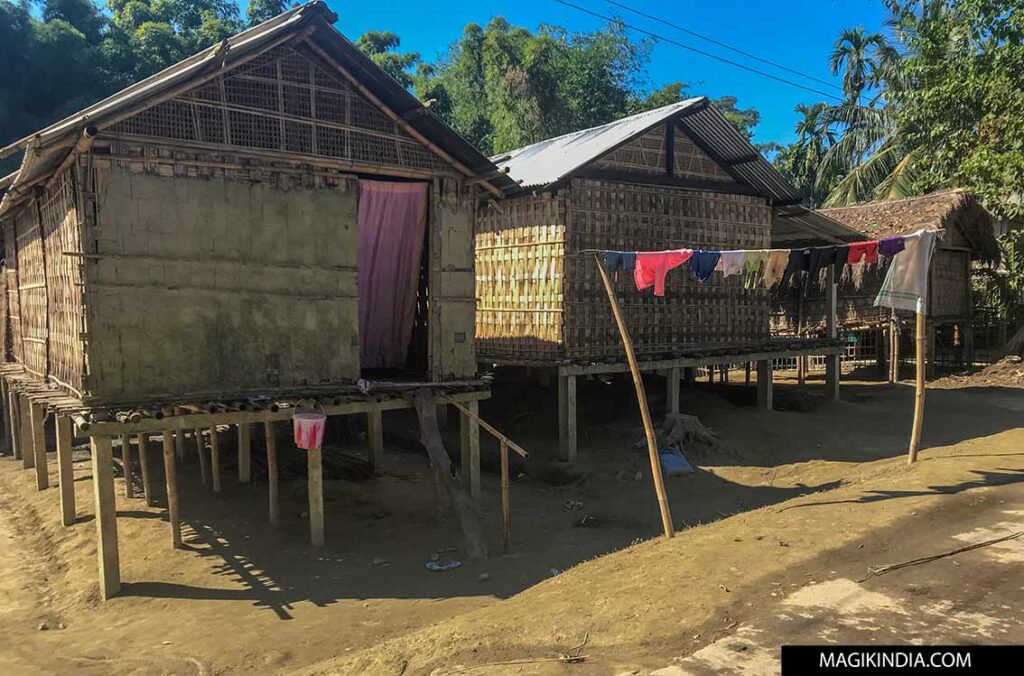
The houses are made entirely of natural materials (bamboo, wood, thatch), which allows them to be rebuilt or moved easily if the river changes its bed.
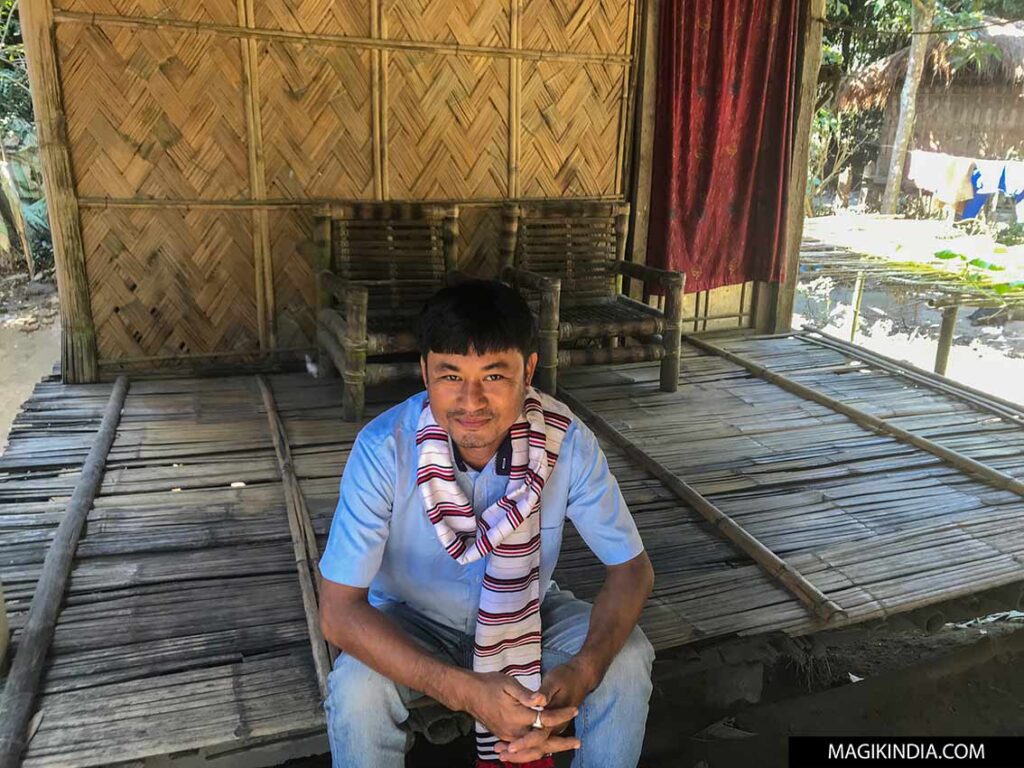
A culture oriented towards the river and the land
The Mishings’ way of life is intrinsically linked to water and the rhythm of the seasons.
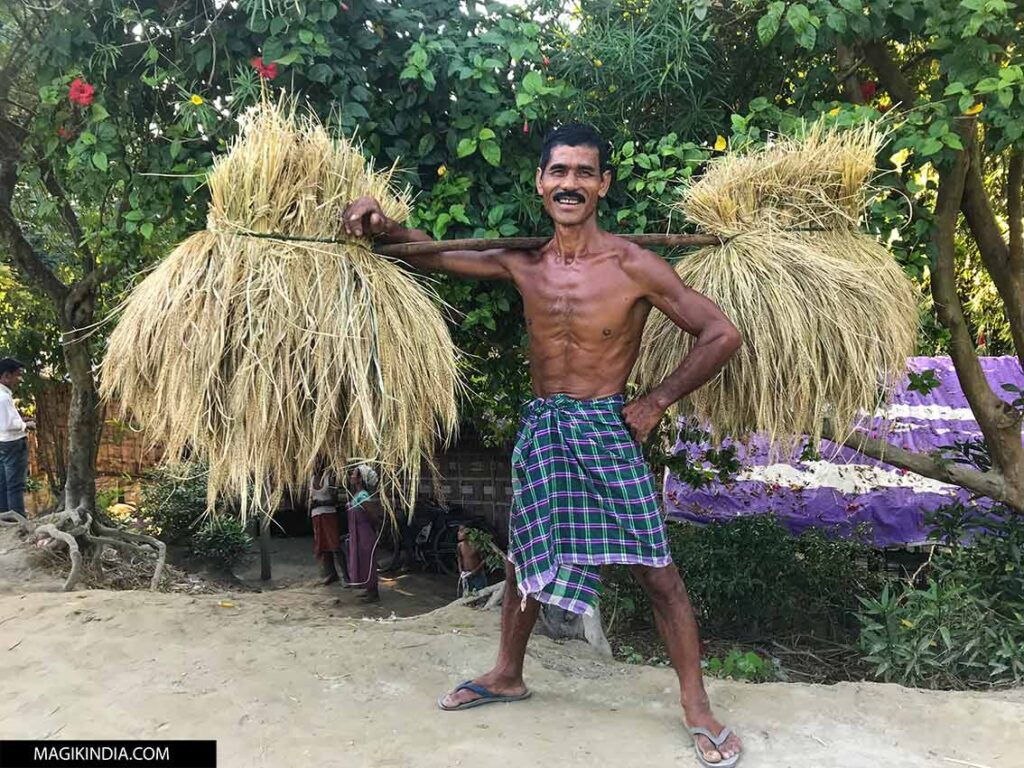
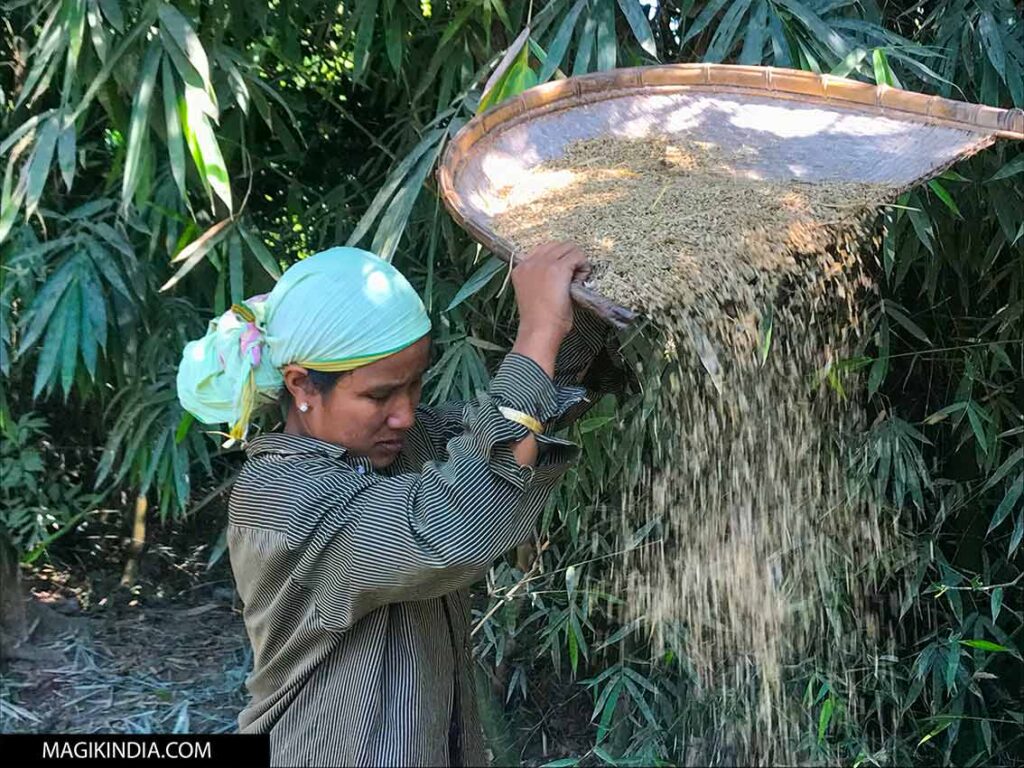
They are accomplished farmers, notably cultivating rice, which constitutes the basis of their diet. Fishing in the beels (wetlands) is an essential complementary activity to support the needs of the community.
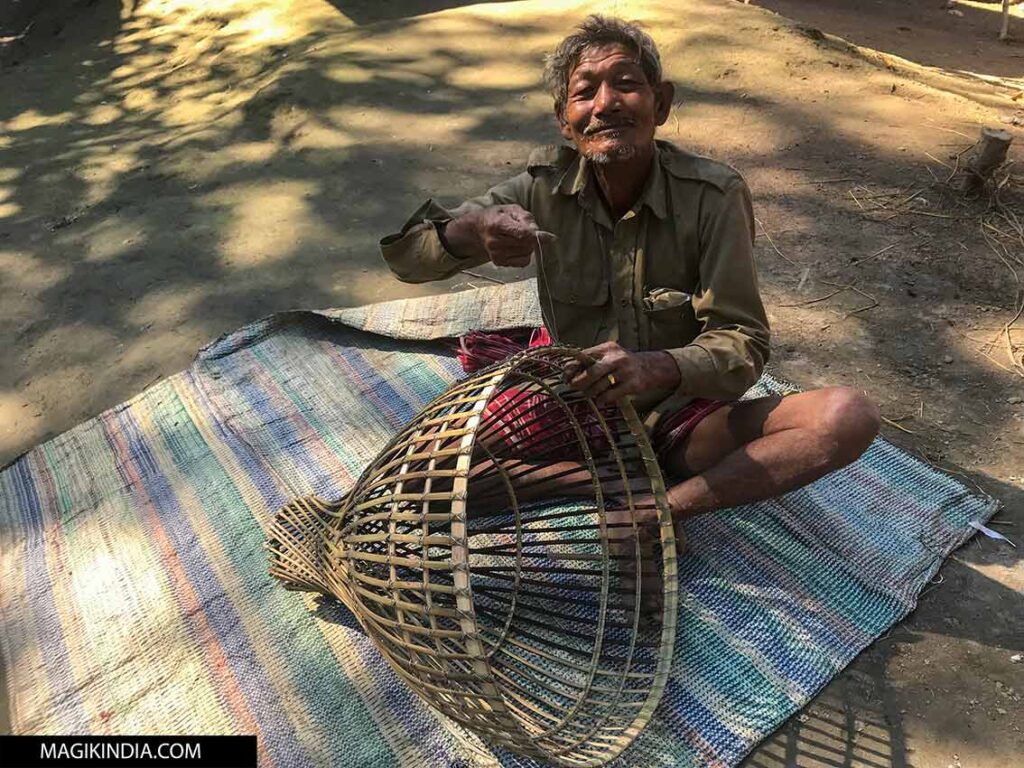
Their cuisine is simple and healthy. They consume dried or smoked fish, fermented bamboo shoots and many local herbs.
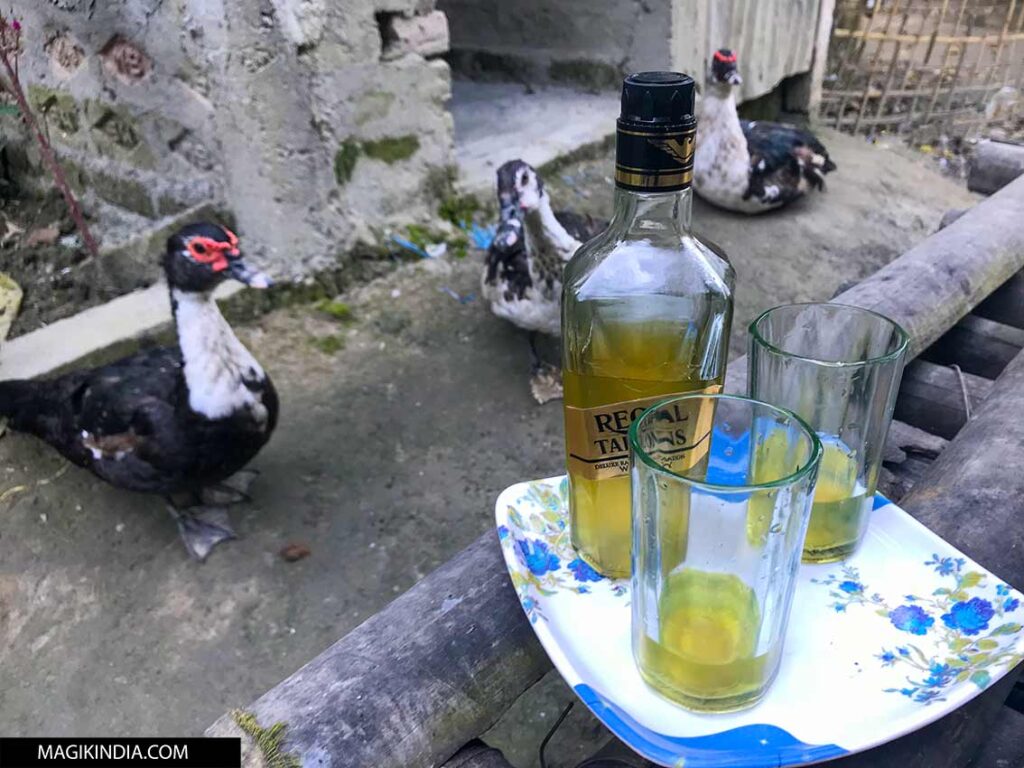
Apong, a rice beer brewed by women, is the essential social drink during village festivals and meetings. I have unforgettable memories of my tasting, immersed in the backyard of a Mishing house, under the astonished gaze of Muscovy ducks! This was arguably one of the best local beers I have ever tasted: a subtle flavor, revealing the richness of the medicinal herbs infused during brewing.
Weaving: a feminine art
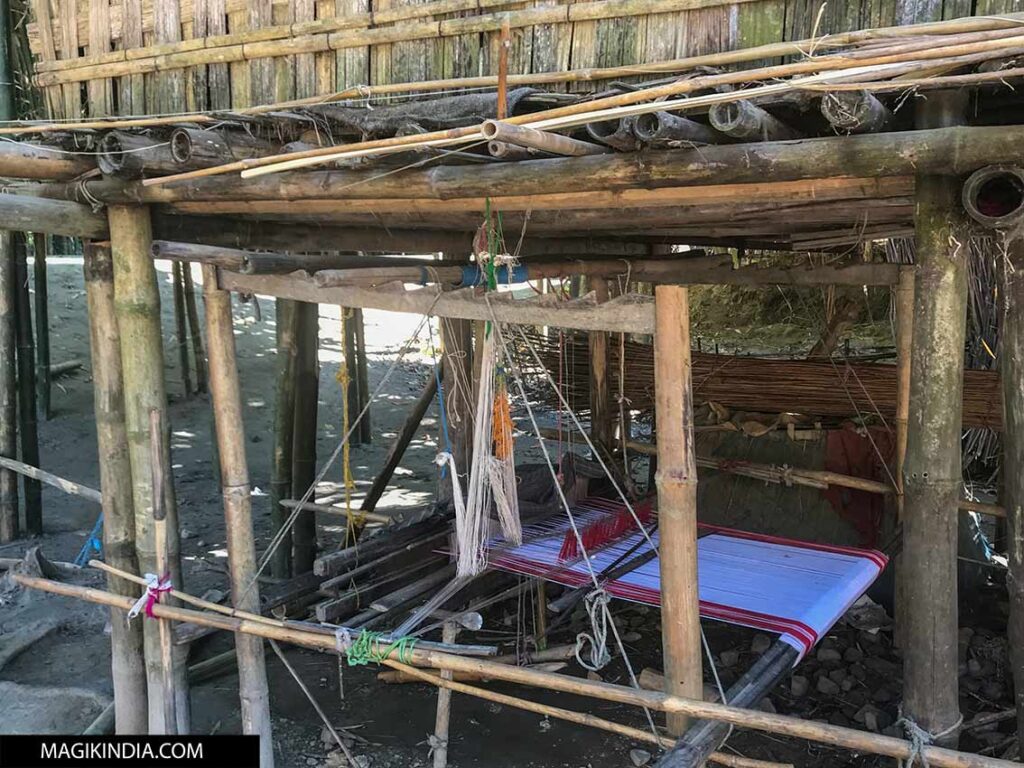
Among the Mishings, weaving is an essential domestic activity. It is not uncommon to find a traditional loom under every Chang Ghar.
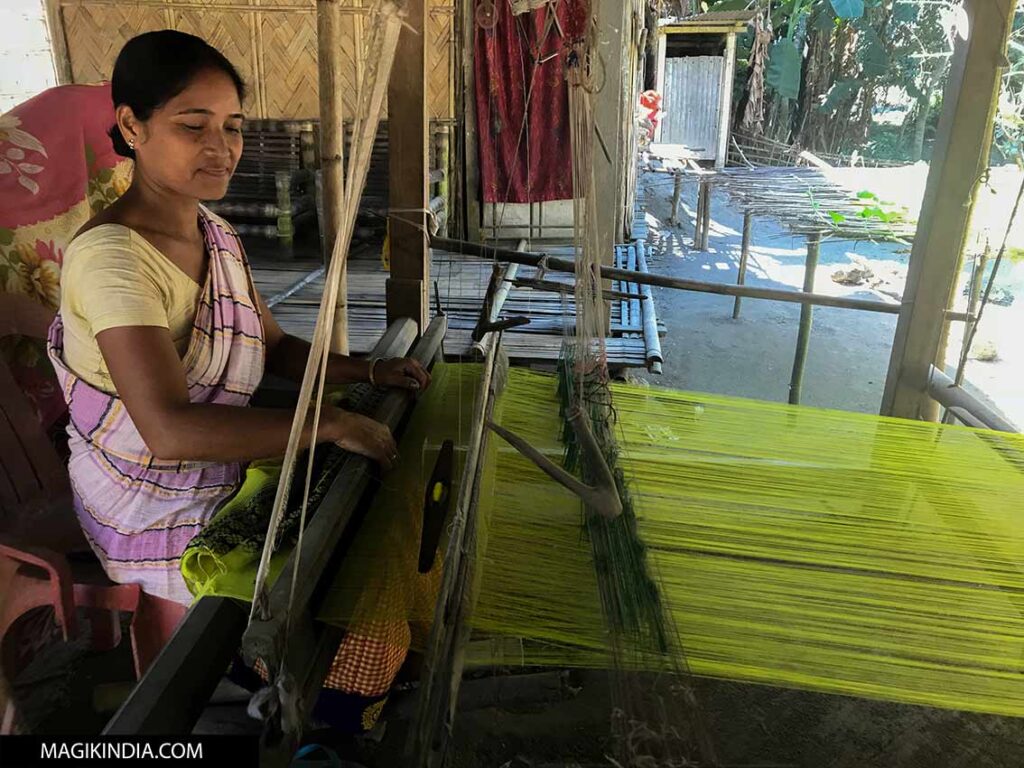
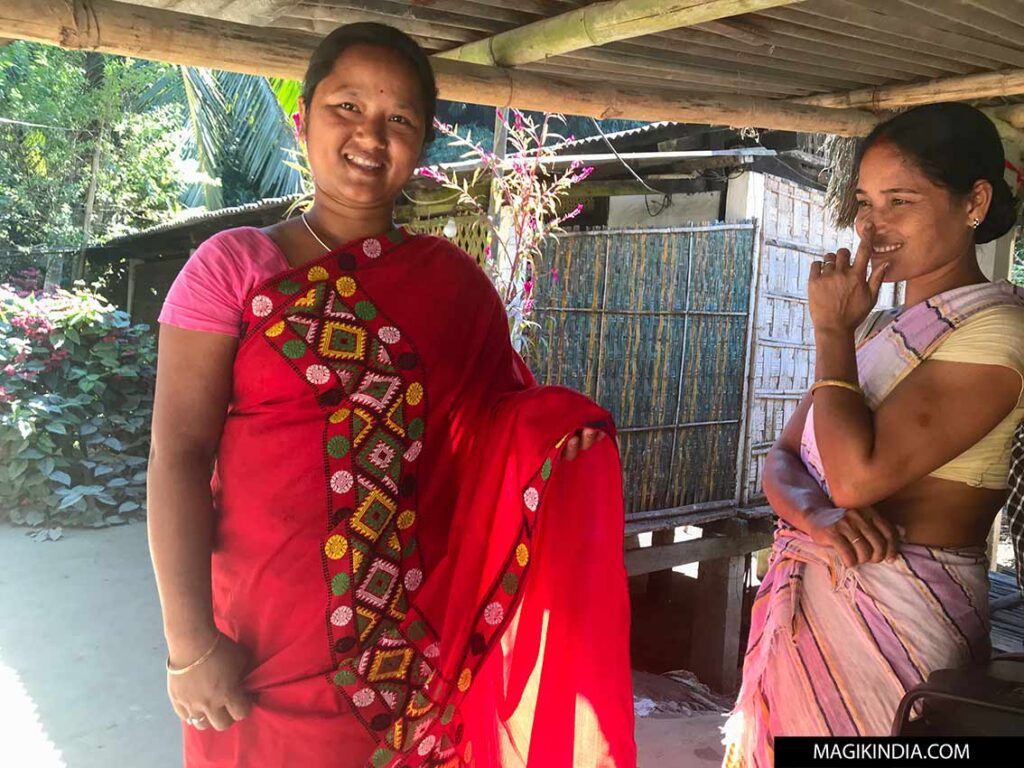
Mishing women are renowned for the finesse and complexity of their designs. They weave cotton and silk to make their traditional clothing such as the Ege, a type of sarong.
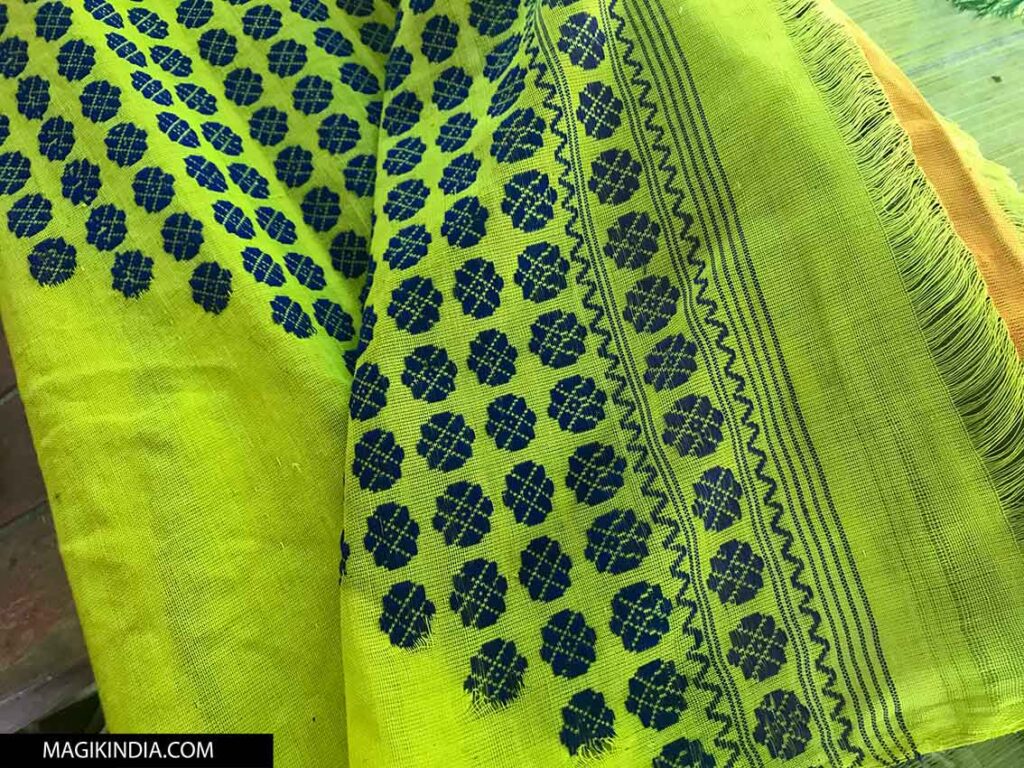
Woven geometric patterns often tell stories related to nature or ancestors. A hand-woven garment is considered a sign of respect and is given at weddings or important ceremonies.
Practical information for Majuli
How do I get there?
In Johrat: The main entry point is the pier at Nimati Ghat, located near Jorhat. From there, ferries cross to the island (Kamalabari Ghat).

In Lakhimpur (northern Assam): You can reach Lakhimpur from Dibrugarh. From here you need to go to the pier at Dhakuakhana or Badati to cross the river by ferry to reach the north of Majuli Island. This access is less frequented than the main passage through Jorhat. It is often used by locals or travellers wishing to explore more remote areas of the island.
Where to stay?
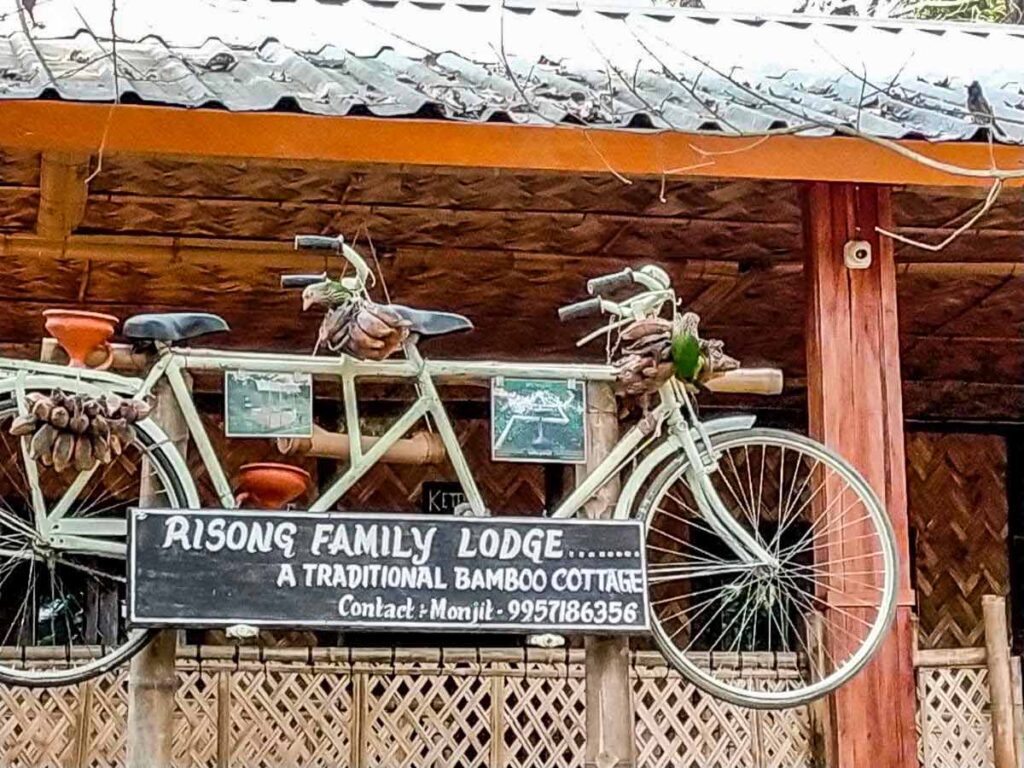
Accommodation in Majuli is necessarily rustic, there are no luxury hotels on the island. You will stay in guest houses managed by the locals themselves, often built from traditional materials such as bamboo. It is a unique opportunity to share the daily life of the islanders, while keeping in mind that comfort is basic but authentic. Advance booking is strongly recommended during the Raas Leela festival.
What period?
- Ideal season (October – March): Cool, dry weather, perfect for exploring villages and attending festivals.
- Unmissable festival: Raas Leela takes place in November (during the full moon).
- Avoid: Monsoon (June to September). The risk of flooding and disruptions linked to river flooding make travel difficult and access to the island uncertain.
On-site advice
- Travel: Majuli is extensive. Renting bikes or scooters is ideal for navigating between the Satras and villages at your own pace.
- Daily life: Bring enough cash as ATMs are rare or unreliable.
- Etiquette: Respect the tranquility of the Satras. Always ask permission before photographing monks or the interior of prayer rooms (Namghar).
VISIT ASSAM WITH US!
Vous aimerez peut-être aussi...
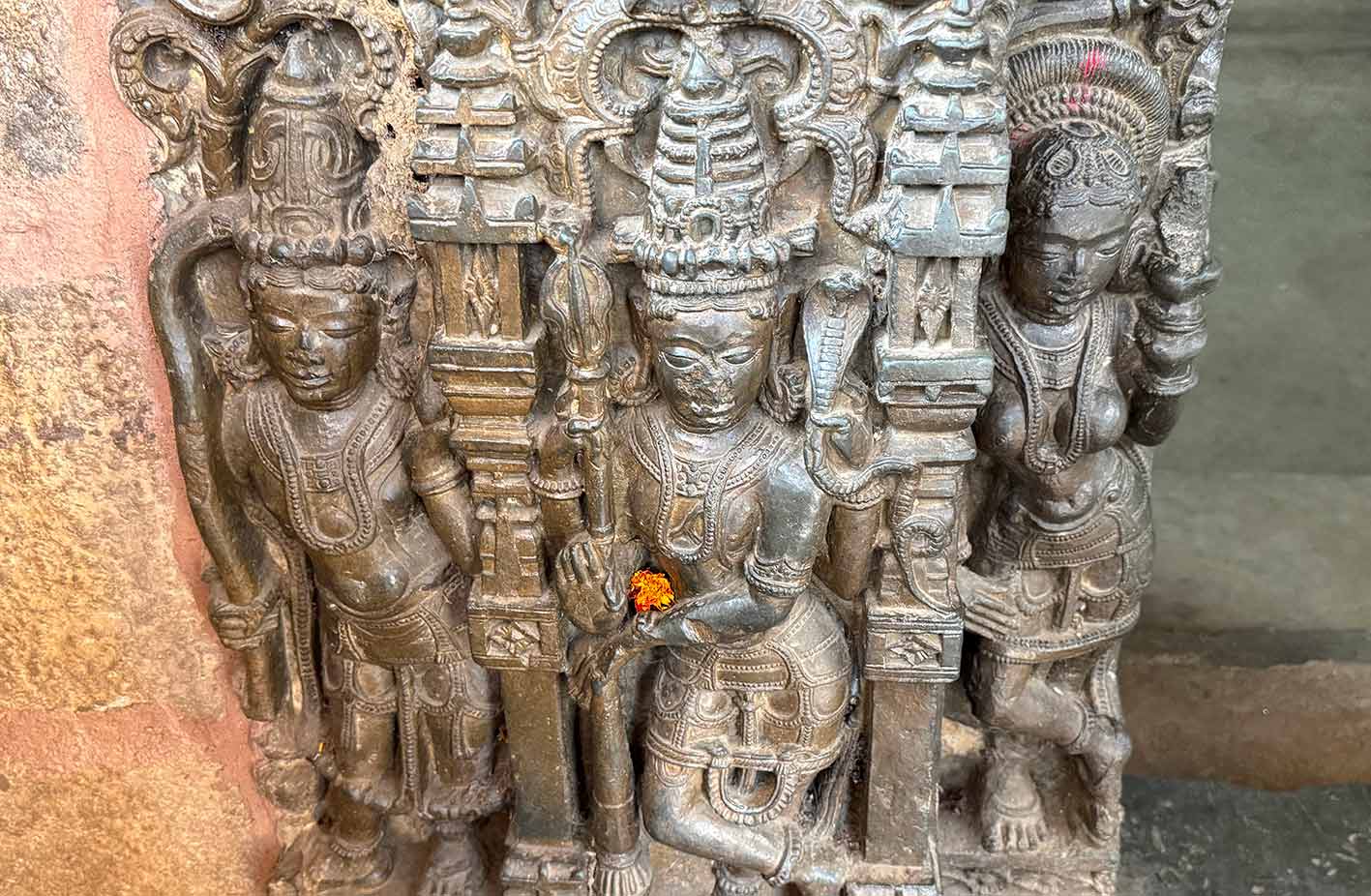
In the hollow of the wooded hills of the Maikal range, in the wild setting of Chhattisgarh, the Bhoramdeo temple...

If Gujarat captivates me, it is above all by the human richness of its communities. After exploring the world of...
The Mata ni Pachedi, literally “the goddess in the background,” is the triumph of fervour over exclusion. Invented by the Vaghari...

The Santhal people constitute one of India's largest indigenous communities, primarily settled in the states of Jharkhand, West Bengal, Odisha,...

Imagine a kitchen utensil capable of rivaling Teflon, yet born of the earth, long before the industrial era. Deep within...

