
In the hollow of the wooded hills of the Maikal range, in the wild setting of Chhattisgarh, the Bhoramdeo temple...
Jhunjhunu: Between Devotion and Forgotten Splendor
Jhunjhunu is the administrative headquarters of Shekhawati, a cultural region renowned for its palatial homes adorned with sumptuous frescoes. Having served as the center for various dynasties, ranging from the Chauhans to the Nawabs, the city is today primarily famous for the imposing Rani Sati Temple. This major place of worship attracts thousands of devotees annually from all corners of India.
Chauhans, Nawabs & Shekhawat
The history of Jhunjhunu is a succession of influential dominations, beginning with the reign of the Chauhan kings in 1045, the first known ruler being Sidhraj Chauhan.
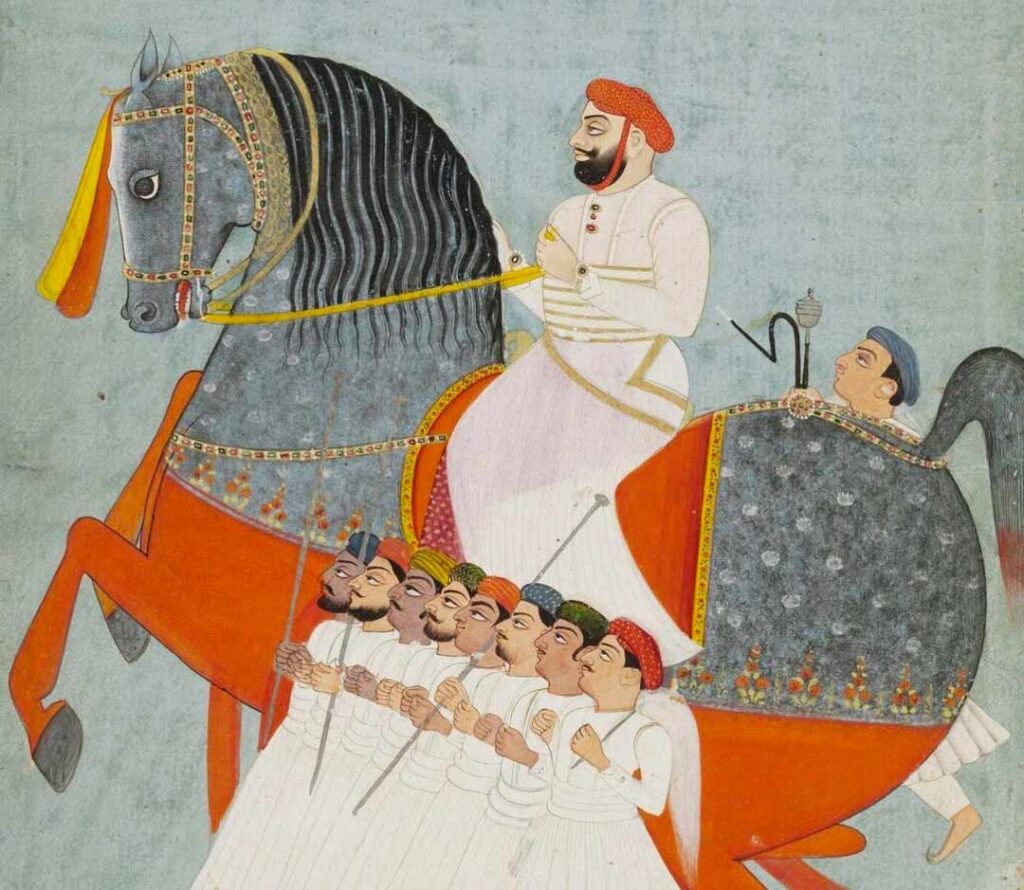
In 1450, the Chauhans were defeated by the Kayamkhani (or Quaimkhani) Nawabs, descendants of Mohammed Ali Khan, whose father, Karamchand (originally a Chauhan Rajput), had converted to Islam marking an era that lasted until 1730. It was at this juncture that Thakur Shardul Singh Shekhawat, the diwan of the last Nawab, Rohilla Khan, seized control of the city, bringing an end to the Nawabs’ rule.
After his death in 1742, the estate was divided among his five sons, forming the “Panchpana,” and the Shekhawat descendants continued to rule until India’s independence in 1947.
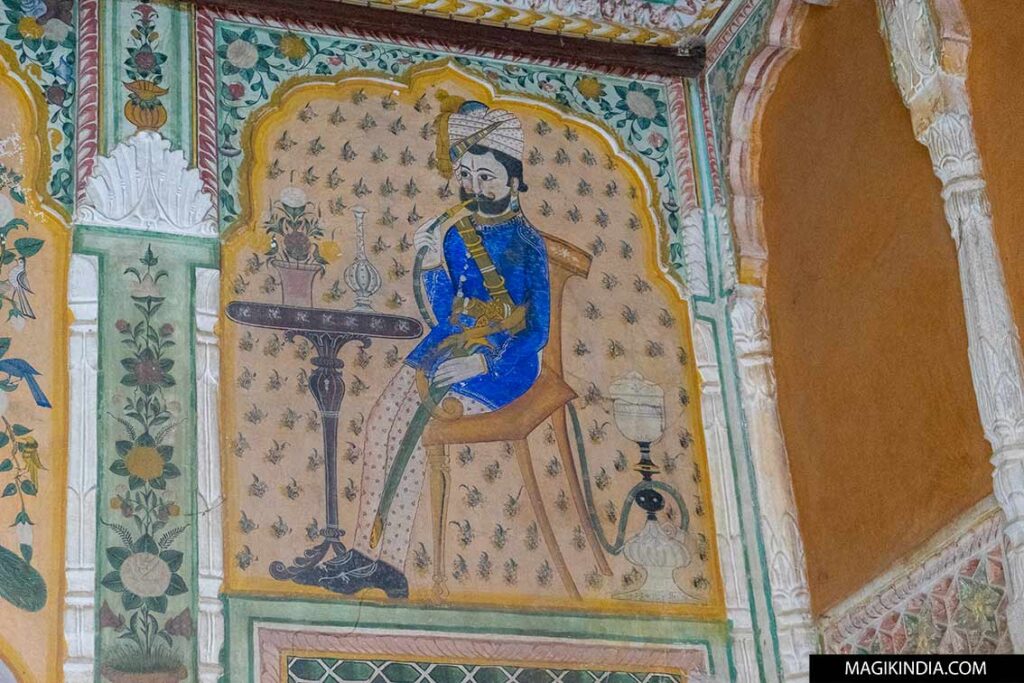
Alongside these dynastic changes, Jhunjhunu, located in Shekhawati, prospered thanks to its wealthy merchant families (the Marwaris), who left behind an impressive architectural heritage in the form of numerous havelis.
Rani Sati Temple
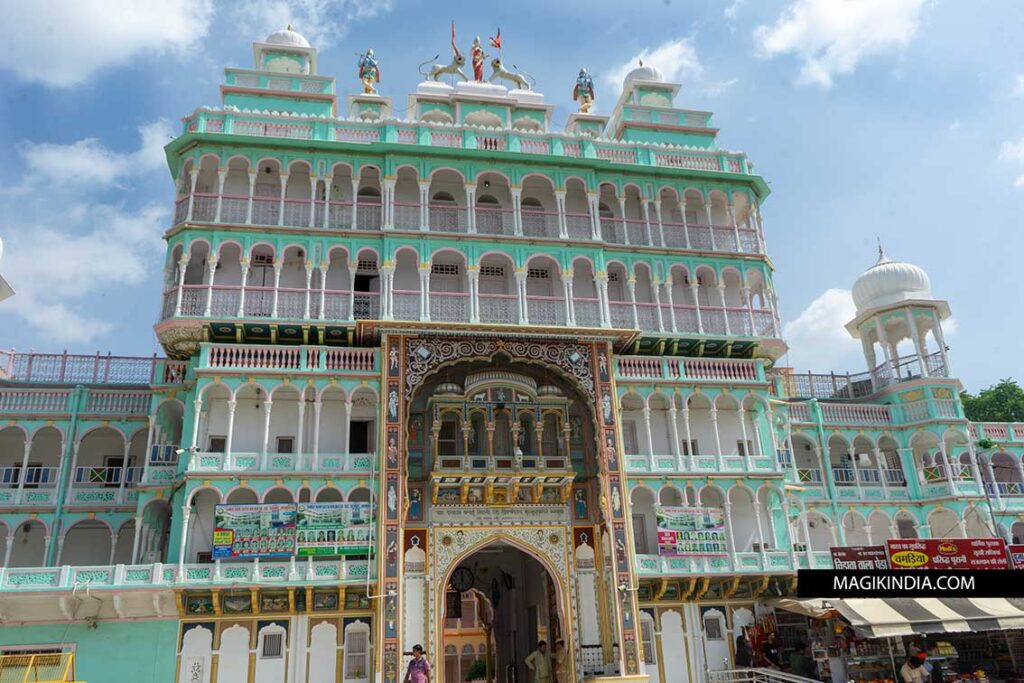
The Rani Sati Temple is a place of devotion dedicated to Narayani Bai affectionately called Dadi Ji (“Grandmother”) by her devotees and revered as an incarnation of the goddess Durga. It commemorates her act of “Sati” (self-immolation on her husband’s funeral pyre).
Sati (from the Sanskrit meaning “true” or “righteous”) was a historical funerary practice observed primarily in northern India and Rajasthan. It involved a widow voluntarily immolating herself on the funeral pyre of her deceased husband. The act was idealized as the ultimate proof of conjugal devotion with the widow being revered as a goddess (Sati Maa) although it was often driven by coercion and social pressure. Sati was officially banned in India in 1829 and is today strictly illegal under the Commission of Sati (Prevention) Act, 1987, following isolated modern instances. Despite this prohibition, temples associated with this practice continue to attract Hindu devotion.
The legend of Narayani Bai (or Dadi Ji), revered at the Rani Sati Temple, is most often set around 1590 (or sometime between the 13th and 17th centuries). Narayani was the wife of Tandhan Das, a wealthy merchant. The story recounts that Tandhan Das, having refused to surrender his horse to a prince (the son of the King of Hisar), was challenged and killed either by the vengeful king following a duel, or by bandits (dacoits).
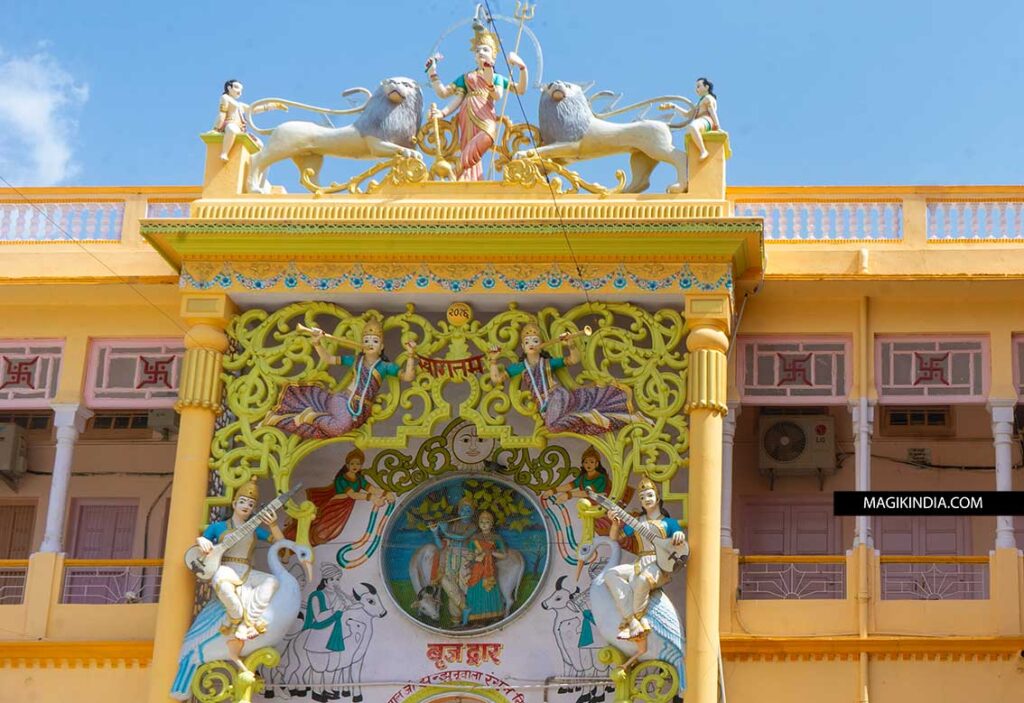
Witnessing the death of her husband, Narayani Bai displayed exceptional bravery, personally fighting and killing the perpetrator. She then immolated herself on Tandhan Das’s funeral pyre, performing the act of Sati (a practice now prohibited in India). Due to her courage and sacrifice, she was deified and is now revered as a symbol of feminine power (Shakti), having been bestowed the title of “Rani” (Queen).

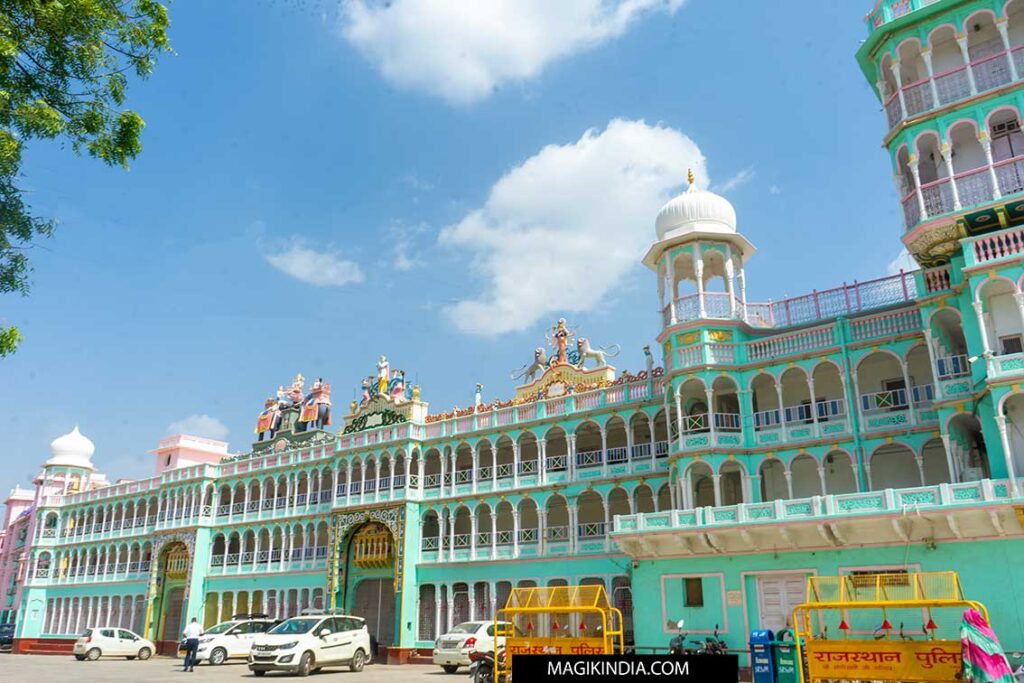
The current complex, in the Colonial-Rajput style, was built primarily between 1936 and 1937. It consists of the large main temple inaugurated as a memorial as early as 1912 and twelve smaller shrines dedicated to other widows of the Aggarwal clan’s Jalan branch who performed Sati after 1762.

The uniqueness of the Holy of Holies lies in its absence of traditional idols. Instead of statues from the Hindu pantheon, devotees venerate a Trishul (trident), which embodies power and strength (Shakti). The upper sections of the walls are adorned with frescoes that recount the stories of Rani Sati.
Jhunjhunu havelis
Like the entire Shekhawati region, the city of Jhunjhunu bears witness to its bygone golden age a period during which wealthy Marwari merchants commissioned the construction of sumptuous mansions, true reflections of their opulence and commercial success.
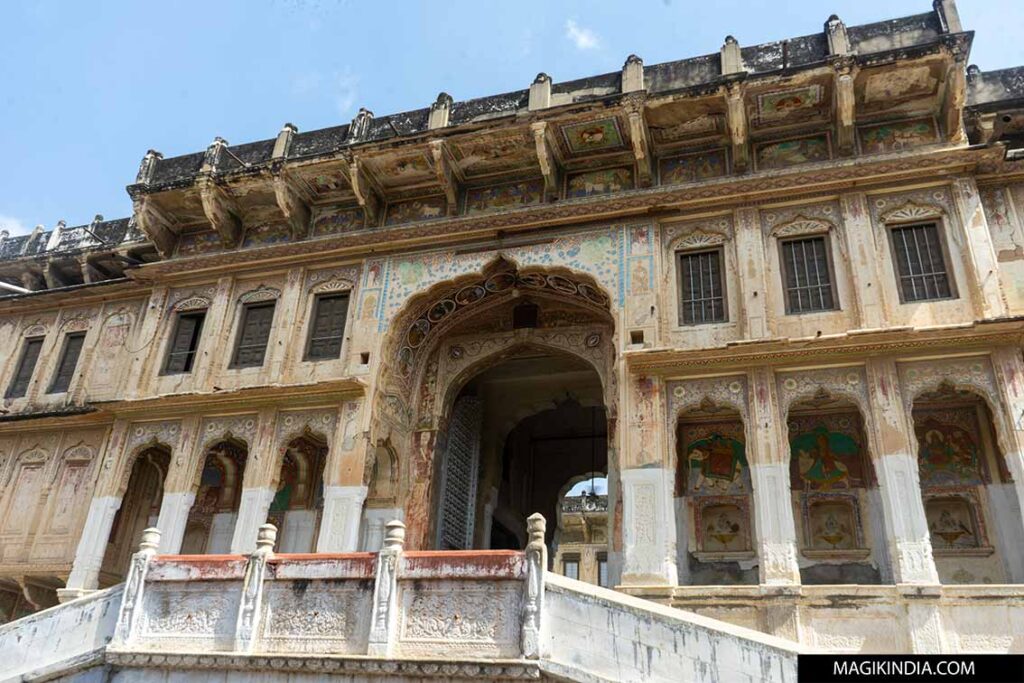
Among these residences, the Modi & Tibrewal Haveli stands out in particular. Situated in the heart of the main bazaar, it actually consists of a pair of facing residences, the foundations of which reportedly date back to the late 16th century.
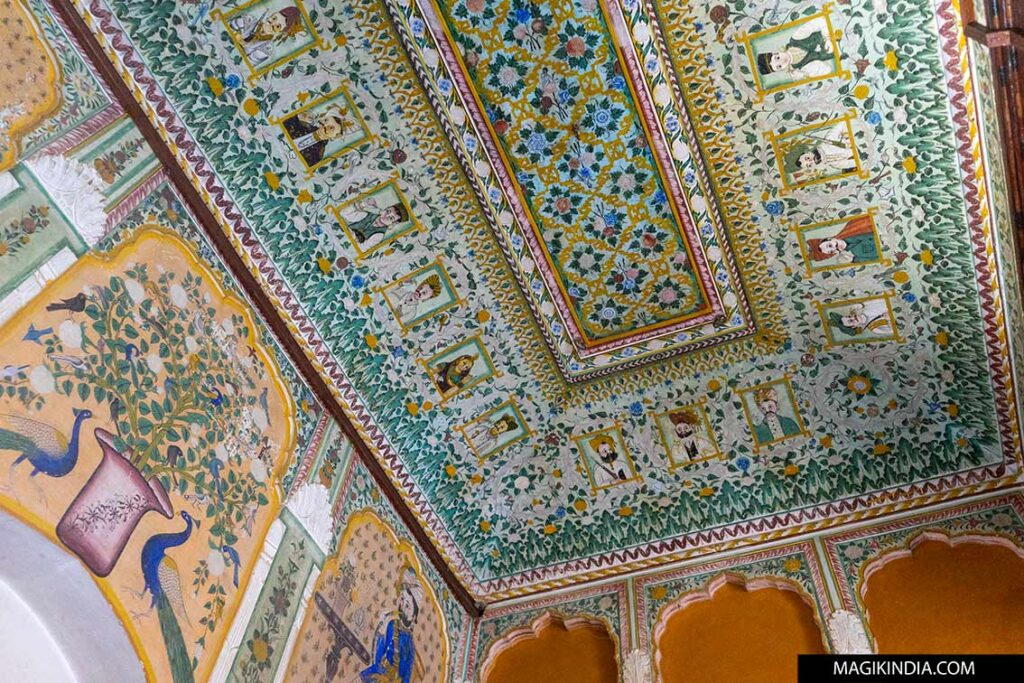
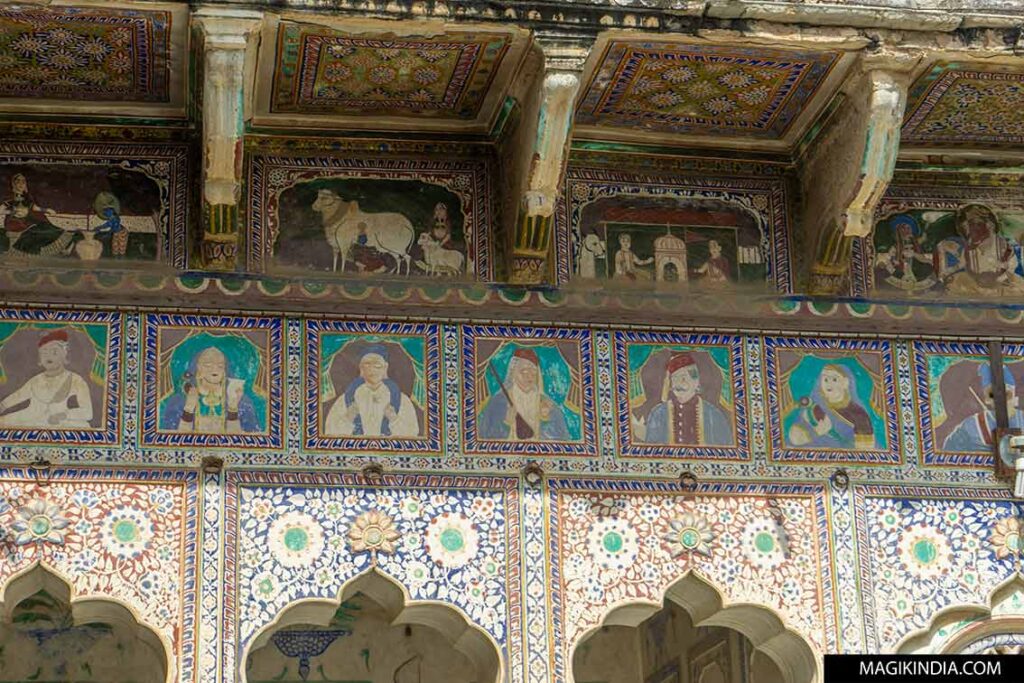
These two havelis are renowned for the exquisite craftsmanship of their wall frescoes which remain remarkably well-preserved featuring original paintings created using natural pigments. The Modi and Tibrewal families, members of the Marwari community, played a pivotal role in the economic history and architectural flourishing of Jhunjhunu and the entire Shekhawati region.
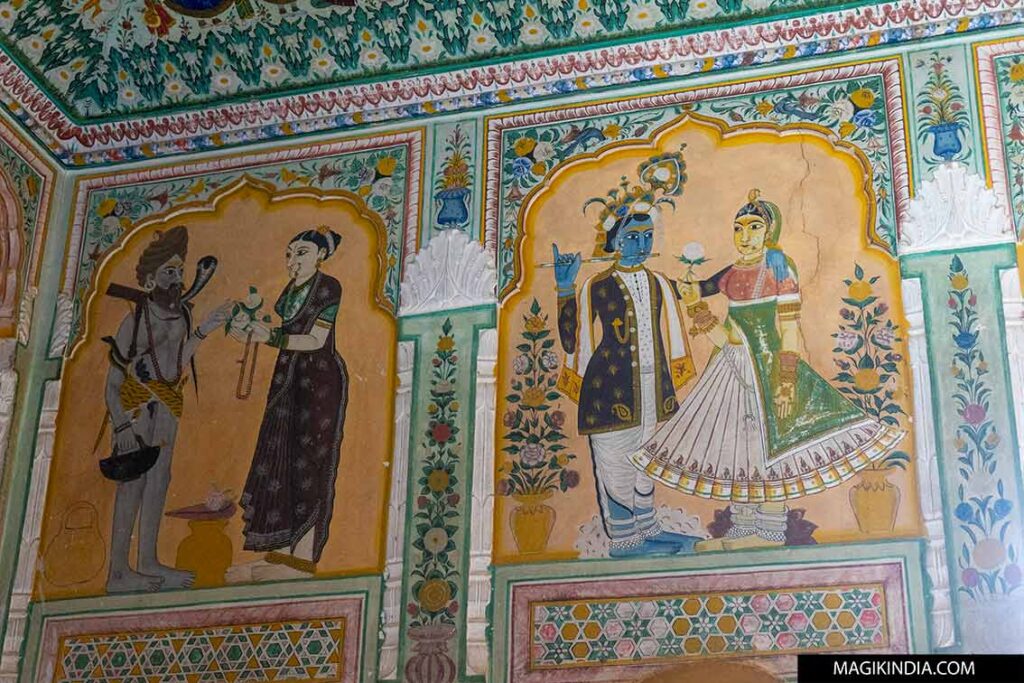
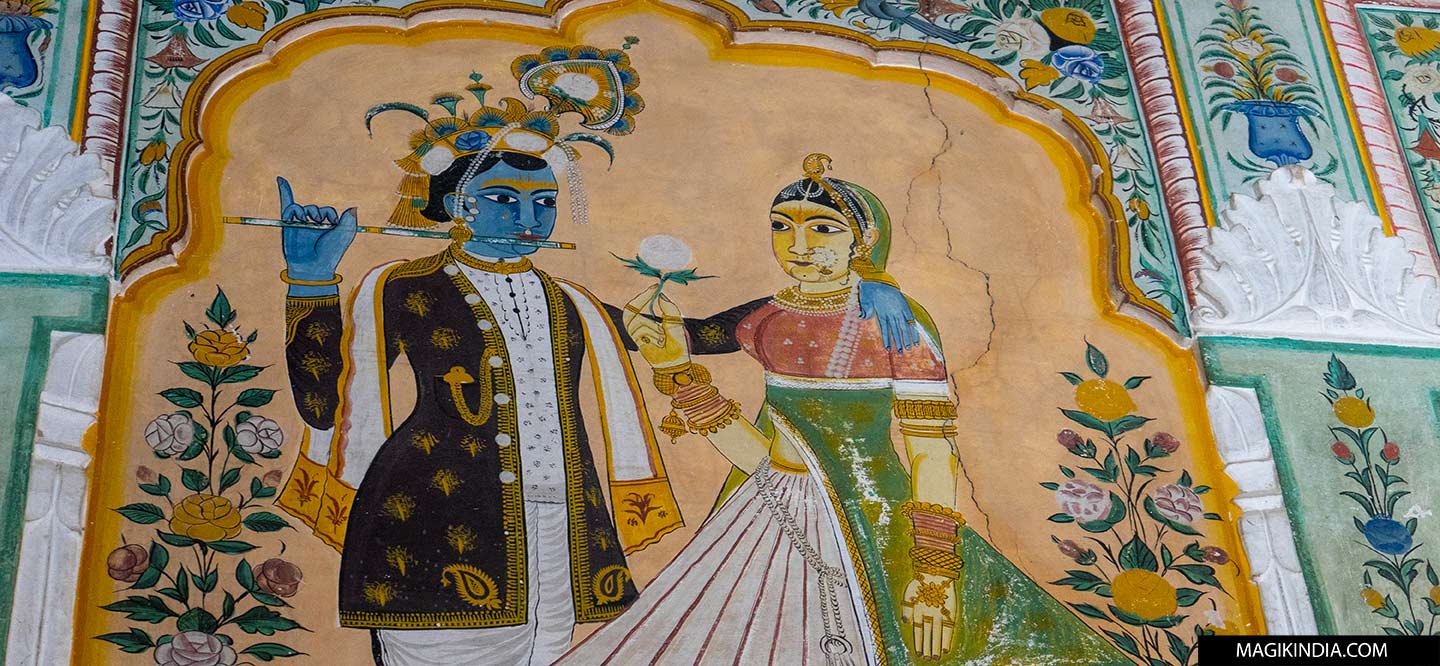
The antechamber is a masterpiece of refinement: frescoes of Shiva and Parvati, as well as of Sri Krishna and Radha, adorn the side walls. The ceiling, meanwhile, is embellished with a masterful fresco depicting the “Raas Lila”, the mystical and ecstatic dance of Krishna and the gopis, which symbolizes the union of the individual soul with the Divine. This scene is further enhanced by the presence of celestial angels hovering above it, illustrating once again the artistic syncretism characteristic of the havelis of Shekhawati.
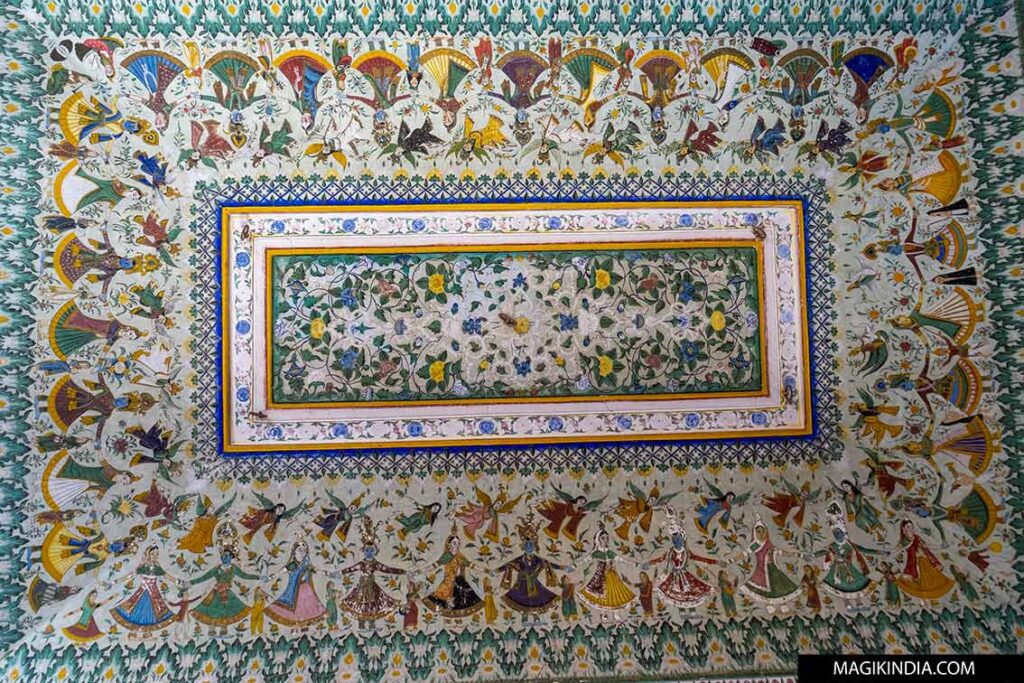
The vaulted passageways complement the frescoes with a spectacle of great richness, featuring beautiful inlays of mirrors and glass tiles that lend a shimmering luster to the architectural surfaces. Miniature figures are arranged within medallions, illustrating various aspects of daily life.
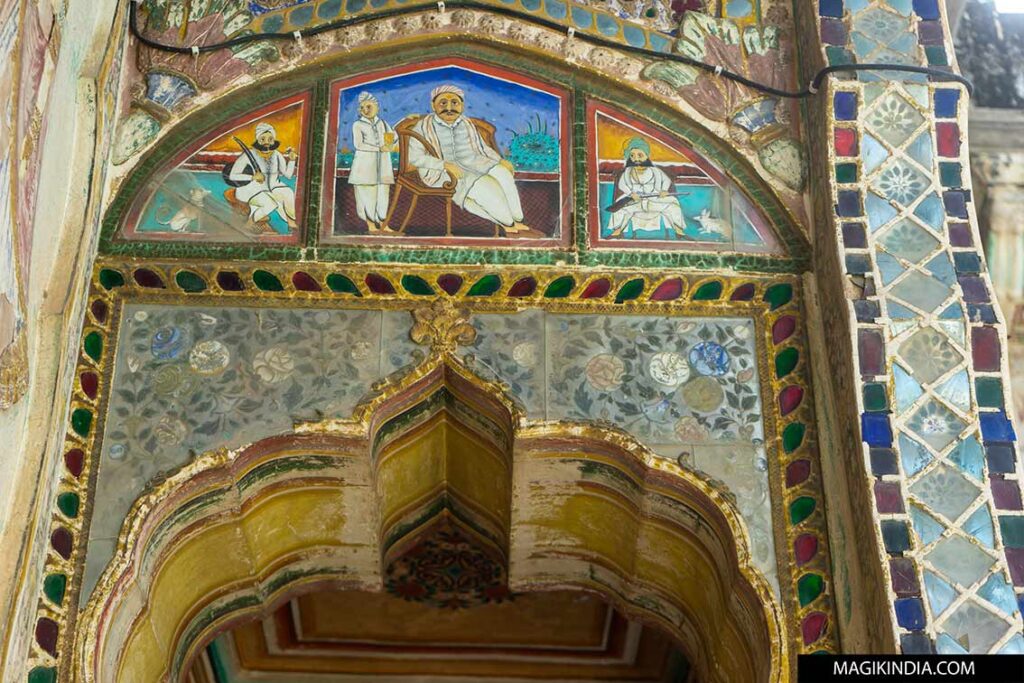
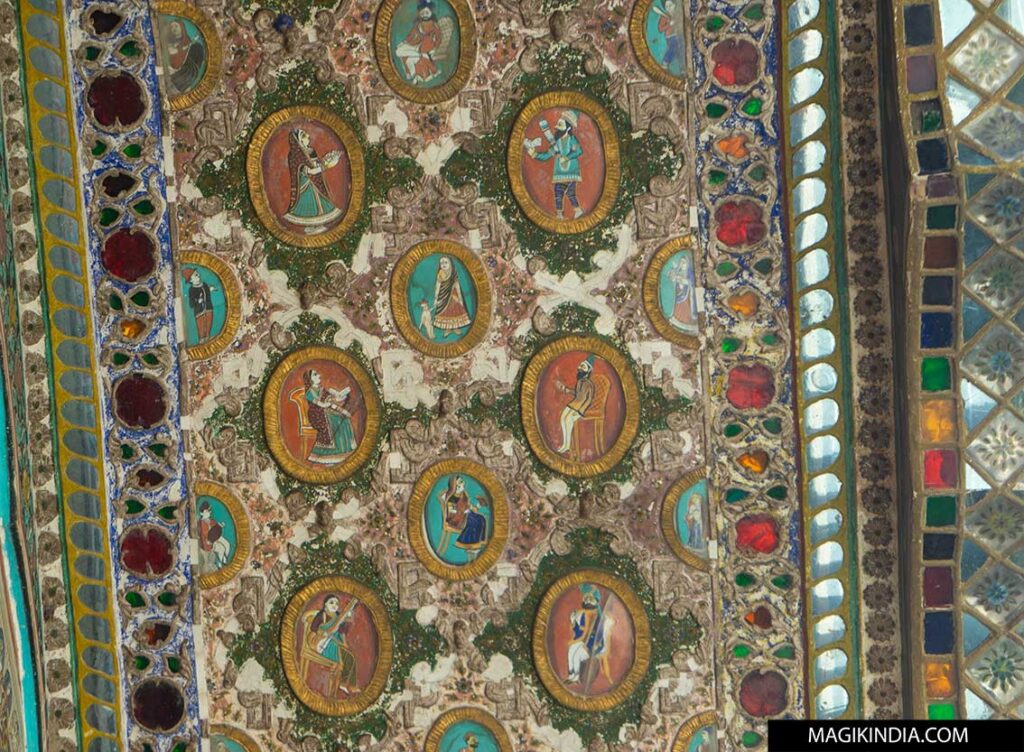
The decoration of the inner courtyard, for its part, follows a clear thematic organisation: the upper frieze is reserved for deities to symbolise the celestial realm; the middle band is dedicated to humans to represent the terrestrial world; and the lower section is adorned with floral motifs, evoking the plant kingdom.
Other Interesting Places to Visit in Jhunjhunu
Mertani Ji Ki Baori
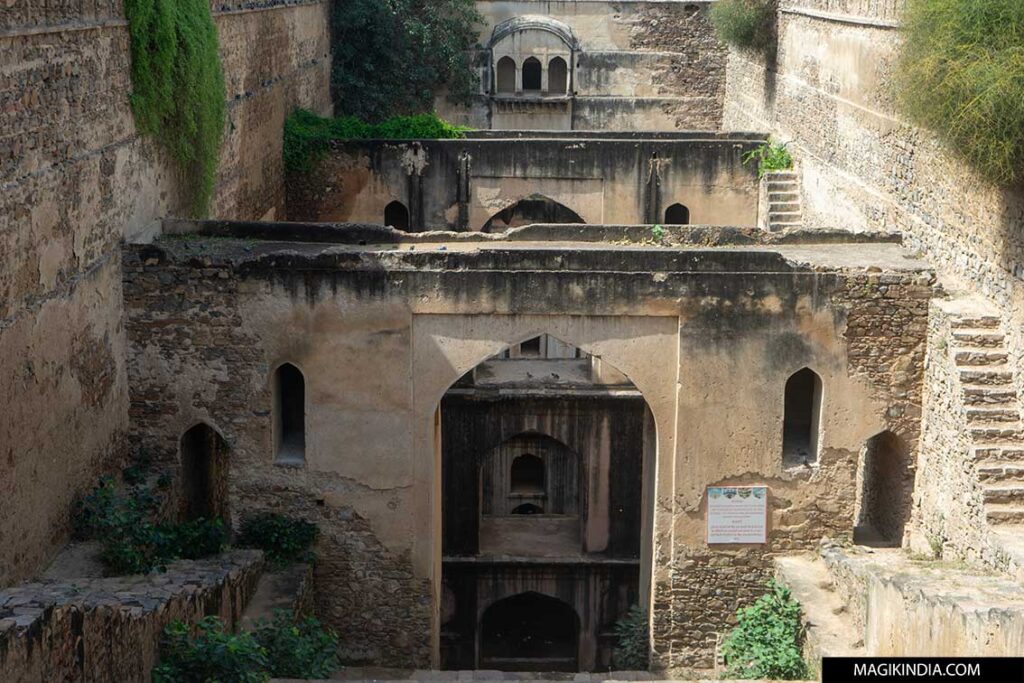
Recently renovated, the Mertani Ji Ki Baori is an imposing baori (stepwell) named after Mertani, the wife of King Shardul Singh. Built in the 18th century, it reflects both royal generosity and the practical necessity of hydraulic engineering in this arid region. Its architecture is characterised by symmetrical staircases that descend deep beneath the surface across several levels, providing access to water regardless of the season, while the intermediate landings and niches once served as social resting spots.
Bihariji temple
Situated in the heart of the Old Town, the Bihariji Temple stands as a remarkable testament to the art of Shekhawati, having been erected in 1776 (Samvat 1833) by the influential local patron, Seth Malalidatt Shah of Khetri. It is a pity, however, that the temple’s appeal is somewhat diminished by the rather unwelcoming demeanor of the new pujari (priest)!
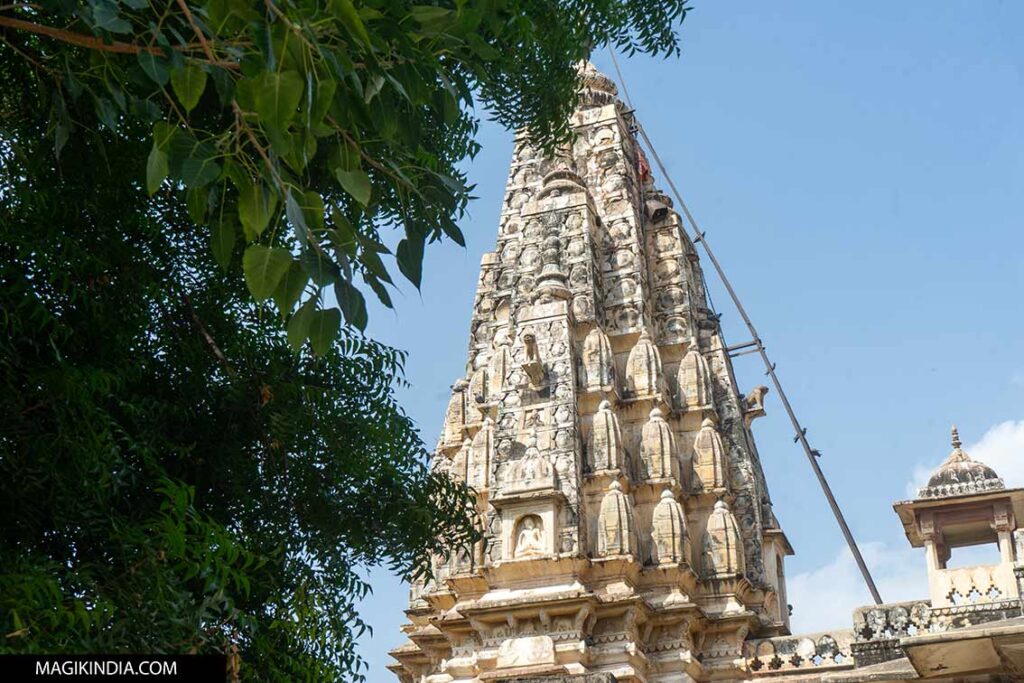
Artistically, the interior is dominated by frescoes centered on the worship of Sri Krishna. They immortalise key episodes of his divine life alongside the gopis, including, here as well, a depiction of the Raas Lila.
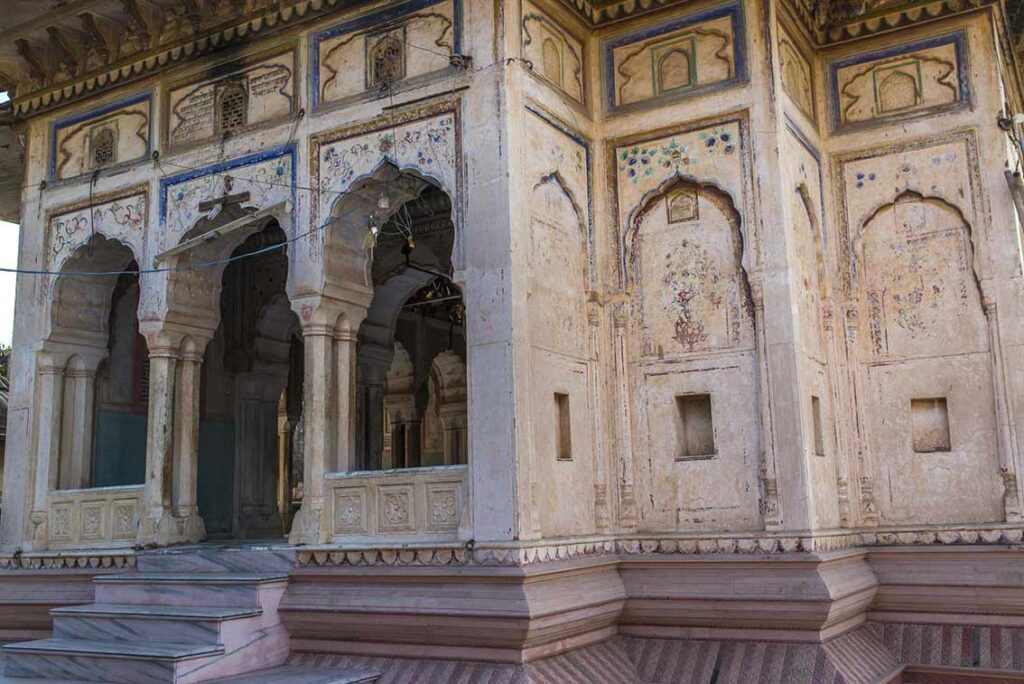
However, the uniqueness of the Bihariji Temple lies in its integration of secular themes: one discovers rare historical and societal frescoes there, finely detailing the court of King Shardul Singh of Jhunjhunu and his five sons, thereby offering an intriguing juxtaposition between mythological devotion and the chronicle of regional nobility.
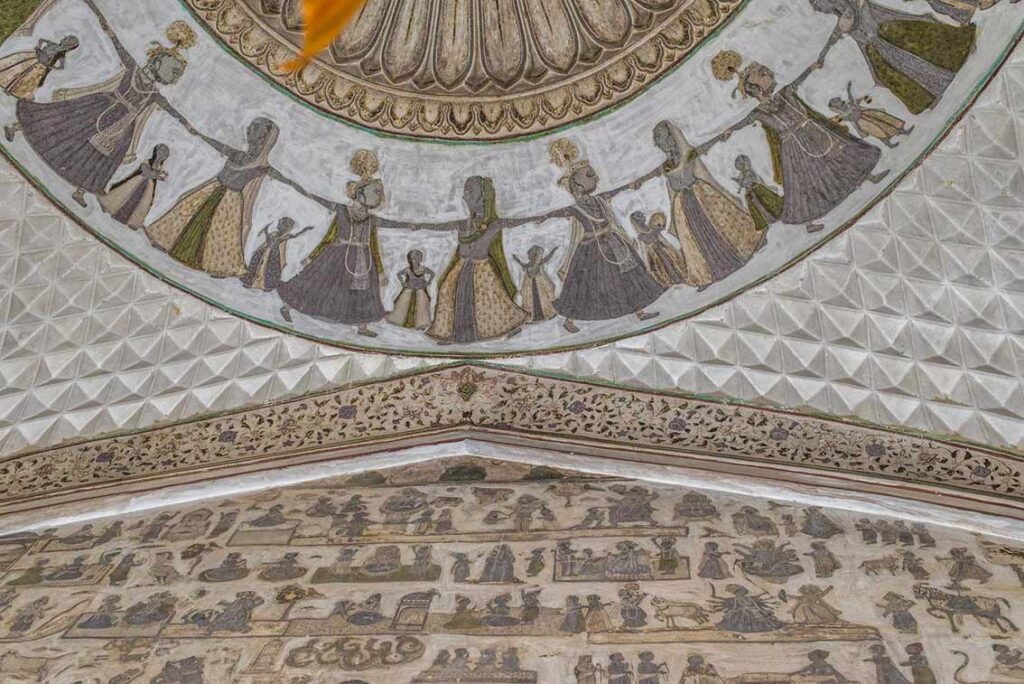
Ketri Mahal
Although Khetri Mahal is now largely in ruins and has passed into private ownership, it is still worth a visit for its unique architecture, provided, of course, that you obtain prior permission from the new owners.
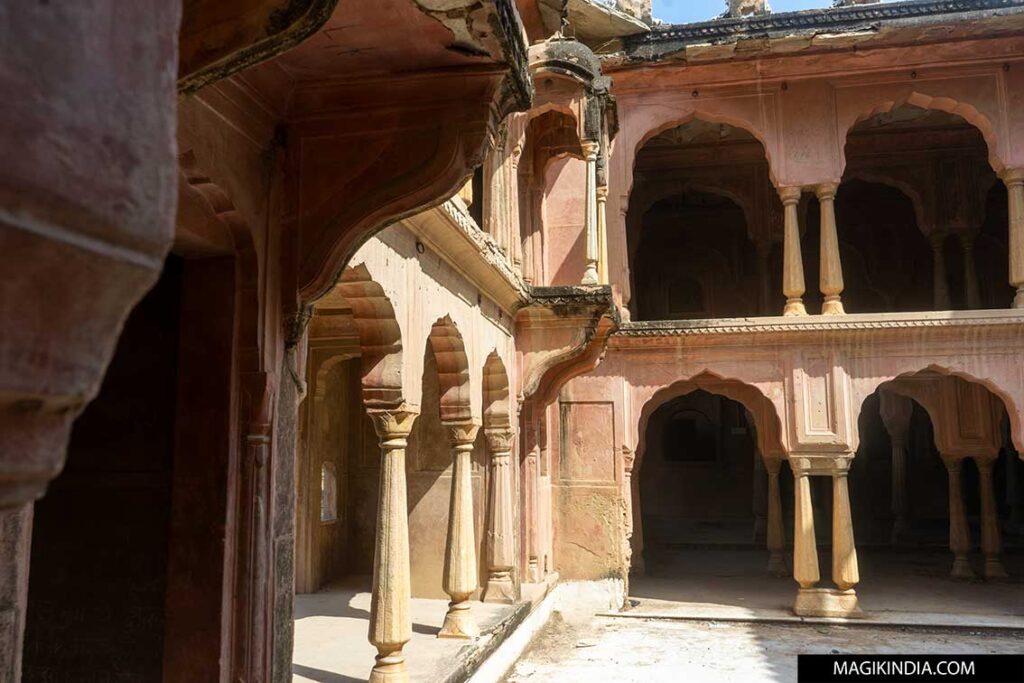
Built around 1770 by Raja Bhopal Singh, it is also known as the “Palace of Winds of Jhunjhunu”; it is an iconic example of Rajasthani haveli architecture, the design of which is specifically conceived to optimise air circulation.
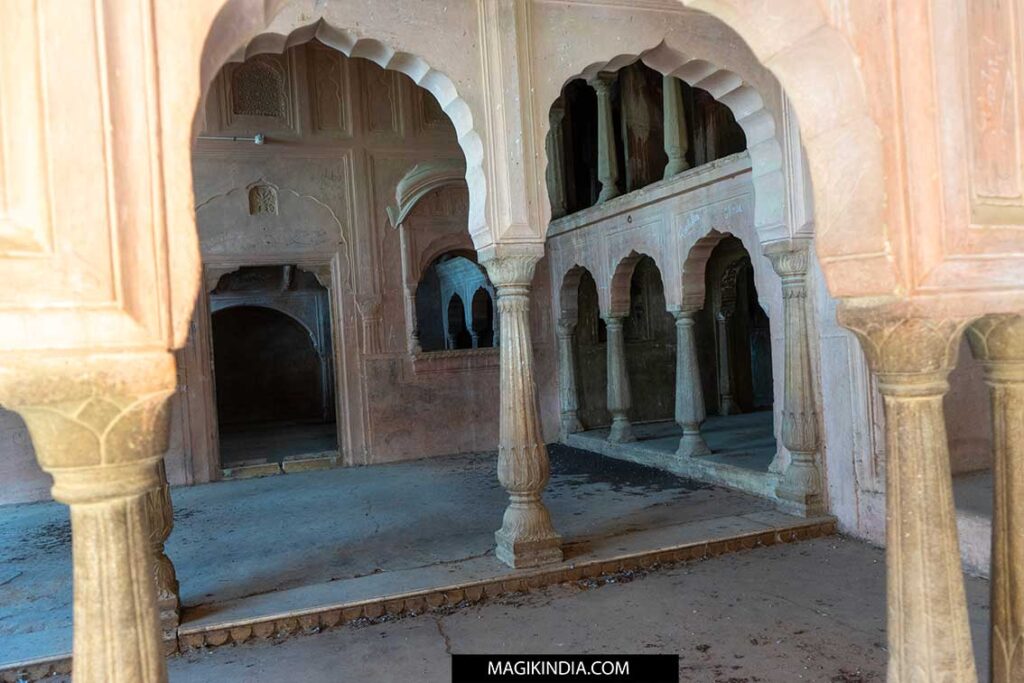
Its grand halls are supported by elegant Rajput-style arches, and many of the rooms communicate with one another through vaulted portals rather than doors, creating a naturally ventilated environment. Indeed, the Ketri Mahal is considered to be the model that inspired the construction of the famous Hawa Mahal (Palace of Winds) in Jaipur, built a few years later.
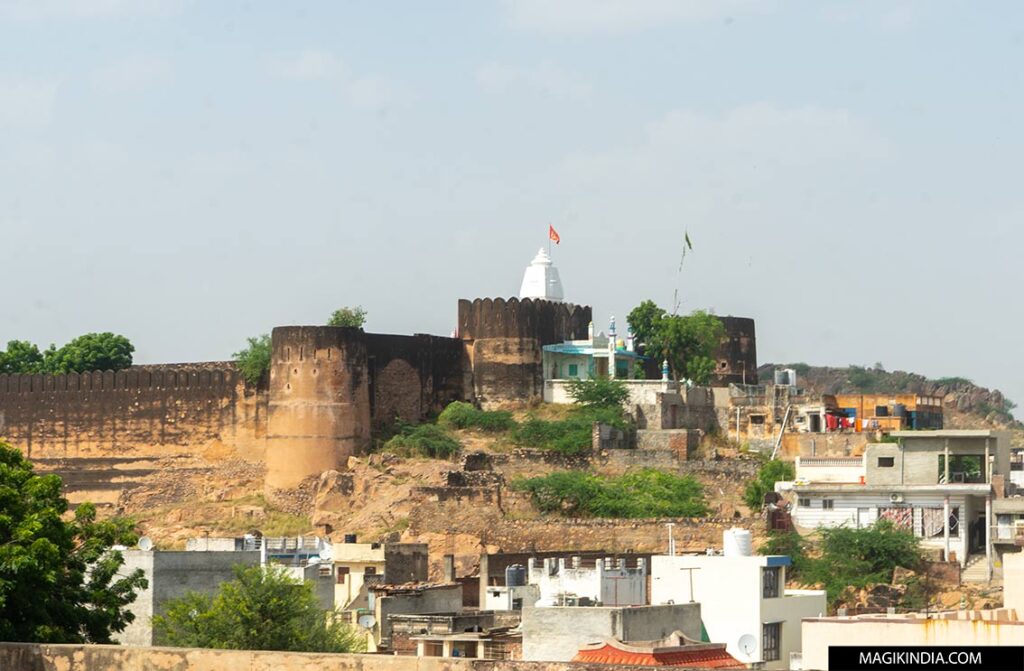
Worth seeing before the structure falls completely into disuse and for its view of the Jhunjhunu Fort.
Hazrat Qamaruddin Shah Dargah
The Hazrat Qamaruddin Shah Dargah is a significant Sufi shrine. It houses the tomb of the Muslim saint Qamar ud-Din Shah (1784–1859). This site stands as a powerful symbol of interfaith harmony, as its construction in the mid-19th century was funded by local Hindu rulers. The complex comprises the tomb, topped by a white dome, a mosque, and a madrasa.
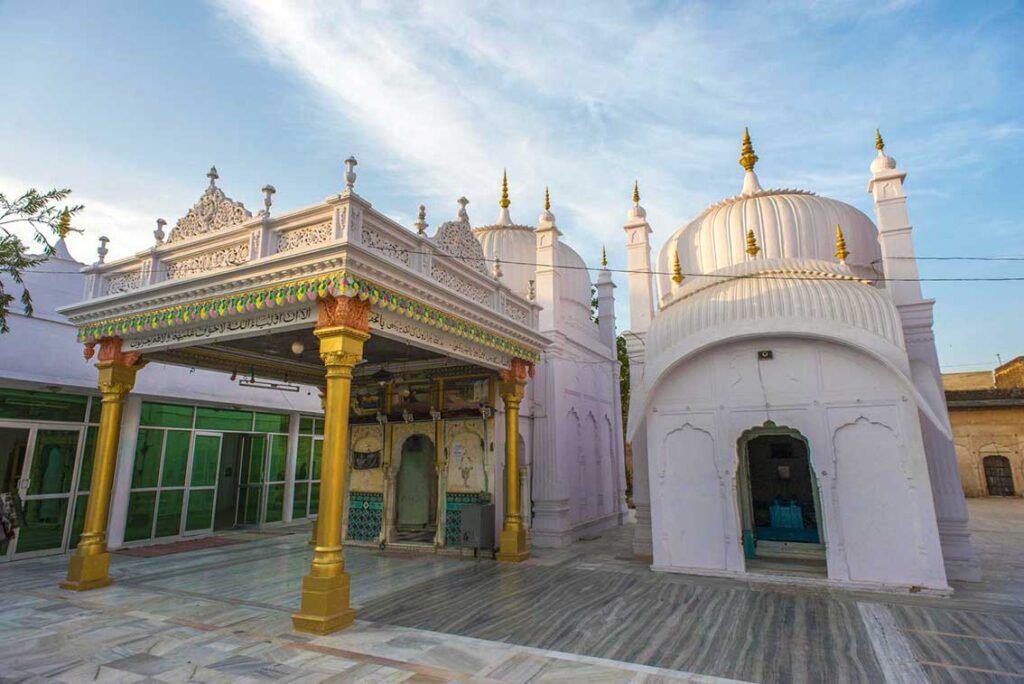
The mausoleum is also renowned for the legendary friendship that united Qamar ud-Din Shah with a Hindu saint, Sri Baba Chanchal Nath. This friendship gave rise to a tradition in which the communities celebrate each other’s religious festivals, notably by lighting diyas (oil lamps) within the dargah during the festival of Diwali.
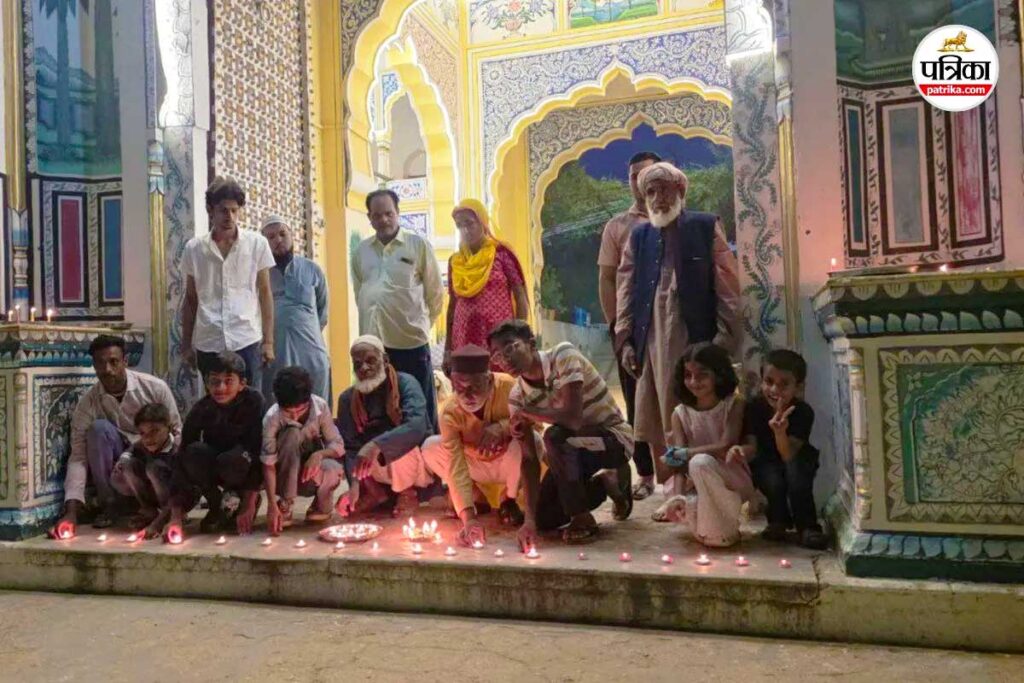
It is, however, regrettable that the original frescoes were recently erased (forever) by garish paintings. This act of degradation once again bears witness to a lack of regard for local heritage, as the region appears oblivious to the extent of its own richness.
VISIT THE SHEKHAWATI REGION WITH US!Vous aimerez peut-être aussi...

Languid on the banks of the Narmada, in the southwest of Madhya Pradesh, Maheshwar offers the image of a city...

Nestled on a fortified plateau of the Vindhya Hills, over 600 meters above sea level, Mandu (or Mandav) is one...
Located in the Bastar region (Chhattisgarh), the town of Barsoor stretches along the peaceful banks of the Indravati, witnessing its...
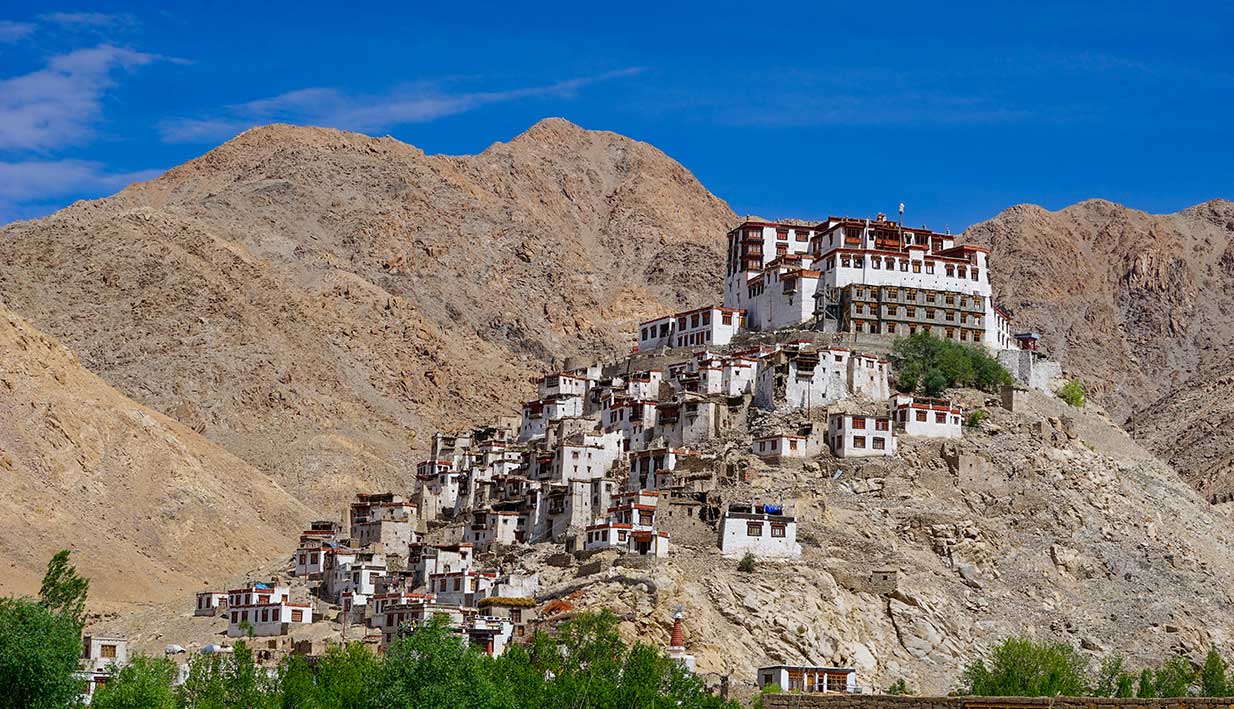
As a lime sentinel emerging from the mineral chaos, the Chemrey gompa appears carved out of the raw verticality of...
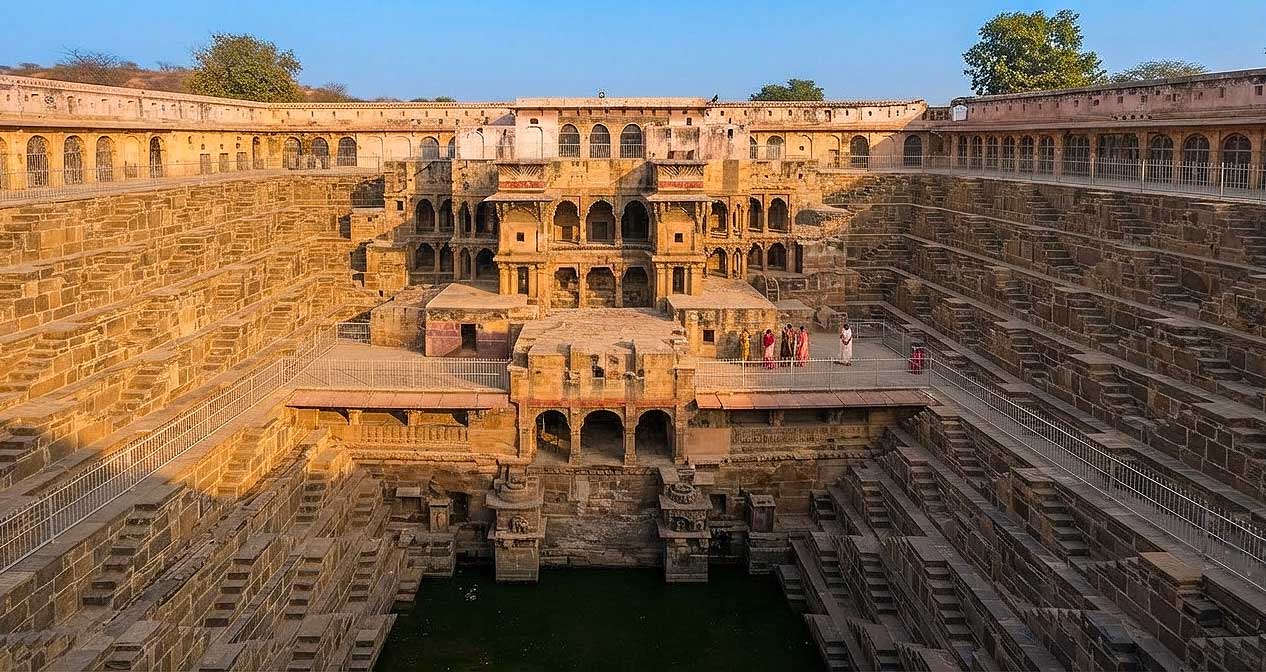
Situated between Jaipur and Agra, Abhaneri, the ancient "City of Brightness" (Abha Nagri), is a historical treasure. Its heritage rests...

