
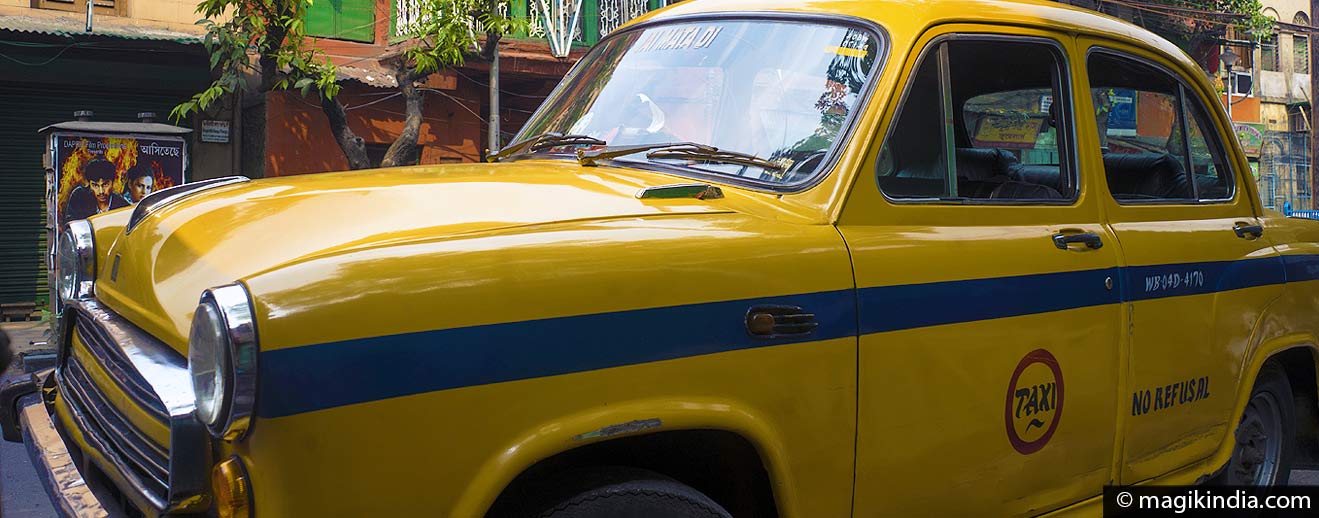
Everyone arriving in Kolkata for the first time totes a bagful of preconceptions, mostly from books or films such as...
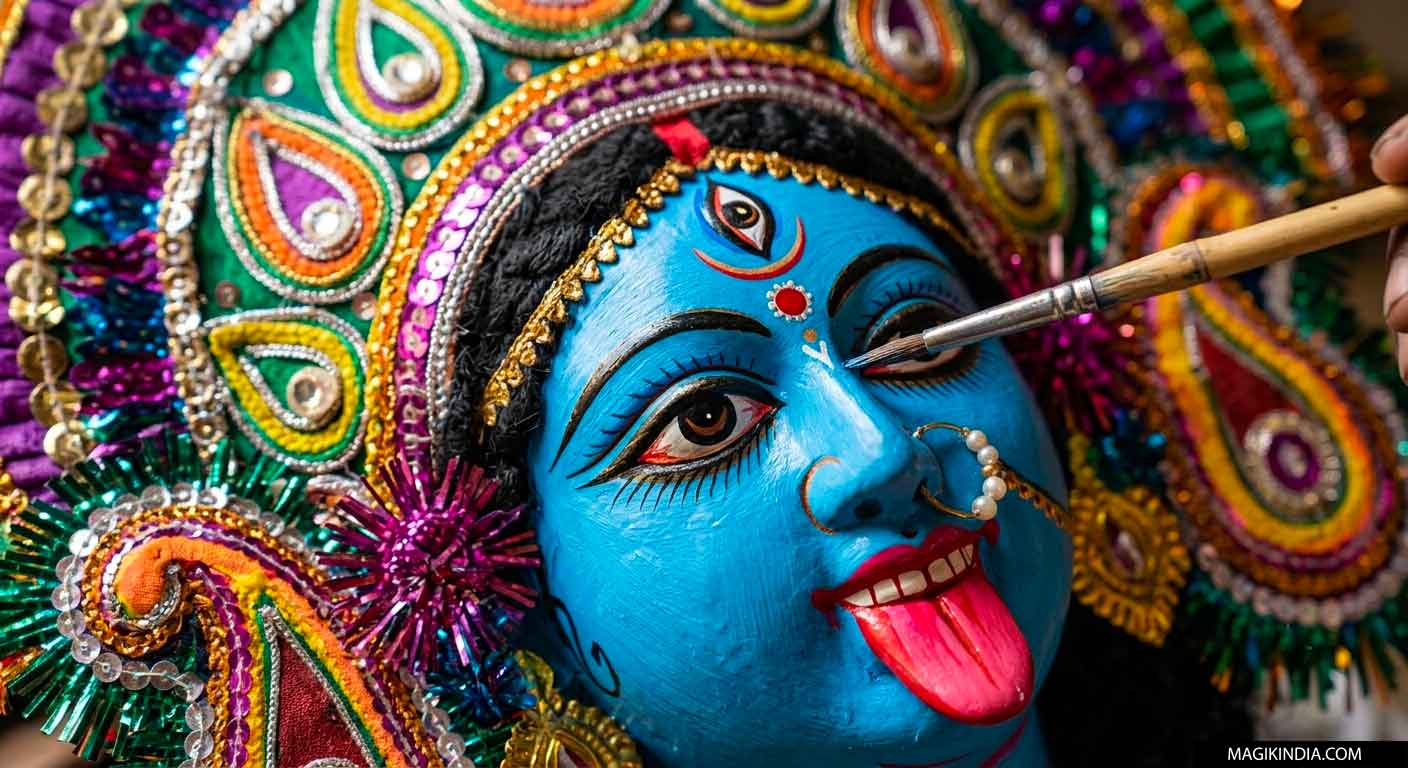
Chhau: Between Sacred Fervor and Warrior Tradition
Classified as an intangible heritage of humanity, Chhau dance is a centuries-old tradition from Eastern India. By combining martial techniques and mythological stories, this nighttime performance, carried by costumed dancers, celebrates local folklore and remains a powerful vector of community unity in the face of changes in the modern world.
Origins of the Chhau dance
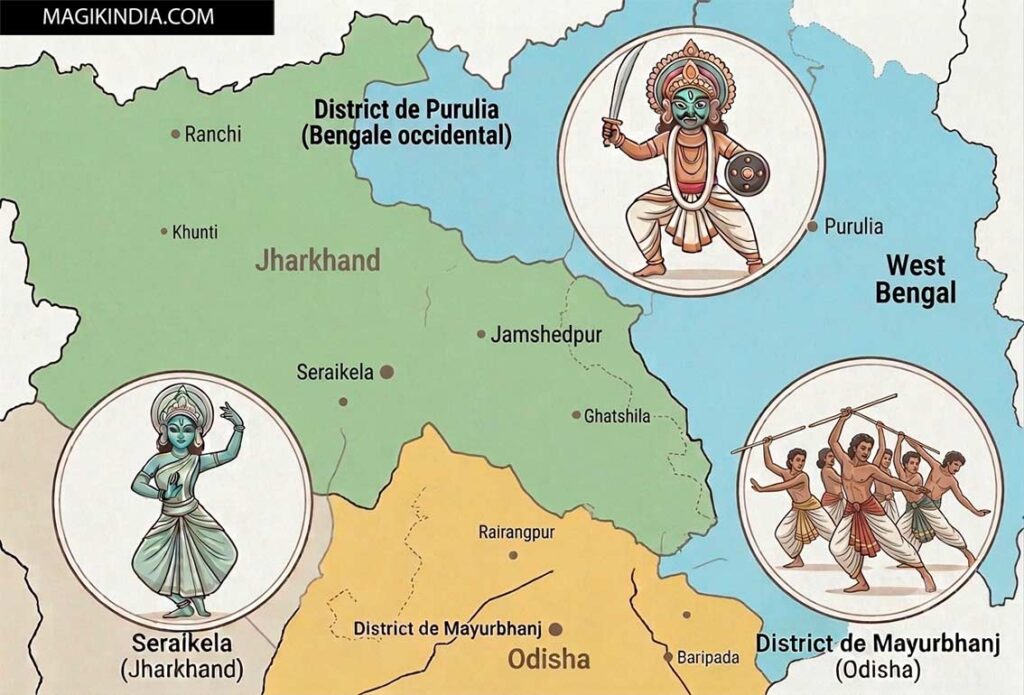
Chhau is a traditional art form originating in eastern India, primarily practiced in the states of West Bengal, Jharkhand, and Odisha.
There are no ancient texts describing its creation, as it is a tradition passed down orally from master to disciple (guru shishya parampara) within specific artist families and communities. Chhau is not the result of a single invention, but the result of a gradual fusion between tribal martial arts and the classical and religious traditions of Eastern India.
Martial and indigenous roots
The word “Chhau” is often linked to the Sanskrit term chhaya, meaning “shadow” or “mask“, but a popular etymology widely accepted in the regions concerned links it to the term “chhauni”, which designates a military camp.
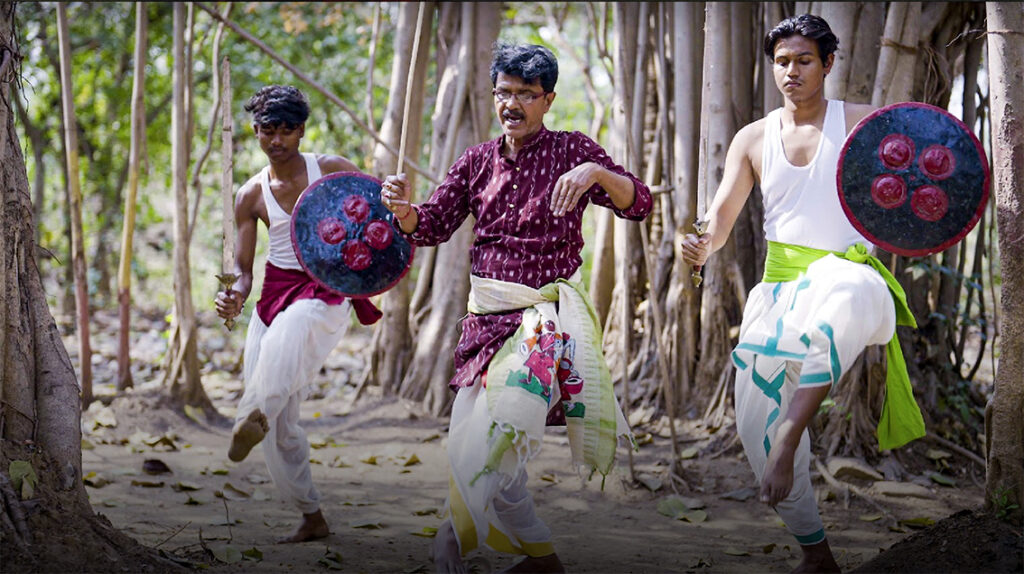
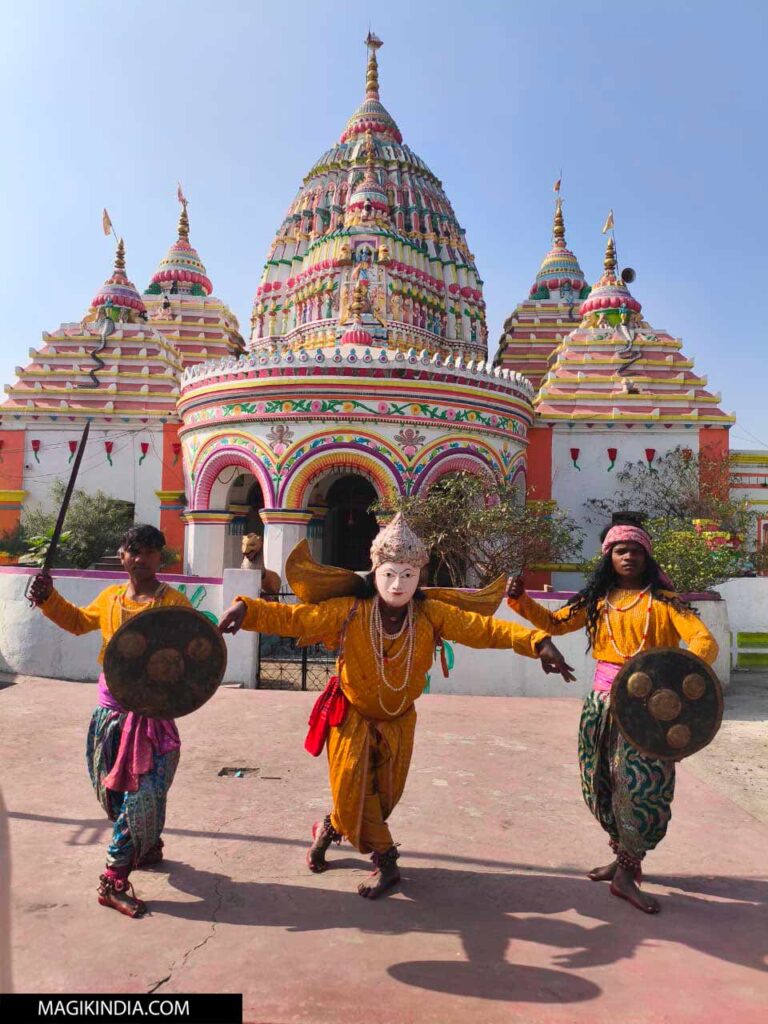
Originally, dance was closely linked to martial practices. It served as a method of physical and tactical training for warriors and members of local militias in the princely states of eastern India. The movement vocabulary, which includes simulated combat techniques (phari-khanda), bears witness to this warrior heritage.
Cultural evolution
Over the centuries, these martial exercises have been imbued with cultural and ritual elements: the dance has gradually integrated themes taken from Hindu epics (Mahabharata, Ramayana) and Shaivite mythology. The Chaitra Parva festival (spring festival), which celebrates the deity Shiva, became the major ritual setting for its performance.
It also drew upon the folk traditions of local tribes (such as the Munda, Santal, and Bhumiji) while absorbing more formal aesthetic codes through contact with princely courts notably in Seraikela and Mayurbhanj, where local rulers long patronised this art form.
The mask, a central role
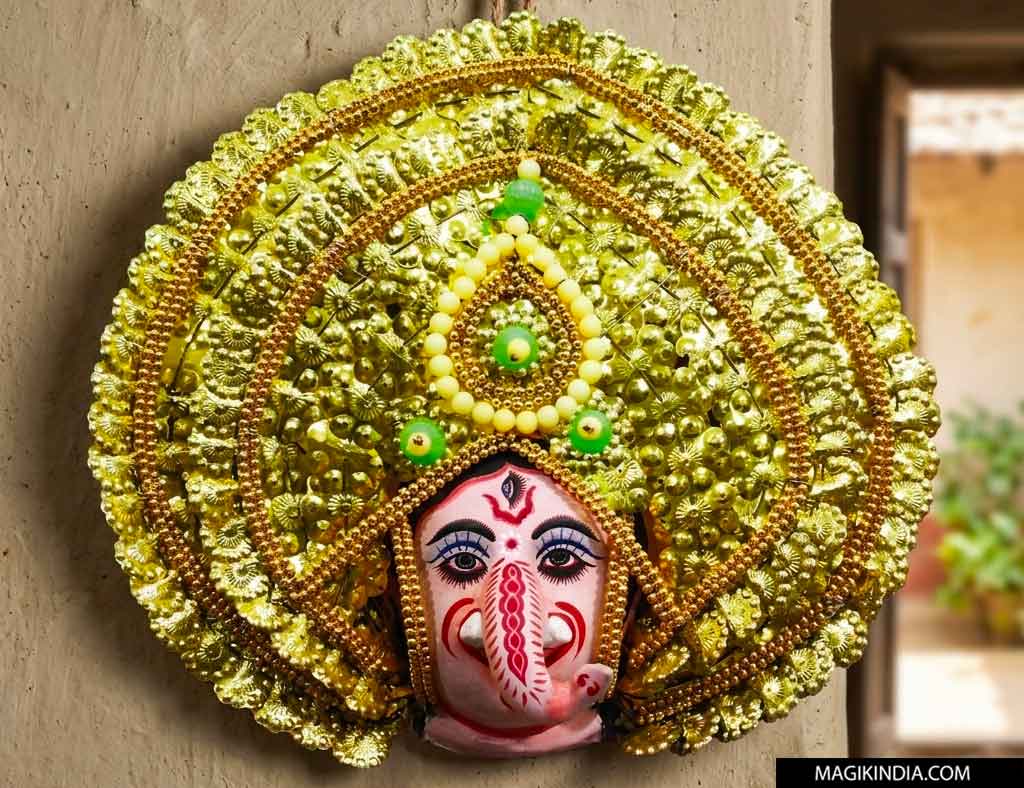
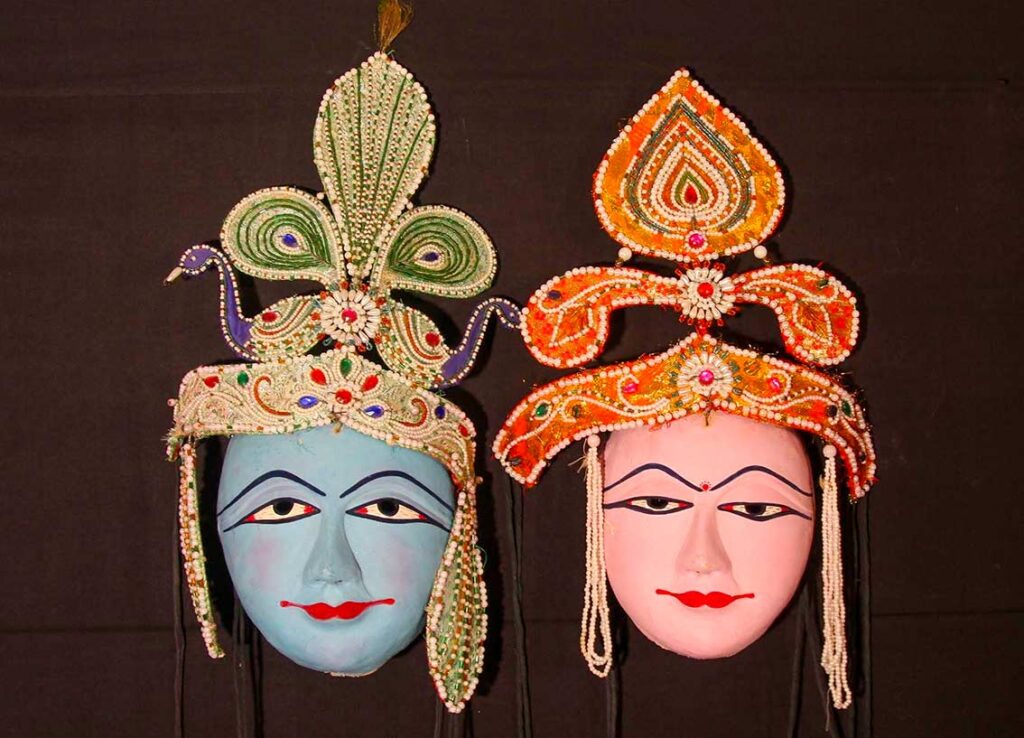
The mask plays a major role in chhau dance. They allow dancers to embody mythological characters, Hindu deities, animals or elements of nature. They help define the character and emotion of the role without the actor needing to use facial expressions on their own face.
Chhau dance comes in three regional versions:
Purulia Chhau (West Bengal)
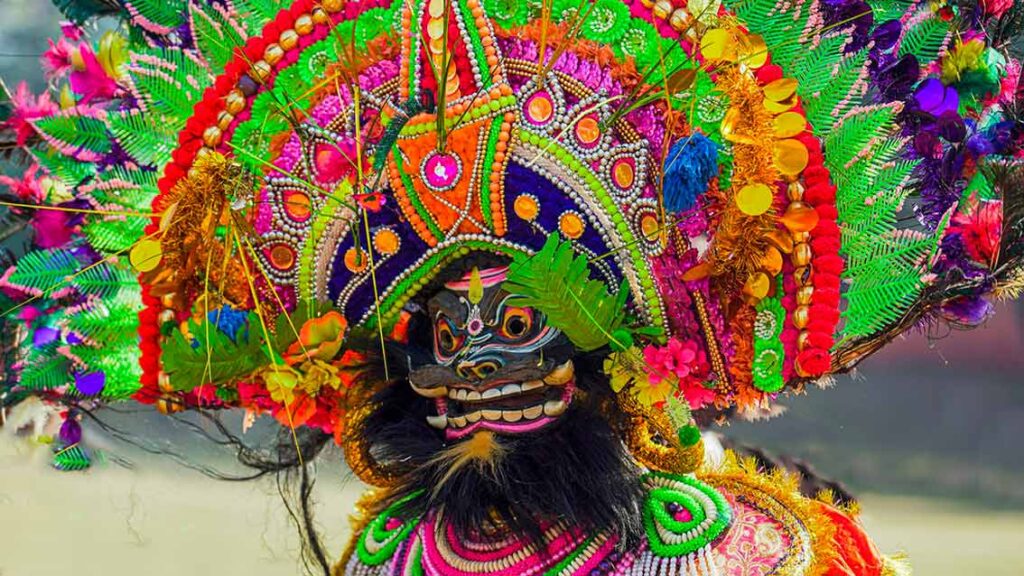
This style is distinguished by its visual excess. The dancers wear imposing colourful masks, topped with crowns richly decorated with feathers and sequins. Representing deities or demons, these costumes are designed for outdoor performances, in order to impose a heroic and spectacular presence, perfectly readable even from a great distance.
Seraikela Chhau (Jharkhand)
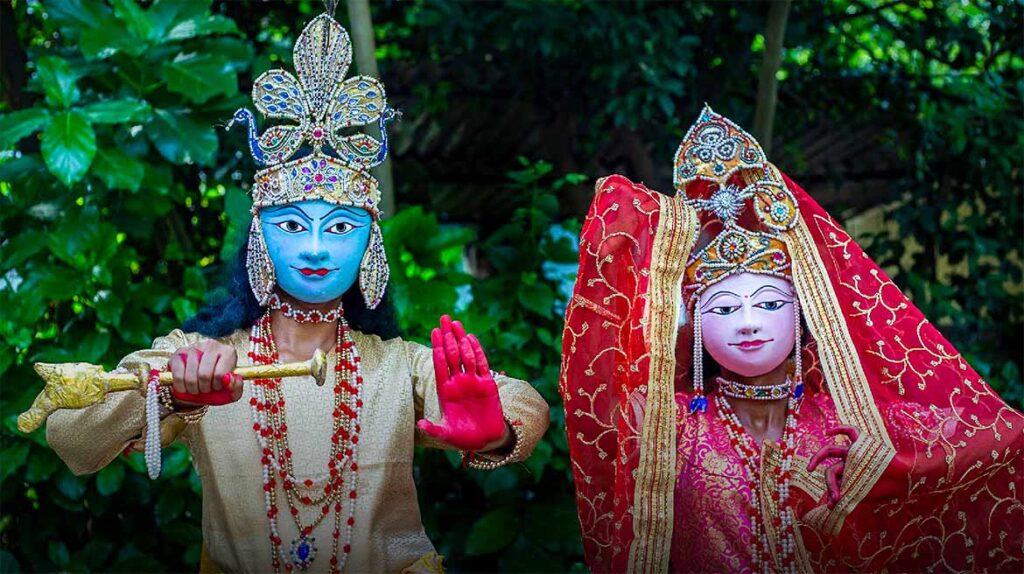
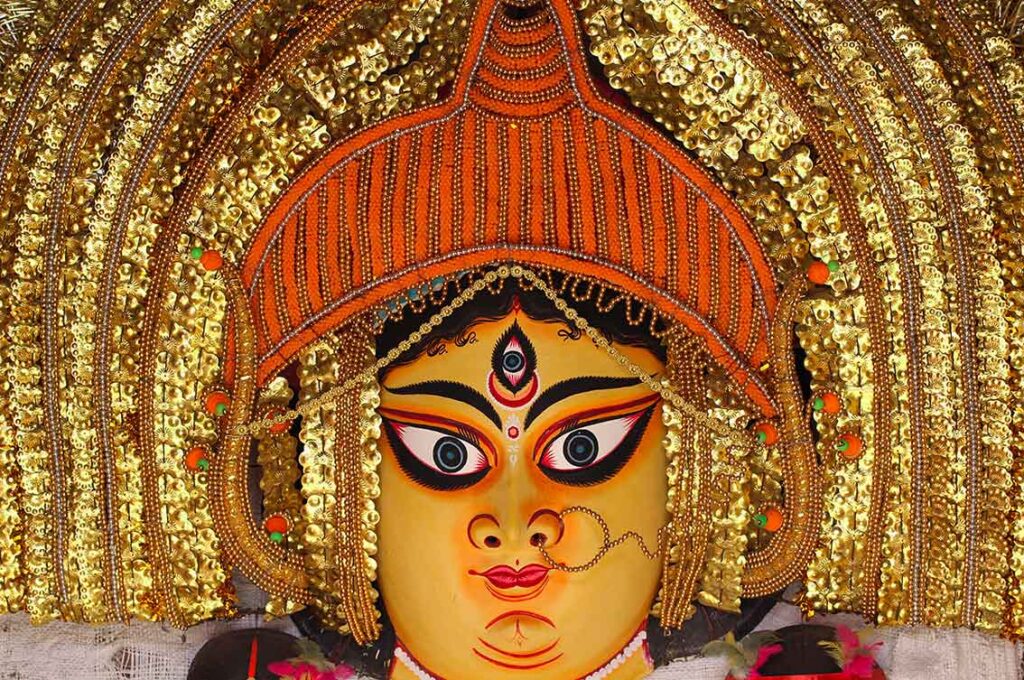
This style is distinguished by a nuanced approach and a search for purification (my favorite!). Unlike Purulia’s style, these masks feature smooth finishes, close to human anatomy.
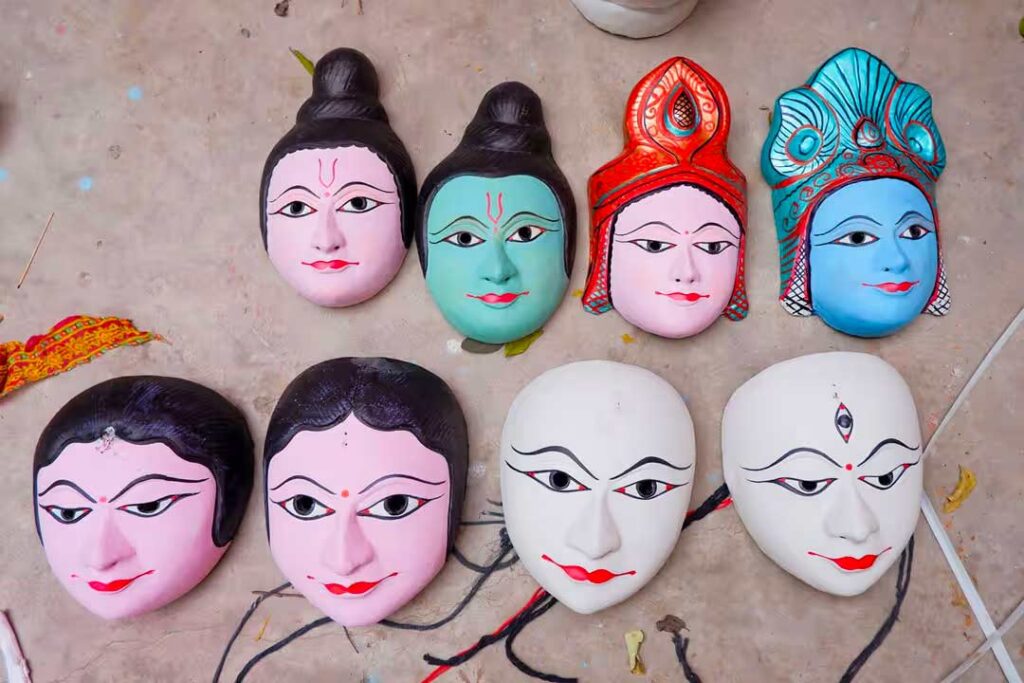
Their symbolic character, sometimes embodying concepts such as night or the ocean rather than mythical figures, serves as a support for a rich gestural performance: the dancer animates the mask with subtle movements of the neck and inclinations, thus translating complex emotions
Mayurbhanj Chhau (Odisha)
The Chhau of Mayurbhanj is radically distinguished from other styles by the total absence of masks. This particularity allows dancers to express a finer and more nuanced emotional palette through facial expressions.
It is a style characterized by its technical virtuosity, combining vigorous martial movements, athletic jumps and great mastery of body control. The themes explored are vast, ranging from episodes from the great Hindu mythological epics to scenes from daily life or observations of nature.
Making Chhau masks
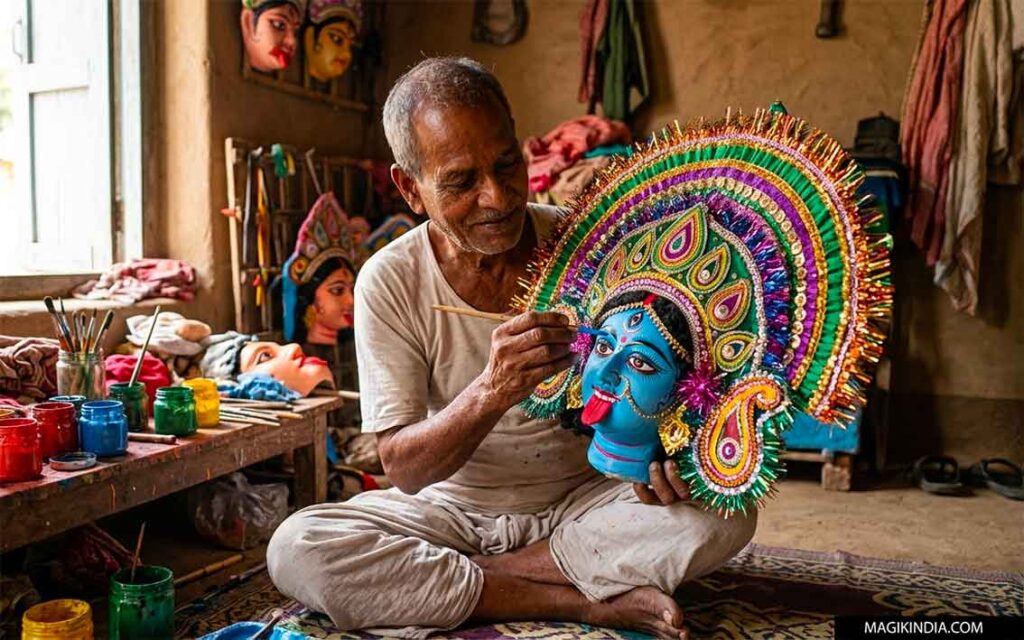
Mask making is a meticulous artisanal process that primarily uses papier-mâché. The artisans first create a clay base on which several layers of paper soaked in a natural glue paste are applied, which are allowed to dry before removing the initial mold.
Once the structure has hardened, the mask is carefully sanded, then painted to define the expressive features of the characters. Finally, the whole is richly decorated with ornamental elements, such as beads, feathers and sequins.
A theatre of the night
Chhau dance is inseparable from the spring festival Chaitra Parva. Performed at night in the open air, this ritual performance uses darkness and specific lighting to magnify the masks and intensify the immersion in mythological epics.
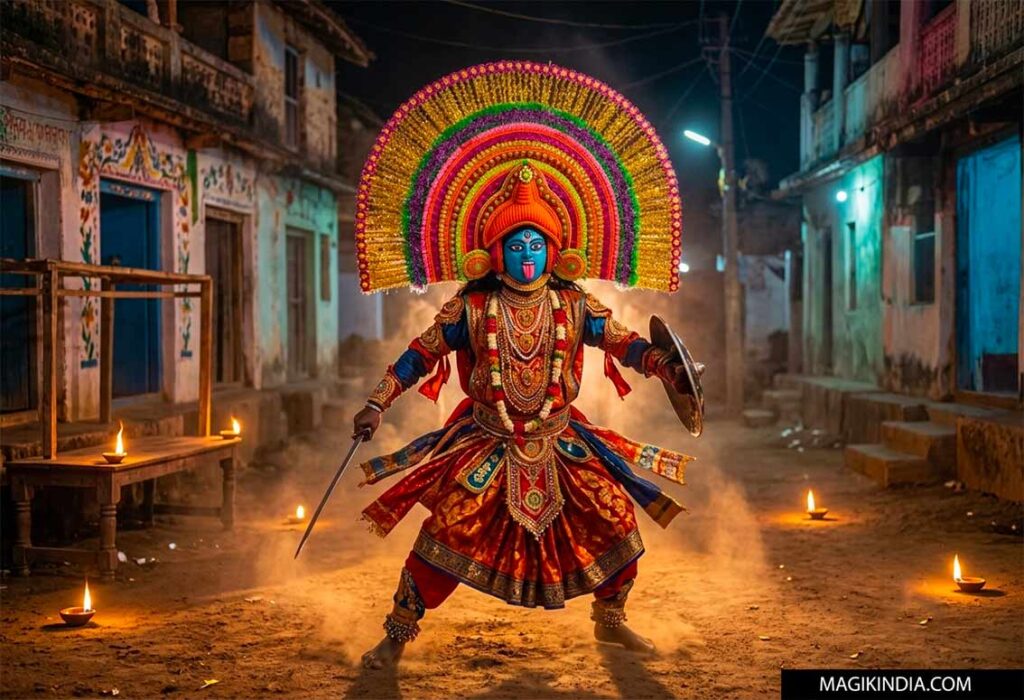
Chhau dance brings the community together after daily toil, offering a collective experience that transcends social and ethnic divisions. Its performances are punctuated by traditional and folk melodies, carried by reed instruments such as the mohuri and the shehnai, all dominated by the resonant beats of a percussion ensemble.
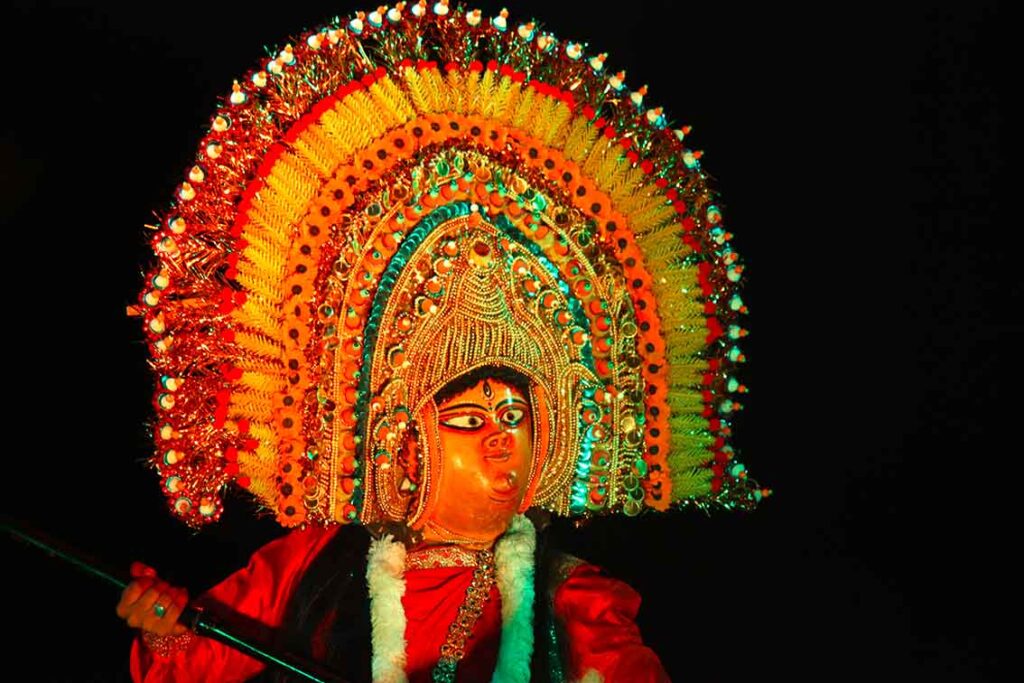
If Chhau dance historically brings together individuals from varied backgrounds, ethnicities and professions, it is today facing a decline in its collective practice. Industrialisation, economic constraints and the emergence of new media are weakening this social bond, gradually distancing communities from their cultural roots.
Breaking down barriers
Chhau dance is usually taught to male dancers from traditional performing families or local communities. It is therefore the men who play all the roles, including the female characters, using masks and costumes to embody the different characters.
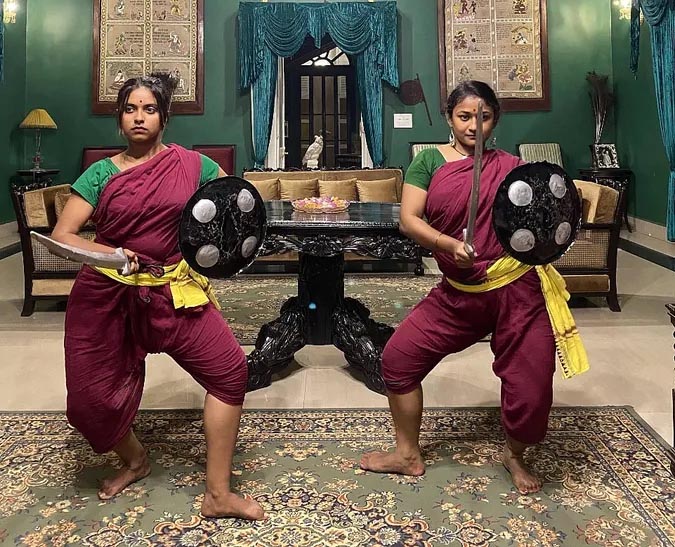
Since the end of the 20th century, the practice of Chhau has gradually opened up to women, particularly in the Mayurbhanj style. This inclusion, supported by new training centers, energises art and ensures its contemporary relevance.
VISIT WEST BENGAL & ODISHA WITH US!
Vous aimerez peut-être aussi...
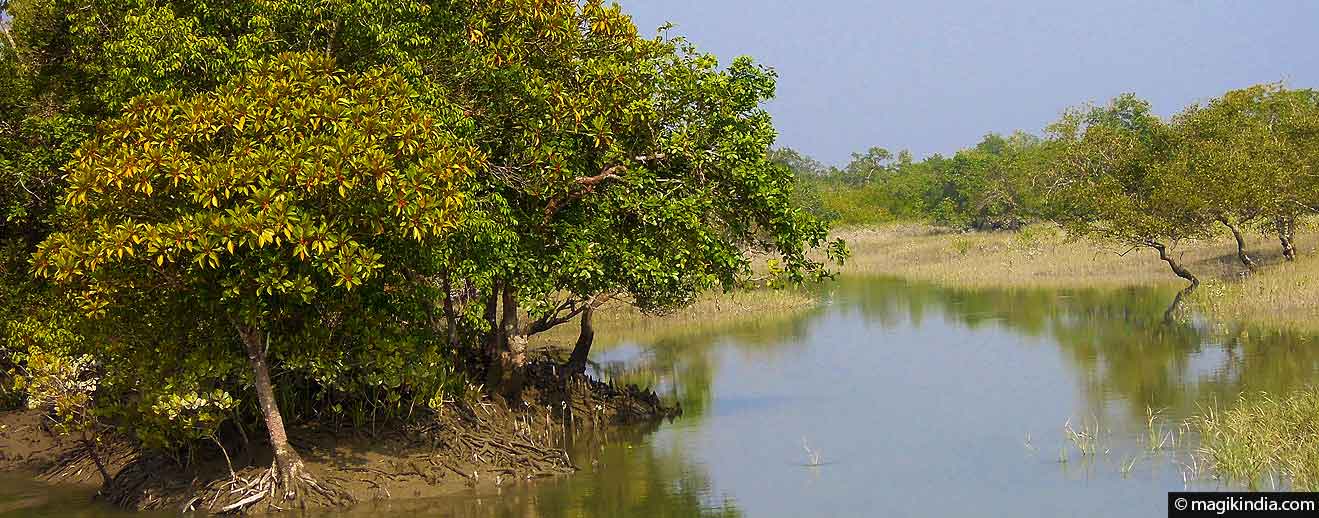
Even if the royal Bengal tiger never shows his furry face, this trip among the mangroves will leave you with...

Pendant quarante jours, le théâtre mystique Gavari s'anime sous les pas des troupes d'artistes adivasi, qui sillonnent les villages du Mewar (Rajasthan) pour...
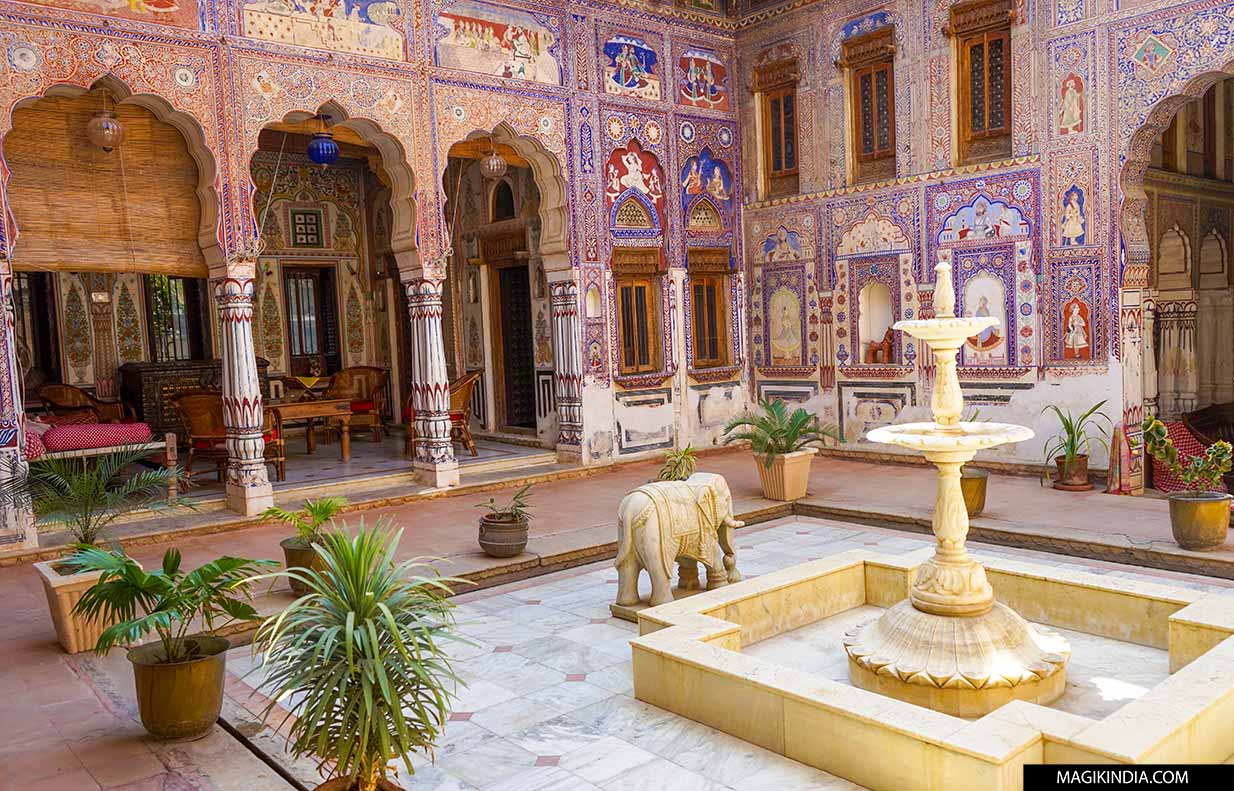
Située dans la région du Shekhawati, entre Jaipur et Bikaner, Fatehpur est une étape moins fréquentée que ses voisines du...

Situated in the vast expanses of Rajasthan, halfway between Udaipur and the Pink City, Shahpura cultivates the art of discretion....
Posée sur les vastes étendues du Rajasthan, à mi-chemin entre Udaipur et la ville rose, Shahpura cultive l'art de la...

