



Namaskaram !
Welcome, Padharo ! I'm Mathini, a French woman who has been living in Rajasthan for 10 years. Despite being imbued with Indian culture from a young age it wasn't until 2014 that my Indian adventure really began. I left everything behind in France and set off on a 6-year journey through the land of Gandhi. These adventures are gathered in this blog which aspires, in an intentionally positive spirit, to bear witness to India's remarkably diverse and multifaceted cultural heritage. If this website sparks a desire to pack your bags and set off for an Indian adventure, it will have achieved its purpose. Subh Yatra on Magik India and beautiful explorations in the sacred land of Bharat...
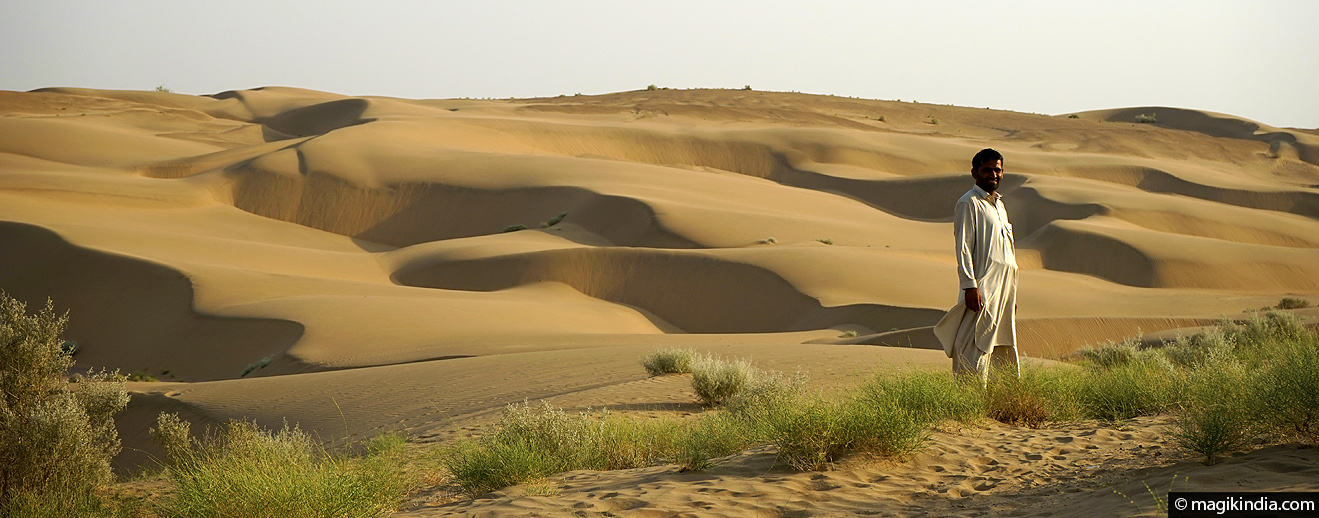
“I have always loved the desert. One sits down on a desert sand dune, sees nothing, hears nothing. Yet through the silence something throbs, and gleams…” (A. St Exupéry,The little Prince).
The Thar Desert, also known as the Great Indian Desert, is a large, arid region in the northwestern part of the Indian subcontinent that forms a natural boundary between India and Pakistan. It is the world’s 9th largest subtropical desert.
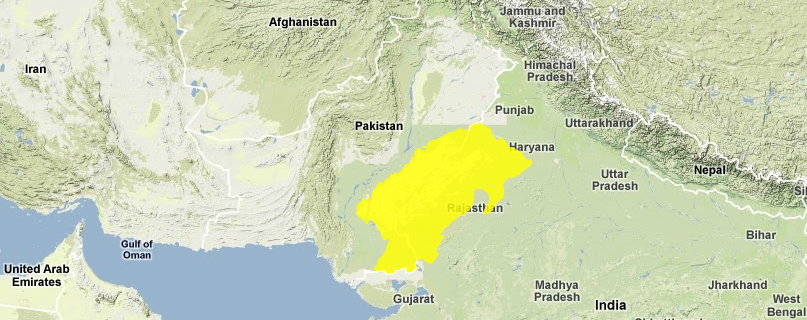
source : wwf
About 85% of the Thar Desert is in India, and the remaining part in Pakistan. In India, it covers about 120,000 sq mi, of which 60% is in Rajasthan and extends into Gujarat, Punjab, and Haryana.This desert comprises a very dry part, the Marusthali region in the west, and a semidesert region in the east with fewer sand dunes and slightly more precipitation.
Population: The Thar Desert is the most densely populated desert in the world. In India, the inhabitants comprise Hindus, Muslims, and Sikhs. In Pakistan, inhabitants include Sindhis and Kolhis. About 40% of the total population of Rajasthan live in the Thar Desert.
Occupation: The main occupation of the people is agriculture and animal husbandry. A colourful culture rich in tradition prevails in this desert. The people have a great passion for folk music and folk poetry.
Faune: Due to the diversified habitat and ecosystem, the vegetation, human culture and animal life in this arid region is very rich in contrast to the other deserts of the world. Some wildlife species, which are fast vanishing in other parts of India, are found in the desert in large numbers such as the blackbuck (Antilope cervicapra), chinkara (Gazella bennettii) and Indian wild ass (Equus hemionus khur) in the Rann of Kutch.
The region is a haven for 141 species of migratory and resident birds of the desert. One can see eagles, harriers, falcons, buzzards, kestrel and vultures. There are short-toed eagles (Circaetus gallicus), tawny eagles (Aquila rapax), greater spotted eagles (Aquila clanga), laggar falcons (Falco jugger) and kestrels. There are also a number of reptiles.
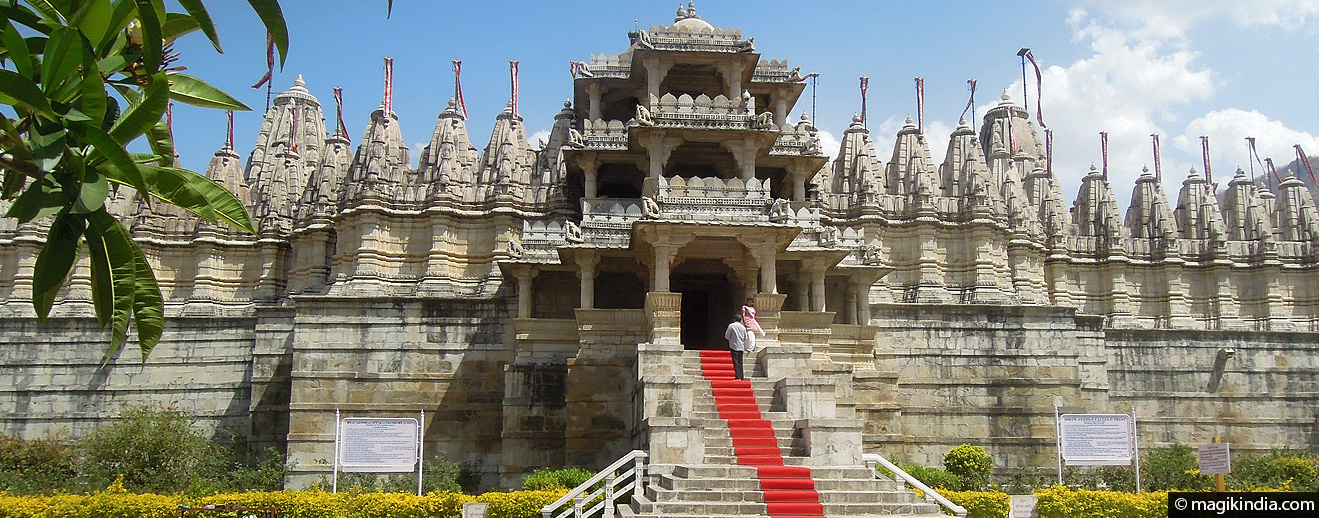
On the road between Udaipur and Jodhpur, tucked away in a magnificent valley in the Avaralli hills, there stands a gem of architectural virtuosity: the Jain temple of Ranakpur, one of the largest Jain temples in India.The building is so richly and densely decorated that the gaze pans in amazement across the omnipresent intricate carvings.
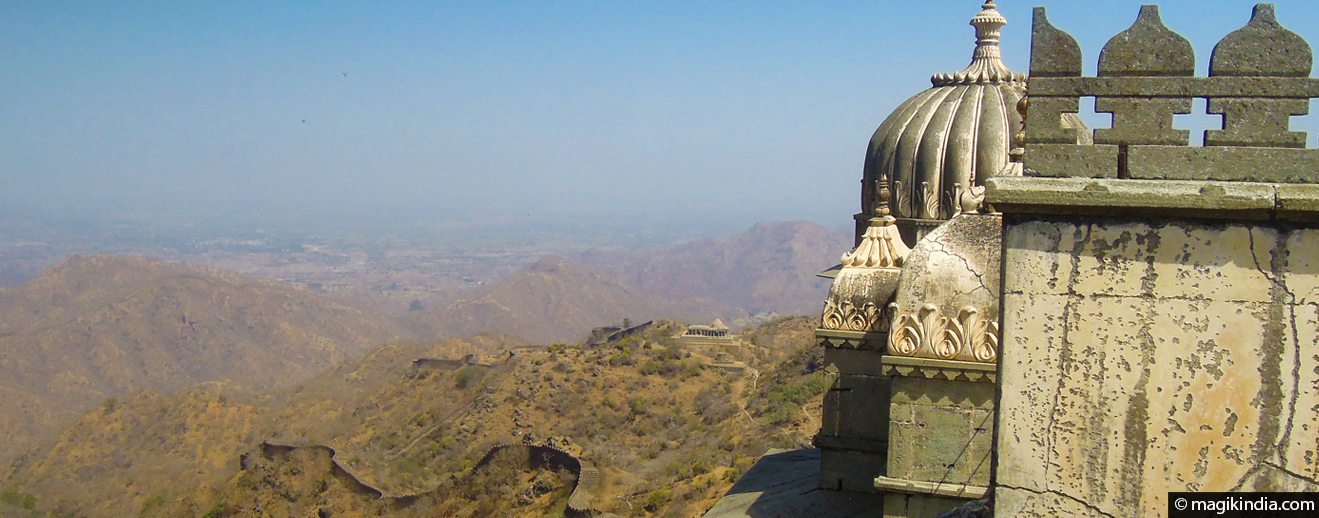
On the road to Jodhpur, 80km from Udaipur, an imposing construction stands on a hilltop 1100m above sea level. This is Kumbhalgarh fort, a World Heritage site. Its boundary wall, extending over 36km, is the second-longest continuous wall in the world after China’s Great Wall, and also the second largest fort in Rajasthan after Chittorgarh.

Bundi is one of those small Indian towns that have particular charm. It is an ancient city, dressed in blue like Jodhpur. Its many bazaars are an invitation to idle strolling and, like any town on a human scale, Bundi makes it easy to meet people. The royal palace stands majestically above the town, reminding us of the opulence of the Maharajas in the long-lost days when they rode down on elephants to the city and its narrow lanes.

Nageshwar Temple, 12 miles to the northeast of the holy town of Dwarka, houses the “lord of cobras”, one of the 12 Jyotir Lingams or “lingams of light”. The temple is way out in the countryside but can be seen from afar, particularly the huge 82-foot Shiva statue that watches over it.

Resting like an offering upon the shores of the Arabian Sea, Dwarka exudes the peace of cities beyond time. When twilight sets the ghats ablaze, the traveler wanders there amidst the merchants of mother-of-pearl. It is here, within this eternal sanctuary, that destinies intersect: the sovereign destiny of Lord Krishna, who founded his empire here, and the passionate destiny of the poetess Mirabai, whose songs still resonate within these walls.

Majestic and sacred, Mount Girnar stands as one of the jewels of Gujarat. This mystical mountain, towering over the city of Junagadh, is a reward that must be earned: climbing the 9,999 steps that wind their way to its summit is a physical challenge etched forever in the memories of those who undertake it. Fortunately, the fervour of the pilgrims transforms this ordeal into a deeply convivial and communal experience. it’s a total immersion in mystical India, crowned by breathtaking landscapes.

