





Namaskaram !
Welcome, Padharo ! I'm Mathini, a French woman who has been living in Rajasthan for 10 years. Despite being imbued with Indian culture from a young age it wasn't until 2014 that my Indian adventure really began. I left everything behind in France and set off on a 6-year journey through the land of Gandhi. These adventures are gathered in this blog which aspires, in an intentionally positive spirit, to bear witness to India's remarkably diverse and multifaceted cultural heritage. If this website sparks a desire to pack your bags and set off for an Indian adventure, it will have achieved its purpose. Subh Yatra on Magik India and beautiful explorations in the sacred land of Bharat...
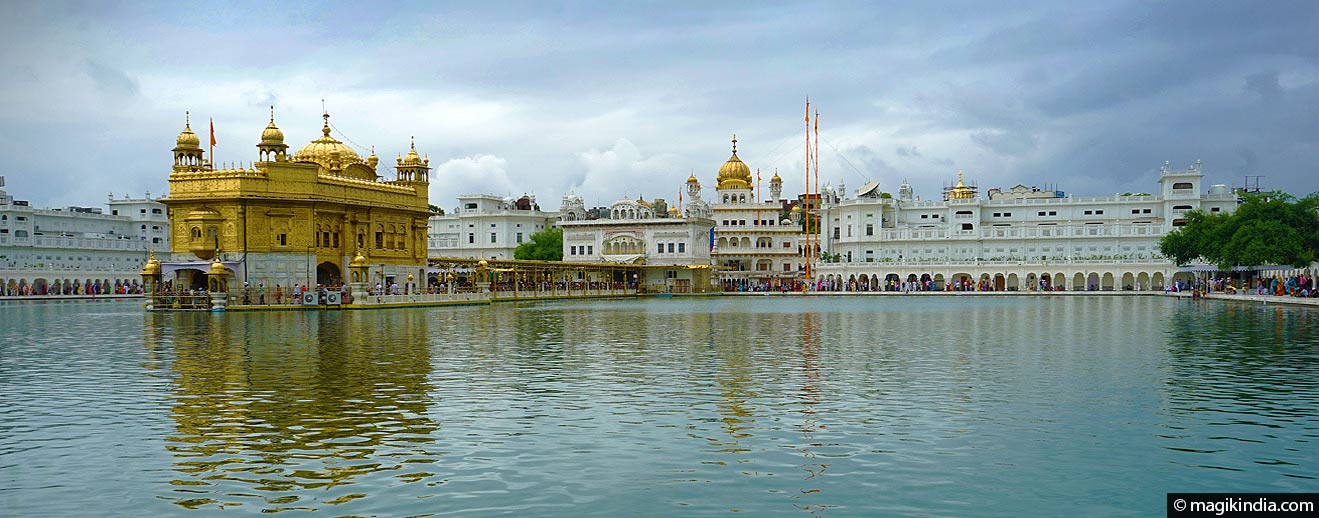
Just as Agra is known for the magnificent Taj Mahal, Amritsar too has its emblematic monument, the famous Golden Temple, spiritual and cultural centre of the Sikh religion. Amritsar (“nectar of immortality”) is also called Guru Nagri, “city of gurus”, referring to the spiritual leaders of the Sikh religion. As well as the famous Golden Temple this holy city offers such sights as the Durgiana temple and the more unusual Lal Devi temple (Lal Devi was a 20th-century woman saint).
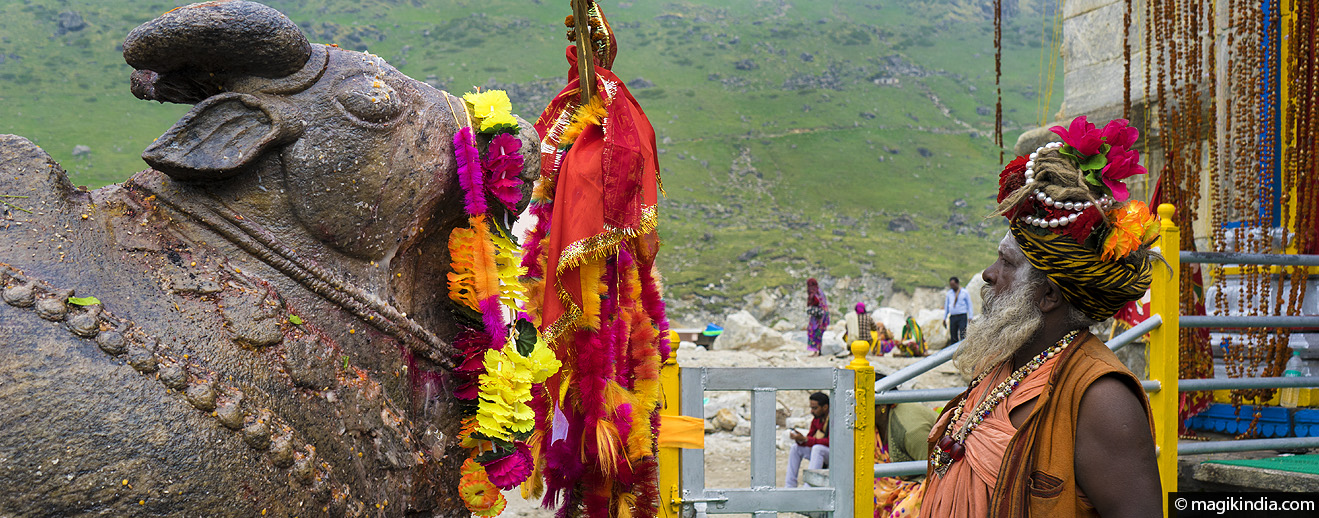
Char Dham, meaning ‘four abodes’, is the pilgrimage circuit around the four most revered pilgrimage sites in all India. These are in Badrinath, Dwarka, Puri and Rameshwaram, located at the four cardinal points of the Indian sub-continent.
Hindus believe that a pilgrimage or yatra around the Char Dham cities opens the way to moksha, liberation from the cycle of deaths and rebirths. They also think that every believer should try to visit each of these places at least once in their life.
Chota Char Dham: Over time, another Char Dham pilgrimage circuit has developed, in Uttarakhand state in North India. Its importance has increased considerably since the 1960s, with improvements in roads and other infrastructure.
It is known as Chota Char Dham, ‘the four small abodes’ or ‘Himalayan Char Dham’ as all four “Dham” are situated in the Garhwal Himalayas.
Most pilgrims start the ‘Chota Char Dham’ pilgrimage at Haridwar. Others set off from Rishikesh, or from Dehradun, capital of Uttarakhand. From there, the tradition is to visit Yamunotri, Gangotri, Kedarnath and Badrinath in that order ; from East to West.
CHOTA CHAR DHAM
 Yamunotri
Yamunotri, 3300m up in the Garhwal Himalayas, marks the source of the Yamuna, one of seven India’s most holy rivers.
Yamuna temple, on the left bank of the sacred river, was built by Pratap Shah, a 19th-century Maharaja of Tehri Garhwal. The idol is made of black marble. For Hindus the Yamuna, like the Ganges, has the status of a holy mother.
 Gangotri
Gangotri is a town near the source of the Ganges, more than 3000m above sea level in the Garhwal Himalayas.
India’s holiest river is called Bhagirathi at its source and Ganga (Ganges) after it reaches Devprayag, where it is joined by the Alaknanda river.
The actual source of the river is at Gaumukh on the Gangotri glacier, 18km from the town. Gangotri temple was built by the Gurkha general Amar Singh Thapa in homage to Mother Ganges.
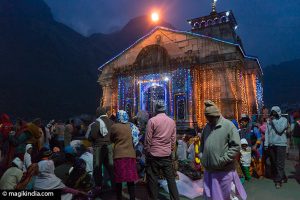 Kedarnath
Kedarnath is situated about 3583 meters above the sea level near the Chorabari Glacier. It is the abode of one of 12 Jyotirlingams dedicated to Lord Shiva.
According to legend, the five Pandava brothers wanted to meet Shiva to ask him the absolution of their murders committed during the war against the Kauravas. Shiva decided to test them and went from town to town to finally arrive at Kedarnath in the form of a buffalo. Bhima, one of the Pandava brothers recognized him. Shiva decided then to sank into the ground, leaving only his hump on the surface. It is this hump that is worshiped in the temple of Kedarnath.
Due to the extreme weather, the temple is open only late April until November. During the winter, the vigrahas (deities) of Kedarnath temple are transported to Ukhimath.
The temple is not directly accessible by road. It is reached by a trek of 19km.
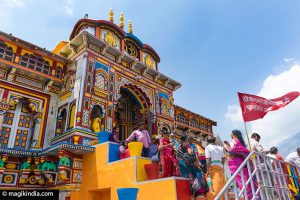 Badrinath
Badrinath stands on the river Alaknanda, 3000m above sea level in the Garhwal Himalayas.
According to the sacred Bhagavata Purana texts it is at Badrinath that Vishnu, in his incarnation as Narayana, performed a great penitence for the wellbeing of all living beings.
The town’s main attraction is Badrinath temple. Legend has it that the sage Adi Shankara found a figurine of the god Badrinarayan (Vishnu) made of holy black saligram stone in the river Alaknanda. It was kept in a cave near the Tapt Kund hot springs until the 16th century when the king of Garhwal had it moved to its current temple.
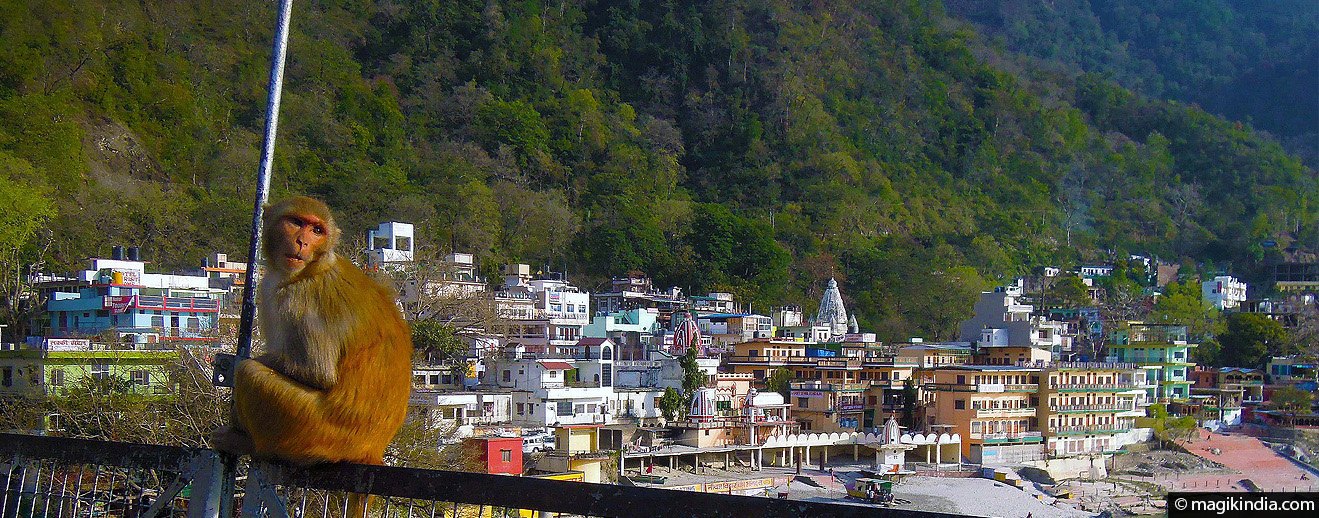
Rishikesh, the city of the Rishis of Uttarakhand, sometimes called the world capital of yoga, is a tourist town where many Westerners come to take instruction. But it is a very pleasant place, steeped in the mystic atmosphere that so many sages and ascetics (as well as the Beatles!) have come seeking over the centuries.
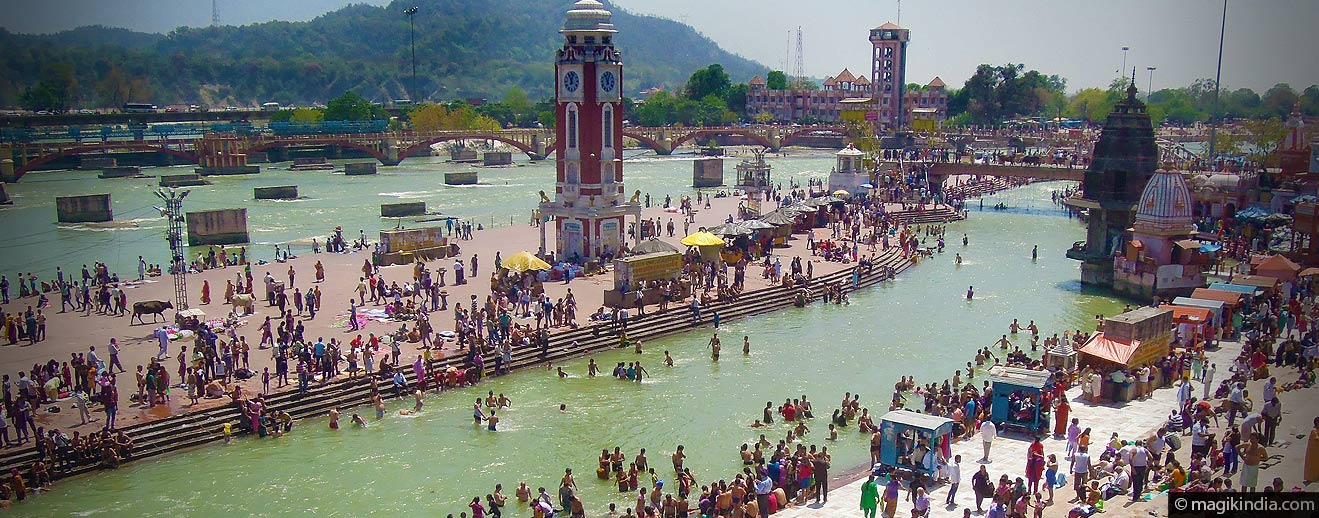
 Haridwar, gateway to the sacred! Haridwar is one of India’s seven holiest places or ‘Sapta Puri‘. It is a major pilgrimage centre, with millions of pilgrims flocking to it each year for it it is one of the four places that host the famous Kumbh Mela, the world’s largest religious gathering. This holy city boasts three ‘Siddha Peetha’, places where the wishes of worshippers are said to be fulfilled.
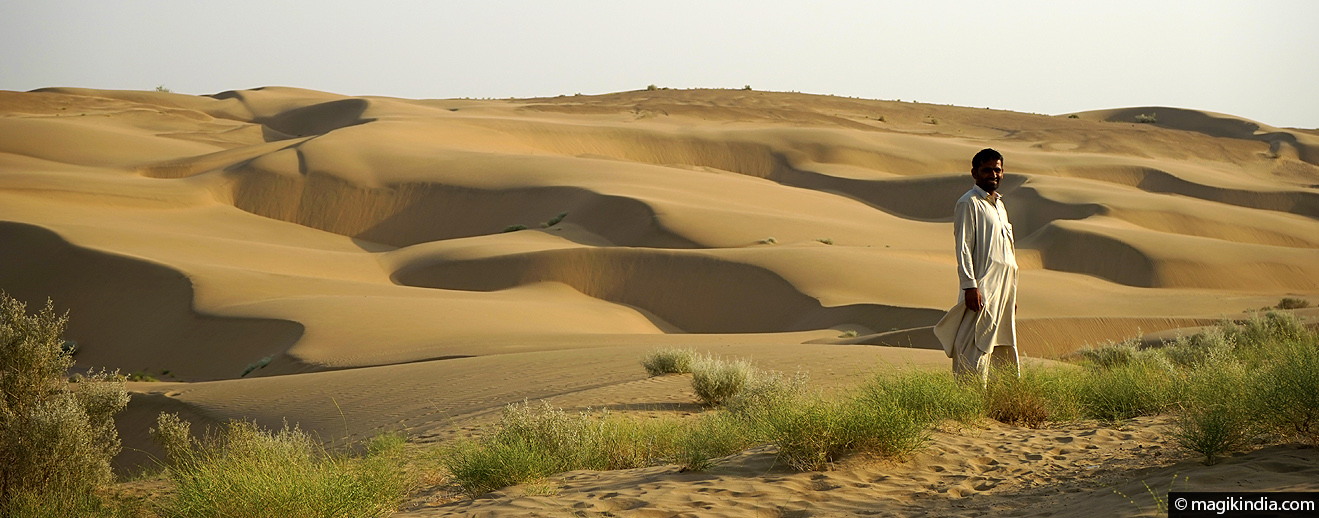
“I have always loved the desert. One sits down on a desert sand dune, sees nothing, hears nothing. Yet through the silence something throbs, and gleams…” (A. St Exupéry,The little Prince).
The Thar Desert, also known as the Great Indian Desert, is a large, arid region in the northwestern part of the Indian subcontinent that forms a natural boundary between India and Pakistan. It is the world’s 9th largest subtropical desert.
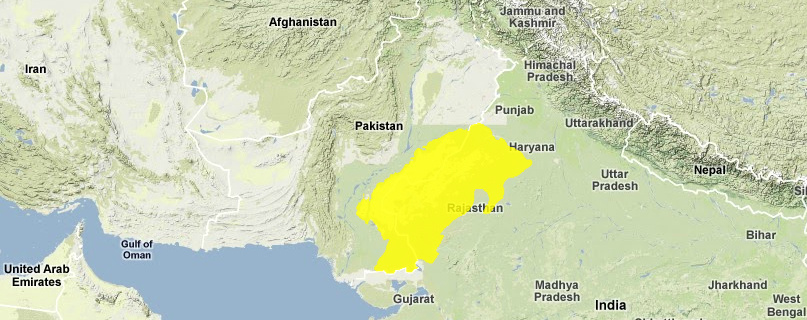
source : wwf
About 85% of the Thar Desert is in India, and the remaining part in Pakistan. In India, it covers about 120,000 sq mi, of which 60% is in Rajasthan and extends into Gujarat, Punjab, and Haryana.This desert comprises a very dry part, the Marusthali region in the west, and a semidesert region in the east with fewer sand dunes and slightly more precipitation.
Population: The Thar Desert is the most densely populated desert in the world. In India, the inhabitants comprise Hindus, Muslims, and Sikhs. In Pakistan, inhabitants include Sindhis and Kolhis. About 40% of the total population of Rajasthan live in the Thar Desert.
Occupation: The main occupation of the people is agriculture and animal husbandry. A colourful culture rich in tradition prevails in this desert. The people have a great passion for folk music and folk poetry.
Faune: Due to the diversified habitat and ecosystem, the vegetation, human culture and animal life in this arid region is very rich in contrast to the other deserts of the world. Some wildlife species, which are fast vanishing in other parts of India, are found in the desert in large numbers such as the blackbuck (Antilope cervicapra), chinkara (Gazella bennettii) and Indian wild ass (Equus hemionus khur) in the Rann of Kutch.
The region is a haven for 141 species of migratory and resident birds of the desert. One can see eagles, harriers, falcons, buzzards, kestrel and vultures. There are short-toed eagles (Circaetus gallicus), tawny eagles (Aquila rapax), greater spotted eagles (Aquila clanga), laggar falcons (Falco jugger) and kestrels. There are also a number of reptiles.
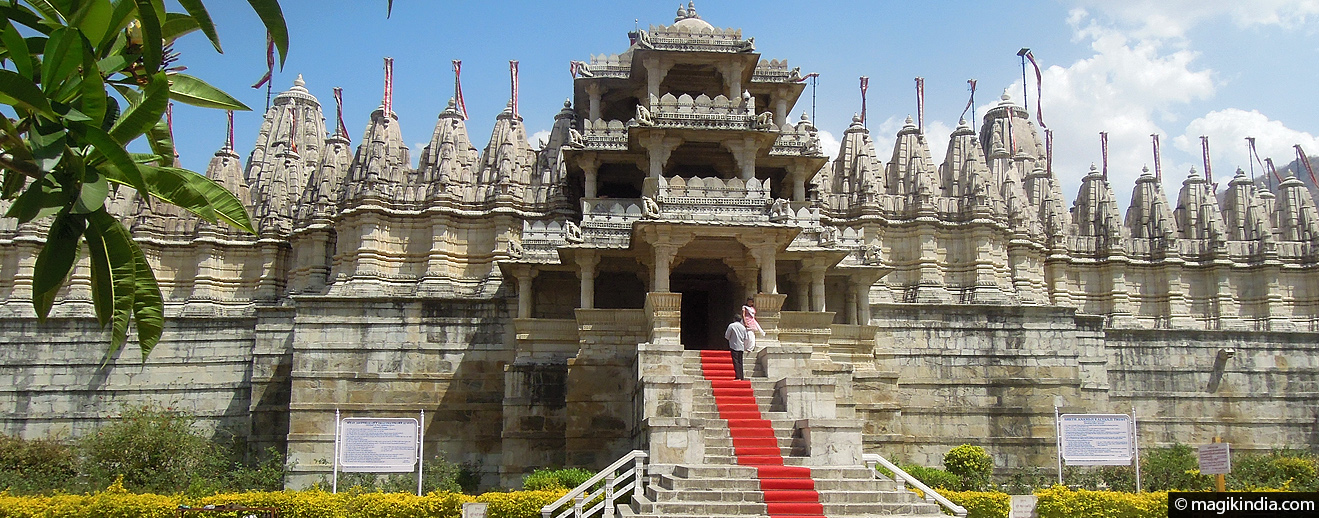
On the road between Udaipur and Jodhpur, tucked away in a magnificent valley in the Avaralli hills, there stands a gem of architectural virtuosity: the Jain temple of Ranakpur, one of the largest Jain temples in India.The building is so richly and densely decorated that the gaze pans in amazement across the omnipresent intricate carvings.
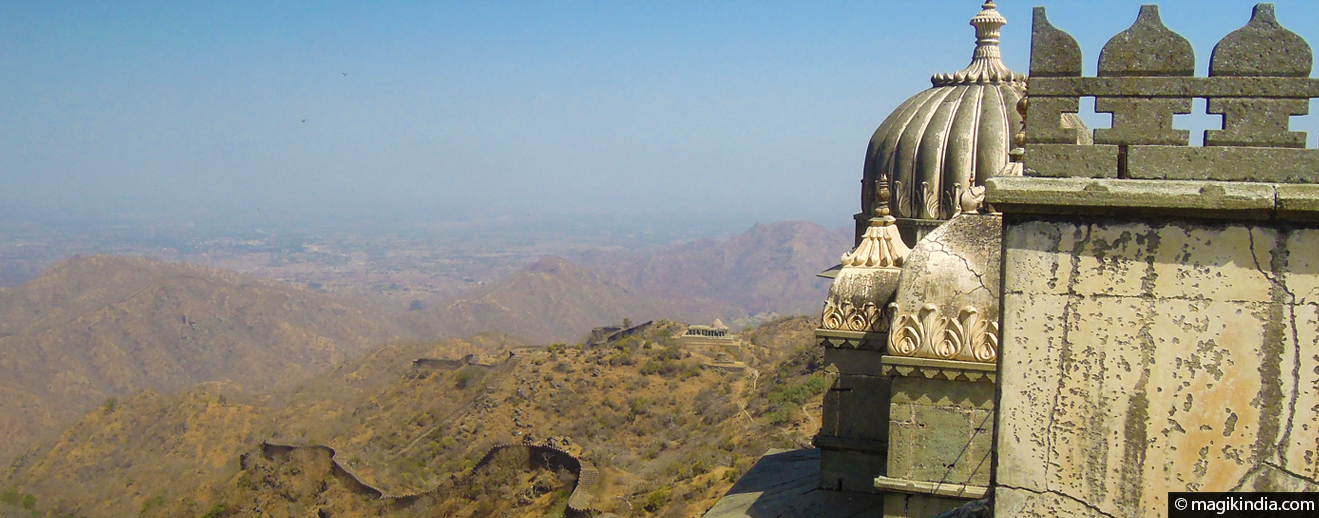
On the road to Jodhpur, 80km from Udaipur, an imposing construction stands on a hilltop 1100m above sea level. This is Kumbhalgarh fort, a World Heritage site. Its boundary wall, extending over 36km, is the second-longest continuous wall in the world after China’s Great Wall, and also the second largest fort in Rajasthan after Chittorgarh.

